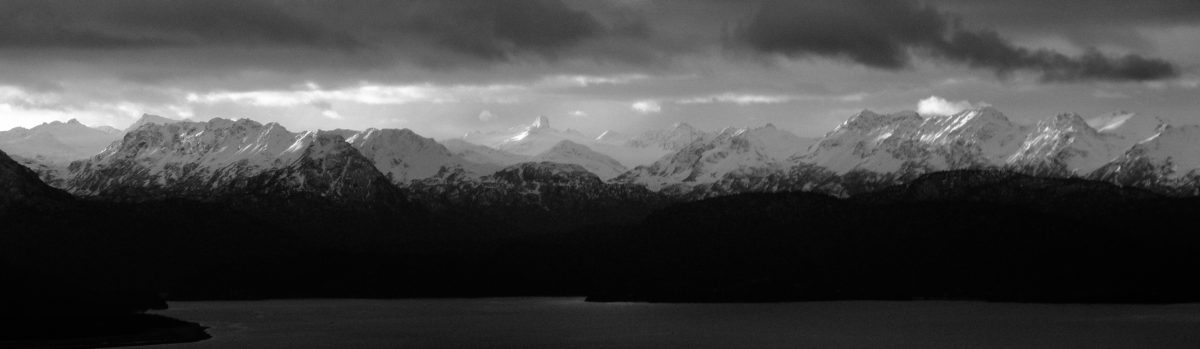
I wish I had a picture of Sadie. But even if I had a photo to go from I don’t think I’d be able to properly describe her. I remember a weatherworn face and a missing tooth. I remember her layers of clothes, faded and worn to a color similar to that of her skin. I remember the way her odor—distinct and offensive, but impossible to describe—lingered for a long time after she’d come inside to borrow our phone. And I remember her adamant warning that came every year in March:
“Beware the spring equinoxal,” she’d say.
***
Right now in Homer we’re gaining around five minutes of daylight a day. We’re looking at seed catalogs and planning our summer camping trips. The dirty snow berms on the side of the road are receding and the sun is high enough on the horizon to throw a little heat. Tasks that seemed overwhelming just a couple of months ago seem possible now.
And yet, suicide rates go up this time of year. The police blotter gets interesting and mental healthcare facilities fill to capacity. Couples who’ve held on through the winter give up and go their separate ways. It seems counterintuitive, but it’s true. This is a tricky time of year for lots of people.
When it comes to the spring equinox, Sadie was on to something.
***
I’ve been thinking about Sadie lately, wondering about her life, of which I knew very little. I was a teenager when Sadie used to make her way from the little shack across the alley to our house. But honestly, I never gave her much thought. To me she was just an eccentric old woman, living in a decrepit cabin. I knew she had a husband over there, a man called Monty, but I never really got a good look at him. They just existed there, on the edge of town. When I think about it, I’m not sure how.
I asked my mom about the old couple that used to live behind us, and she told me what she knew about Sadie and Monty Holbrook.
Monty kept to himself and Sadie came around to “borry” our phone now and then. She didn’t really offer much information about herself though, until one afternoon when my brother-in-law brought a horse he’d just acquired over to our place. In the driveway he tried repeatedly to get up on the horse, but every time he tried the horse would lie down. Sadie watched all of this from across the alley, then came over and asked if she could “have a turn at that horse.” She grabbed the reins, got the horse up on its feet and in a matter of moments had the horse “doing right.”
Sadie then told my mom that she’d grown up on a horse, had in fact ridden one from Canada to Mexico with an infant in front of her and a two-year-old behind her. “No horse would dared lay down or buck with me,” she said.
After the horse incident, Sadie talked more. She said she and Monty caught and broke wild Spanish mustangs for a living and trailed them to North Dakota. She also told my mom that Monty, who was ninety years old at the time, used to run with Butch Cassidy and The Wild Bunch. At one point a movie producer found him and wanted to interview him, but Monty chased him off with a gun and told him to “Git.” He was afraid that if people knew who he was he’d be arrested and hung.
***
One Easter Sunday morning, after I’d already moved out of the house, my mom and step-dad saw smoke billowing out of Sadie and Monty’s cabin and called the fire department. It was late in March. Medics came and took the two of them to the hospital. There they were treated for mild smoke inhalation, but other than that were found to be in good health. Monty put up quite a fight though, when the hospital staff tried to get him to bathe. He was of the belief that bathing too early in the year made one susceptible to pneumonia.
After their house fire, Sadie and Monty never returned to their home. They went to a nursing home in Fruita, Colorado to live near their daughter. My mom heard that Sadie was happy there—it must have been a huge step up in terms of ease of living—but Monty didn’t like it much. He died within the year.
* * *
Sometimes we wouldn’t see Sadie for several days, but then something would change and she’d come over several times a week. During the times when she’d visit frequently, she’d watch for us to come home. We couldn’t see her peering over, but moments after we pulled into our driveway we’d see her hunched figure making its way across the dusty alley and up the stairs to our back door.
I wish I had a picture of her now to remember her face, but more than a picture I wish I had a week of afternoons with Sadie. I’d ask her what it was like to break wild Spanish mustangs. I’d ask her what it was like to be married to an outlaw. And I’d ask her to tell me exactly why she was so wary of the spring equinox.
I’m guessing she had more stories to tell.

Wild, Wild Horses
Life Expectancy
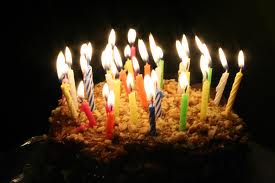
Just twenty years before my Grandma Ross was born, the average life expectancy for a woman in the United States was 45 years. Coming across this bit of trivia this morning—this day of my forty-fifth birthday—makes complaining about getting older seem ridiculous and downright ungrateful.
Statistically speaking, there’s a good chance that I’ll have at least another thirty-five years or so on this amazing planet, and that’s something that women in their forties couldn’t say in 1879. Seriously, I could spend this birthday pining for the days when my hair was more brown than gray, or for a time when I could fit into size seven jeans, but I’m thinking that since this is the beginning of those extra years that modern life has potentially granted me, I ought not to squander this day on pining. Instead I’ll make a list of positive things about turning forty-five:
- My hair started turning gray about ten years ago and I’ve spent a lot of the past decade self-consciously feeling older than I am. But now that I’m in my mid-forties, a few of my same-age friends are beginning to sprout a few gray hairs of their own, and while I wish I didn’t care about such trivial things, there is something nice about no longer being alone in this particular category.
- I will never make it into one of those 45-Brilliant-Writers-Under-45 anthologies, so that’s one less thing I need to worry about.
- When I was thirty-five and my hair was turning gray and my children were ten and seven years old, I sometimes questioned my decision to have children before establishing a career or traveling the world. Now that I’m 45 and my children are nearly grown, I can see the advantages of having had kids early in life. If I am indeed granted an extra thirty-five years or so, then I’ll get to enjoy my children as adults for a much longer time than if I had waited to have them. And after I get done paying off the debt I’ve accrued in raising them, I may still have time to travel the world.
- My life so far has been divided into lots of parts, but the most defining of them have been 1) my own childhood and 2) the raising of my children. Right now I’m on the cusp of the Next Big Part and it’s exciting to consider the possibilities.
- At forty-five I’ve already done so many of the things I’d hoped to do when I was just starting out. Now I have this distinct feeling that the future is less about serving my own needs and more about finding a way to be of service to others, it’s humbling and hopeful all at the same time.
- And on a lighter note, hitting the quintessential birthday that marks the potential halfway point of life left me feeling completely justified in buying myself a new pair of gorgeous leather boots, and in that way turning forty-five hasn’t been all that different from turning twenty.
Slow Soup
What fools call “wasting time” is most often the best investment. — Nassim Nicholas Taleb

This week I’ll be facilitating my first Creative Writers’ Roundtable discussion at the Kachemak Bay Campus. The topic for the first of the three-week series will be on developing a writing practice. It’s a funny subject, developing a writing practice, because what works for one person doesn’t necessarily work for another. And a routine that works beautifully for a certain period of time doesn’t always continue to work as life circumstances change or as the writing itself evolves.
When I first decided to pursue an MFA in Creative Writing I imagined that I’d make a peaceful corner in my house that would be solely devoted to my writing. I thought I’d carve out a very specific schedule for myself: two hours before work every Tuesday morning, three hours on Thursdays, another big chunk of time on Saturday afternoons… you get the picture. But the reality of my writing practice is something much more chaotic than this. The truth is that I don’t have a quiet corner in my small house. Oftentimes family obligations get in the way of the time I’ve set aside for my writing. How is it, then, that I continue to get things done? How do I meet my deadlines? This is the stuff I hope to talk about at the Creative Writers’ Roundtable.
* * *
I’m lucky enough to live with a man who, in an effort to keep our family eating nutritious meals in the midst of a busy workweek, has taken it upon himself to make a big pot of soup or stew every Sunday afternoon. It’s usually a long, slow affair. He spends a good amount of time looking through recipes, making a grocery list, shopping, soaking, chopping, sautéing, simmering. And then there’s the clean up.

Some might say that Dean’s Sunday soup productions are a waste of time, and it’s true that if time were the only consideration we’d be better off buying a case of Campbell’s Soup at Safeway. But with the extra attention Dean gives to the food he prepares, we get so much more than canned soup. We have more time in our week because we don’t have to scramble through the kitchen on weekday mornings to make ourselves lunch before we leave the house. We don’t have to drive across town during our mid-day breaks in hopes of finding something satisfying to eat. And ultimately we have delicious, sustaining food that gets more flavorful as the week progresses.
* * *
Writing is more than time spent in front of a computer or a notebook. Like the making of a slow soup, writing requires assembling the right ingredients, processing, organizing, simmering, filtering and cleaning up. Some of those things can be done even when I’m not in front of my computer. In fact, many of my problems in regards to a story or a plotline are solved when I’m doing the dishes or going for a walk. Important revelations have come to me when I’ve been playing my banjo or been in the middle of a yoga session. And so for me developing a writing practice is about practicing to be a writer—all the time. It’s about never turning it off. This is not to say that every moment of my time is organized, in fact it’s just the opposite. My best writing is done when I’ve had a fair amount of time to dawdle. If I don’t take the time to stir my ideas around and let them settle, my writing sounds canned, like it was pulled from a shelf. It’s a little too bland or salty. It lacks originality and flavor.
So I guess part of developing a writing practice, at least for me, is learning to embrace the slowness of the process, the thoughtful moments that can’t necessarily be accounted for. Part of it is letting go of the false belief that productive writing can be measured with something as simple as a word count.
Confession Time:
“I mean I truly believe there exists some combination of words—there must exist certain words in a specific order that would explain all of this…” – Walter White, from Breaking Bad
Here’s my confession: I have an MFA packet due on Tuesday and I’m not even close to having it done. This packet is to include one new short story, one revised short story, four pages of transcription, three reader’s response papers and forty pages of freewriting. So one would think that the logical thing to do would be to set aside this blog for a while and get to work on the required writing, but doing things in their logical order isn’t necessarily my strong suit, and so here I am, composing a blog post in hopes that by getting this out of the way I’ll be able to focus on the tasks I need to complete by Tuesday.
I’m not going to tell you what parts of my packet I have done and what parts need to happen between now and January 15th, all I will say is that I need to put on my superhero cape or my bionic woman costume and get on with it because I’ve waited for the damn stuff to write itself and clearly that has not been my best tactic.
You see, I’ve had a hard time writing fiction lately and I’m not entirely sure why. I’d rather write poetry or essays or memoirs or songs. I’d rather write letters to friends or make lists. Right now nothing sounds more daunting than sitting down in front of blank page on my computer screen and creating a story out of thin air about people who aren’t real.
When I was accepted to the MFA program two years ago I had to pick a genre for my course of study. I could have gone in any direction: poetry, fiction or nonfiction. At the time I had this grandiose idea that I should choose the genre that I’d find most challenging and so I chose fiction. That didn’t seem to be so much of a problem last year, but this year something has changed. This year I have a bad case of fiction fatigue.
I’ve been trying to figure out what is causing this little fiction problem I seem to be having. I think it has to do with the gap that lies between being able to recognize good fiction and being able to write it myself. I’ve experienced similar gaps with fiddle playing. Sometimes I can recognize when something I’m playing doesn’t sound right, but I don’t yet know what I need to do to fix the problem. Then there is another gap that comes when I know how to fix the problem but I don’t yet have the skills to make it happen, for example my fingers might not be trained to reach so far, or the bowing technique is something I haven’t yet learned.
So I suppose my job for this second year of my MFA is to work on bridging that gap between where I’m at with my writing and where I want to be. I have to keep on writing marginal fiction and trust that I’ll recognize when something in it doesn’t seem right. Then I have to figure out what to nix or change or tweak in order to make it better. And I have to keep reading great fiction and thinking about what makes it great in the first place. It’s like putting together a complicated puzzle, but with pieces I have to hand craft myself.
Someday I’ll be glad I set myself up for this challenge, but between now and Tuesday night it’s going to hurt.
Low Pressure
The ceilings have been lowered and the walls are pushing in. Even if the winds weren’t howling, if sprays of rain weren’t pelting the side of the house, even if I were warm and dry inside a silent house with no access to the weather forecast, I would feel this storm. It’s all pressure. It’s a dull headache and achy joints. It’s slowing me down.
Outside everything is accelerated: Gusts to 55mph. Three feet of snow from Tuesday now condensed to a waterlogged foot and a half. The driveway, meticulously plowed a few days ago to allow us access to the world, has become a southern sloping waterway; its riverbed made of ice. Inside we sip coffee, read books. We think of the things we’ll bake—assuming the electricity stays. We watch water pour off the roof, wonder when the snow will reach its saturation point. Dinner with friends across town is cancelled.
The forecasters have used the word cyclone to describe this storm. The satellite image is reminiscent of hurricanes and typhoons. The startling terminology aside, this kind of weather system is not uncommon here and it poses no danger to our house. We aren’t in a flood zone. No trees will blow over onto our roof. We might lose our power and we might be cut off from getting to town for a few days, but even those things are unlikely. All we really have to do is keep a fire burning in the wood stove and wait for things to get back to normal.
Several years ago a relative asked me, “What’s so special about Alaska?” Her accusing tone made me defensive and I talked about the mountains and the ocean and the extreme weather. I talked about the long hours of daylight in the summer, the darkness in the winter. I mentioned the northern lights and grizzly bears. Everything I said was true, but she wasn’t convinced. And to be honest, neither was I—every place has something to make it special. But her pointed question and my inadequate answers have stayed with me.
And today there is no place I have to be, no thing I have to do, which allows me to enjoy this storm and whatever it might bring. Outside, the world is a giant swirl of wind and rain and snow and muck, and as I’m writing this I can see a bald eagle from the window beside my kitchen table. Its wings are spread. It’s coasting on the currents of this storm—rising and falling—giving in to the push and pull of the wind. I watch it and wonder, what’s so special about children? Or coffee, or flowers or chocolate, for that matter. What’s the big deal about the sky or stars or fire? Why spend an hour writing about a storm or watching an eagle play in the winds of a cyclone?
No reason. No reason at all.
Something to Say
You’d rather write about the charming side of your town, and for the most part you do. But this week your town has shown its not-so-charming side. Two brothers aged eighteen and twenty were arrested for sexual assault. A number of other young people are afraid that they might be next because they were at the party where the alleged assault took place—with cameras in hand. A young person was victimized; his life altered. And so you want to write about your town and what it’s going through because people are shaken up about it. But where do you start? Your children are the same age as these children. They’ve known some of them since preschool.
You want to write about the mother you spoke to today whose fourteen-year-old daughter was groped at her first high school dance, a place you’d expect her to be safe. You want to write about how strange it is, adolescence. How that window of time between trading Pokemon cards and being hormonally charged is so small, so small that you barely have time to catch your breath. You want to talk about this terrible thing that happened in your town like it’s an isolated incident but this is nothing new and your town is not unique. You write about your town and you write about every town and a culture that has allowed it to go on and on and on. You write about how it was going on when you were in middle school and the boys chased you at recess and knocked you onto the grass and stuck their hands up your shirt and you write about it now because back then you didn’t tell anyone because you had it in your mind that it was just playful playground fun—even though it didn’t feel like fun to you.
You want to write about all of this and more, but putting it in words is difficult. The thoughts are coming from so many different places and what you need to do is set the thoughts aside for a while and write from that place in your gut that’s holding it all in. You want to write and you don’t want to write because it’s going to take you places you’ve been avoiding. It’s going to take you places that you’ve held in secret for about thirty years and it’s going to make you feel vulnerable because somehow you still have it in your head that it was your fault, that you put yourself in a bad situation and so ultimately you are responsible. You hate feeling vulnerable.
You’re going to say things about boys that have most likely grown in to decent human beings, stellar community members, charitable donors to their local nonprofits. But you decide to write it now because it’s the only way you can express what’s going on inside of you when you hear about these two young men who have been arrested for sexual assault.
You knew boys like those boys in your school days. They were the kids the teachers liked. They were the kids you liked. They played basketball and football. They were witty and popular and you wanted their attention so badly. And so when they gave it to you it felt like a privilege. You with the crooked teeth, that lived on the wrong side of town, that had a step-father who wouldn’t talk to you and a father who never called wanted the attention of those boys and when they gave it you certainly didn’t want to tell them no. And so they asked you to hang out with them after school one day and you said yes and it never occurred to you that you’d be the only girl. And you went with them anyhow because you didn’t know not to trust them. You went to one of the boys’ houses a few blocks from school. His dad was home and so you went instead into their camp trailer that was parked in their front yard. You don’t remember much about the camp trailer, just being shoved down on a little folding bed, and someone undoing your pants and another someone pulling them off your legs and there was laughing and you didn’t know you were crying until you felt the tears running down the side of your face and one of them put his head to your privates and said things and did things that in your naivety you never knew were things to do and the humiliation was more than you could bear and so when it was over you laughed along with them and pretended it was no big deal and then you walked home, alone and ashamed. At home you ate dinner and watched Three’s Company with your mom and your little sister and your silent step-dad. You talked on the phone with your friend for a while and you never said a word about what happened because you thought somehow you should have seen it coming. You should have known not to go with them. You should have been smarter. You should have been prettier because the boys probably didn’t do that to the prettiest girls. You should have, you should have, you should have and it never even occurred to you until several years later that the should-haves weren’t yours to own.
And so you want to write about your town and what it’s going through, because what your town is going through is a terrible thing. But it’s been going on for ages. The humiliating, the bullying, the assaulting, the tricking, the teasing, the hurting. All of is has been going on in varying degrees in every town. Your town is not unique. The actions the two boys in your town have been accused of are not so uncommon. What’s uncommon is their being called on it. Victims blame themselves. They try to protect their dignity and even their assailants with silence because the assailants are the good guys; they’re popular, the teachers like them, they make your town look good on the playing field. But silence is more terrible than truth. It perpetuates the belief that it’s okay. It’s okay to rape a girl if she’s wearing a short skirt. It’s okay to mess with the drunk kid. It’s okay to tease the kid with a learning disability. It’s okay to shame a girl for having sex. It’s okay to shame a boy for not having sex. It’s okay to beat up the gay kid. It’s okay to pull the pants off the girl who was stupid enough to follow you into the camp trailer.
It has to end somewhere. At some point you have to say enough. It’s not okay. And sure, what your town is going through is a difficult thing, but it’s necessary. It’s breaking the pattern of silence.
You write about it now, not because you want attention or sympathy. You write about it now because there is this hope that by not brushing a society’s dark secrets aside, by saying something, by doing something, you’ll make a difference. You write about it now because when you were thirteen you couldn’t articulate the truth of the matter: it’s not okay to hurt someone, grope someone, touch someone without consent even if they’re passed out drunk, even if they’ve flirted with you, even if they’ve wandered off with you. You write because you hope for a future where open communication reigns and where victims don’t feel responsible for the actions perpetrated against them. You write because there should be no excuses and no free passes when it comes to harming another human being. You write, not because you have any answers, but because you have something to say. You believe that when it comes to teaching respect and dignity we all have something to say.
Layers Upon Layers of Normal
Floating
I would have been comfortable
floating somewhere near medium
in the realm of muted colors, suburban
yards and lite-rock.
But with you it’s AC DC,
1975 green shag
and weeds so tall
it’d take a machete to cut a trail
back to normal.
* * *
It seems appropriate—in a full-circle kind of way—that I’m going to Montana next week. That’s where a lot of things started for me nearly twenty-three years ago. As a twenty-year-old I moved to Missoula “to go to school,” but the real reason was to be nearer a guy that I’d met while fighting fires in New Mexico. He lived in a small town not too far away in Idaho and the University of Montana was the closest place where I could continue my education.
The guy from Idaho was the wrong guy—that’s something I knew even before I went there—but it turns out that everything else about moving to Montana was right. I didn’t know a soul in Missoula and so it worked out to be the place where I started to figure a few things out for myself.
It’s where I began to pay attention to nature. It sounds silly because I grew up in Western Colorado, one of the most amazingly beautiful places I’ve ever been, but the landscape was different in Montana, so I began to see things I’d failed to notice as a kid.
It’s where I started to question religion and where I began to appreciate literature. It’s where I first had the idea to start writing. And it’s where I eventually met Dean. Three years later we were on our way to Alaska and our first child, Dillon, was on the way. He turns twenty on Sunday.
Nothing about our journey from there to here has been what I would have predicted. As a child I imagined a much more mainstream way of living. But we haven’t taken the normal route: We got married young. We had kids young. And since then it’s been a flurry of school and summer camp and trips across the bay (when the motor doesn’t peter out) and jobs and struggling to pay the bills and homeschool and taking classes to finish the degree and gardens and neighborhood get-togethers and dogs and chickens and bears in the yard and dipnetting for salmon and old time fiddle tunes and accidents on icy roads and gun-yielding neighbors on one side and nudist neighbors on the other and all of it has been a mix of love and heartbreak and fun and frustration—and it’s been twenty years. And now our youngest child is leaving for Montana.
Adella was born in Alaska and has been anxious to go someplace new for a few years now and so she’s going to Missoula to live with friends for her senior year of high school. And I get to go down there with her to get her registered for school and spend a week in the place where so many things began for me. Montana seemed pretty extreme when I moved there from Colorado all those years ago. It will be interesting to see how I perceive it after having lived in Alaska for twenty years.
(The poem at the top was in the Winter Solstice 2011 Issue of Cirque Literary Journal.)

Speaking of Chicken….
It seems that chicken is all over the news this week, and things are no different here at the Sundmark household. Monday evening when we came home from work we discovered carnage in our yard. The security of our chicken tractor—the one that got us through last summer with 25 healthy birds—had been breached. Some kind of critter, most likely a dog, had broken the fiberglass greenhouse siding off of one side and proceeded to slaughter seven of our chicks. The others went in to a state of shock and huddled together in a corner. The ones on the bottom of the pile suffocated. All together we lost fifteen of our chickens.
I know that eating local food isn’t going to save the world, but it’s a cause our family has decided to put some effort toward. For us it means growing a garden or buying from local growers. It means harvesting salmon, buying beef from our local cowboy, and raising our own chickens for both eggs and meat. After the slaughter we found in our yard on Monday it looks like next winter we’ll have fewer chicken dinners.
There are plenty of foods I’m not willing to give up in order to eat a strictly local diet and so we spend a great deal of money on food that comes from places much warmer than Alaska. I’m a big fan of apples, for example, and I have a weakness for the Rugged English Cheddar cheese that Save-U-More carries. In fact Save-U-More is full of surprises, including an aisle of Trader Joe’s foods and an extensive organic produce section. It’s a goofy grocery store with its bizarre layout and its incessant rearranging, but for the most part it keeps the foodies in Homer happy.
For the size of our town we have a good selection of restaurants and cafes as well. Back in the day when we ran a bed and breakfast we had a guest one time that expressed surprise that a few of our nicer restaurants stayed open through the winter. I tried to explain that in Homer people have priorities that might not be the same as in other parts of the country. We may only buy a new pair of jeans every two or three years, and we may drive a Subaru that can only be entered through the passenger side door (true story) but we’ll spend good money on good food. A few of our higher end restaurants have survived when Arby’s and Burger King couldn’t make a go of it.
And so it’s safe to say that after living in Homer for eighteen years I’m no expert on fast food. I eat at the local Subway once every couple of years, and I haven’t stepped inside the local McDonalds since my niece worked there several years ago. When I go to Anchorage there are so many great places to choose from that fast food doesn’t even cross my mind. What all of this is getting at is that I’ve never eaten at a Chick-Fil-A, and I never will. I wouldn’t have even if Dan Cathy had never made his statement in opposition to gay marriage, or if the company had never donated millions of dollars to organizations like the Family Research Council.
When I came home on Monday to find a bunch of dead chickens in my yard I had the realization that something I thought was secure was in fact very vulnerable. I feel the same way today after seeing photos from around the country of crowds of people lining up to eat at Chick-Fil-A’s. I thought we were moving beyond homophobia, but I see that we have a long way to go. I believe that for some people eating at Chick-Fil-A this afternoon was a matter of showing support for our first amendment rights, but I don’t think that was the true motivation of most.
I’m in the fortunate position of having a diverse group of Facebook friends. They cover most sides of any political issue and this whole Chick-Fil-A thing is no exception. One of my friends stated in a thread that people were just taking a stand for Godly values by showing their support for Chick-Fil-A. A couple of people on this thread even evoked the old saying, “hate the sin but love the sinner.” It shows me that to them today’s turnout for chicken sandwiches wasn’t about first amendment rights. It was about speaking out against homosexuality. What I want to point out is that hating the “sin” in this case is synonymous with hating “the sinner,” because it’s not a matter of deciding to be gay; it’s a matter of being gay. And that hatefulness, no matter how it’s framed, is disheartening.
A line from a John Gorka song comes to mind sometimes when I feel overwhelmed by the way humans build up walls and divisions between one another… We are here to love each other, that is all…
I know it’s only a line to a song and that it’s not realistic to think that this world will ever be a place where all people show love to one another all the time. But the truth is that we all have the capacity for love on an individual level. Every day lives are changed and attitudes are changed; every day individual worldviews are changed because one person somewhere decides to imagine the world from another person’s point of view.
We’re a diverse bunch, us humans. Some of us will raise our chickens ourselves, some of us want ours served with a side of waffle fries. Others of us would never think of eating a chicken. The reality though is that we all get hungry. Our differences are lower on the scale of importance than the things we have in common. Let’s focus less on the ways we fill ourselves up, and more on the fact that we all need food.
A Gathering of Writers
The Kachemak Bay Writers’ Conference happened this past weekend and I’m taking the day to recover and reflect. This year I didn’t just attend the conference; I really did the conference. I didn’t skip any sessions. I went to the evening readings. I even socialized after hours instead of rushing home to the solitude of my home. I wish I had it in me to write up something cohesive to describe the weekend, but since I’m still feeling whooped and I need to save my writing energy for some revising that needs to be done over the next couple of days, I’ll stick to bullet points.
Here are few things that are sticking with me from the 2012 Kachemak Bay Writers’ Conference:
- Barry Lopez started things off with an incredible keynote address. He asked the question, “What is the purpose of a writer in a pluralistic society?” Then he wound around to the answer he’s come up with for himself which is that the writer’s job is to help. So that leaves me asking, am I helping anyone or anything in any way? Am I telling stories that need telling?
- Ann Pancake discussed the tricky territory of writing fiction that delves into political issues. It’s difficult, she said, but when it’s done the right way it has the potential to dispel psychic numbing. I think of The Grapes of Wrath by Steinbeck, a book that I just finished reading for the first time this week. It was relavent when it was written and its relavent today. It’s a book that has helped.
- Valerie Miner, one of University of Alaska Anchorage’s MFA faculty members, suggests that we are all literary citizens. She offered ideas of how to keep the literary conversation going, one of which was simply to take one another’s writing more seriously. And that’s one of the beautiful things about this conference; writing is shared, discussed, taught and discovered in a supportive, friendly, noncompetitive environment. Warm fuzzies pretty much all around.
- Peggy Shumaker. Alaska is beyond fortunate to have Peggy as the State Writer Laureate. Her generosity, professionalism and kindness are a blessing. In her closing address she admonished us to look out for one another—and nobody looks out for writers the way Peggy looks out for writers.
- Back to Barry Lopez. He says to know exactly why you’re writing. It’s necessary to have a solid understanding of your purpose as a base for the rejection you will face. Yikes, but true. This leads me back to the forever question of why do I do this? My answer is forming and changing all the time. He also says that writing is not about intelligence. It’s about telling a memorable story. And for some reason I find that statement incredibly comforting.
Then there are the other, non-classroomy things: I got to hear longtime acquaintances from the library read their work at the open mic and in hearing them discovered a side to them I would likely never have known had I not been there. I ran into an old friend—one I hadn’t seen in nearly a decade—and we had the chance to get caught up with each other’s lives. And of course I got to see lots of my MFA cronies.
The last thing I’ll mention is the bonfire. It was just what I needed after three days of sitting. The wind died down, the rain held off and the bay was calm. Children of attendees ran around, drinks were shared, stories were swapped and music was played. Amy brought her ukulele, Ed brought a guitar, TJ brought his banjo and I brought my fiddle. Since the three of them are infinitely more musically versatile than I am we were able to play tunes into the night. It was a great convergence of a few things that I love.
The 2012 Kachemak Bay Writers’ Conference was a great gathering and next year will be too. I mean, Naomi Shihab Nye will be the keynote speaker. Can it get any better than that? Hopefully I’ll see you there.

A Mom, First of All
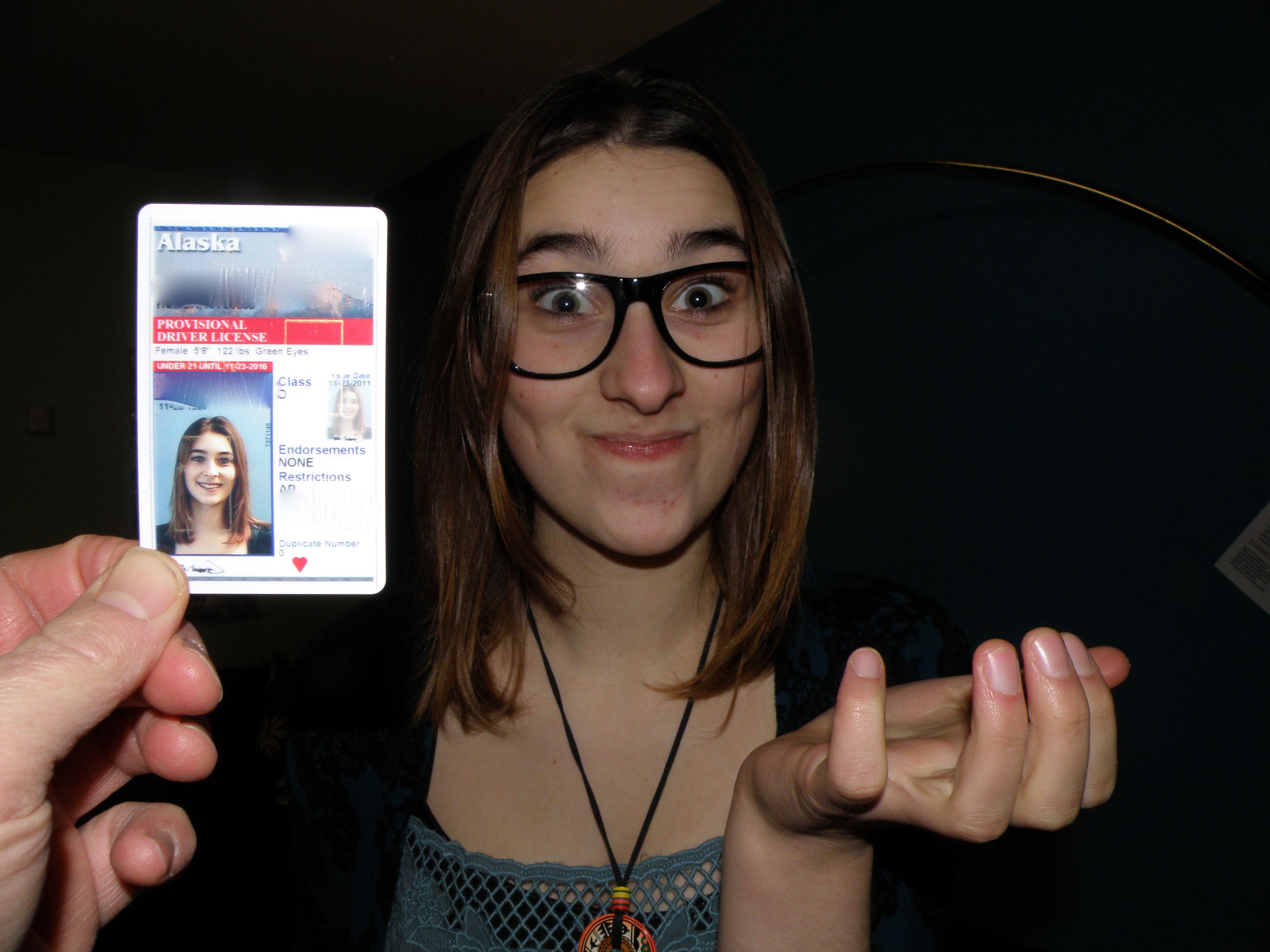

A few months ago I had a conversation with my kids about careers. My son is nineteen and trying to figure out what comes next for him. My daughter is sixteen and has the next decade of her life completely mapped out. They are about as dissimilar as two kids can be. I constantly wonder how it’s possible for two people from the same genetic pool to turn out so incredibly different from one another. It’s something that has baffled parents from the beginning of time, I’m sure.
The great thing about raising kids from such opposite edges of the universe is that I’ve learned so much from them—things I never would have imagined on my own if I had been given two very mediocre children. Life would have been so predictable and boring had that been the case.
From Dillon I’ve learned that there are different paradigms from which to see the world. Sure, I knew that already, but I’d never lived with someone who was seemingly born with that knowledge. He questions everything and always has. I admit that it’s made for some challenging parenting, but then I think of when I was a kid; I believed the things adults told me without much wonder as to whether they were right or not. I did not question authority. I did not imagine another way. Dillon sees the world with a much broader lens than I do, and for the past nineteen years he’s shown me new ways of thinking. His approach to life has made me a less judgmental person. Parenting him has given me the courage to care less about convention.
Adella has shown me the power of discipline. I know that kids are supposed to learn about determination and hard work from their parents but I can honestly say that that has not been the case in our family. Adella was born with the inability to procrastinate and as a result she gets more done than anyone I know. She’s not afraid of tackling any task or assignment. When she’s struggling with a concept in math or a song for choir, she doubles up her efforts, she puts in her time, she works until she gets it. She’s driven in a way that I have never been, and watching her set and meet goals is an inspiration.
When I try to imagine where my kids will be a decade from now I have an easier time imagining where Adella might be. Although I don’t know what career she’ll choose, I imagine that she’ll have one firmly established by then. When I ask her what she wants to study her answers vary. She’s interested in psychology and social sciences. She also wants to travel. She’s got her path figured out though—she wants to graduate from high school early, go to a small liberal arts college on the East Coast and then possibly medical school. She’s quick to point out that she might change her mind about the medical school part though.
Dillon lives more in the here and now, so his future is more mysterious. When I ask him what he wants to do for a career he doesn’t have an answer, but he might pick up his guitar and play something that he’s written—some heart-felt melody that he’s come up with on his own. He shows me the value of being present in the moment. He reminds me that for some, the journey is more interesting if the route involves meandering the back roads for a while instead of taking the interstate.
They’re at that age now, where we have a lot of discussions about the future. In one of our conversations a while back, when I was questioning them about their desires and goals, they turned it back on me. “What did you always want to be, Mom? Have you always wanted to be a writer?” I thought about it for a while. I thought back to when I was their age. I didn’t have any career goals. If anyone were to have asked me what I wanted to be back then I would have told them I wanted to become a teacher, but that wasn’t necessarily true. The true answer wasn’t something anyone wanted to hear, especially from a teenager.
“I wanted to be a mom,” I told them. “It’s the one thing—the only thing—I really knew about myself.”
I think they were surprised to hear me say that. For the last several years I’ve been so busy working and going to school and trying to establish myself as a writer that I may not have given them the impression that they were my first choice, that I wanted them first and foremost. Sure, I want to be a wildly successful writer now, but it will always be lower on the rung of things I’ve wanted in my life. I wanted them most of all and I’ve been lucky and blessed enough to have my heart’s desire. Everything else I might have or achieve just adds to the abundance of what I’ve already been given.
 Lofty Minded in Alaska
