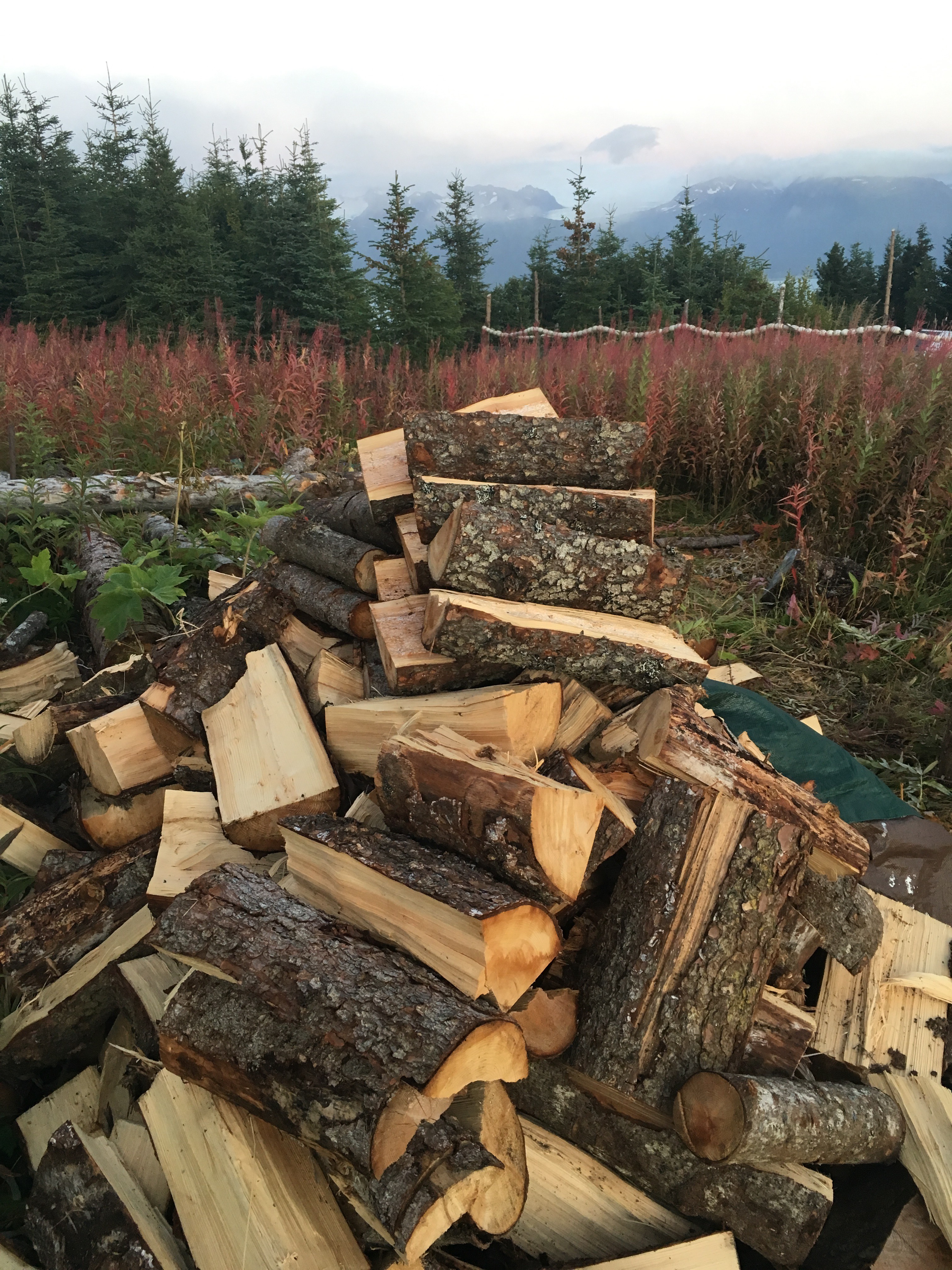
Five-Acre Almanac: The Rooster Years

Week 15:

Yesterday our rooster died. It happened sometime between when I brought the chickens some water around 11:00am and when I went back around 4:30 to shut them in for the night. I found him on the floor of the coop, close to the feeder, perfectly still, still warm. He lived through six Alaskan winters and didn’t have it in him to make it through another one.

In all the years we’ve kept chickens he was our only rooster. I never gave him a name and each summer around the solstice when he’d start crowing at 4:00am I’d grow weary of his voice piercing through the quiet every fifteen minutes like a persistent snooze alarm, but still I grew attached. He was beautiful to look at and the seriousness with which he took himself amused me to no end. While I don’t have any hard evidence, I think the flock was healthier with him around. He was protective and unafraid to speak his mind if the feeder ran out of food or if he spotted an intruder. His last valiant effort was in early October. I heard him sounding the alarm from a thicket of spindly spruce and when I went out to see what the ruckus was all about I found a Northern goshawk perched in the chicken pen. From his safe space the rooster sent out a warning cry that sent all the hens running for cover. With a little coaxing from Dean and I, the hawk moved on and in time the chickens found their way back to to coop. That was the end of the chickens’ free ranging for the year, and as it turns out, the rooster’s last foray out into the wild.

The year we got the rooster, which was an accident, was the same year we planted a garden in our front yard. Dean used a pile of pallets and made six 4’x4’ raised beds within feet of our front door. Although we’d gardened off and on before that, moving the garden to a location that demanded our attention was a game changer. The next year he added another three 2’x4’ beds even closer to the house. We made a temporary fish-net fence around the front yard garden to keep the chickens and the moose out, but as these things go, the temporary fence is still in place.

A couple years after the front yard garden went in, Dean built a small greenhouse off the back of our chicken coop. He used old windows and a used sauna door that our friend Robert found at the dump. In addition to creating a space for us to grow warmer weather crops, it made it so the chicken coop warms up by a few degrees on a sunny day, and it blocks the south wind that used to seep through the cracks.

The summer after the greenhouse was built, we cut a trail through the lower portion of our property. Starting from the chicken coop/greenhouse, the trail cuts downhill through a thicket of wild roses and ferns to a small spruce forest. When we first moved in, three old spruce trees dominated the area, but within two years the spruce bark beetles came through and killed them. They stood tall and dead for several years, but one by one wind storms knocked them over. Dean and our brother-in-law Joel milled one of the original old trees into lumber that we’ve used for various projects around here. The other two are slowly rotting back into the earth. Now the spruce that were young enough to survive the beetles have grown tall.

After the forested area, the trail comes out into a meadow and turns west. Those first few years after the trail was built we found morel mushrooms in the springtime in that transition zone where the forest turns into the meadow, usually on the south side of a particular small spruce tree. We haven’t been so lucky the last few times we’ve looked but like our old dog Porter who once caught a mouse and for the remainder of his days looked in the same spot every time he passed by in hopes of it happening again, we’ll probably continue to look for morels under that same tree every spring for as long as we’re able to walk the trail.

Where we once found a morel

The trail turns north toward the house again after a hundred or so yards of walking west through the meadow. It winds up through a thicket of wild elderberries that once entered feels otherworldly and is completely private. It’s protected from wind and it’s a space that could be inhabited by fairies, black bears and moose. In the years since we’ve cut a trail through, wild raspberries have moved into the edges to take advantage of the light, and as you move up the hill the stinging nettle becomes more prominent. We spend hours picking nettle along the trail in the early part of summer, and we dry it and store it in glass jars on our pantry shelves to use through the winter months.

One of many elderberry trees

Yesterday after I found the rooster lying dead on the floor of the chicken coop I came in the house and made myself a cup of nettle tea. It’s considered a tonic herb, which according to a study out of the Institute of Integrative and Complimentary Medicine in Zurich, Switzerland means that it has the ability to promote the physiological functioning of an organ system, leading to the subjective feeling of well-being of the patient treated with it.

I sat and treated myself to the hot, earthy, chlorophyll-rich tonic and thought about the rooster’s years with us. I stoked the fire and looked out at the moon, half illuminated and reflecting off the bay. I thought about the hens out there in the coop, wondering which one will claim the highest perch now that the rooster is gone. He was noisy and had a big presence and I imagine it will take a few days for them to sort out their new pecking order. It will take some time to get used to all the newfound space and quiet now that he’s gone.

Old guy

Five-Acre Almanac: Oil to the Engine

Week 14:

Late Friday afternoon on my lunch break I took a walk on the beach. I only had twenty minutes so I set the timer on my phone for ten minutes and walked one direction until the alarm sounded, then turned back. The tide was just a foot or so below its highest point of the day and I followed the line of driftwood and seaweed that the sea had recently deposited. I’ve walked on the beach several times over the past few weeks, but most days it’s been overcast. On this particular day the sky was blue and the sun was bright and reflecting off the water. When sunlight hits your retinas it sends a signal to your brain to produce serotonin, but even without the technical explanation all that light felt like medicine.

After reading To Speak for the Trees last week I was eager to learn more from the author Diana Beresford-Kroeger and I searched online to see what was available. I found a podcast called “For the Wild” produced by Ayana Young that has Diana Beresford-Kroeger as a featured guest. The two women cover a lot of ground in the interview, but one of the asides that Ms. Beresford-Kroeger offers has to do with kelp. Those of the Fucus species she said, when rubbed against the skin, give the body a boost. This was an old Celtic traditional health practice that can now be explained in scientific terms. Bladderwrack is the common name for our local Fucus species and it has inflated bladders that are filled with a water soluble mucilaginous substance that’s loaded with all kinds of lipids, amino acids, vitamins and minerals, one of which is iodine that helps regulate the thyroid. According to Beresford-Kroeger, rubbing the substance into the skin is like “adding oil to an engine” and makes everything run more smoothly.

Strolling along the tide line with all the washed up kelp at my feet I scanned for Bladderwrack even though it’s not the right time of year for harvesting it. Most of what I saw was bull kelp (nereocystic luetkeana) that had rolled onto shore with recent storms, along with plenty of other species I’m not familiar with yet. While I’ve spent a lot of time learning about the wild plants that grow on land around here, the plants of the sea are new territory. For once my focus at the beach was not just on rocks.

Almost every time I leave the beach I’ve got one or two rocks in my pocket. I collect them for reasons that are beyond reason. Sometimes I imagine using them to border a garden bed but most often there is just a compulsion to pick them up, feel their smooth contours, admire their individuality. The concept of infinity is difficult to fathom, but the rocks on the beach in all their various shapes, colors, sizes, and compositions inch me closer to understanding. To give my attention to one rock out of the millions, billions, trillions that are available, is a study in singularity. Occasionally I try to imagine the geological and geographical journeys a rock has been on and even though I can’t really, just the trying puts time in a whole different perspective. A twenty minute walk, a work day, a week, a month, a year, a decade, a century, a millennium. For those of us that are fleshy and prone to decomposition, time is not the same thing as it is for a rock. Maybe this is why my windowsills are lined with them.

After my twenty minute walk on the beach I went back to the library to finish out my work day. When six o’clock rolled around and it was time to leave I discovered that my phone was missing. The last place I’d used it was at the beach when my ten minute alarm went off. It wasn’t quite dark yet, so I decided to head back to the beach to retrace my steps, but as I was pulling out of the library parking lot and saw the police station directly across the street I figured it wouldn’t hurt to stop in to see if anyone had turned it in.

I told the attendant at the front desk that I’d lost my phone at the beach and she asked my name. Within minutes of noticing they were gone my phone and the case I keep it in that contains various cards and my driver’s license were back in my hands.

It was a small thing in the big scheme of things, to be lucky that way. Lucky that the tide had been high when my phone fell out of my pocket, lucky that the person who found it was kind enough to turn it in, lucky that my hunch to check the police station saved me from a fruitless search at the beach.

If I’d lost my phone forever, along with my driver’s license and cards, it would have been disrupting and a hassle, but I’d still consider myself lucky. I think about this in terms of the times we’re living in. Every time I read the news or spend much time on social media I am reminded of all the ways I could spend my time fretting. But I am alive. There is always more to learn, more to consider. There are an infinite number of relationships to cultivate—with people, with plants, with the ocean, with the seasons, with the elements. The possibilities for expansion and wonder are limitless and learning to look at life this way is a kind of medicine. It’s like adding oil to the engine.

***

Photos: Sunday afternoon, unexpected brush cutting/burning/rejuvenating.

Five-Acre Almanac: Here and Now

Fresh snow and low angle sun on the trail to the chicken coop.

Week 13

Yesterday when it was raining buckets outside, we cozied up our living room. We pulled all the furniture aside and vacuumed the dust and dog hair out of the corners. We took everything off the bookshelves, wiped them down and reordered all the books. We dealt with the pepper plants that had been in our south-facing window by moving some to a cool dark place where they can be dormant for a while, putting a few under a grow light to finish up, and harvesting one that was loaded with tiny hot red fruits.

We cleaned off all the horizontal surfaces, dusted off the house plants and the instruments, moved the couches around, and sorted through a bunch of old magazines. Then we pulled out an extra lamp and a few more candles. We’re in for a long stretch of darkness and my compulsion to do this deep cleaning and comfort making comes from having experienced many long winters in Alaska. Borrowing the term from the Danish, we call this time of year hygge-season and with equal measures of self-preservation and gratitude we fully embrace it.

Having a warm and snug home is something we don’t take for granted, especially since both Dean and I regularly meet people whose living situations are much more tenuous than our own. Our home is small by today’s middle class standards and it needs about a million upgrades, but when we look out at the trees being tossed about in the wind and hear the rain pelting the windows, we feel wealthy in our green-carpeted living room with our wood stove thumping and a pot of chili simmering in the dutch oven.

I read a book this week called To Speak for the Trees: My Life’s Journey from Ancient Celtic Wisdom to a Healing Vision of the Forest. The author, Diana Beresford-Kroeger, now in her seventies, is a renowned botanist and biochemist who went into her formal education after having first been schooled in traditional Celtic knowledge that had been passed on to her by a community of Irish relatives after both of her parents died. Much of her work as a scientist has been driven by what she learned about the natural world through stories and plantlore on the hillsides of Ireland as a young girl.

Reading the book made me wish I could go back in time and walk through wild places with my ancestors. It made me wish for long hearthside afternoons with my grandmothers and their mothers and those even further back. If I could, I’d keep a record of all the little tidbits of information they must have had about plants and people and keeping home and getting by. Plus it would be fun to know them, these random people who came together from so many different places in such a way that made my existence here and now a possibility.

I imagine my life is so very different than theirs must have been, driving thirteen miles a day to town for a job, flipping a switch to make the lights come on, buying food that was grown in one place, processed in another, and shipped a thousand miles so that I can have the convenience of not cooking something from scratch if I don’t feel like it. I’m sure the number of choices we have in our daily lives—what to eat, what to watch, what to wear, what to listen to, what to read—would overwhelm them. I wonder if they would celebrate the number of choices we have or if they’d worry about our sanity. Probably a little of both.

I like to think about the things I can still learn from those in my family that I did have the privilege of knowing. My slow moving nature came straight from my dad and sometimes when I’m moving from one task in the garden to the next I imagine his commentary and advice. When I’m at my desk writing, I think of my Grandma Acree who was studious and thoughtful and always careful with her words. When I’m looking at the jars of herbs in my pantry wondering what I’m meant to do with them all, I think of my Granddad Acree, autobody repairman by trade, who in the final decade of his very long life took a deep dive into learning about alternative healing practices and herbalism. When I’m feeling scattered and overwhelmed, I think of my Grandma Ross and the gentle way she moved through her days, grounded in her unwavering faith.

Life on Earth changes continually, but there are still a few things that our ancestors experienced that we can experience too, and it makes sense that one way to know those who came before us is to get to know aspects of the natural world that they must have known. We can watch a storm brewing the way they did. We can walk a dirt path through the forest. We can dip our toes into cold running water. We can eat some of the foods they ate.

In To Speak for the Trees, Diana Beresford-Kroeger writes that medicine men and women of ancient and modern Indigenous cultures call wild food “bush food” and they understand that when people stop eating bush food, they lose their health. Then she goes on to state that “wild foods of all kinds, from untainted, pure, genetic sources, have a phytochemical regulation system that modern science is just now trying to understand.”

Diana Beresford-Kroeger’s discussion of “bush food” confirmed to me something that feels instinctual. Food that is foraged, that is freely given from the earth, has value that goes beyond caloric intake and wonderful flavors. Wild food can serve as a link to our ancestors. It can connect us to the wild, biological, animal side of ourselves. It can restore our health on more than just a physical level.

The possibilities are enough to inspire me to get outside and pick another bucketful of rose hips and to keep adding dried nettle to every kind of soup and sauce that I make. It’s enough to keep me tossing a few wild blueberries into my pancake batter and to keep experimenting with all the wild plants we collected and dried throughout the summer. Brewing things up, trying things out and pouring through books on how to use all of these plants is the perfect thing to do now, in this season between harvest and winter solstice. With any luck we’ll have a few gifts worth giving at Christmastime. After that we’ll be looking at seed catalogs and plotting next year’s garden.

Right now though I’m not going to think about all of that. I’m going to go outside and enjoy the break in the weather, then I’m going to come in, make a cup of tea and settle in for the evening. It’s the season for settling and I’m ready.

Five-Acre Almanac: Good Time

Week 12

I’ve been thinking about time this week. This started because Monday was Alaska Day, which meant that I got an extra day added onto my weekend. I spent most of the day alone at home. I wrote in my journal. I spent some time in the garden mulching and picking carrots. I even made a batch of cottonwood salve. Because the house was already clean and I’d already written my blog post for the week and I didn’t have to go to work, the day had enough space in it for me to follow my whims and do whatever I felt like doing. I even let myself imagine what my life would be like if I had more days like that. Would I squander my time if I were suddenly given more of it or would I make good use of it? And what does it mean to make good use of time?

When I was a kid it was pointed out to me more times than I care to remember that I was slow. I didn’t know how to use time wisely. I was the slowest to get the chores done, the slowest to get ready for church on Sunday mornings, the slowest to get my thoughts sorted out before speaking, the slowest one in the bathroom I shared with my older sisters. In general I was the slowest at everything and was reminded of it often. I dawdled. I lollygagged. I putzed around. It hurt to be labeled that way, especially in the context in which it was usually delivered, but it was true.

The truth is that slowness suits me and it’s unfortunate that as a child I was given the message that moving through life in a lower gear was somehow bad. It means that I’ve had to learn how to make peace with this fundamental trait of mine and I’ve had to forgive myself for not being able to fit as many things into a day as some of the people around me. I’ve also had to quiet that inner voice that is always criticizing, always hurrying, always comparing. In a society that measures success in terms of productivity, I’ve had to remember that there’s value in just being.

As part of my practice of spending at least twenty minutes outside each day I’ve been taking the opportunity to sit beside the old birch tree in our yard when I have time in the mornings, or go to the beach on my lunch break, or stand out in the dark for a while and gaze at the stars. Originally my goal was to be outdoors in order to get some fresh air and to add some variety to my days during this time of year when it’s easy to spend so much time inside, but as valuable as the fresh air and change of scenery are, I’m learning that they are greatly enhanced when I place the emphasis of the experience on the being itself. The temptation is to multitask—make phone calls, exercise, write in my journal—anything to make me feel like I’m making good use of my time outside. But multitasking would only diminish the moment. What I need is to be. Where I need to be is outside. At least for a while every day.

I’ve only been deliberate about being outside for a while each day for a couple of weeks, but it’s something I’d be wise to continue. When I’m feeling hurried or overwhelmed I have a still point to reference and that still point comes to me even when I’m not intentionally trying to summon it. There’s also an unexpected sense of intimacy that comes with surrendering my thoughts and ambitions for a few moments to nature. Even when I’m alone I don’t feel alone.

Then there are the gifts that are not necessarily given as much as they are received simply because I’ve put myself in a state to receive them. Like the silence of morning before the neighborhood gets busy. Like the cool and damp air settling on my face at dawn. Like the seal that popped up to say hello a few feet away from me at Bishop’s Beach on my lunch break. Like the three shooting stars I saw the other morning because I happened to be out and looking up at the right time.

The automatic response to these kinds of gifts is gratitude, and the beauty of gratitude is that it has the ability to push aside desire. For a while I’m not thinking about the things I want to get done or the ways I wish society would change or the time I wish I had. I can’t help but think that this is how time is meant to be spent. Free of wanting, deep in gratitude.

Five-Acre Almanac: Winter Ready

Week 11

Today has been a chicken-soup sort of Sunday. The two inches of snow that we woke up to is turning to slush in the rain and while that’s the sort of weather that’s not welcome in January, I’m just fine with it in October. Most likely we’re going to have plenty of snow for several months and I’m not in any hurry for it to pile up. Plus I’d still like to rake some leaves and dried grasses to store in the greenhouse for chicken coop bedding.

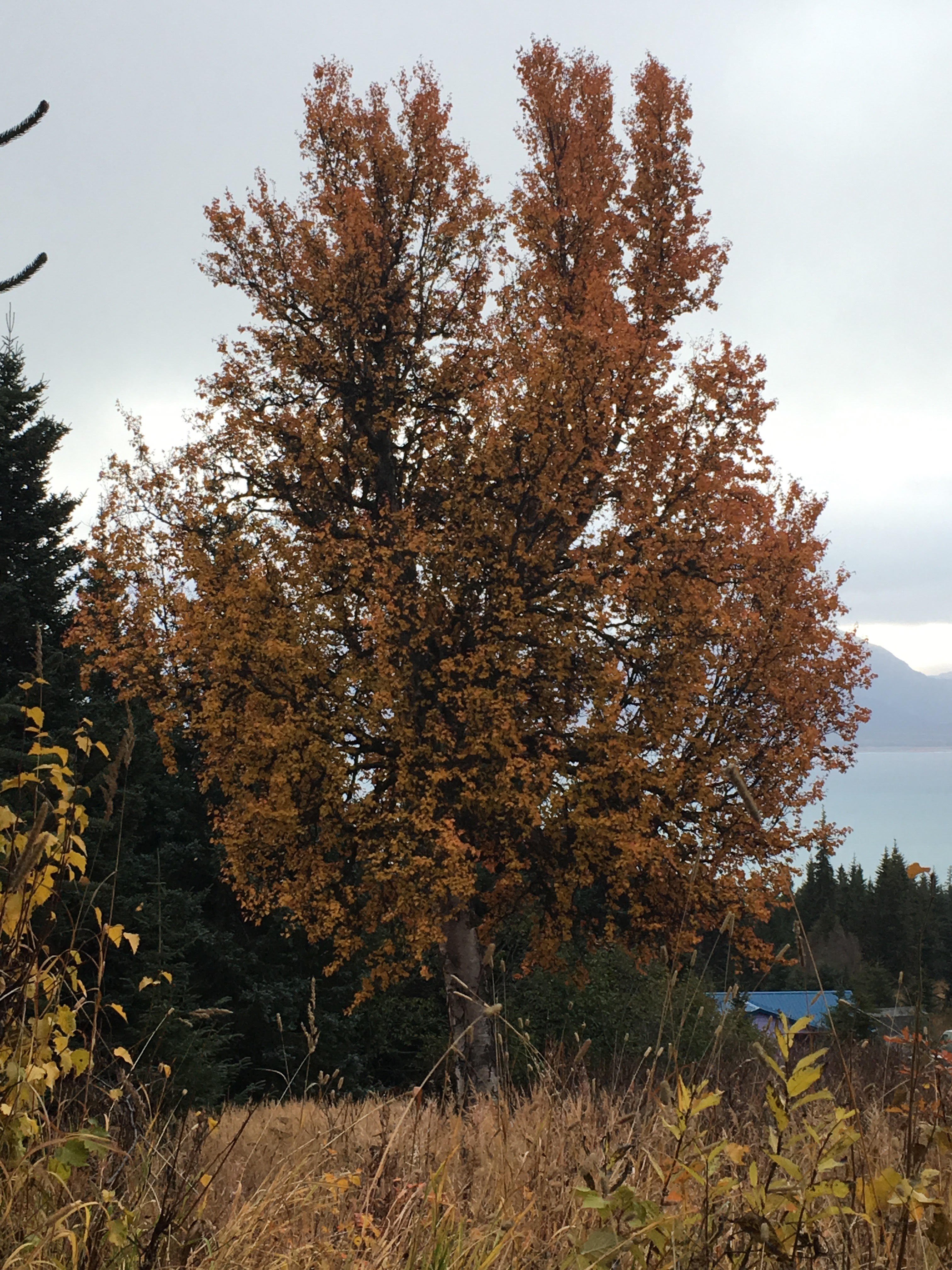
Birch tree in full yellow

Earlier this week I started making a plan for myself for the winter. I don’t typically get depressed or experience seasonal affective disorder (SAD), but that’s not to say that six-month long winters aren’t hard. It doesn’t hurt to go into the season with a few intentions.

One thing I’m going to do is try to get outside every day for at least twenty minutes. I realize this doesn’t sound like much, but it can be tricky when it’s dark before and after work. And it’s so easy to be a wimp when it’s super cold, or raining sideways, or when everything is covered in a sheet of ice, or when the snow is too deep, or when it’s just gray and dreary and I’d rather be inside by the wood stove. But I always feel better with fresh air and often it’s not as bad outside as it looks like it’s going to be. And even when it is bad, I think it’s good to experience a little weather now and then. It can wake me up, shift my energy, change my mood.

Same birch, a day earlier.

The next tool I’m going to use to help me through winter is yoga. I’ve tried doing yoga in the mornings but between a cold house, demanding dogs, and a job I have to go to, evenings work best. It feels good to put on some music and stretch out on the floor in a cozy living room after a long work day, and it almost always leads to a good night’s sleep. I’ve done this for the past couple of winters and now it’s a part of the dark season I look forward to.

One of the simplest and most satisfying aspects of recent winters has been incorporating the food and herbs that we’ve grown or foraged during the summer into our daily lives. Whether it’s adding black currants to our oatmeal, drinking a cup of nettle tea in the afternoons, or simmering garlic and hot wax peppers in chicken broth for a good long time like we did today, we’re able to take in good Jing from the garden with nearly every meal. It’s satisfying and nourishing on a deep level. It keeps us feeling connected to our land during a time of year when it’s easy to fantasize about selling it all and moving down south to where winters are short and where a day’s light and darkness are more evenly balanced.

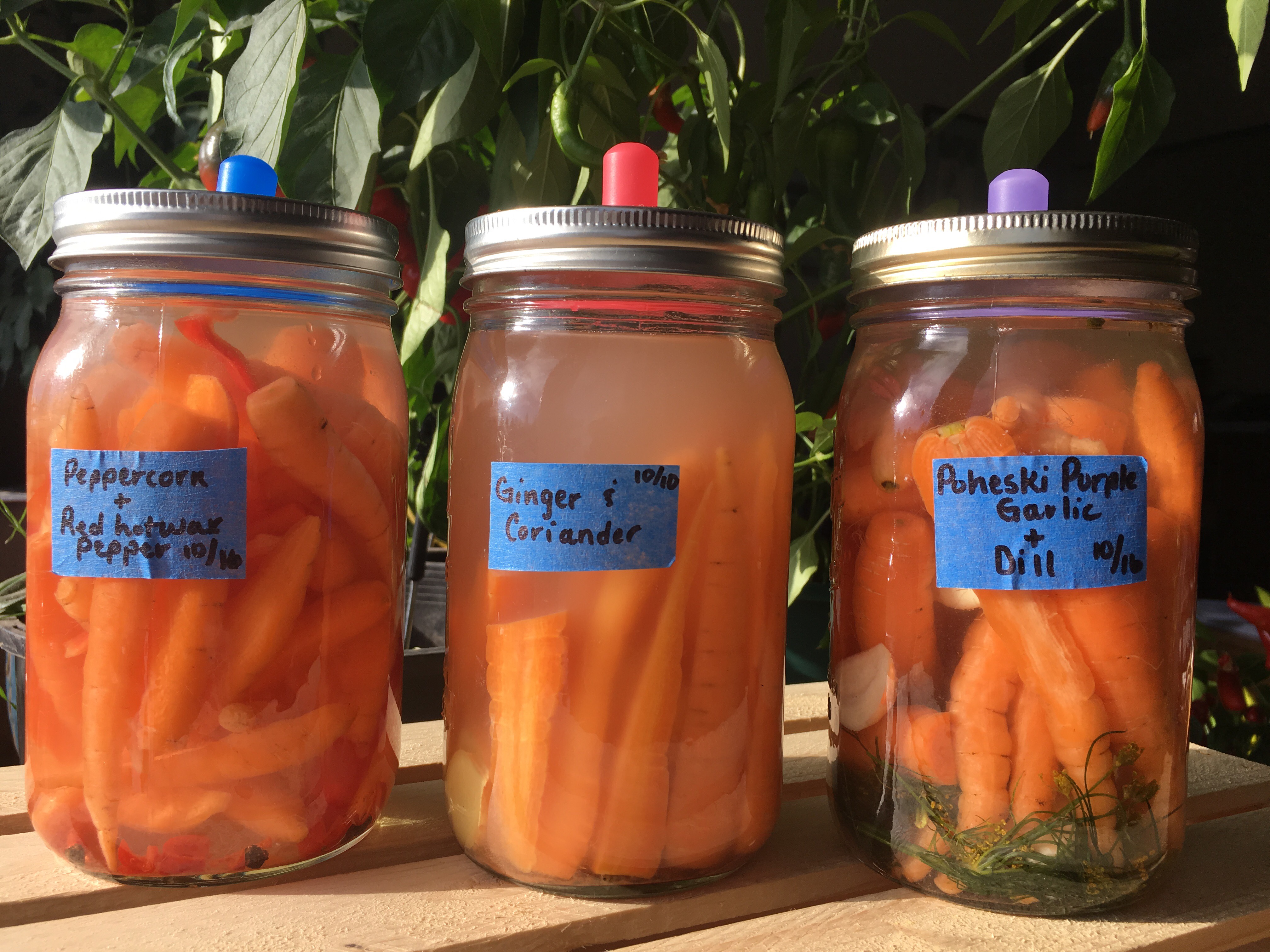
Fermenting carrots/good jing.

There are other things that help with winter. A couple of hours of standing around a fire pit with friends can reaffirm that we’re glad to live where we live. Taking Vitamin D regularly keeps us from wanting to sleep all the time. Music can change the atmosphere in the house, which is especially helpful during long, dreary stretches of being mostly indoors. And after the frenetic summer season I appreciate that winter offers time for deep dives into things more cerebral.

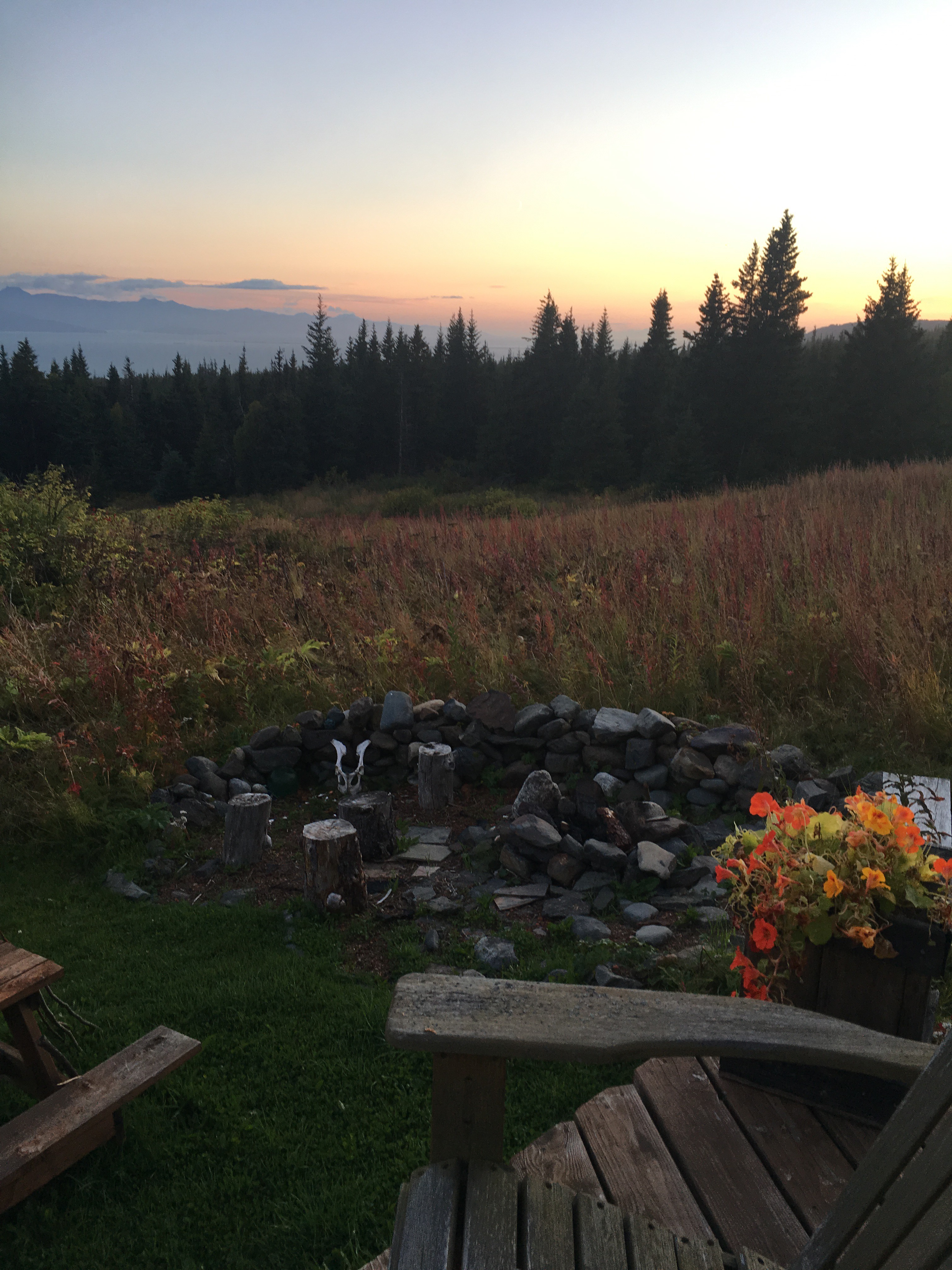
Midday fire in mid-October

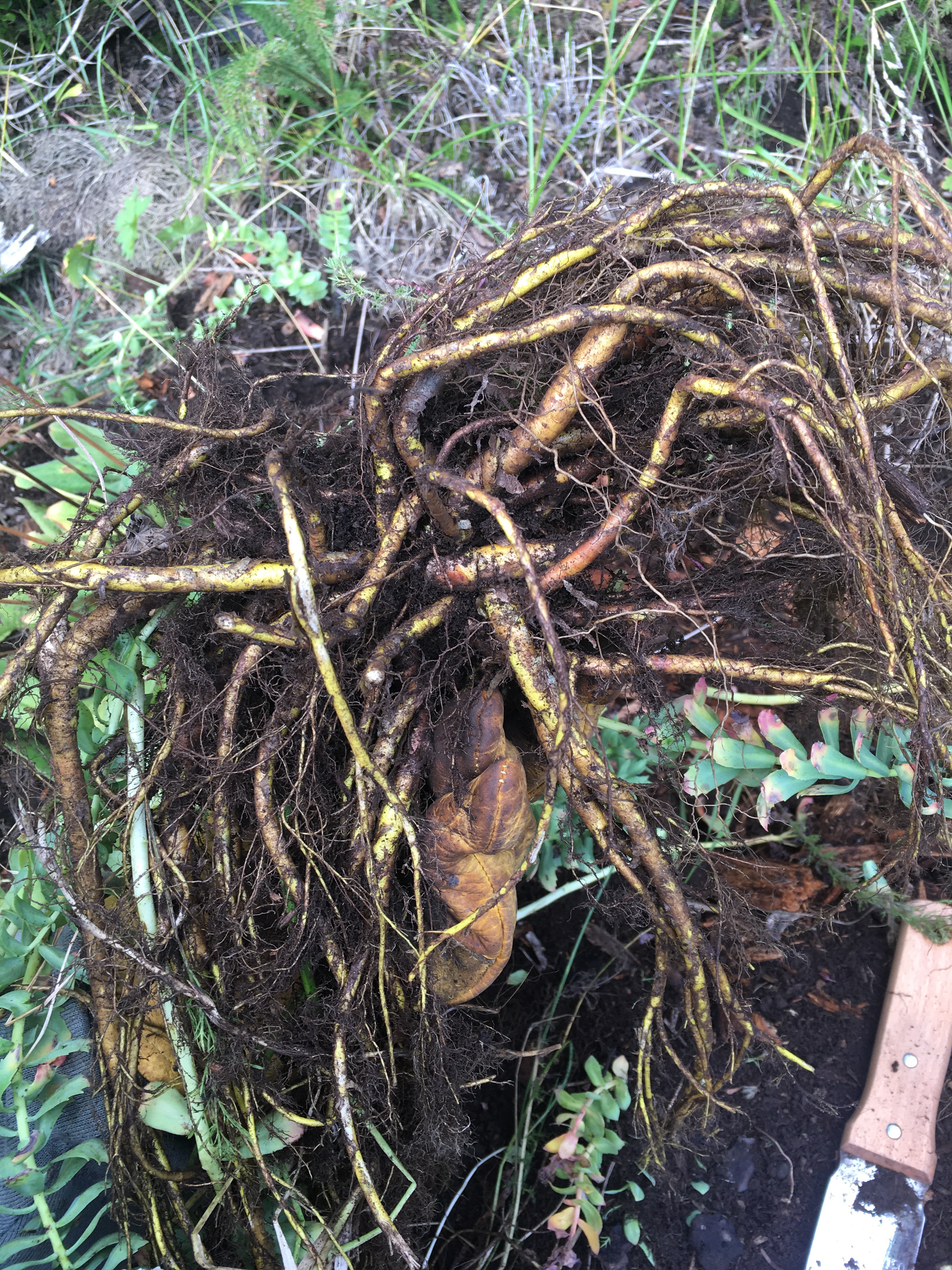
I’ve been learning about herbs for the past couple of winters, and this year we’ve got a new one to try. Rhodiola rosea is an adaptogen which means its main medicinal purpose is to assist the body in adapting to stress. According to Beverly Grey’s informative and comprehensive book The Boreal Herbal: Wild Food and Medicine Plants of the North, it’s also supposed to help with fatigue and depression and can “bring relief to people who live in extreme climates.” In nature it grows in harsh alpine conditions and for the past four years we’ve had some that’s been growing and thriving in our dry and often-neglected hugelkultur bed. It takes a few years before Rhodiola is ready to harvest, but finally this fall it was time. We pulled its long and tentacle-like roots out of the soil, chopped it and dried it, and now for a month we’re going to engage in a little citizen science and drink a cup of it daily to see if we can see any noticeable effects.

Rhodiola rosea in a gloved hand

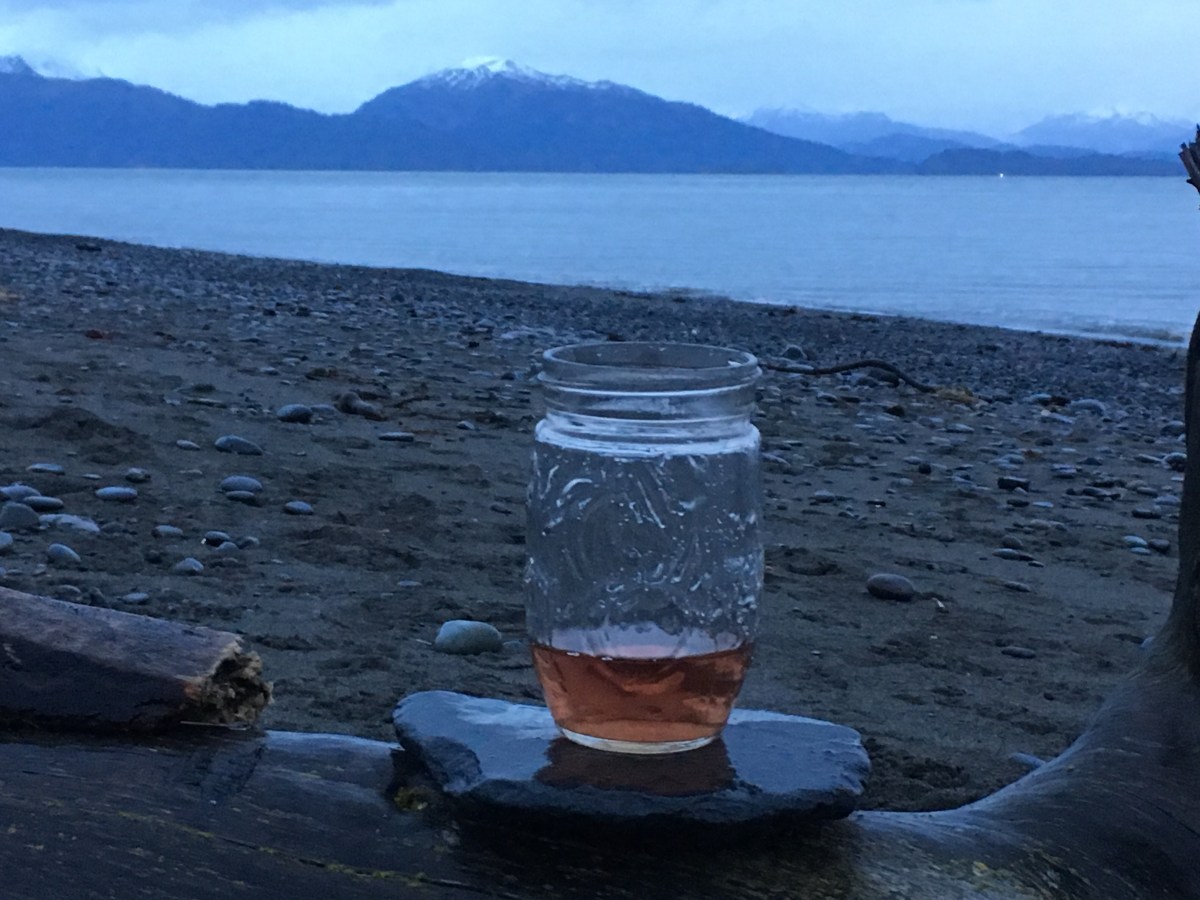
Rhodiola rosea’s roots are yellow and they smell like the wild Sitka roses that grow around here. The decoction that’s made from simmering the roots is rose colored with a mild citrus flavor. It’s a little dry too, like dry wine. Because it’s so tasty it would be easy to drink too much of it, which I think I might have done earlier in the week because for three nights in a row I woke up at 3:30am and had trouble going back to sleep. When I cut the amount of tea I was drinking in half I slept fine.

Learning about herbs from books is a good place to start, but I’m equally as interested in the traditions and stories that go along with them. Trying them out on myself is a lesson in paying attention to subtleties, asking questions, making adjustments, and still not knowing definitively if a specific herb is having a specific effect on me. But it seems like a good way to practice honing my intuition and getting to know specific plants. If I were truly committed to scientific testing I’d give up coffee and just drink the rhodiola tea to try to isolate its effects, but coffee is another thing that helps me through winter.

For now I’ll study the two together, and I’ll try to get enough sleep and exercise. I’ll try to consume plenty of good jing but hopefully not too much. I’ll keep showing up here every week too, because writing this feels like movement, like I’m heading somewhere new. And sharing it feels like I’m throwing out a net, gathering people to travel along with me for a while. I can’t have you all over for a cup of coffee or a pot of herb tea, but I can write you here. And when we’re done with our imaginary drinks we can put on our rubber boots and rain jackets and head out into the storm. I’d love nothing more than to show you around.

Morning tea beside the old birch, a day before the snow.

Five-Acre Almanac: Good Jing

Week 10

Last night as Dean and I sat down to dinner it hit me that I need to clarify something. I write about our garden and the food we grow so much that it’s possible I’ve given the impression that we are food purists. We’re not. Life is busy and time is limited and sometimes we just want a frozen pizza or nachos or something that doesn’t take planning or effort. That’s how it came about that we invented the “dress that somebitch up” category of dinners at our house. They’re best on Fridays and basically the recipe looks like this:

1. Pick a record to listen to and put it on. (Look for one that will lift the energy, because you usually need a boost by the end of the work week.)

2. Find a pre-made pizza crust or quesadilla makings or a bag of tortilla chips. (A slice of white bread would work in a pinch.)

3. Heat the oven. (Usually to about 400 degrees)

4. In the time it takes to heat up the oven, put together something delicious and nutritious to add to item in step 2. (The goal is to add something with good Jing* every time.) (*I’ll try to explain what I mean by Jing further down.)

5. Add the results of step 4 to what you found in step 2.

6. Bake it until it looks ready. (We’ve learned that on a Friday night it’s good to set a timer so you don’t forget about it in the oven.)

7. Pull it out of the oven. (Be sure to turn the oven off!)

8. Let it rest for 2-3 minutes. (This is a good time to clear some space at the table.)

9. Slice it. Scoop it. Put it on a plate.

10. Eat. (It’s important to comment frequently and dramatically on how delicious your food is, and how clever you are to have dressed that somebitch up.)

11. Save the dishes for morning (Because you’re done with the work week.)

12. Pick another record. (Take the energy down just a notch.)

13. Make a pot of tea. (This is an opportunity to consume more Jing!)

This is what dinner looks like almost every Friday night at our house in the darker months. It started as a way to be easy on ourselves but it’s turned into a weekly celebration. We may be tired and in need of recharging by the time Friday evening rolls around, but we’re home, and we have two days ahead of us and during those two days we can be ourselves and pursue the things we love and work on the things we care most about.

Dean’s Kombucha has good Jing!

In certain Chinese traditions like Taoism, Qi Gong, and Tai Chi, there are three energies that sustain life. They’re called Jing, Qi, and Shen, and are known as the “Three Treasures.” My husband has been practicing Qi Gong and Tai Chi for nearly a decade, and while he’s introduced me to these ancient concepts it would take a lifetime of study to truly understand them.

On a very basic level, Jing* is the essence of a thing.

Merriam-Webster defines “essence” as the basic nature of a thing : the quality or qualities that make a thing what it is.

Imagine the potential that’s contained in a blueberry seed. If that seed is given what it needs—the right amount of water, proper soil, an ideal temperature, clean air, and time, then it can transform into what it is meant to become: a blueberry bush that grows beautiful, delicious berries. That transformation is an energetic process.

Once we consume the blueberry, the energy that was contained within it is converted into our own life’s energy. According to Taoist principles, the catalyst that turns the Jing from the berry into life energy, or Qi, is love.

Jing is the building material for Qi, but love is required in order for the transformation to take place. It’s going to take a while for me to wrap my mind around this.

The third of the Three Treasures is Shen, and I’m not sure how to write about it because it has to do with things I can’t quite put to words. It’s an energy that comes from the practice of moving the Qi energy. The movement of Qi creates the pathway for a kind of alchemy that converts the Qi into something beyond life energy. That something is Shen and it’s associated with Spirit, and our souls. It has to do with being connected to the food we eat, the air we breath, the soil, and water. It has something to do with love.

All of this is to try to explain Jing, which is the essence of food, fuel of our life force, and key to discovering the Divine, and to tell you how we incorporated it into our dinner last night after an exhausting work week.

Here’s the recipe:

1. We chose the record album “uh-huh” by John Cougar Mellencamp. (I checked it out from the library!)

2. Dean pulled the cauliflower crust pizzas we’d purchased from Save-U-More earlier in the week in anticipation of Friday night from the freezer.

3. I picked some King of the North red bell peppers that are growing in our living room now that the greenhouse is put away for winter.

4. I pulled a few yellow and red tomatoes out of the box in the pantry where they’re slowly ripening.

5. I peeled and and crushed four cloves of Vietnamese red garlic.

6. I chopped up part of the portobello mushroom I found last weekend near the chicken coop.

7. I sauteed the veggies and mushroom on medium heat for five or so minutes before I added three tablespoons of Concord grape shrub that I made last year from some grocery store grapes. Then I sprinkled on a pinch of salt.

8. After all the flavors melded together I spooned it onto the frozen pizza.

9. Then I baked it at 420 degrees for thirteen minutes.

10. I pulled it out of the oven and let it sit for a few minutes. While it sat I put this week’s mail into a pile that will be sorted later. I scooped the dandelion roots that have been drying all week on our kitchen table into a jar. I moved the crock of fermenting sauerkraut from the center of the table to the side.

11. Then we sliced the pizza and ate it.

12. We agreed that it was one of the best DTSB-up dinners so far. High in flavor. High in Jing. We ate a slice or two more than we really needed.

12. When we were done we made a pot of tea. (nettle, clover, dandelion root and chocolate mint)

13. We put on another record I brought home from the library. This time it was Retrospective: The Best of Buffalo Springfield. We listened to “For What It’s Worth” three times for the lyrics and “Bluebird” twice, once for the guitar and a second time for the banjo.

We sipped our tea and changed the music a few more times. We talked about what we want to accomplish over the weekend. We decided that it’s time to get the candles out, and the copper wire lights to string around the ficus tree. We left the dishes for later.

Five-Acre Almanac: Never A Straight Line

Week 9

What I write and what I want to say don’t always come together easily, and yesterday was one of those days. Yesterday I sat writing on my couch for almost the entire day, and in the end I had fewer words than I started with. I’ve made a commitment to myself to post something every week, but I don’t want to write just for the sake of writing. I want to write something I like.

Yesterday I didn’t like my writing, and it felt like I was wasting time. As the day went on I grew increasingly frustrated and I was hard on myself, and while Dean worked to get a bunch of things crossed off of our to-do list and was infinitely patient with me sitting on the couch for hours writing, I felt guilty. Late in the evening I finally gave up. I’ve learned that trying too hard is counterproductive, and I was definitely at that stage. Today I’m starting over.

One of the many things Dean accomplished when I was writing.

Today is Sunday and the sky is mostly blue with a few wispy clouds. Our daughter called and I told her of my dilemma with writing yesterday and she said I should just go outside and work on something for a while and then write about it. So that’s what I set out to do.

I’ll start from the beginning.

After coffee, and my phone conversation with Adella, and a piece of toast, I decided it was time to go outside, but first I needed to change out of my sweat pants. When I went to put on some clothes I remembered that I needed to switch over a load of laundry, so I did that. I didn’t want to take the time to fold the clothes from the dryer so instead I took them to a chair in the spare bedroom. Out the window of the spare bedroom I saw a spruce grouse in our driveway, so of course I wanted to go get a photo of it.

I slipped on some shoes, grabbed my phone and went outside. I followed the spruce grouse around and managed to get a couple of pictures, but not good ones because my phone camera isn’t the best and the grouse kept moving. When I was about to come back in the house, two of my chickens showed up. These two particular hens have been perching outside at night lately, and they were locked out of the coop. So I went to unlatch the door so they could get in for some food. While I was there it made sense to check for eggs. There were four of them.

I didn’t have a bucket, so I put two eggs in the pockets of my sweatpants. As I was latching the chicken coop door I looked down on the outside of the coop. Two days ago Dean dug up a bunch of dirt from the chicken pen to add to one of our garden beds and I looked down at some of the holes he’d dug and found a giant portobello mushroom growing in a crevice. It was huge, and I had to get it, so I spent the next five or so minutes carefully extracting it. I carried it back to the deck, set it outside so the dirt on it could dry, brought the eggs in the house and remembered that I needed to start another load of laundry.

Soil rehab: Layering up with chicken coop dirt, straw, and grass clippings.

I finally got dressed and headed outside. It made sense to start with the greenhouse since it was warm. My task was to empty all the tomato and cucumber pots into the compost bin and stack the empty pots in our garage. As soon as I set the pots on the ground outside the greenhouse, the chickens flocked to eat the fresh chickweed that was growing in them. And because the chickens were enjoying their buffet I couldn’t empty the pots quite yet so decided to find something else to do for a while.

Sauerkraut is on my list of things to make today, so I went to the front yard garden and harvested some cabbage. We didn’t get a bumper crop of cabbage this year, but we did get two excellent heads, one purple and one green. Then I went to the back garden to pull some carrots that I’ll shred into the kraut. On my way to the carrot bed I noticed our chrysanthemum plant finally looks like it’s done for the season. We bought the plant from Strictly Medicinal earlier in the summer and they told us to give it a nice deep mulch before winter. So I went to find some straw. While I was at it I thought I might as well get enough for the lavender plants.

Dean started the lavender plants from seed last spring, and seven of them survived and are doing well. But depending on our winter, they may or may not make it. In addition to mulching them, I decided to dig one up, put it in a pot, and bring it in the house for the winter. All of that required finding some soil and a pot.

I got the soil and the pot and set them on the deck. Then I went to get the straw, but before I actually got the straw I saw some tall nettle plants that I decided to cut down so that I can extract some fiber from them later when I have more time. I cut the nettle plants, found a safe place to stash them, then got the straw.

I grabbed Dean’s hori hori knife for digging up the lavender plant. I mulched the plants I’d set out to mulch and dug up one of the seven lavender plants. But before I headed back to plant the lavender in its new pot I saw the two beds we harvested potatoes from the other day. They were empty and the soil was exposed and now that we’ve changed to no-till gardening I have this thing about exposed soil and I had to cover it up. So I used the hori hori and cut down a bunch of fireweed stalks and mulched those two beds. Then I remembered to pull some carrots for the sauerkraut.

That brings me up to right now, and after spending a whole day writing yesterday I can’t afford to put much more time into this post. I’ve still got sauerkraut to make and pots sitting out beside the greenhouse that need emptying. And as you might guess, the odds are high that I’ll find something that’s not on my list that I’ll want to get done.

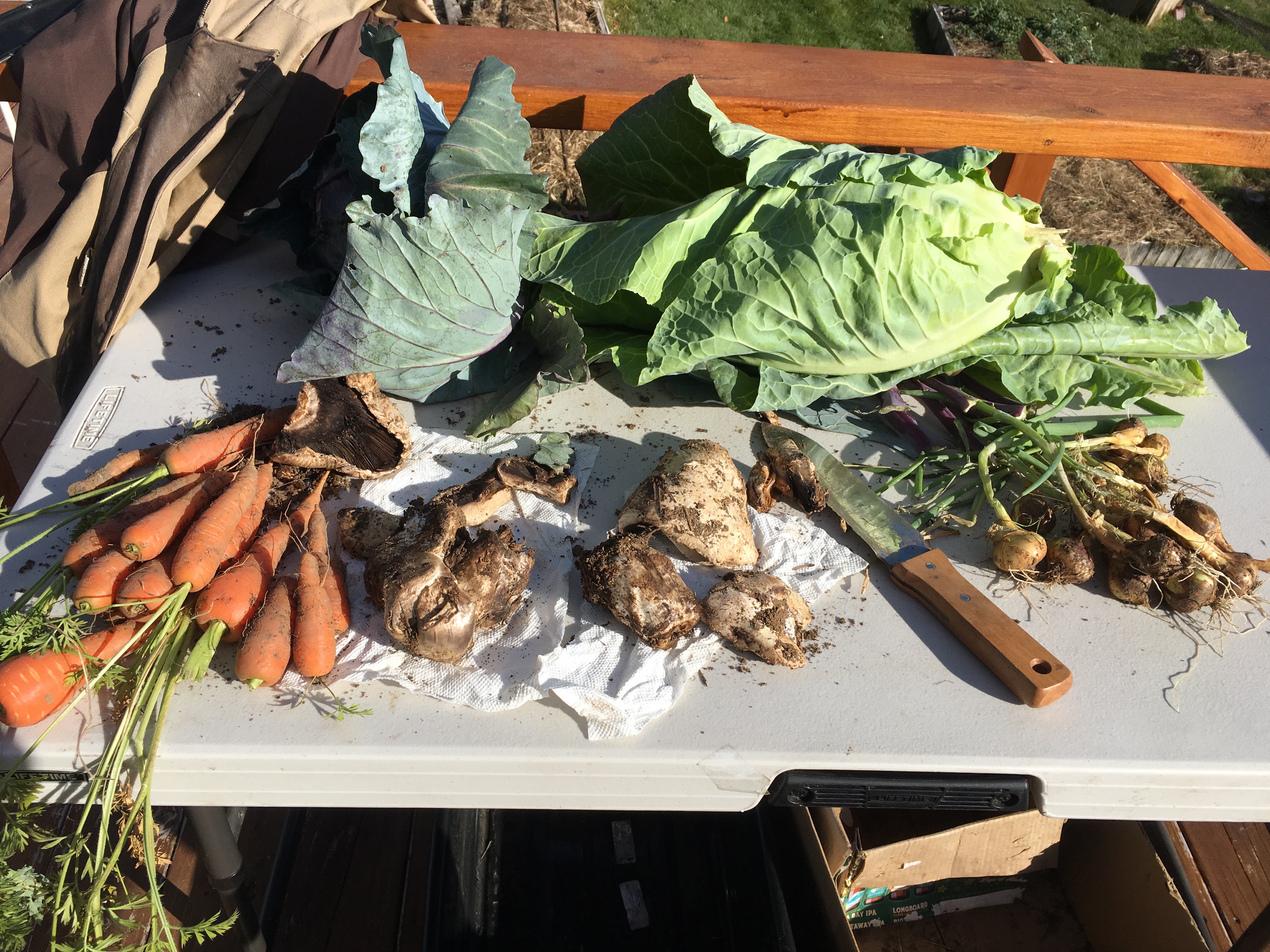
Mushroom, cabbage, carrots, hori hori.

Five-Acre Almanac: Mid-September

Week 7

It’s Wednesday night and finally after sitting on my couch bundled up in a blanket for an hour I decided to build a fire. There’s always some denial when the weather cools down to the point of needing a fire every day, but we crossed that threshold this week. I’m not sure if the denial is out of stubbornness, as there’s a certain amount of work in burning wood for heat and I’m not fully prepared to add that task into my daily life again, or if I’m just trying to hang on to summer as long as I can. Either way the house is cozy now with a fire crackling, and there’s comfort in knowing it won’t be frigid when we wake up in the morning.
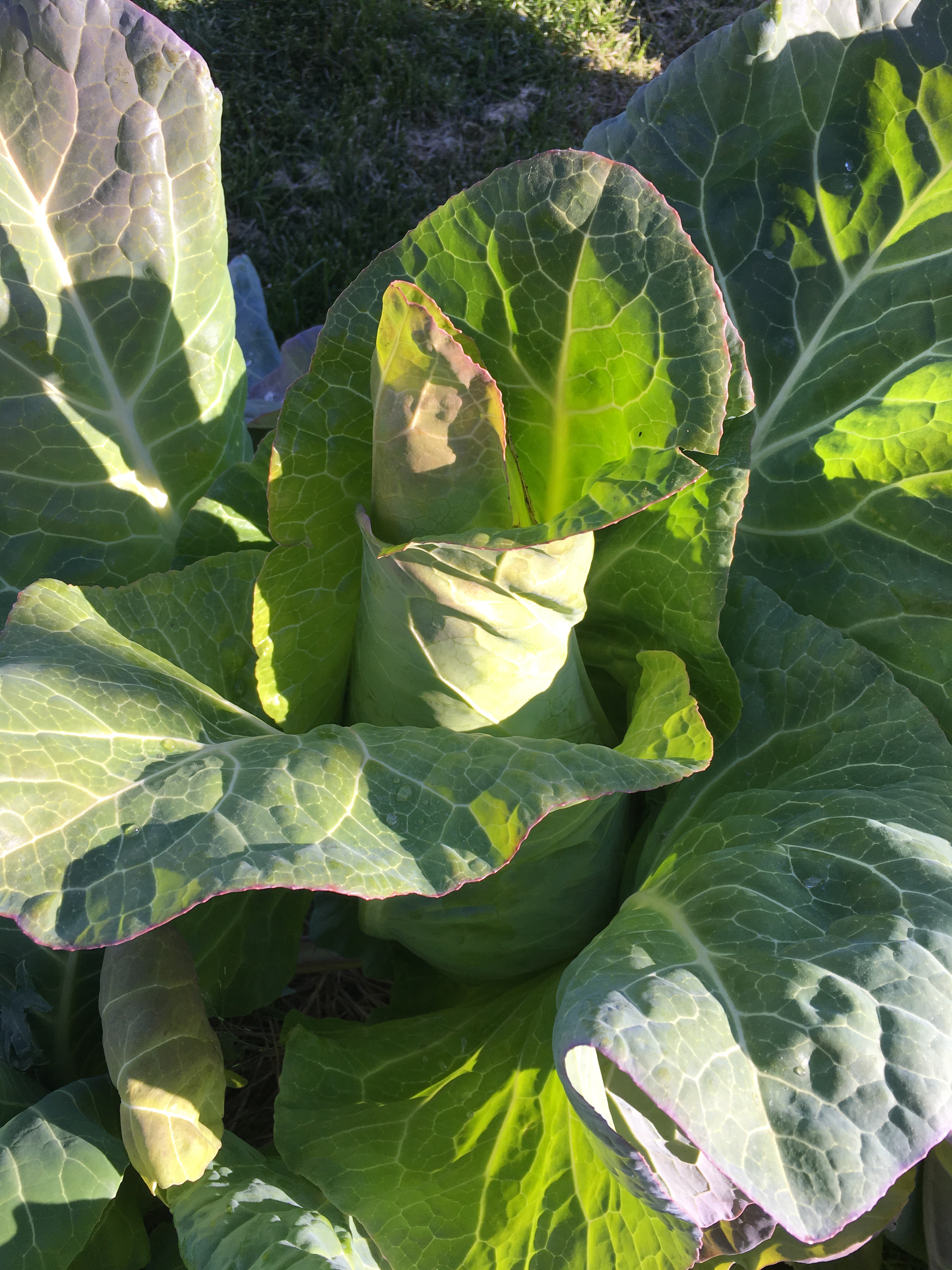
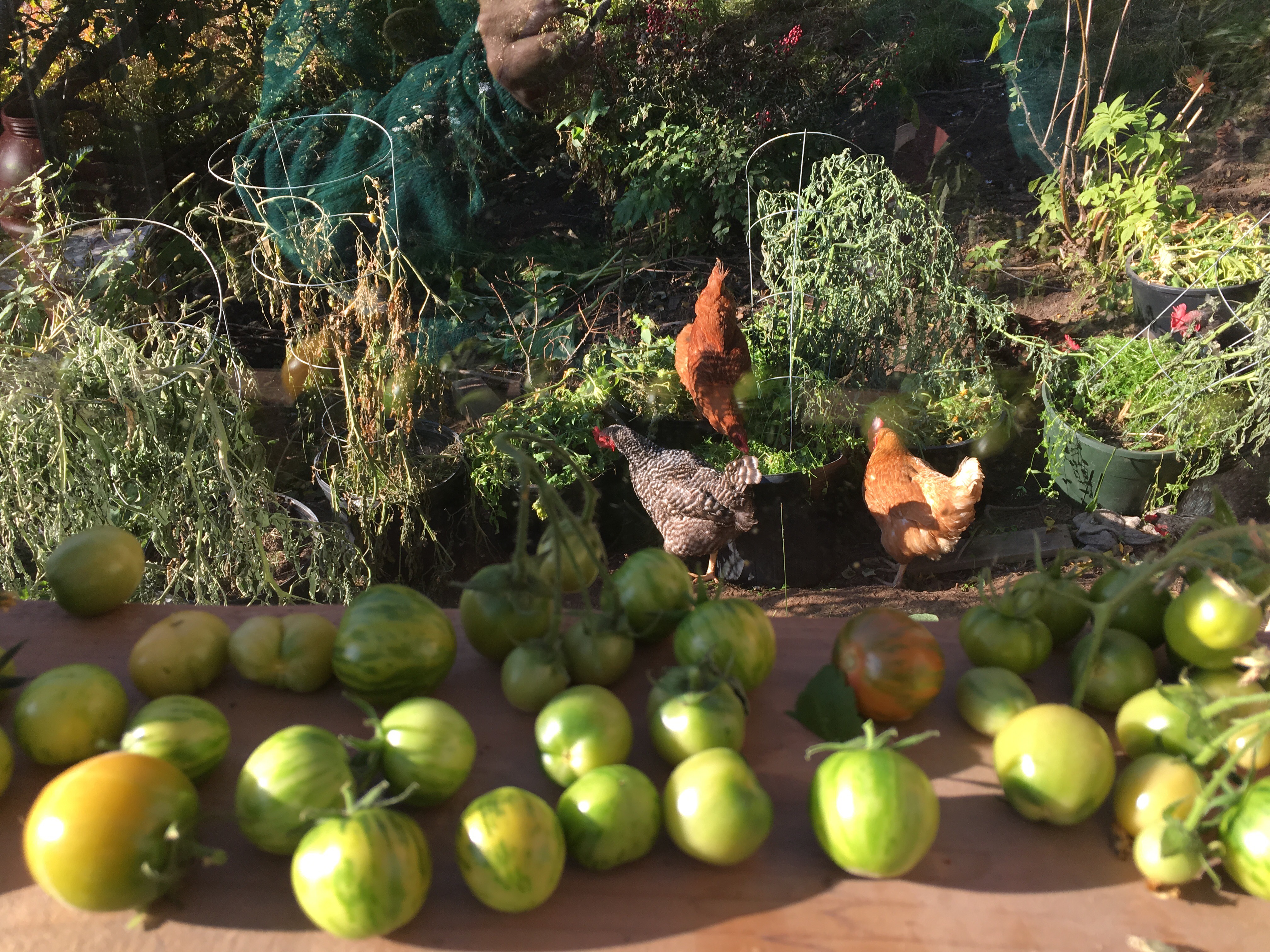
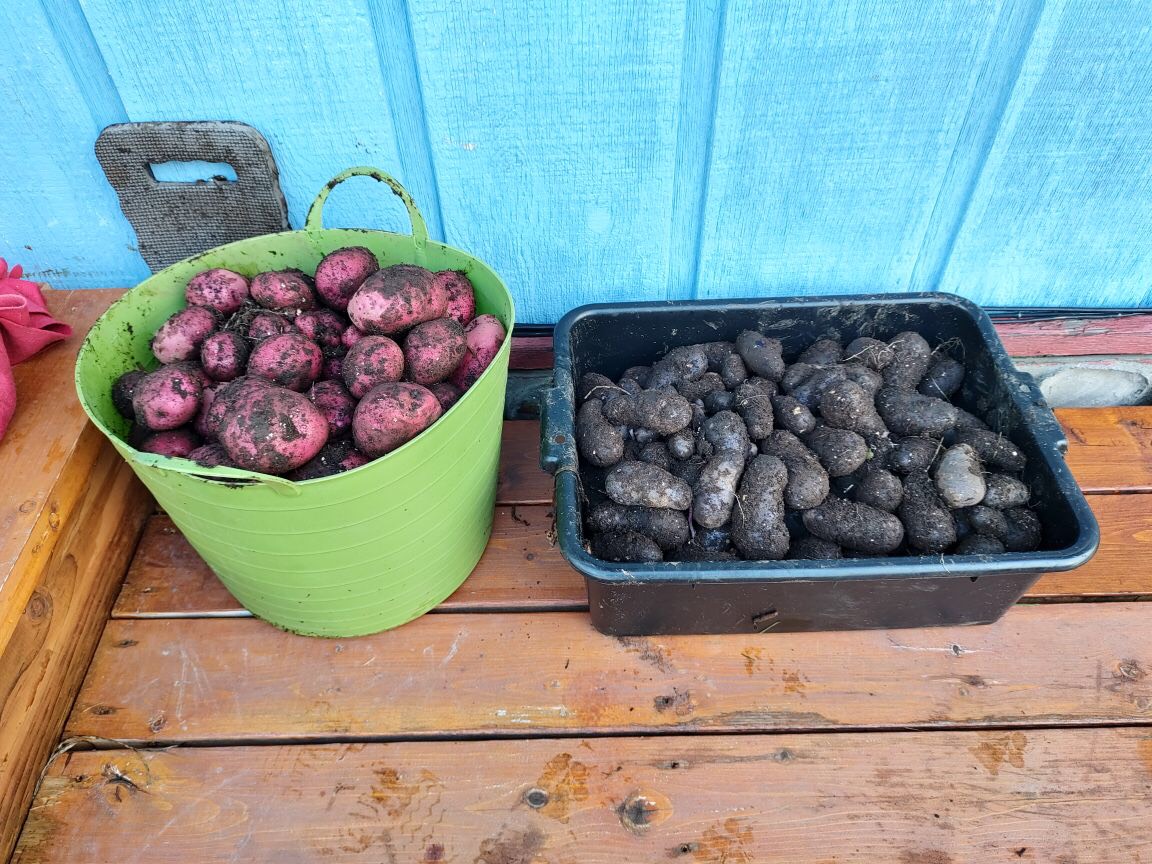
Tonight, for the second time this week, we had trout for dinner. Last weekend Dean and Dillon borrowed a canoe and drove north to spend the day on a lake. Alongside the trout we had purple potatoes and sliced cucumber from the garden. I wasn’t expecting cucumbers, but a few pulled through for us despite the cool summer. We’ll have potatoes and carrots well into winter, but we’re in the last days of our zucchini. Clear skies are predicted over the weekend, which means we’re likely to get frost, which means we need to pick the peas, pull the green tomatoes off their vines, and pick as many of the herbs as we can and get them drying. The kale will be fine with a light frost, and the carrots will just get sweeter.

A few frosts will turn the rose hips bright red and we’ll be able to harvest them for several weeks, even after snow falls. A couple years ago I discovered that chickens love rose hips. I toss them a handful a couple times a week and hope that it gives them a healthy boost that will help them get through another long winter. Like heating the house with wood, keeping chickens through the winter in Alaska is work. It requires a bit of resolve to slog through rain, snow, and oftentimes ice in the dark for months at a time to make sure they have what they need. I find myself apologizing to them for having to be cooped up for so long and questioning my decision to keep them. Our seven year old rooster looks a little tired these days and last week one of his spurs fell off. I’m not sure what that means, but I have a feeling it means he might not have another winter in him.

There have been moments, usually around 4:00am in the middle of summer, when I’ve been frustrated by his wake-up calls. Overall though I’ve been happy to have him as part of the flock. Besides being handsome, he acts as spokesman when food runs low and crows hello when we get home from work. He sounds off when he sees one of our neighborhood eagles circling overhead or peering down from the top of a nearby spruce tree.

The nesting eagles have had their eyes on our chickens all summer. We had one close call, but so far we’ve had no eagle casualties this year. The area around the coop is better protected than it used to be now that the trees and foliage have grown in, and the chickens can easily take cover.

Unfortunately the cover didn’t protect them from the bears that came through when we were in Georgia for our daughter’s wedding. When we returned from our trip we found a door to the pen that had been torn from its hinges, eight piles of bear scat surrounding the coop, and two fewer hens than we had before we left. A neighbor told us that there had been a bear with cubs spotted walking down the road around that same time. We fully expected that they’d be back since they successfully acquired food from our place, but thankfully they haven’t returned. It would be bad for us and our chickens if they made a habit out of coming here, but ultimately it would be bad for the bears.

In addition to building a fire again every day, this week also marked the beginning of headlamp season. I dusted mine off and don it daily now when I take the dogs out in the mornings. It’s still light well into the evening, but the morning darkness comes on fast this time of year and I find it a little disorienting. I’ll wake up and have no sense of whether it’s 3:00am or 6:00am. Soon enough I’ll adjust, but right now when the time between sunrise and sunset is shorter by over five minutes each day, my internal clock is a little out of whack.

Living in Alaska where the movement from one season to the next is anything but subtle, I’ve learned to take notice of how my own waxing and waning throughout the year is tied to the earth’s journey around the sun. It’s true for the plants and for all the wild animals, and so of course it’s true for us too, but it’s easy to believe that our humanness makes us immune to the forces of nature. In the springtime when we’re gaining daylight, my energy levels are surprisingly high. This time of year though I’m tired and my mood tends toward melancholy.

Maybe it’s the angle of the sun and the way it filters through the yellows and reds of autumn that makes me feel this way or maybe it’s that I’m worn out after a fast paced summer. Either way I don’t think it’s a bad thing to feel pensive. I just need to remember to be easy on myself. Do what I can and don’t expect to get it all done. Allow myself time to move slowly. Take comfort in the things we’ve accomplished.

Yesterday afternoon after a week of rain and cloudy skies, the sun broke through. I spread a fresh layer of straw in the chicken coop and washed off the potatoes that Dean harvested earlier in the week. Seeing them spread out on the table drying in the sun filled me with a kind of satisfaction that’s seldom matched, and our dinner of baked potatoes topped with stir-fried veggies from the garden gave me some comfort that I needed.

Now it’s Saturday morning. The sun is up and it’s time to get out in it. The first thing I need to do is save the potatoes I washed last night from the Steller’s Jay that’s undeterred by the blanket I covered them with. It’s flown away with two in the last ten minutes. After the potatoes are safe I’ll harvest carrots and enough greens for another batch of pesto. I’ll work on getting one of the garden beds tucked in for the season. I’ll bring a few pepper plants in the house and start picking green tomatoes. Maybe this evening we’ll build a campfire. Standing around a fire is a good way to soak it in—the colors, the crisp air, the quiet, the bigness and the wild of all that surrounds us. It’s a good way too, to feel the wild that goes along with being alive in this world, and surrender to it for a while.
Five-Acre Almanac: Value-Added Gooseberries

September colors

Week 6

We had spent our childhood running wild in the country. Like peasant children, we passed our days and nights in the fields and the woods, looked after horses, stripped the bark off the trees, fished and so on…. And you know, whoever has once in his life caught perch or has seen the migrating thrushes in autumn, watched how they float in flocks over the village on bright, cool days, he will never be a real townsman, and will have a yearning for freedom to the day of his death.” —From the story “Gooseberries” by Anton Chekhov

Our friend Jane gave us a cutting from her gooseberry bush several years ago and we planted it where our rain gutter drains. It started out as a spindly little thing, but it seems to be happy in its spot and now it produces plump, juicy berries every year. Last year the chickens ate the gooseberries closest to the ground and the younger of our two dogs ate the ones that were at knee height. That left us with just a couple of handfuls, which was enough for flavoring kombucha but not much else. This year I made a point of beating the animals to the berries because I want to make a pie.

My dad had a thing for gooseberry pies. They were one of those things that he was known for, like his golden delight biscuits and his pancakes. In my memory he made the pies himself, but I don’t know if that’s true. I also don’t remember having gooseberry bushes, so the berries that went into his pies must have come out of cans. There was more to to my dad’s love for gooseberry pies than their flavor though, and I knew this even as a girl. There was a memory or a story that went along with it, maybe a longing for a time and place.

This morning I looked online for a recipe for gooseberry pie and the results led me to a short story called “Gooseberries” that was written by Anton Chekhov in 1898. In it the character Ivan Ivanovich relays the story of his brother’s longing to own property in the country.

“He used to draw a map of his property and in every map there were the same things—a) house for the family, b) servants’s quarters, c) kitchen-garden, d) gooseberry bushes.”

For all the years that I knew my dad, he lived in town but wanted to live in the country. Like Ivan Ivanovitch’s brother, he remembered the freedom the countryside offered and wished to return to the kind of life he’d known as a boy outside of Telluride, Colorado.

He kept as true to his dreams as he could while working full time and living in town. He and my step-mom always had a pantry full of food they’d preserved. He had two mules, Jack and Sam, and a horse named Penny at one point too. He grew squash and tomatoes and had plum and apricot trees in his yard. And he always had plans. Plans for buying a few acres where he could do more of what he was already doing. Like Ivan Ivanovitch’s brother Nikolay in Chekhov’s story, he would have liked to own a spread of land where he could plant a few gooseberry bushes of his own.

My dad visited Homer once when we lived in town. He got to see Kachemak Bay and the mountains and glaciers on the other side. I wish he could have seen where we live now though. He would have appreciated our simple house and the way our garden sits on a south facing slope to get optimal sun. He would have liked the way the trees have grown up around our chicken coop to offer natural protection from predators. He would have been as excited as we are about all of our ideas and projects and he would have offered some good advice.

The gooseberries I harvested earlier in the week are all tucked into the freezer and the pie I want to make will have to wait a while. Right now I want to be outside– partly because it’s lovely with all the changing colors and partly because winter is long and the season is headed that direction.

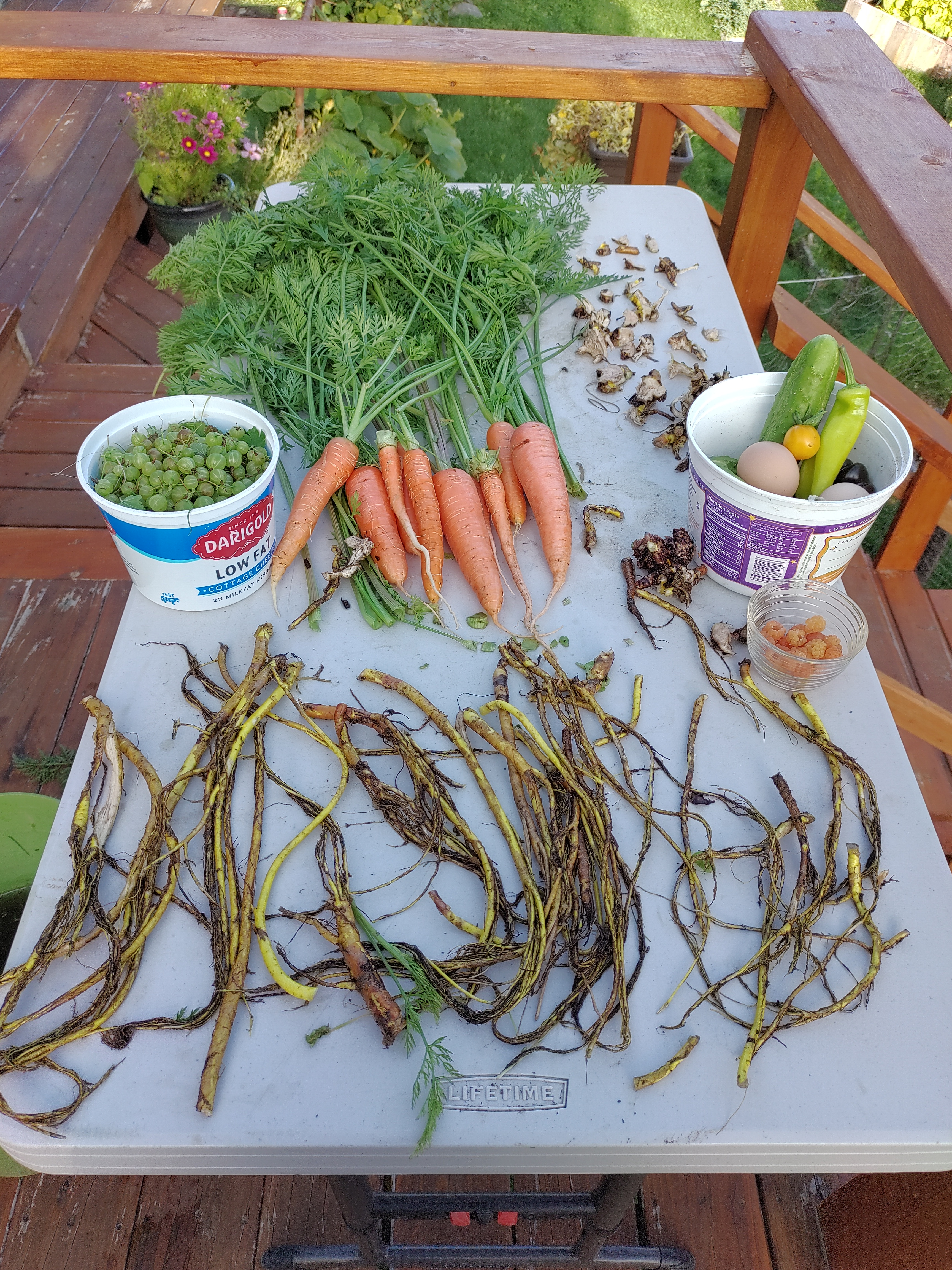
This weekend there’s firewood to stack and fireweed leaves to collect before they all turn red. Our neighbor’s raspberries are ripe and they’ve invited us to come pick. My mom spends summers here but will be leaving soon, so I want to get as much time with her as I can. It’s also time to dig potatoes and dry the burdock and rhodiola root we harvested last weekend.

After working at my paying job all week I look forward to the the days that allow me to wander from chore to chore according to my own schedule, and the freedom to stop and read a short story when there’s a thread I feel like following. Chekhov’s “Gooseberries” felt significant because it put to words a kind of longing my dad carried with him throughout his life that I recognized but could never fully articulate, and now it’s added a layer of value to those berries that are sitting in my freezer waiting to be transformed into a pie.
Spruce wood

Five-Acre Almanac: Restoration

Photo provided by Dillon Sundmark

Week 4

Earlier in the week I heard a sentence that I can’t stop thinking about.

*The individual soul is not separate from the conditions of the world.

I’ve done a pretty good job of hiding away from the news lately, of busying myself with work and gardening and starting a business, and living my life with the news of the world at a distance has been good. There’s a lot that’s outside of my control. Worrying and getting worked up about all the things that are far beyond my reach is not productive. But the truth is that I don’t want to live my life being oblivious to suffering, and I don’t want to hole away in my comfortable existence and excuse myself from actively trying to make the world a better place.

The individual soul is not separate from the conditions of the world.

A few years ago I wasn’t sure I believed in the concept of a soul, and even now that I do I’m not sure if I can define it. To me the word soul is just a word I use to try to describe a kind of connection I feel. For some people the word soul is loaded with religious connotations and requirements of belief. The word connection is not.

The individual soul is not separate from the conditions of the world.

The soil in our oldest garden bed in the back yard has been trying to tell us for the past couple of years that it’s not up for the job of growing great vegetables. Our use of the bed has not kept pace with its ability to renew itself, and we’ve not kept up with giving it what it needs. We’ve added mulch and compost in an effort to make it better, but whatever attempts we’ve made have not been enough.

The broccoli, kale, and cabbage we planted in it this year are stunted. Compared to those same varieties that were planted in more robust soil, they’re a fraction of the size. And to add insult to injury the slugs have moved in. Last weekend I pulled out a number of the plants and transplanted them into beds in the front yard. Already the kale looks better. Its color is more vibrant and it has new growth.

Plants are easy. Basic biology tells us what they need in order to thrive. In the case of our garden bed, we have it within our means to adjust the variables. I can give it the correct mineral and nutrient balance. I can add elements to give it the right texture, structure, and drainage. Then nature can take over and complete the job. With time and the right ingredients worms and mycorrhizae will move back in. The sun and rain will orchestrate microbial action. It will produce good vegetables again.

If soul is a word I use to describe a connection, then it’s safe to say I have the ability to facilitate the restoration of the soul of the soil in that 4×16 foot garden bed. I can only do so much though. There are laws of nature that must be followed, but there is a force, or a will of nature that I am utterly dependent upon for the restoration of the soil to be complete.

The individual soul is not separate from the conditions of the world.

A question of why is hovering around this idea of restoring the garden bed. I could add Miracle-Gro and be done with it. I could buy my vegetables from the grocery store and not concern myself with how they’re grown. But now that I’ve witnessed the actual miracle of living soil, I want to be a part of the equation that brings about its recovery. I want to eat food that is imbued with that fundamental force. Making myself a part of healing the soil enhances my feeling of connection. It puts me in touch with my soul.

The individual soul is not separate from the conditions of the world.

The next question is what does all of this have to do with the conditions of the world that feel beyond our reach? How are we to proceed when it all feels so daunting? We feel the heaviness of all that’s wrong, but are we meant to be crushed under such weight?

The statement I keep repeating is not just a statement. It’s also an equation.

The individual soul (is not separate from) the conditions of the world.

The conditions of the world (are not separate from) the individual soul.

For a while after I left religion behind I was threatened by the idea of a soul. I thought it meant I had to believe in something supernatural. Now I see soul as something that’s intricately connected to the natural order of things. It’s not separate from science. It’s not separate from the way we treat each other. It’s not separate from the goods we consume or the way we spend our time. There is no religion involved and there are no punishments or rewards outside of the rules of nature.

Out of necessity I’ve been working on the restoration of my soul for the past couple of years. I’ve had to in order to save myself from the despair the creeps in when I pay attention to the condition of the world. I’ve not been hiding away from the difficult things humanity is facing as much as I’ve been trying to understand what I’m meant to do in the midst of it all, or more accurately, who I am in the midst of it all. It’s been an intentional shift and it’s changed how I move through space and time. From the outside looking in I may not look different, but I am different. I am better.

Like the soil in my garden, when I provided the elements needed for my soul to thrive it began to take on a life of its own. I’m excited to follow where it leads.

The conditions of the world are not separate from the individual soul.

*Heard on the podcast Living Myth by Michael Meade