For the past several months I’ve spent Sundays writing and it’s been a luxury to devote one entire day a week to it, but now that the season is shifting this blog may have a bit of a personality change in order to accommodate the demands of summer. It might be a bit less lofty and a bit more earthy. It may have fewer words and more pictures. I’m not sure what it will look like exactly, but it will be fun to see where it goes.
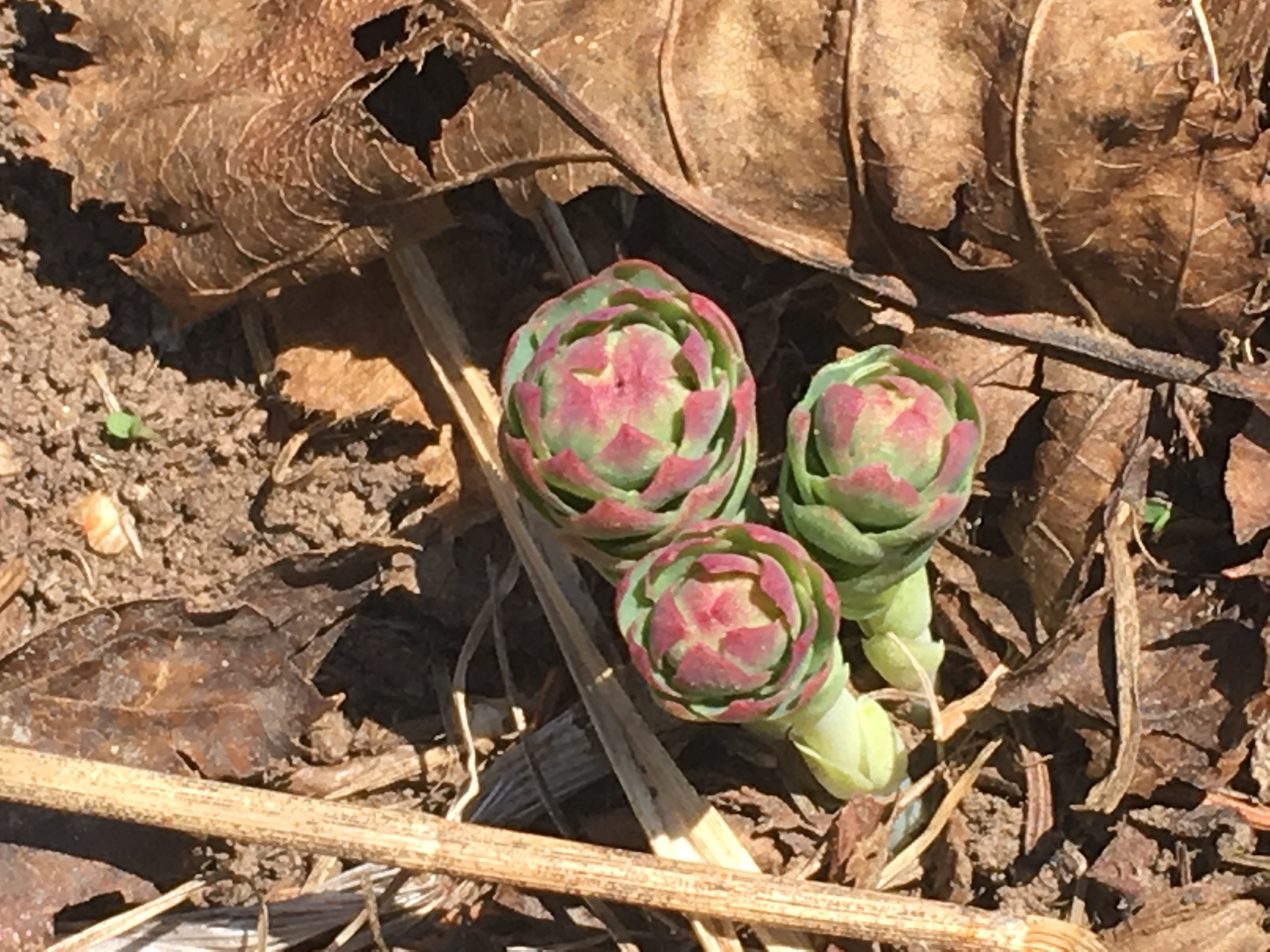
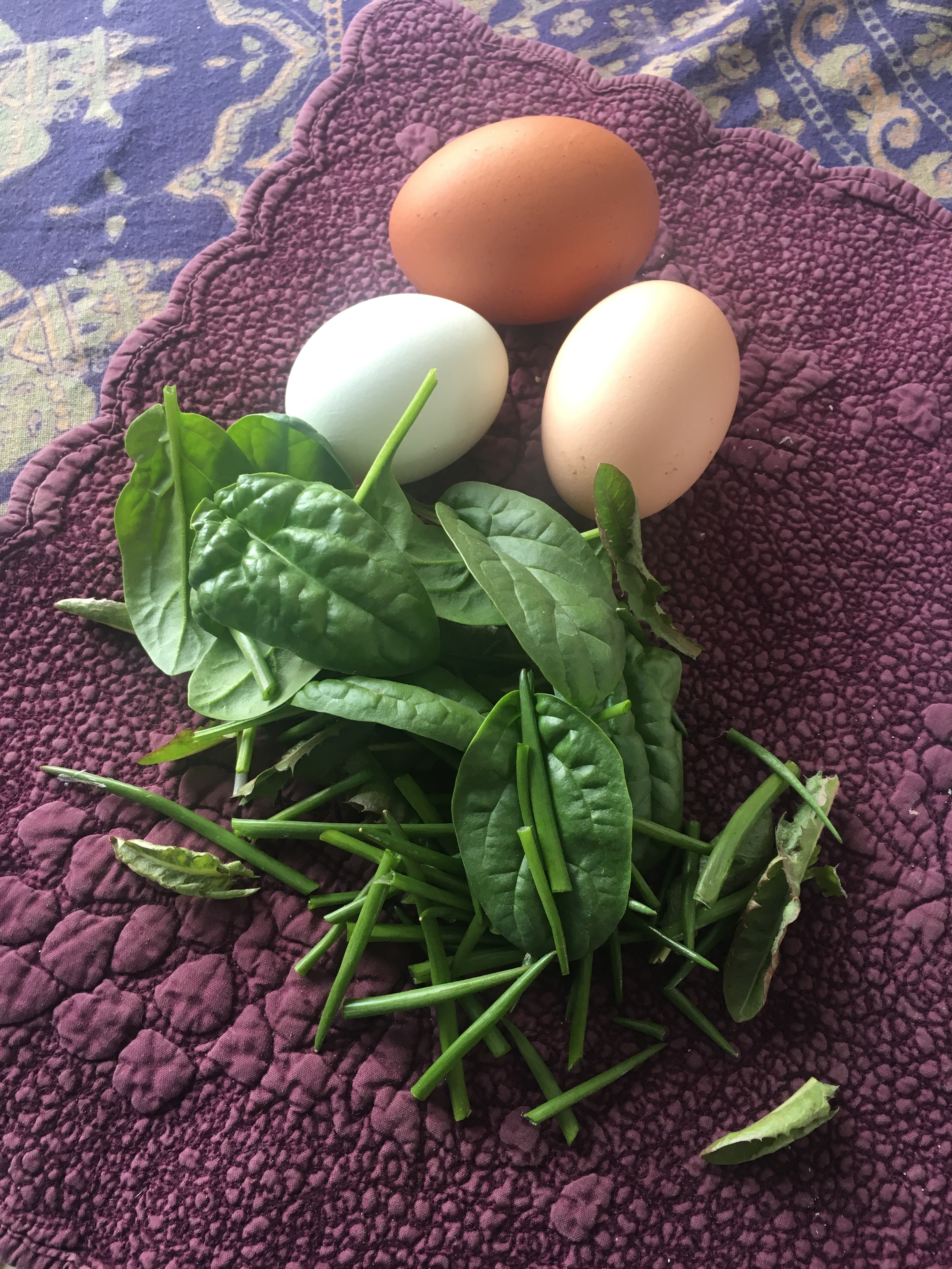
Every winter in Alaska is a long winter, but now, thankfully, it really does feel like this one is behind us. Every day there is less snow and yesterday after coffee Dean and I ventured out to have a look around and to reacquaint ourselves with the bare ground. We pulled mulch off of our front garden beds to check on the state of the soil and saw that it’s thawed and ready for seeding root crops. We checked on the waist-high apple trees that popped up in our compost a few years ago and pruned them back a bit. We looked in on the rhodiola divisions that we planted in the fall and found that in addition to thriving they look like they somehow grew over the course of the winter. We found rhubarb bulging up red through the soil and stinging nettle growing on ground that was covered with snow just two days ago. We plotted out the spots where we’re going to plant the five apple trees that we ordered and then before coming back inside we picked some early spinach and chives to go with our scrambled eggs.
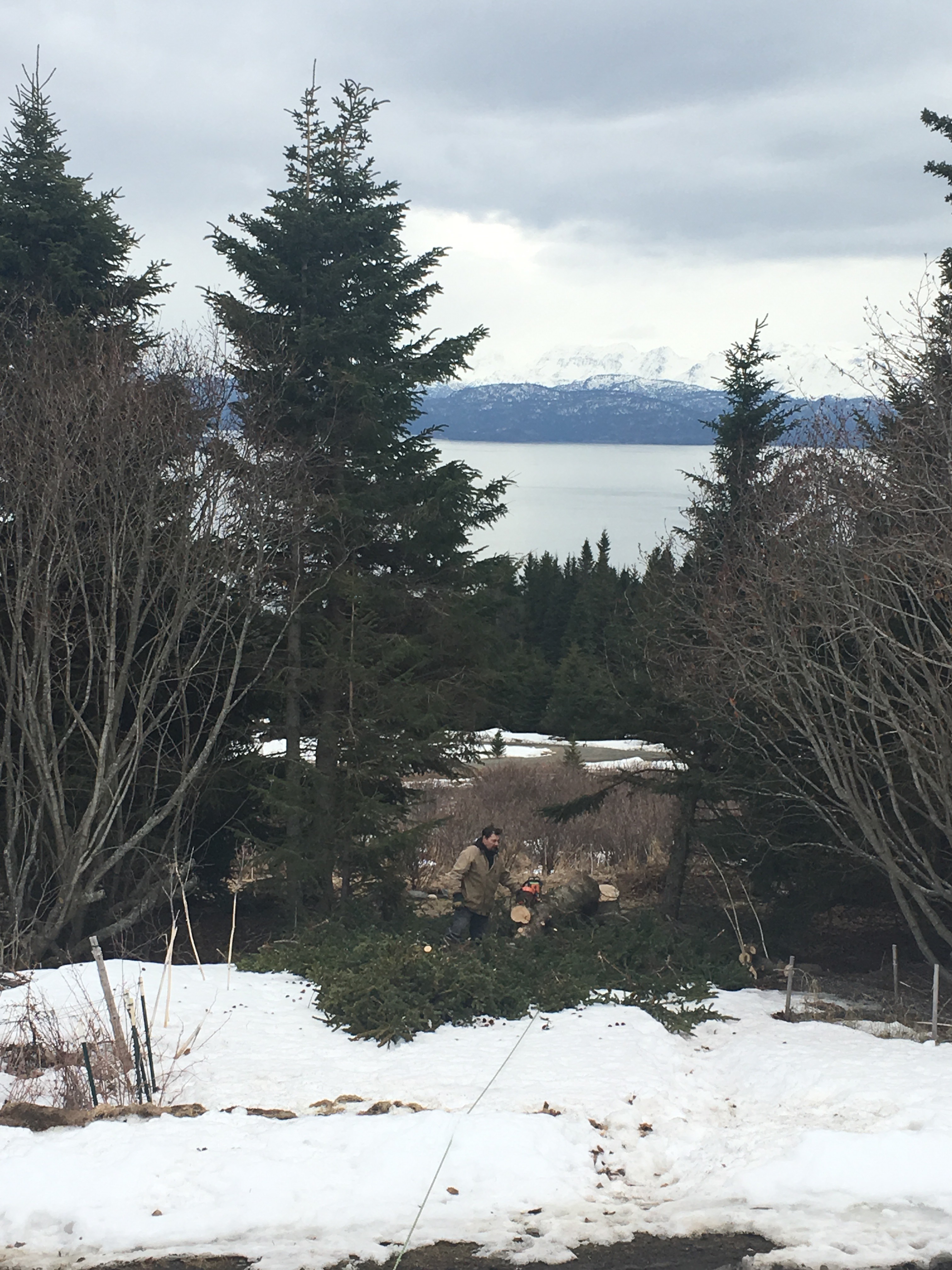
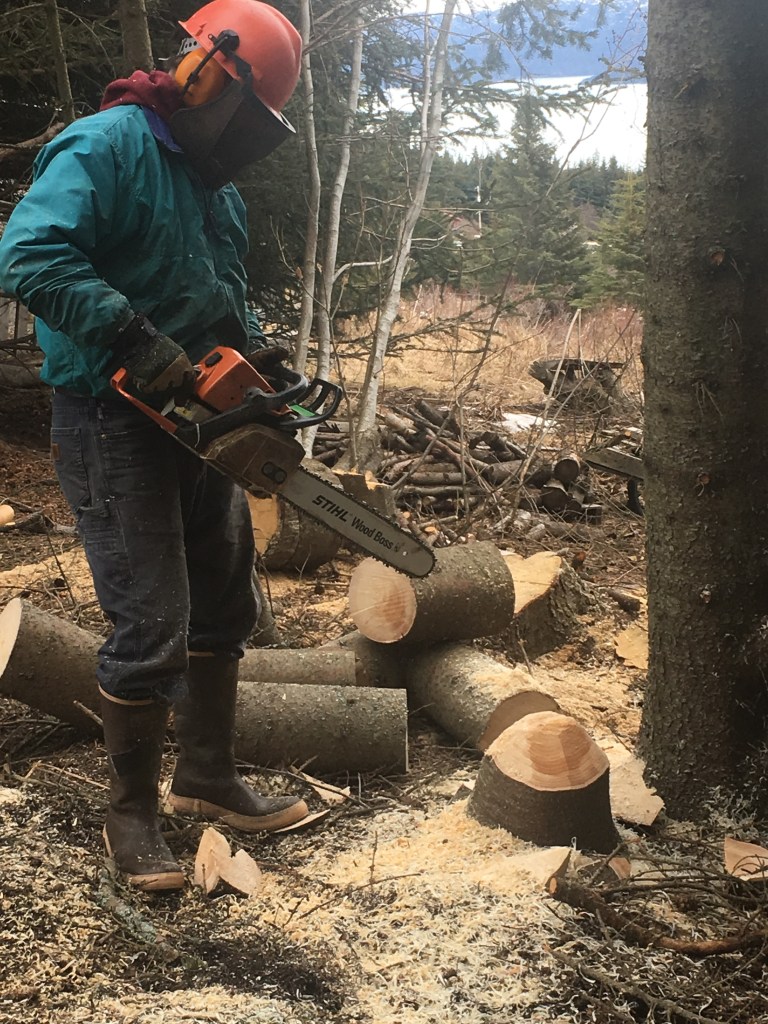
In the afternoon Dean cut down a tree in an ongoing effort to reclaim our view. I had mixed feelings about this as I tend to get attached to trees. I enjoyed watching squirrels jump from this particular tree’s branches onto the neighboring tree and I appreciated that the two trees together formed a kind of passageway from one part of our yard to another. This tree was young when the spruce bark beetle infestation that came through twenty some years ago and its very survival gave it sentimental value. I mourned the loss of the old trees, but it helped to watch the young ones that were spared grow tall and stately over time.
The view from our house disappeared so gradually as the small surviving trees grew that I didn’t notice its absence until people started commenting on it. In my mind the view was still there for us, we just had to take a thirty second walk to get to it. I didn’t feel like I’d lost anything as much as I felt like I’d gained some tall trees. But once it was pointed out to me that our view was gone I started to look for the things I could no longer see. In time I warmed up to the idea of dropping some trees.
I was on the phone with my daughter in Atlanta when the tree came down and in an instant the space inside our house was brighter, which is a benefit I hadn’t anticipated. Now I can once again see the entrance to Peterson Bay from my living room window, and Sadie Peak, and a swath of Kachemak Bay that goes from this side of the bay to the other. The tree was still healthy and beautiful though. It blocked wind and provided a barrier of privacy between our house and the development in the meadow down below. It was a part of this place.
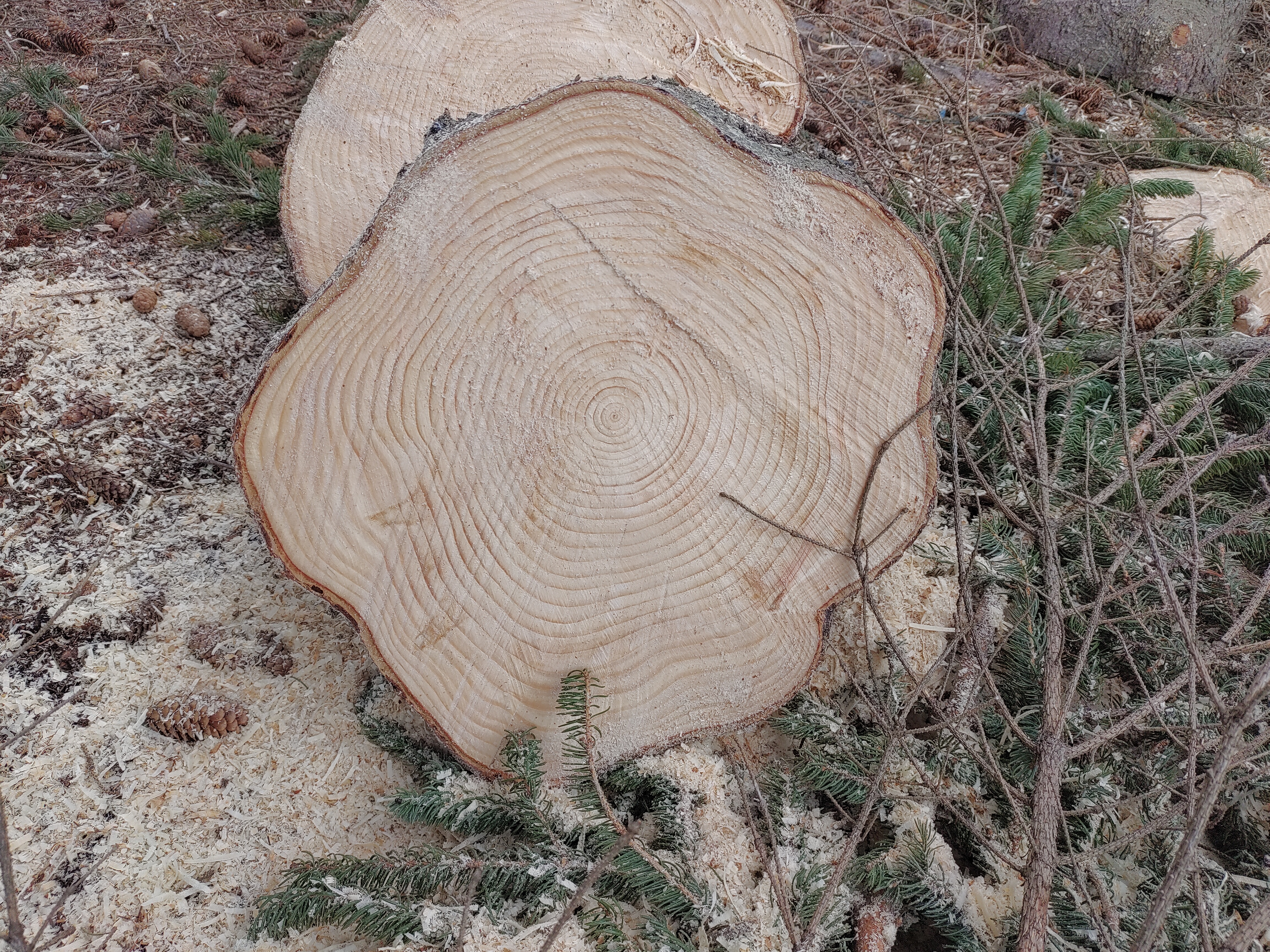
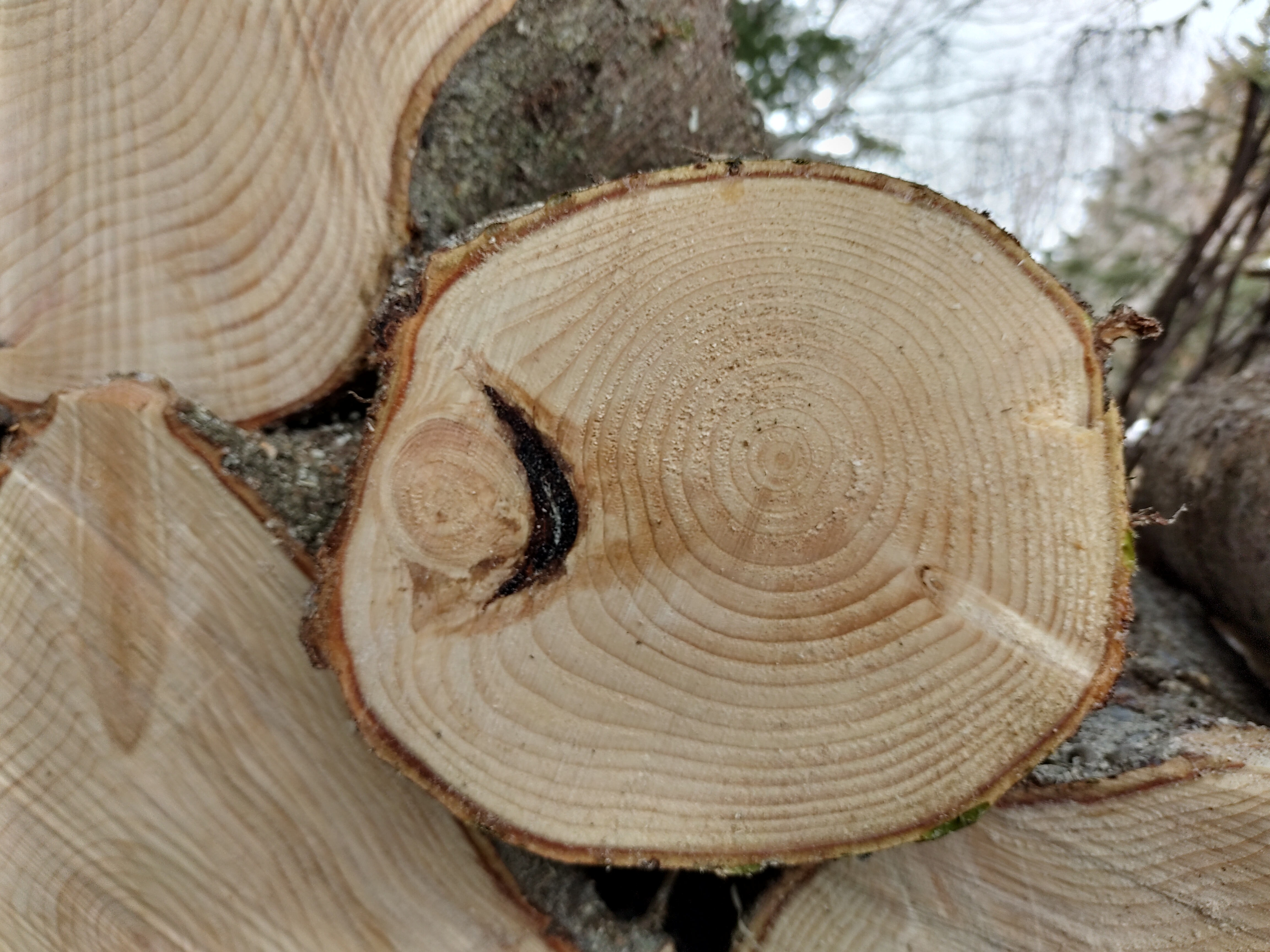
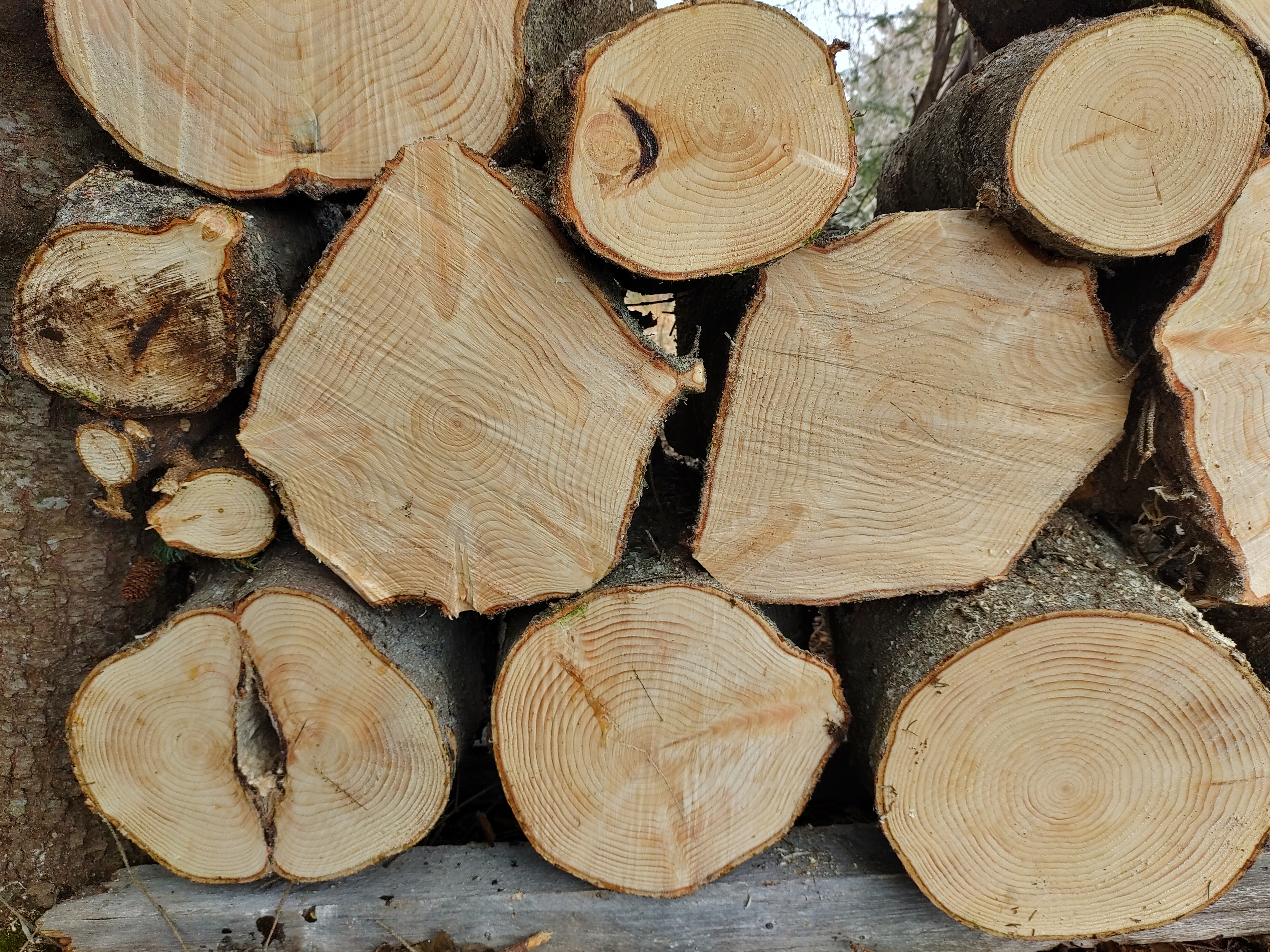
Now its trunk has been sawed into rounds and stacked to dry. Either next winter or the following one we’ll use the wood to heat our house. Cutting the tree down was a loss and a gain. An exchange. Soon enough it will be old news but today I can’t stop looking at the space where the tree used to be. The influx of light still surprises me. The gap leaves me feeling a little bit exposed.
More trees are slated to come down but probably not for a while as gardening season is upon us. After we get back from a short trip out of Alaska next week we’ll be going full throttle around here. We’re eager to get our hands in the dirt. Eager to see green. We’re eager for company and late night fires, for songbirds and cranes. We’re eager for fishing and foraging and for getting our fill of summer so that when winter rolls around again in a few short months we’ll be eager for it too.
I don’t think about it much anymore, but when we bought this property we were recovering from a bad decision. Without going into too much detail I will just say that before we landed here we had a bed and breakfast in town. It all looked good on paper when we bought it and we did our best to run it for a couple of years, but we were young, we were in over our heads, and the stress of trying to maintain it and keep up with the demands of guests and two small children nearly tore us apart. We reached a point where we had to make a choice between getting a return on our financial investment by sticking it out, or count our losses before we lost more than just money.
Our daughter was born at our bed and breakfast home on Thanksgiving. It was a fast and easy birth and after our midwife and doula left, Dean and I found ourselves sitting on the couch with a newborn and a toddler and it was there in the dark hours of that early Thanksgiving morning that we decided we had to make a change. It took a while to extricate ourselves from that house and business, but when we finally did we were nothing but relieved.
When we saw this simple house on five acres of land it seemed like a place where we could begin again, and thankfully we still had enough money left to make a down payment.
There’s a lot of shame involved in losing money and it’s not something we’ve talked much about with other people. But as the story goes, we had a chunk of money from an inheritance and then we lost most of it and then we spent a lot of years of our lives beating ourselves up over those losses.
Once I took a writing workshop from Luis Alberto Urrea and he said that forgiving our former selves is one of life’s most difficult tasks, and I’m not sure if I’ve ever heard truer words. But I can say that it’s worth the effort it takes to do so.
Now our lives seem so sane. Our children are grown. We have steady jobs and enough time to pursue the things we love. The dreams we had when we bought this piece of property have been slow to come, but they are coming. I say all of this because sometimes the way it’s all working out still surprises me. Our grown children still seem to love us despite our imperfect parenting. While money is not growing on any of the trees we’ve got around here, we can pay our bills and afford the inevitable car repairs and winter tires. We’ve got steady jobs and friends and family members who’ve got our backs. We’ve still got each other too, which wasn’t always a given.
One of my favorite novels from the last couple of years is This is Happiness by Niall Williams. Besides being exquisitely written, it’s an homage to a simple life. It takes place in Ireland and it’s told from the perspective of a young man living with his grandparents in a small village during the time when electric lines were making their way to the rural parts of the country. There is a custom in the springtime of the year in which all of the villagers’ household belongings are taken outside and set in the yard for a good airing out in the sun. Then the empty houses are scrubbed clean. The cleaning and airing out is to prepare for the Easter holiday and the custom itself is called Eastering.
First fresh greens of 2022
We’re not quite at that stage of the game here. Our yard still has too much snow and where the snow has melted the ground is mushy. But the scene from that book stays with me. I imagine the house would smell like freshly laundered sheets and sunshine after that kind of a cleaning. And I try to imagine a life so unencumbered by stuff that it would be an easy enough task to haul all of our belongings out into the yard in an afternoon. Mostly I love the idea of letting air and sunshine work their way through all the indoor things that are prone to dust and darkness.
Retreating snow from the back garden
Journaling for me is a form of Eastering. With each entry I haul out something from inside myself that could use a little fresh air and sunlight. When it’s laid out on the page I can see the dings and the dust. More importantly I can see how small it is when it’s juxtaposed against a larger landscape. Once it’s no longer cluttered inside the shadowland of my interior self, there’s space for me to do some cleaning. Or forgiving, as the case may be.
Then, once I’ve looked at whatever it is in a different light and from a few different angles I can decide what to do with it next. I might choose to let it go or I might decide to hold onto it differently. I might file it into a new category or I might connect it to things that at one time seemed unrelated. But after each airing out I’m ready to begin again, which is what we all do. We begin, and then we begin again, and hopefully as we look at the pieces of our lives that brought us to where we are now, we’re able to offer ourselves and each other some grace.
**
Fire safety/improved view/next winter’s heat all wrapped into one job.
In the summer when the plant life is in full force, certain parts of our property aren’t easily accessible. In the winter when the snow is deep and soft we tend to stick to trails. But this time of year we can get around. This morning it was clear and cold and the snow was perfect for walking on. When I went out to feed and water the chickens I didn’t intend on staying out for such a long time, but once I started walking around on top of the snow I didn’t want to stop. I didn’t have a particular mission in mind when I started meandering but soon I occupied myself with surveying the birch trees that grow around here.
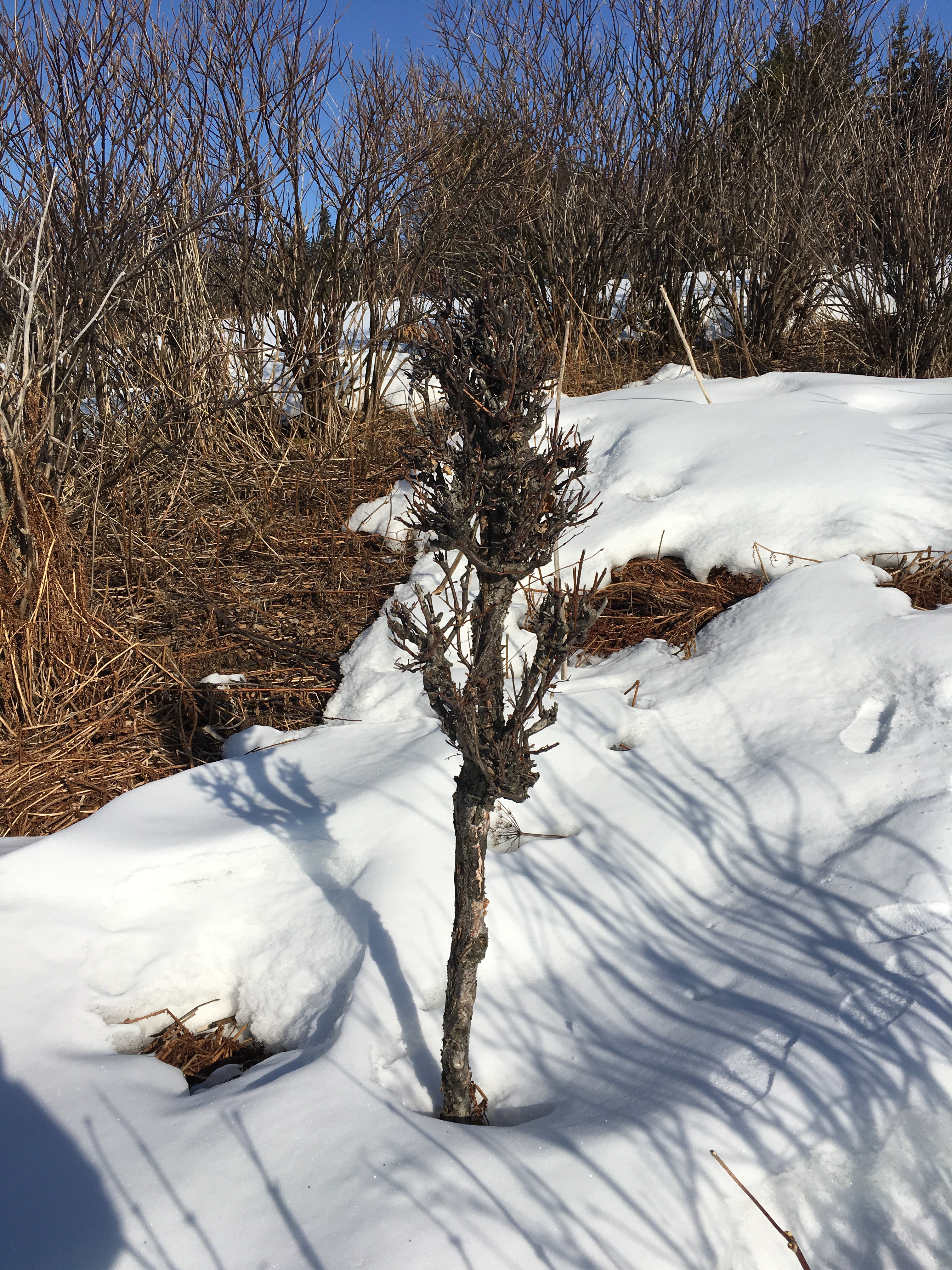
Birch are the species of tree that have the longest life span in this area. We’re fortunate to have a few very old ones on our property, and a handful of younger ones that have grown tall in the protection of spruce where the ever-hungry moose have not been able to eat them. There are also dozens of small ones scattered around. Each summer these small birch trees put on new growth and each year they get munched back by the moose, but somehow they still manage to stay alive. They’re gnarly and tough and some of them are probably much older than their size would indicate. I imagine they have some sturdy roots beneath them.
An old but unprotected birch
In the book To Speak for the Trees, the author and botanist Diana Beresford-Kroeger suggests that every person plant a tree a year for six years in order to bring the planet’s living systems back into balance. She also says that the trees that will offer the most in return for our efforts are those that are the longest living native species to an area. For us on the lower Kenai Peninsula that species is birch.
From my vantage point up on top of the snow I identified a few of those small moose-vulnerable birch trees that might be good ones to fence, then I checked on two that we transplanted a few years ago, one of which was only about three feet tall when I removed it from its less than ideal location just behind our house. It was small and spindly when I carefully extracted it for replanting, but it had a robust main root that ran horizontally in one direction for about seven feet alongside a cement barrier that’s part of our home’s foundation. That long horizontal root made both the digging it up and the transplanting tricky and I wasn’t sure if it would survive, but so far it has. Now it’s about seven feet tall, its main trunk is thick enough to withstand moose munching, and it has lots of new growth.
The other fenced birch tree had a precarious beginning. Three summers ago, after years of neglect, I finally got ambitious and cleaned the organic material out of our back rain gutter. Growing out of the muck was a small birch tree about four inches tall. I potted it in some soil and kept it tucked away from moose for that first winter, then the next spring we planted it in the ground, staked it with some old curtain rods, and protected it with chicken wire. Now it’s about four feet tall and in need of much more substantial fencing.
Gutter Birch
In addition to planting a native tree every year for six years, Diana Beresford-Kroeger says we should do everything we can to make sure they make it to old age. To her that means more than just taking care of their physical needs, it also means forming a relationship with them. Name them, tell their stories, she says, and I’m good with that.
There are plenty of trees around here besides the birch that have stories to go along with them. We’ve got a larch we planted on our son’s eighth birthday and the spruce tree we’ve buried our beloved pets beneath. We’ve got a mini-forest of spruce trees to the east of our garage that were knee high when we moved in but are now keeping us in fence posts and Christmas trees.
In our fenced-in back garden we’ve got four apple trees that popped up from seed in our compost pile five years ago and without any expectation of them producing fruit we transplanted them just to see what would happen. They grew to two feet tall that first summer and stalled out there until last summer when they shot up to about waist high.
We also have the cottonwood trees above our property that bald eagles roost in, and the elderberry forest down below the yurt with its fairyland hideaways. We’ve got a few mountain ash too, and a couple of willow trees that have grown tall. Alders are everywhere, fixing nitrogen and creating amazing soil.
I’m here with all of these trees. With their windbreaks and their shelter. With the habitat they create and texture they add to this landscape. I’m here with the grandmother birch and the rain gutter birch. I’m here with the ones that have grown straight and tall and the ones that have grown gnarled and twisted. I’m here with the ones that need to be trimmed back and the ones that need to be fenced. I’m here with all of these trees and they’re here with me.
Their presence is so quiet and constant and undemanding that it’s easy to take the simple way they give us what we need for granted. It’s easy to lose sight of the significance of our connection. But today I remembered to be in awe of trees for a little while.
It’s Sunday again, the day I’ve designated each week to write a post for this yearlong project. Facing down a blank page with the intention of sharing the words that materialize over the course of a few hours requires courage because while I’m writing about some aspect of life here on our five acres, I also want something more to come from my writing. I never know if what I’m hoping for is going to show up though, and the courage comes in trusting that something will reveal itself at some point along the way.
Writing about the work we do, the gardens we grow, the wild foods we harvest, the antics of our homegrown food experiments and our animals is the easy part. Writing from a deeper place, a place where the physical world connects to that place within me that is searching for meaning, is much more difficult.
This is all to say that this week I’m struggling to know what to write. In one hand I’m holding all the hope that this time of year brings, and in the other I’m holding sorrow. I believe that’s true for most of us. To pay attention to what’s happening in the world is to know grief. To see spring chives poking up out of the ground is to feel hope. Watching our beloved dogs grow old exposes our hearts to a tenderness that’s both beautiful and sorrowful. To have the time and ability to work on the things we find meaningful gives us deep satisfaction. Every day is a mix of small joys and deep sorrow, deep joy and small sorrows and writing this post each week becomes a balancing act where I try to lean heavy on the hope and joy but stay grounded in reality.
Earlier this week Dean and I signed up for a year-long gardening course offered by local gardener and teacher Saskia Esslinger. The way it works is that Saskia hosts a Zoom meeting once a week to talk about some aspect of gardening and a person can join the course at any point in the year. We signed up because even though we’ve been gardening for a long time now, there’s always more to learn and as we look at expanding, any efficiency we can implement now will help make this a sustainable endeavor rather than one that wears us out. Also, we get to talk about gardening and related subjects every Saturday morning for a year.
Yesterday was our first session and the topic of the day was greenhouses. We have a greenhouse, but already after just one class we have some simple improvements in mind that will likely make it better. Even if we don’t have the time to make the changes this year, we have an ideal we can work toward, which is exactly the kind of thing we were hoping for when we decided to sign up for this course.
Dean built our greenhouse off the back of our chicken coop five summers ago. He used old windows, a door one of our friends salvaged from the dump and scrap lumber from an old structure that was here when we moved in but needed to be torn down. It’s a funky little greenhouse, but I love it and now we have a place to grow a few crops that don’t typically grow outside in Alaska and a place to hang out and enjoy the view this time of year before it’s full of plants.
Dean putting all the pieces together
On Thursday I went out to check on the chickens in the early afternoon and heard something scurry up the side of the coop. I’ve suspected that an ermine has been stealing our eggs and finally my suspicions were confirmed. I rearranged a few of the laying boxes and plugged up a hole that might have been the entry point. Since then I’ve been getting four or five eggs a day as opposed to zero or one, but I’m not convinced that the ermine won’t find its way back in. They seem like smart and scrappy little creatures that would be quick to find a work-around to any obstacle that’s put in their way.
On Friday an unexpected package arrived in the mail from a friend. She sent me a chicken poster with a handwritten note explaining that she saw it hanging in a bookstore window and immediately thought of me. She asked the proprietor if they had another poster for sale but they didn’t. They did however have one they were willing to give her. She also mentioned that the poster is meant to be hung in the chicken coop to inspire the hens. I’ll get down there soon for some deep spring cleaning and muckraking and ermine-proofing and I’ll find a place to hang it then, but in the meantime I’ll keep it inside where I can see it and be reminded of my friend, and the fact that she thought of me and acted on her impulse to spread some joy.
And I guess that’s what I’m landing on today, the importance of those small joys that make up a life. Interesting classes, the kindness of friends, fun surprises, spring greens after a long winter, sitting in a warm greenhouse on a cool but sunny afternoon, solving problems, time spent pursuing passions, great conversations, beach walks, good music. These things don’t take away the sorrows of the world, but they ease them a little. They don’t give us a solution to every problem, but they point us in the right direction. If enough of us follow where those small joys lead us, maybe it will make a difference.
I’m not sure when it happened, but somewhere along the line Dean and I became the kind of people who have a well-stocked pantry. It makes sense here in earthquake country, in a state that gets most of its food from thousands of miles away, but we haven’t always been this way and so we’re still figuring out how to do it. Yesterday I started the project of organizing it. We try to do this every now and again to remember what all we have and to bring the stuff that’s been sitting around for a while to the front of the line. We’re realizing that there’s a fine line between having a well stocked pantry and hoarding, and we don’t want to cross that line.
The process of working on the pantry was painful, and as those kinds of jobs often go it got worse before it got better. A couple hours in and the kitchen table and counters were covered in all the things that had been on the pantry shelves, and with each item a decision had to be made. Are we really going to use that five year old rhubarb butter or is it time to give it to the chickens? That weird sauce that has the questionable ingredients in it, yes we bought it for some strange reason a few years ago but now that we know what’s in it will we ever use it? Probably not.
Between the pantry job, the disheveled nature of our house while it’s undergoing some minor remodeling and garden starts filling every horizontal surface that gets any light, the clutter nearly sent me into a state of overwhelmed-ness that bordered on despair. The fact that I’d been reading the news earlier didn’t help. The pantry job also had me going in and out of our garage which, even after a few sessions of sorting and getting rid of stuff, is still packed.
A few years back we got rid of a raft that we bought in Montana shortly after we got married. It was worn out and no longer useful but we held on to the rowing frame. The frame had been knocking about in the loft of our garage for years and we kept it even though the likelihood of us ever using it again was next to nothing. Finally a couple of weeks ago we loaded it into the back of our truck, but not before I imagined how it might be put to use for a cold frame for our garden or for a makeshift bench by our fire pit, and that revealed another problem I have which is that I feel guilty for adding more stuff to a world that’s already overwhelmed with too much stuff and in an effort to assuage my guilt over being a consumer I try to envision the potential reuses for every single thing, from used yogurt containers to old rowing frames.
Another problem with getting rid of things has to do with the stories that are attached to them, or more accurately, our perception that stories are attached to the objects we hold on to. Storing the raft and frame in our garage added nothing to the memories we have of floating the Smith River or fly-fishing our way down Rock Creek. Letting them go was not letting go of the people we used to be, as those younger versions of ourselves had already moved on. The raft and frame weren’t keeping anything alive, they were just taking up space.
We’re having a bigger dilemma trying to decide what to do with a huge collection of leather bound Franklin Mint books that once belonged to Dean’s dad who died at age 48 just a month before Dean and I met each other. Ken was a pilot for Braniff Airlines, and then after Braniff folded he and a partner started Sun Country Airlines. He valued the idea of reading classic literature but as a driven businessman he didn’t allow himself much time for that sort of thing. He told Dean that his plan was to make his way through those books once he retired.
Ken’s untimely death meant that most of those books he looked forward to reading one day were never opened. When he died they went into boxes, and then into storage, and then onto a barge that brought them to Alaska where we’ve continued the tradition of not reading them. We displayed them on our bookshelves for a while, but they weren’t the books we wanted to read so they just collected dust. Now they’re back in boxes in our garage, taking up space.
It’s good to remember that we have some choice over what’s meaningful in our lives, and that we’re allowed to change our minds and evolve and let things go when the time is right to let things go.
Yesterday I let that old rhubarb butter go, along with a half-full mystery box of croutons and bag of sorghum flour that I was never going to use. I said goodbye to the three year old box of yellow cake mix and eight jars of dried herbs that were well past their prime. Then after I got the pantry put back together and cleaned up after the project, I went outside and wandered around for a while with Dean and the dogs. We loaded the wheelbarrow with firewood and shoveled snow off the yurt deck. We checked in on the chickens and stood inside our greenhouse for a while to enjoy the extra bit of heat. I stayed out long enough to lose my sense of being overwhelmed, then I came back inside and turned on Radio Paradise and made dinner.
Sometimes I want everything to be orderly and I want it now, but the nature of this life that we’ve chosen is that it’s messy. We make repairs as we can afford them. We sort through the stuff that’s accumulated as we’re able to. We cook and make a mess of the kitchen, then we clean it up and do it all again. We reuse jars and plastic bags. We have dogs that shed. We ferment things. We grow a garden that takes over our house for about a month every spring. We put chores on hold in order to write. We make time to go for walks and practice tai chi and listen to music.
There is no future date when everything will be perfectly lined up and all the tasks will have been completed. There is just this day and the next. We’ll make a little progress in some areas and fall further behind in others. It’s easy to get overwhelmed by the fullness of it all, but when I stop to take a breath I remember that we’re having a pretty good time.
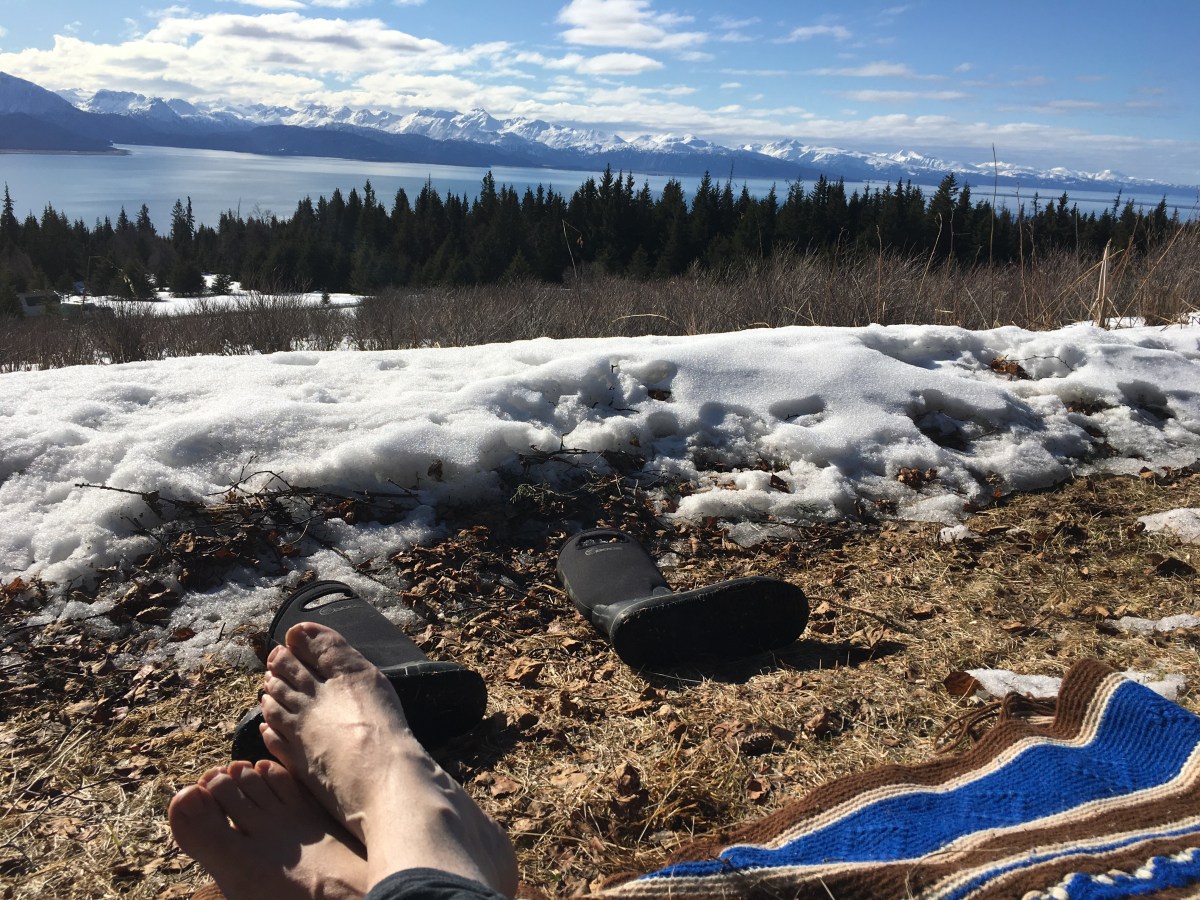
Spring Equinox was this past Sunday and for a while in the late morning after it warmed up to nearly 40 degrees, I camped out on a blue and brown thrift store afghan on a south-facing, wind-protected piece of earth in our yard. I brought my journal and my favorite mechanical pencil with me and thought I’d brainstorm ideas for this blog post, but out there in the bright sun and cool air my mind wasn’t big on ideas. It was just taking it all in. The heat of the sun against my black jacket, cool air on my face, the shimmer of light on the bay, every contour, shadow, ridge and knoll on the snow covered Kenai Mountains, the chirping squirrel in the tree behind me, neighbors hammering and sawing in their yards, a raven chortling in the distance, chickens murmuring in their pen, faint music coming from the deck where Dean was planting more seeds to fill our garden beds that are still buried in snow.
It was the kind of day like the days that make their way into my January dreams. Only this one was real.
I thought I’d sit for fifteen minutes and fill a page with ideas but instead I sat for a couple of hours and tried to list the things I noticed. Newly hatched insects floating up from the ground, last autumn’s musty smelling leaves, the cool, damp earth against the soles of my feet, light reflecting off the crusty snow covered mountains, magpies hopping from tree to tree, eagles circling overhead, melting snow all around me, the voices of neighbors, sun on my skin, wake lines left by small boats on a glassy bay.
When I let go of having to write something meaningful and allowed myself to become an observer, I freed myself from my own busy mind.
The natural world I observed was not vying for my attention. It was not trying to sell me anything. It was not twisting facts or trying to keep secrets. It was indifferent to my place in society, my age, my education, my past. I did not feel unsettled by anything I witnessed. There was no veil of judgment between me and what was around me. No expectation.
And so here I am two days later, still unsure about where to go with this post. All I’ve got this time around is that I sat on a small dry patch of grass beneath a spruce tree for a couple of hours on Sunday and took in as much of the world around me as I could. I soaked in the sun. I filled my lungs with fresh air. I listened to the sounds of a changing season and stopped trying to make sense of things for a while. It was peaceful and it was good.
Last weekend I got a new rooster to replace the one that died earlier this winter. His name is Rooster Chuck and he’s only the second chicken in the history of my chicken keeping that’s been given a name. He came with a hen that will hopefully be willing to sit on a clutch of eggs until they hatch. It’s been a week of negotiations in the coop as the flock reorganizes the structure of their small society. They’re sorting out the details of their hierarchy and sometimes I hear a ruckus coming from the coop, but thankfully they don’t seem to be harming each other.
Our entire chicken coop is in need of some attention. One or more of the hens has been eating eggs and I have a strong suspicion than an ermine has been weaseling itself into the coop and feasting as well. It’s been a long winter and while I’ve tried to keep up with giving them plenty of straw and making sure their water isn’t frozen, it hasn’t been easy on any of us. We’re turning a corner now though, and I’ve even been able to let them out of their pen to scratch in the duff below the spruce trees where there’s no snow. I’m optimistic that I’ll be able to sort out the troubles afflicting our flock and am open to any name suggestions for the new hen. There’s a prayer I heard a while back that concludes with the line, ‘May I do all things in love and compassion,’ and naming the chickens that will be a part of my life for the next several years seems to go along with that.
So far this weekend I’ve been doing chores I didn’t do last week when I thought I’d have time to get them done. I cleaned out the refrigerator, made some sauerkraut and started some black currant shrub. I got caught up on some paperwork. All of it was less overwhelming than it seemed last week when I needed to rest. It turns out that even chores are better when done in the spirit of love and compassion, and love and compassion are easier to access when well rested. I hope I remember this.
Yesterday when I started writing this post it was snowing outside. Today the sky is clear and I feel the need to get out there. There’s brush to burn and firewood to move, but really there isn’t a whole lot that has to be done in the yard this time of year, which gives us the perfect excuse to just sit for a while and feel the sun on our faces.
Burning brush in the snow
These are my favorite kinds of weekends. Getting things done but moving through time without deadlines or too much pressure. On days like these I imagine books I’d like to write. I think of food experiments I’d like to try. I brainstorm topics to write about for this blog. I come up with new ideas for our small business. I dream about the garden. Occasionally I make myself a cup of afternoon tea and sit in front of the wood stove and listen without distraction to whatever music happens to be playing.
Typically when I’m writing an essay or a blog post there is an expectation that the piece will all come together in some way. That the ideas and images will converge or there will be a story or a narrative arc. A beginning, a middle, and an end. Sometimes though I think all that pressure to write something tidy gets in the way of being authentic. Most of our lives is just a string of moving from one moment into the next. I think about those individual moments that make up a day, a weekend, a month, a year, a life, in the context of that prayer. May I do all things in love and compassion. All things.
Yesterday I kept that prayer in mind as I tossed out a jar of strawberry jam that had been buried in the back of the refrigerator since last spring, as I sprinkled salt over chopped cabbage and kneaded it like bread, as I brought the chickens a bucket of kitchen scraps, as I checked Twitter for breaking news, as I talked for an hour on the phone with my son.
With that prayer on my mind I sat down to write about this moment in time. This moment that I’m not being forced out of my home. This moment when my family members are safe. This moment in which I’m free to voice my opinions and plan my future. This moment in time on this sunny day with its melting snow when my most pressing task is to pull words from nowhere and string them together. This moment, when I’m both compelled by the imperative to live in love and compassion and taken by the idea that within the command there is a kind of permission.
May I do all things in love and compassion? Yes, I may. It is my choice.
“I hope you find something to love Something to do when you feel like giving up A song to sing or a tale to tell Something to love, it’ll serve you well.” –Jason Isbell
It’s Tuesday 2/22/2022 as I’m writing this and even though it’s just numbers there’s something fun about all those twos in a row. I’ve taken this week off of work in hopes of rejuvenating my spirit. It hit me a few weeks ago that I’m tired. Bone tired. Not the kind of tired that sleep can cure but the kind of tired that only the freedom to follow my whims for a while can cure. So today I’m reading and napping and writing. I’m listening to fiddle and banjo music I haven’t listened to in a long time and it’s waking something up in me that’s been tucked away, buried under layers of responsibilities and commitments and all the things I try to write but cannot properly express. John O’Donohue said, “music is what language wants to be,” and I’ve thought that a thousand times. I write because I’m a better writer than I am a musician.
This morning I came across a journal entry of mine from February, 1999. I recognized my handwriting but not a whole lot else about myself. In it I was searching for something to love. I wrote about how Dean had passions and interests that he pursued and I recognized that I needed something like that for myself.
It wasn’t long after I wrote those words that I borrowed an old fiddle from one of my coworkers and enrolled my kids in violin lessons. The three of us practiced together and while technically I was doing it for them, I found myself pulling out the fiddle after they went to school and after they went to bed. At first it was Suzuki songs, then it was Irish tunes. Then one day while driving the kids to swimming lessons I heard a segment on NPR about old-time music. That fiddle and clawhammer banjo combination was new to me, but the sound of it cut right through all the layers of my soul.
I sat in the car with the kids and listened to the rest of the radio segment before heading inside to the pool. I sat in the bleachers with other parents as the kids learned to swim and there was one mom in particular that I watched closely because her son and my son had a similar energy about them. I sensed that we’d have a few things in common and so I struck up a conversation with her. We hit it off and the next day she brought in a book for me to borrow and over that week of early morning swimming lessons we learned more about each other. One of the things I learned was that she played clawhammer banjo.
It’s funny how you don’t always put things together until after the fact, but the way that friendship came to me just when I needed it seems remarkable now. Like it was orchestrated. I needed Kate’s friendship and I needed that connection to music in my life. It was through Kate and her husband Scotty that I came to know old-time music, which became that thing I was searching for back in 1999 when I wrote that journal entry. I wanted a passion to pursue, something to capture me and give me spark, and I found it.
I immersed myself into the world of old-time music for a while and I loved it, but it wasn’t always compatible with the rest of my life. The experience of delving into something, practicing it, pursuing it, listening to it, studying it, and spending time with other people who loved it as much as I did changed me though. It added dimensions to my life that beforehand I didn’t know existed. And once a person knows about those new dimensions, they’re not something you want to live without.
So I’m taking a break from work for a week, not to get things done or cross things off my list but to remind myself of my multidimensionality. I might read and write some more. I might play music. I might even give Kate a call to see if she’d like to go for a walk. We started talking while our kids were at swimming lessons all those years ago and we haven’t run out of things to talk about yet.
So much of life is about balancing commitments and priorities, about giving a little here and taking a little there. And in taking all of that into consideration I sat down to write this week’s post last night. Today’s forecast is calling for thirty-five degrees and sun. If I were to have put all of this writing off until today I’d have put myself in a position of having to choose between spending time in the sun or spending time in front of my computer screen and it’s the time of year when the sun must win. Hands down. Anyhow, it’s probably good to mix up when I write because my mood is surely different on a Saturday evening than it is on a Sunday afternoon.
Yesterday wasn’t as sunny as today is supposed to be but the air was calm and the temperature was above freezing. I mucked out the chicken coop and made a trail through the snow to the compost pile. Our son is here for the weekend and the two of us spent an hour or so clearing stuff out of the garage. Like he has for the past few weekends, Dean worked on a plumbing project that recently made its way to the top of our home repair list.
Our repair list is long and while it used to feel overwhelming it’s finally beginning to feel less so. Not because we have loads of time on our hands but because we’re making peace with what we’re realistically able to do while still keeping our sanity. Keeping true to our priorities means we get things done at a slower pace. It means one winter we paint the living room and the next one we re-plumb the bathroom. It means our garage will get cleared out eventually, if we keep at it. It means we’ll spend an afternoon outside in the sun when we can, even if something else has to give.
Yesterday before I got busy with chores I spent a couple of hours revisiting a short story I wrote in graduate school. It’s a story that has potential but it’s never been quite right. I tucked it away for a few years and haven’t thought about it much for a while, but it popped into my awareness again this week and I started wondering if I might be ready to give it another shot. My overall mood has changed since I first wrote the story and I may be able to offer it something now that I couldn’t back when it was first written.
A few months ago I told a friend that he has a personal story so intense, so big, that he could write about it every year for the rest of his life and it would be a different story each time. Time changes us and it changes our stories. It’s impossible for me to reread old stories and blog posts without wanting to change them to fit the person I’ve become.
Writing here each week doesn’t allow me time to obsess. I write and then I post and then I have to move on. If I write too infrequently I put too much stock in each piece. I’ve put too much stock in the fiction I’ve written and in doing so I’ve scared myself away from it. It felt good to pull my story out and face it once again. I’m adding it to my long list of things to do.
It’s funny how we add a lot to our to-do lists but rarely remove anything. I attribute the habit to loving life and wanting to experience so many things, but maybe it’s just a sign of too much wanting. Maybe a few hours spent in the sun will help me come up with a few things I can take off of my list.
A week ago one of the pepper plants we overwintered in the back bedroom started putting on new leaves. We’ve kept it inside to keep it from freezing and we’ve given it just enough water to keep it alive. Now it’s coming out of dormancy. In the fall Dean filled several empty chicken-feed bags with potting soil and compost so we’d have some to work with before the ground thaws. Yesterday I brought one of the bags in from the garage and put it beside the wood stove to thaw out. Today I’ll bring the pepper plant out of the back room, re-pot it in fresh soil, give it some water and put it in our south facing window where it can get plenty of sun. If all goes well we’ll be eating peppers from it in a few months.
A few months seems like a long time to wait for peppers when we could buy them fresh at the grocery store any day of the week, but being privy to a plant’s cycle of growth, production, decline, dormancy and reawakening is a pretty cool thing. I suspect we’ll appreciate those peppers more for having witnessed their journey into existence.
There’s so much more that could be said about the cycles and stages we go through in our own lives, about emerging into one thing even while we’re waiting for something else to happen. I could go on. But even as I’ve got my fingers on my keyboard I’ve got my eyes on the forecast. The clock is ticking and the sky is getting brighter.
When my husband was a freshman at Rocky Mountain College in Billings, Montana he had a friend from Kodiak, Alaska. The guy, he said, told a lot of outlandish stories. They involved ice-climbing in harrowing conditions, protecting fresh-killed deer from brown bears, being in small boats on big water, catching enough salmon in one night to fill the back of a pickup bed. At the time Dean thought his stories were unlikely, that nobody’s life was really like that. It wasn’t until we’d lived in Alaska for a few years that it occurred to Dean that his friend’s stories might be true.
The Alaskana section in the library where I work is full of books with these kinds of stories. There are whole sections on dog mushing and bush piloting, on mountaineering and homesteading in the wilderness. There are stories of people who’ve made it through whatever dangerous predicament they’ve found themselves in and plenty of stories about folks who weren’t so lucky. We’ve lived here long enough that we even have a few adventure stories of our own, like the time I had to tromp through the snow with a flashlight in the middle of the night to rescue my dog from a neighbor’s traps or the time Dean and a friend had to be towed across Cook Inlet in our 20-foot skiff in rough water.
A story is boring without some kind of conflict, without some hint of danger, without tension. That’s what was drilled into me in graduate school when I studied fiction writing. What else will get the reader to turn the page? What will get them to read the next chapter?
Dean and I have been watching Poldark, a Masterpiece Theater series from a few years ago. It takes place in Cornwall in the years after the American Revolution. The setting is stunning and the story is full of romance and drama, tension and danger, but we’re beginning to get bored. Last night we decided to skip the swashbuckling and watch Detectorists. The quiet story line and the smart, subtle humor were just right. We wanted to watch the next episode not because we were dying to know what was going to happen next but because we knew the writing was smart. We knew we’d be made to laugh and we’d be touched by some bit of tenderness we weren’t expecting. There is tension in the overall story arc, but it’s not the thing that kept us hooked.
It’s true that something needs to happen in a story. A situation needs to arise that causes a character to change. Sometimes that change comes from external forces and sometimes it comes from within. With all of that in mind, I want to tell you the story of my Wednesday.
I didn’t sleep well on Tuesday night. My mind was wound up and I was unsuccessful in my attempts to quiet it. I dipped in and out through most of the night with dreaming and waking running together until about an hour before the alarm sounded at 5:30am.
Each morning for the past fourteen days we’ve gone through a short qi gong routine called the Eight-Pieces Brocade. It takes about twenty minutes to complete and it involves six repetitions of eight different moves. It’s gentle exercise and while it’s not physically or mentally demanding it does require focus. Between the breath and the movement there’s a lot to pay attention to and I start to get the moves wrong when my mind wanders. Dean, who’s been a qi gong teacher and practitioner for years says that it can take a lifetime to master these moves, so the requirement of focus never goes away.
After my fitful sleep I didn’t want to get out of bed. I didn’t want to do qi gong. I didn’t want to go to work. I was tired and the day’s demands felt like too much. I got up anyhow and fed the dogs and put another log on the fire while Dean got the coffee ready. Then we pushed the coffee table out of the way and started our qi gong practice.
All night I’d been thinking. I wasn’t worried about anything in particular. I wasn’t rehashing past mistakes as I’ve been known to do in the middle of the night. My mind was just going. I don’t know what you call that kind of state. There’s day dreaming and there’s sleep dreaming but what is it called when your mind goes all night and the thoughts aren’t fully engaged thoughts but they’re also not dreaming?
Maybe it was because my mind was finally tired of itself that for first time since we’d started doing this qi gong routine, I was fully there with it. For twenty minutes my mind was not flitting from one thing to another. By the time I was finished with it I’d completely forgotten that I’d been awake for most of the night. It’s like my mind finally got the quiet it needed.
This week the mornings were noticeably lighter, and when I went out to scrape the windshield and start the car before work on Wednesday I didn’t need a headlamp. There was a break in the clouds above the mountains where the sun was rising and I wanted to run back in the house for the camera. I always want to capture the scene but it’s never possible. The colors don’t translate. The scope of it all never really comes through. Besides, I’d have been late to work if I’d started taking photos.
In the time it took me to scrape the windows the colors in the sky had changed and by the time I’d driven to the top of our road they’d changed even further. By the time I passed McNeil Canyon school the sky was every shade of violet. Dark to the west where it was cloudy and lighter in the east. By then I was past the point of wanting to take a photo. What I wanted instead was to stop the car, stand out in the cool air and soak in all that violet. The roads were not in great shape though, and there was not a great place to pull over, and I still didn’t want to be late to work. So I kept driving. By the time I got to town the sky was gray again, but I felt charged by that violet light, by the qi gong. I’m sure the coffee had a bit to do with it too.
Everything at work was fine. I helped a man find some articles he needed. I read reviews of new books. I did the normal library circulation tasks that I do all the time. But it all felt just a little bit different. Like during the qi gong I’d done earlier in the day, my mind stayed on task. I wasn’t thinking ahead or behind.
Over my lunch break I went to Save U More to pick up a few groceries. Apples were on sale, which pretty much never happens, and they had a good deal on some nice looking grapefruit too. I’m curious to know if anyone else has had the experience of finding themselves singing along to a song they haven’t heard in over a decade while in the produce section of Save U More. It happens to me regularly and on this day the song was Eddy Grant’s 1982 hit “Electric Avenue” which is impossible to not bop along to. I bopped on through checkout, at least in my mind, and still had enough time for a walk on the beach.
The tide was coming in when I was at Bishop’s Beach and I set out walking west for ten minutes on the part where the ocean had melted the snow away on the previous high tide. The sand was firm beneath my feet and I walked along to the beat and the lyrics that were on repeat in my head.
Several yards ahead of me, dozens of crows occupied a small section of beach. I’ve been watching the Bishop’s Beach crows on my walks this winter and have witnessed them doing all sorts of things. Sometimes they loiter around until just after the tide starts to recede and then they spread out along the tide line looking to see what the sea left behind for them. And I’ve witnessed them playing on the wind on especially gusty days. I’ve seen them gathering up around bald eagles as they’re scavenging on something that’s washed up, trusting that the eagle will leave a morsel or two behind for them. But on this day I couldn’t tell what the crows were up to until I got close.
On this day about fifty crows were bathing in melt water as it spilled out of a small ravine and headed toward the ocean. They splashed and fluffed and sputtered and my presence did not bother them in the least. Their singular focus on the water was impressive and while I don’t know that I’m qualified to give name to a crow’s inner workings, from my perspective their behavior looked a lot like joy.
I walked back to my car with so many questions. Every time I go to the beach I see the crows, and except for on the coldest of days there is always some fresh water flowing toward the ocean. But this was an epic bird bath event. What was it about the water in that moment? How did their behavior influence one another? Did they all feel the need for a bath, see the water running from the melting snow and settle all together, at once, to bathe there? Or did one start the whole thing and then another and then another and then after a while what had started out as a single bird enjoying a bath turn into a whole community of crows, a whole murder of them, doing this thing together? Was it something about the temperature? Were their bellies full enough that for a while they didn’t have to think about eating? Had they experienced something that necessitated a good bath?
All I know is that those bathing crows were a part of what turned out to be a particularly good day. And it’s had me thinking about the way we move through life. Not every day starts out with a violet sky and it’s not every day that apples are on sale at Save-U-More, but most every day there is something worthy of our attention, something to be curious about. It’s not always scaling mountains or crossing rushing rivers, but that’s okay. Tension might be overrated.
heart shaped ice
The Guest House by Rumi
This being human is a guest house. Every morning a new arrival.
A joy, a depression, a meanness, some momentary awareness comes As an unexpected visitor.
Welcome and entertain them all! Even if they’re a crowd of sorrows, who violently sweep your house empty of its furniture, still treat each guest honorably. He may be clearing you out for some new delight.
The dark thought, the shame, the malice, meet them at the door laughing, and invite them in.