Pointing Toward Winter

It’s fall equinox this weekend and this morning a light frost had settled outside, giving a gray hue to the kale and cabbage that’s still in the garden. This week we’ve draped row covers over the peas and chamomile each evening as the forecast calls for the temperatures to dip down to freezing, hoping to buy them a little more time. There’s a lot to do in the garden this time of year with harvesting and processing, planting next year’s garlic, and tucking in all the garden beds for winter. It’s a bit of a push when our energy is waning and our pull is toward slowing down and settling in.

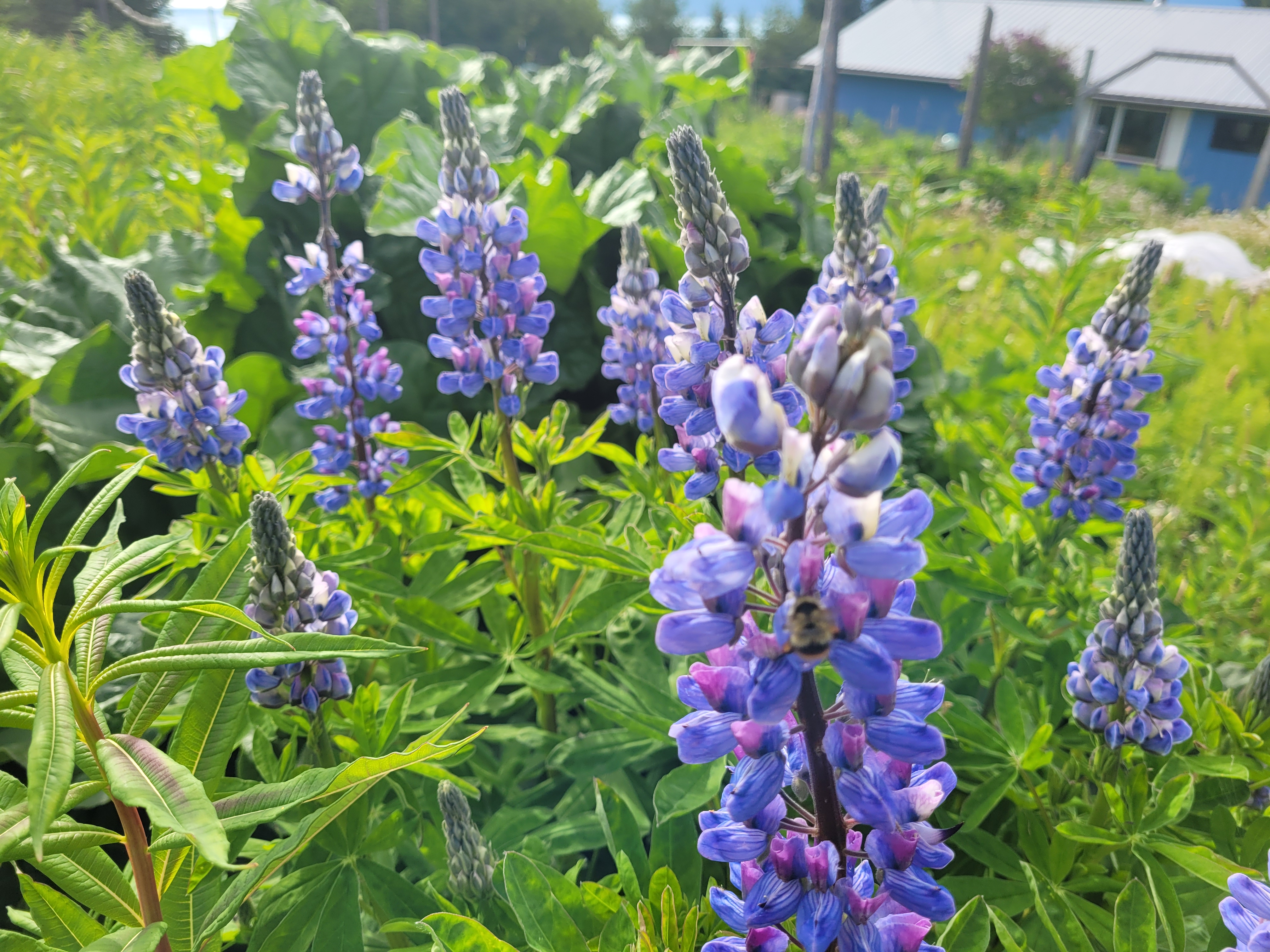
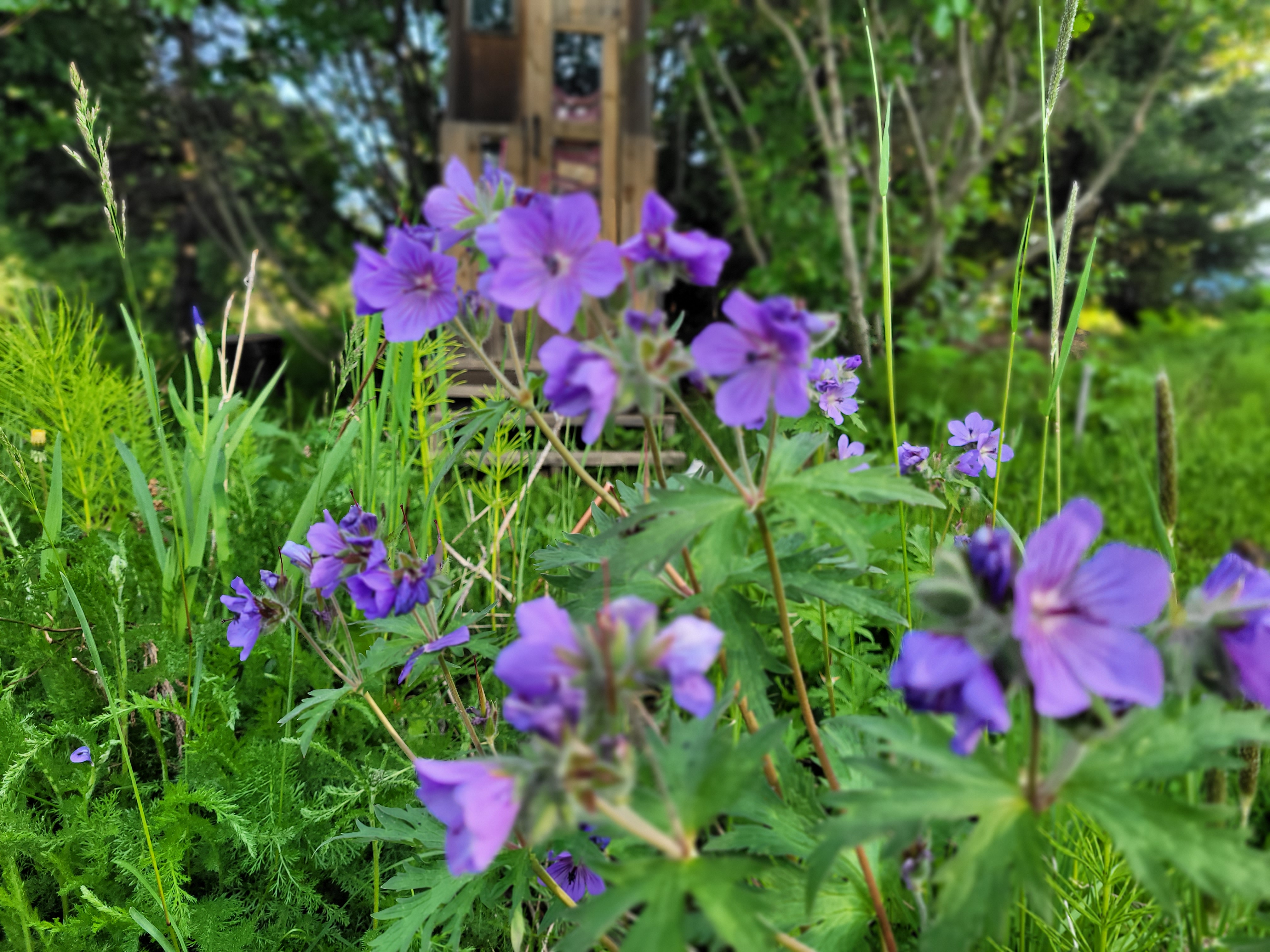
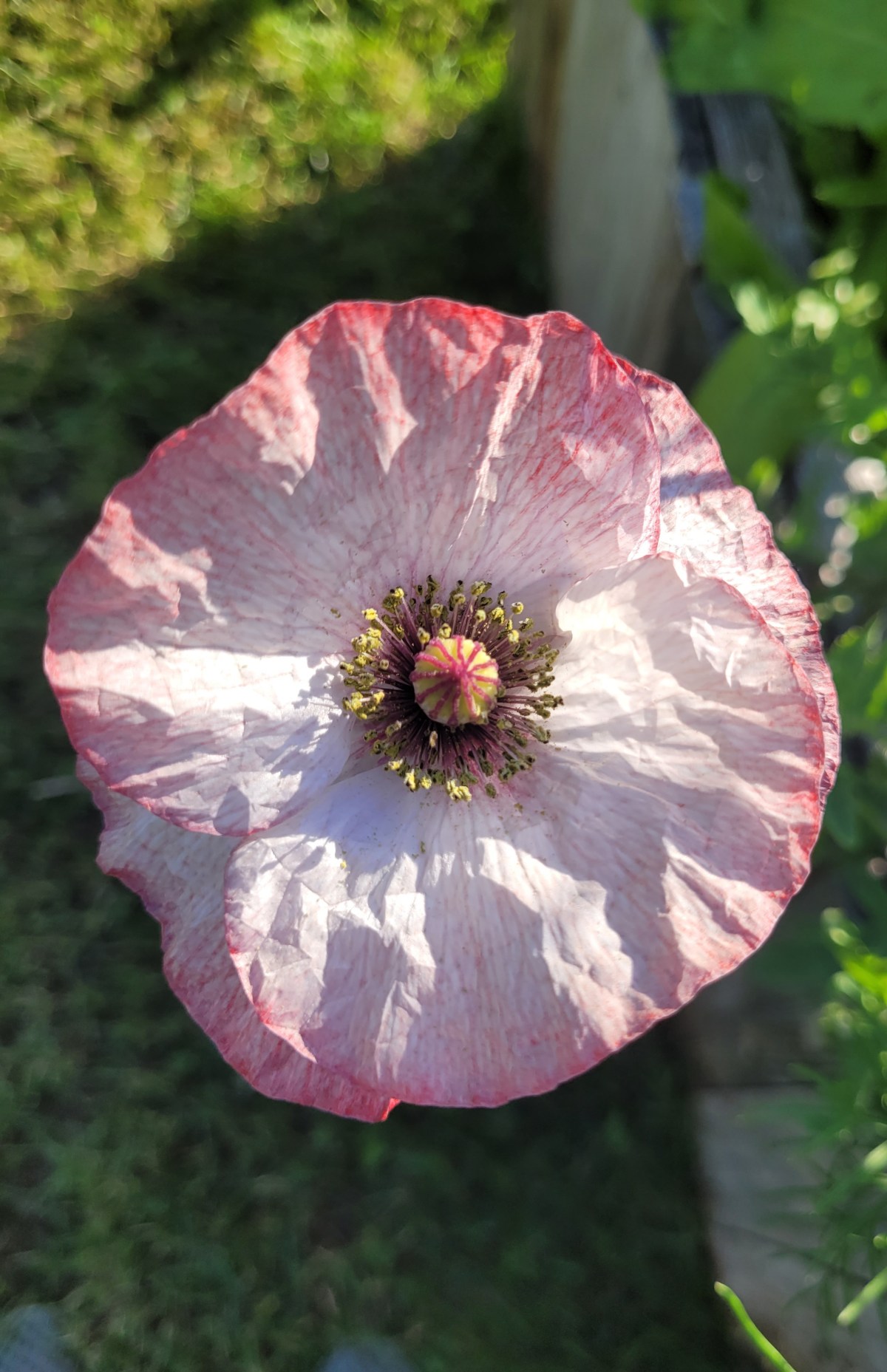
I’m staring out at the landscape a lot these days, and in particular I find myself gazing out the window at our back garden. The fireweed back there didn’t bloom spectacularly this year like it normally does, but now it’s a mix of maroon and orange and red. The cottonwood and birch have turned yellow. The cow parsnip is fading and the alders are browning. A few of our flowers are hanging on, blue borage, purple comfrey, gold and yellow calendula, a couple of deep red poppies for punctuation. I’m enthralled with the colors themselves, but also with the depth of perspective they provide. Suddenly with a change in color it’s as if I can see more. More plants, more variety, more contours, more perspective.

A couple years ago I watched a video of a young man with colorblindness putting on a pair of glasses that allowed him to see colors he’d never seen before. I expected him to be wowed to see certain colors for the first time, and happy to have the visual experience most everyone else has. His reaction though, was one of overwhelm. He immediately burst into tears because it was all so much. He physically didn’t know how to respond to the sensory input he was suddenly tasked with processing.

I’ve also heard stories about people seeing colors they’ve never seen before while on psychedelics or during near death experiences. After the experience is over it’s impossible for them to describe the new colors because there are no words in our shared language for such things, but they have a memory, and an understanding that there’s more out there beyond our perception.

There is a book called Old Ireland in Colour by John Breslin and Sarah-Anne Buckley that features colorized versions of historical black-and-white photos. The book is beautiful and it became a bestseller in Ireland in 2020. But would the book have been a bestseller if it had just featured the black-and-white photos? Or was it hugely popular because of the added color? Does the addition of color allow people to feel a connection to the subjects of the photos – the children, the elders, the landscapes – that’s more profound?

What is it about color that changes our emotional response to a thing? How is it that we’re wired to respond to a smattering of wildflowers against a meadow of green, to alpenglow, to a sunrise? Why do these autumn colors compel me to think deep thoughts and ask so many questions?

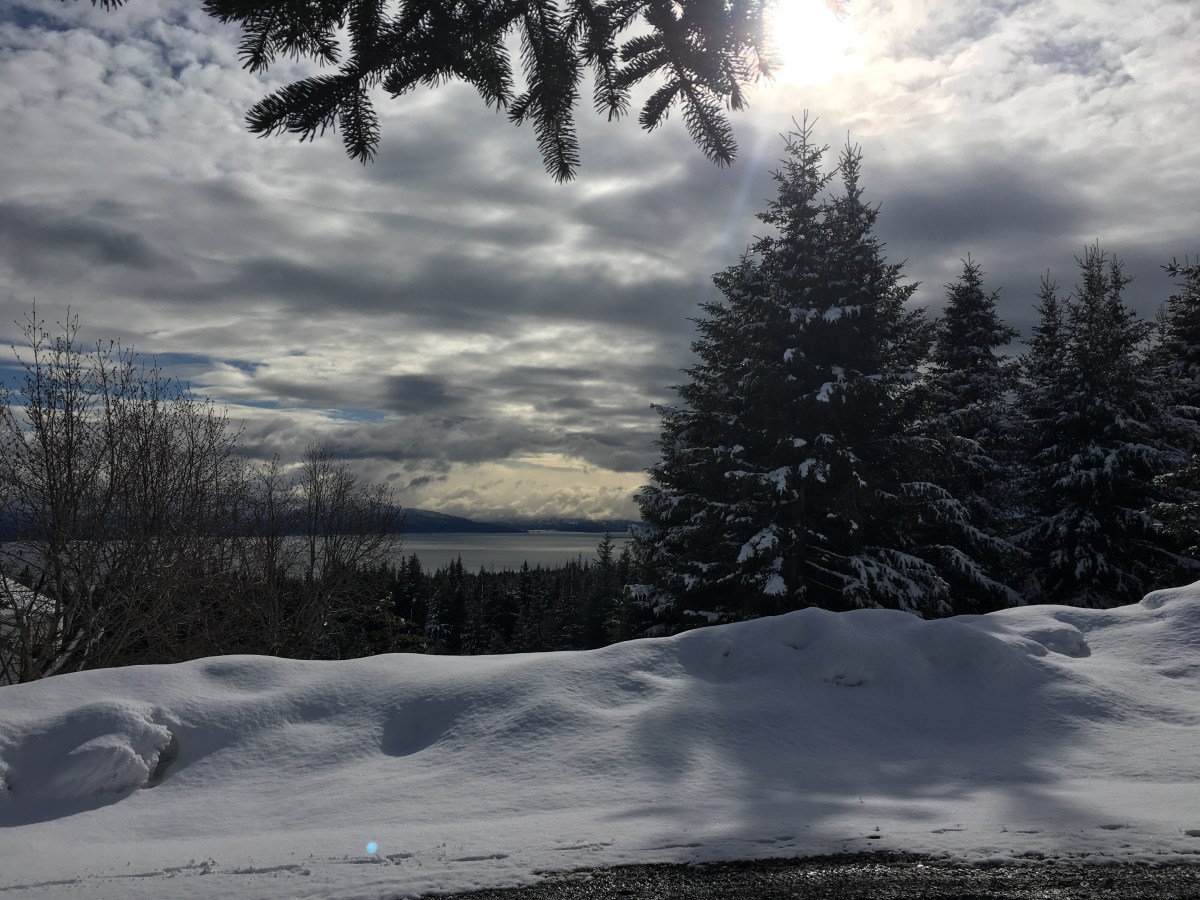
Last week sandhill cranes flew overhead in huge noisy flocks, heading east over Kachemak Bay to begin their journey south for the winter. Now the squirrels are dropping spruce cones from the tops of trees in an effort to build their middens. Even my parents who spend their summers in Homer are starting their long drive back to Colorado on Monday morning.

Once again, like every year, everything is pointing toward winter. While I’d like to sit and write all day, the garden and all the bounty it’s offered us still need my attention. There are roots and herbs to dry, cabbage to ferment, and even a few berries still to pick. I know there will be time for more writing and reading soon enough.

While I’m out there I’ll take in all the colors and I’ll breathe in the cool fall air. I’ll work with my hands and let my mind roam free. I’ll feel the changing season and let myself change with it. I’ll feel the longing that seems to go hand in hand with the fall equinox. I’ll keep working, knowing that I’ll never really be done with all the tasks at hand, and I’ll keep coming up with questions I may never be able to answer. By the end of the day I’ll have added a few new things to my to-do list, and technically I won’t be any further ahead than when I started out, but I’ll be glad for how I passed my time.

***

On a different but not entirely unrelated note, three years ago, starting on the Autumn Equinox, I offered a twelve day journaling challenge. I invited people to sign up to receive an email a day for twelve consecutive days with a few prompts to get them going with their own writing. I put the idea out there without knowing what to expect but with hopes that people would discover a few things about journaling that I’ve discovered over the years, which is that it’s an amazing tool that lends itself to self-discovery and personal growth. It’s fun. It’s a way to jump-start a writing project or any creative endeavor. It can help a person work through a few things in their life that might need some attention and it almost always uncovers surprising insights and ideas.

Here’s the invitation I sent out three years ago: https://loftyminded.com/2020/09/16/lost-words-found-meaning-and-an-autumn-equinox-journal-series/

Around forty people signed up and for twelve days we journaled together. Many of the participants let me know that it was a mix of challenging, meaningful, fun, and inspiring. For me personally, it was the highlight of my year. I loved everything about it and I’ve been excited to do it again.

Finally I’ve settled on a start date for my next one. This time the start date will be November 1, 2023 and it will go for ten days.

I’ll send out a more formal invitation as Nov. 1 approaches, but I want to start getting the word out so that everyone who wishes to participate can start thinking about it and looking for that perfect journal. Please send me an email at tsundmark@protonmail.com if you’d like to sign up or if you have any questions, and I’d love it if you spread the word to anyone else you think might be interested.

Like last time, I’ll be offering this as a gift because I want to make it available to everyone who’d like to participate regardless of their financial situation. When it’s all said and done if anyone wants to and is able to offer a gift payment in exchange for participation in the series, there will be a way to do so. It’s 100% free to sign up and participate though, and I hope you will!
Ben and Beyond

I’ve just come inside from harvesting strawberries in the back yard and all the time I was filling my bucket I wished I could write and work in the garden at the same time. Out there the air is charged with motion and life. Out there the wind is gusting and the fledgling eagles are screeching for their parents. Out there the onion bulbs are swelling and garlic scapes are curling and the scent of chamomile lingers in the air. Out there everything I wish to articulate in my writing comes to me clearly, easily, in an instant, and I always wish I could capture it.

Today if I could have written while I was picking berries I would have written about my friend Ben who died in July just short of his 42nd birthday. Ben was in my cohort in graduate school and the nature of the program, which brought us all together on campus for four summers in a row, allowed a few of us to form fast and lasting friendships.

Unlikely friendships are often the ones that give us a window into sides of ourselves that would likely have gone unknown. Those of us in the fiction cohort challenged each other in our thinking and our writing, and we got to know each other outside of our day to day lives. With Ben and Dan and Nick I was just Teresa. Not the person who worked at the Homer library, or Dean’s spouse, or Dillon and Adella’s mom. It was refreshing to be known differently like that, and it changed the way I defined myself.

When I first met Ben he was becoming a Catholic. One night over dorm room beers Dan and I tried to get Ben to explain why he felt compelled to convert, especially in light of the abuse within the church, and Ben couldn’t really give an answer. He said something about ritual and beauty. He mentioned his dad, who’d also been Catholic. Really though, he didn’t know why he needed to become a Catholic, it was just the way he needed to go.

Since that dorm room conversation over a decade ago, my own ideas about God have evolved. Before when I looked for some kind of evidence of the Divine, I couldn’t see it. Now I see evidence everywhere. That change didn’t happen overnight and it’s not something that can easily be explained. I guess that might have been the way Ben felt when he tried to explain his reasons for converting to Catholicism. It was personal.

The day before I found out Ben was in the hospital, I felt that it was important for me to call him. I was busy though, with all of my work, and I didn’t follow through. It nagged at me in a way that felt urgent, and now, in hindsight, I know that day was the day Ben reached his lowest point. Up until then he put people off when they asked him to seek help. He thought he had a handle on his situation. But on that Thursday Ben knew it was time. Maybe even past time. He told me later that he stopped off at confession that same day.

I’ve lost people I’ve cared about, but something about Ben’s death feels different. His death was tragic, but also not entirely unexpected. I grieve for his sons who will go through life with just a memory of their father. I grieve for the fact that he’ll never come down for a weekend stay in our yurt again. I grieve for the books and short stories and blog posts he won’t write. And I grieve for Alive Ben, whose life was heavy in ways and for reasons I’ll never fully understand. But alongside the grief I have over Ben’s death, there’s a sliver of relief that he’s not carrying the weight of it all any longer. It wasn’t easy being Ben.

As I’m writing this I’m looking out the window at the weather to see if I should get back out there to resume all the chores I hoped to get done this weekend. The way the rain starts and stops, the way the clouds roll overhead exposing patches of blue, the way that summer’s on its way out even as it just now feels like it’s getting started, I find that this grief is always in motion. It’s mixed in with other losses, some more personal than this one, some that came before and some that have come after. It’s a small grief within the bigger Grief that’s been with us and will always be with us.

Every day there is more to grieve. This week a long-anticipated visit from a friend fell through when her travel visa was canceled abruptly before she boarded the plane to Alaska. For a neighbor it’s the loss of a much-loved birch tree that her children used to climb. And then there’s Lahaina. So many lives lost and so much history destroyed.

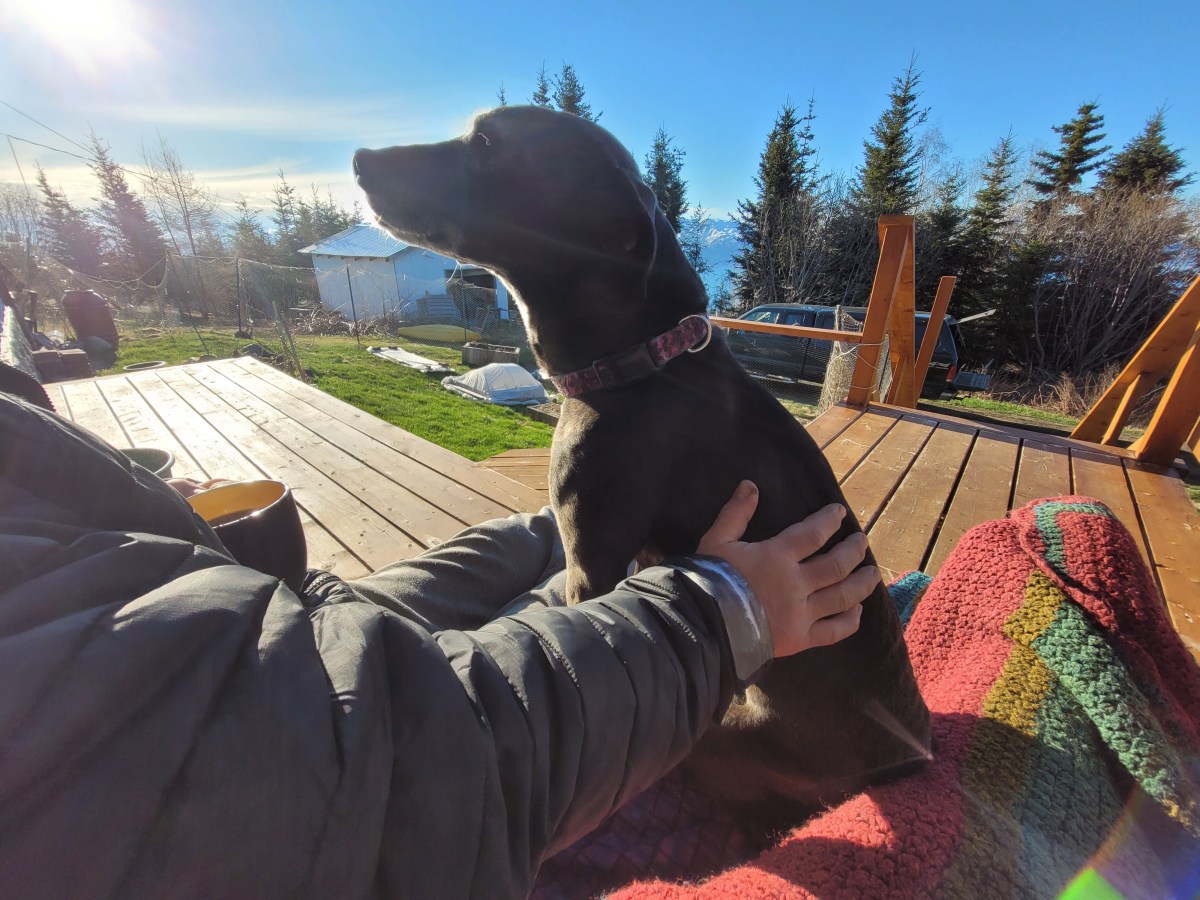
There’s also preemptive grief, like knowing our old dog Ripple is reaching the end of her life span, like knowing an undeveloped piece of land is about to be developed.

Sometimes beauty alone is cause for grief because it’s all fleeting. We grow old. Cities burn. Civilizations come and go. Species go extinct. It’s a lot to carry.

It’s tempting to try to avoid grief by limiting how much we love, by closing our hearts, by becoming cynical and jaded. Or we numb ourselves. Those seem like viable options given how much life hurts sometimes, and every person has to make their own choice as how they’re going to keep going, or whether they’re going to keep going.

Out in the strawberry patch I thought about how grief feels lighter when I put it in the perspective of infinity, when I imagine that this life is a part of something far beyond anything I can truly conceptualize. So vast, so eternal that every experience belongs and is held without judgment, where there’s enough time and enough space for all of our burdens, our quirks, our mistakes.

Within infinity everything is dispersed through time and space, making it all small, nearly weightless. And what is the manifestation of Love if not the lightening of our loads, both individually and collectively?

Who really knows? All I know is that each year the seasons come and go and I’m only here for a limited number of them. Right now it’s the season for harvesting and I should get back out to the garden. This year the strawberries are plump from the early rains and sweet from the late summer sun. It would be a shame to miss them.

Five-Acre Almanac: A Nail in the Foot

Week 43

When I got home from work on Wednesday last week I was eager to join Dean in the garden. Everything is planted now, but for a garden to thrive it needs some encouragement. Some people might not like the ongoing maintenance of gardening, but the fussing is the part I enjoy most. It’s a lot like the process of revising a piece of writing. With each visit there’s something to tweak, something new to see, some fresh insight as to what might be needed to make it better. Always there is something to learn.

Fussing over the garden is always different. It might involve checking on newly planted beds to see what’s sprouted or poking around in the soil to see if it’s dry. It might lead to picking dandelion greens and horsetail to add to the mulch mix. Sometimes it’s watering. Sometimes it’s weeding. On Wednesday evening my garden check led to plucking the tiniest of tiny slugs from my carrot and parsnip bed and plopping them into a jar of vinegar that I’ve always got nearby. I was completely consumed by the task of saving my seedlings from the destructive gastropods when I stepped on a nail. It took a few seconds for my brain to get the message of what had happened, and then another few for me to remove it from my foot.

We shouldn’t have used that old piece of wood with a nail still embedded in it to hold down the row cover that we’d draped over our sprouting beets, but we did. I shouldn’t have worn flip flops in the part of our yard where such pieces of wood are being used, but I did. I should have been more careful in how I placed the board when I moved it, but I was focused on eliminating the slugs. What a shock it was to feel my foot being impaled by a nail. What a way to be brought back from the reverie of my single-mindedness.

My first stop on Thursday morning was the Homer Medical Clinic for a tetanus shot since I couldn’t remember the last time I’d had one. After an hour and a half I left with instructions for how to care for my wound and the reassurance that I wouldn’t succumb to lockjaw. Then I hobbled around for a couple of days in a fair amount of pain, feeling perturbed all the while over my carelessness.

It’s not that I don’t enjoy putting my feet up from time to time, but I don’t like it when I’m forced to do so. Still I took the opportunity to start reading A Swim in a Pond in the Rain by George Saunders. In the introduction he writes, “In Buddhism, it’s said that a teaching is like ‘a finger pointing at the moon.’ The moon (enlightenment) is the essential thing and the pointing finger is trying to direct us to it, but it’s important not to confuse finger with moon.”

1:00 am moon

The nail in the foot brought all of my garden ambitions to a halt for a few days and even though the setback was temporary it gave me cause to consider losing my ability to do the things I love to do. What if one or both of us could no longer keep up with the demands of this lifestyle that we’ve chosen? Would we be adaptable? Would we lose heart? When I read that passage by George Saunders I was reminded that everything we do and learn and try to achieve in this life is just pointing us toward the essential thing.

Already by Saturday the pain in my foot had subsided and I was able to resume making my garden rounds. My first task of the day was to collect dandelion flowers for pancakes and more syrup. My second task was to scour the upper garden for any more boards that might be lying around with nails sticking out of them.

On Sunday I picked strawberry leaves under a pink haze of smoke from tundra fires burning in Southwest Alaska. The tinted sky changed the lighting of everything and somehow it seemed like the colors became more of themselves, the purples more purple and the greens more green. Under these conditions I checked to see if the roses in the meadow below the house were blooming yet. I gathered a pile of last year’s alder leaves from under the trees to use for mulch. I gave the apple trees and the thirstiest of our garden beds a good soak. I reseeded some peas and carrots and beans and hoped for better germination the second time around. More than once I stopped to peek under the straw that’s covering the new garden bed I made a couple of weeks ago out of layers of manure, dried grasses, cardboard, weeds that hadn’t yet gone to seed, dirt, and compost. Already it had come alive with spiders and insects and microbes. Earthworms had moved in and started the work of churning and mixing it all together, and of course there were a few slugs.

Seeing the slugs reminded me of the arch of my foot, which was feeling pretty good considering it had just been four days since I’d punctured it by stepping on that damn nail. I’d taken care of it the way I’d been instructed and I soaked it a few times in hot water infused with yarrow and now I was out in the garden again, fussing over seedlings and pulling a few weeds and checking on the progress of various plants.

Nobody would look at our garden and think that we’re people who have it all figured out, but I go to it each day like I’m its student and it’s my teacher. I do what I can to usher it toward productivity and in return it offers me beauty and delicious, nutritious food. When I pay attention it provides me with the opportunity to witness a million small miracles. It points me in the direction of what’s essential.

Five-Acre Almanac: Back in the Garden

Week 41

I’ve lived in Alaska for thirty years now but I don’t know if I’ll ever get used to the way two week’s time can take us from the end of winter to fire season. May brings us from snow, to exposed dry grasses, and then to some of the warmest days of summer. At least that’s true for this year. When I came home from Atlanta two weeks ago a berm of snow three feet tall piled up behind our house and our driveway was still too mushy to drive on. Now the snow is gone and our rain barrels are nearly empty and the sign in front of the fire station on East End Road says fire danger is extremely high. It’s not an exaggeration. The days have been sunny, the afternoons windy, and it would only take one mistake to set the forest ablaze.

Three days ago there was a small wildland fire to the east of us. Before I was even home from work two tankers and a helicopter with a bucket had it under control and that evening as we worked in the garden a different helicopter flew back and forth from town shuttling a twenty-person crew to the scene. Because of the quick response, we’re breathing clean air on these hot, dry days. It’s something I don’t take for granted.

I’ve talked with two different people in the last month who moved to Alaska to escape the smoke that seems to have become a permanent feature of summer in the western United States. It can happen here too. I hope everyone is careful over the long weekend.

I’ve barely been able to bring myself inside long enough to check my email this week, much less write a blog post. I took a couple of days off of work before the long weekend in order to spend some time in the garden. On Thursday I built a new sheet mulch bed for planting potatoes. It looks like a pile of straw, but it’s a culmination of eight buckets of chicken manure, nine cardboard boxes, seven bags of chopped cow parsnip, straw, six buckets of compost, more straw, eight buckets of soil and yet another layer of straw. I hauled it all uphill and got good and sweaty and dirty and was reminded of how much I love that kind of physical work. It’s good for my mind and it’s good for my body and when the realities of the world are intense, the physical exertion gives me an outlet for some of the energy that would just sit around and fester and keep me awake at night. I also think about what I want to write when I’m digging and hauling and raking. Sometimes my ideas make it onto the page but most of the time they don’t. Either way the writing seems to come more easily when it’s paired with physical labor.

By the end of the day today we should have this year’s garden completely planted. It will be the biggest garden we’ve grown to date and this will be the earliest it’s been in the ground. The beds we’ve worked hard to create in previous years made this year’s planting easier and now we just have to keep everything watered through this dry spell. We’re keeping most of our beds under row cover to protect the plants and to keep some of the moisture contained, but we frequently peek under to see how things look. So far most of the garden starts are doing well and the carrot and radish seeds are sprouting.

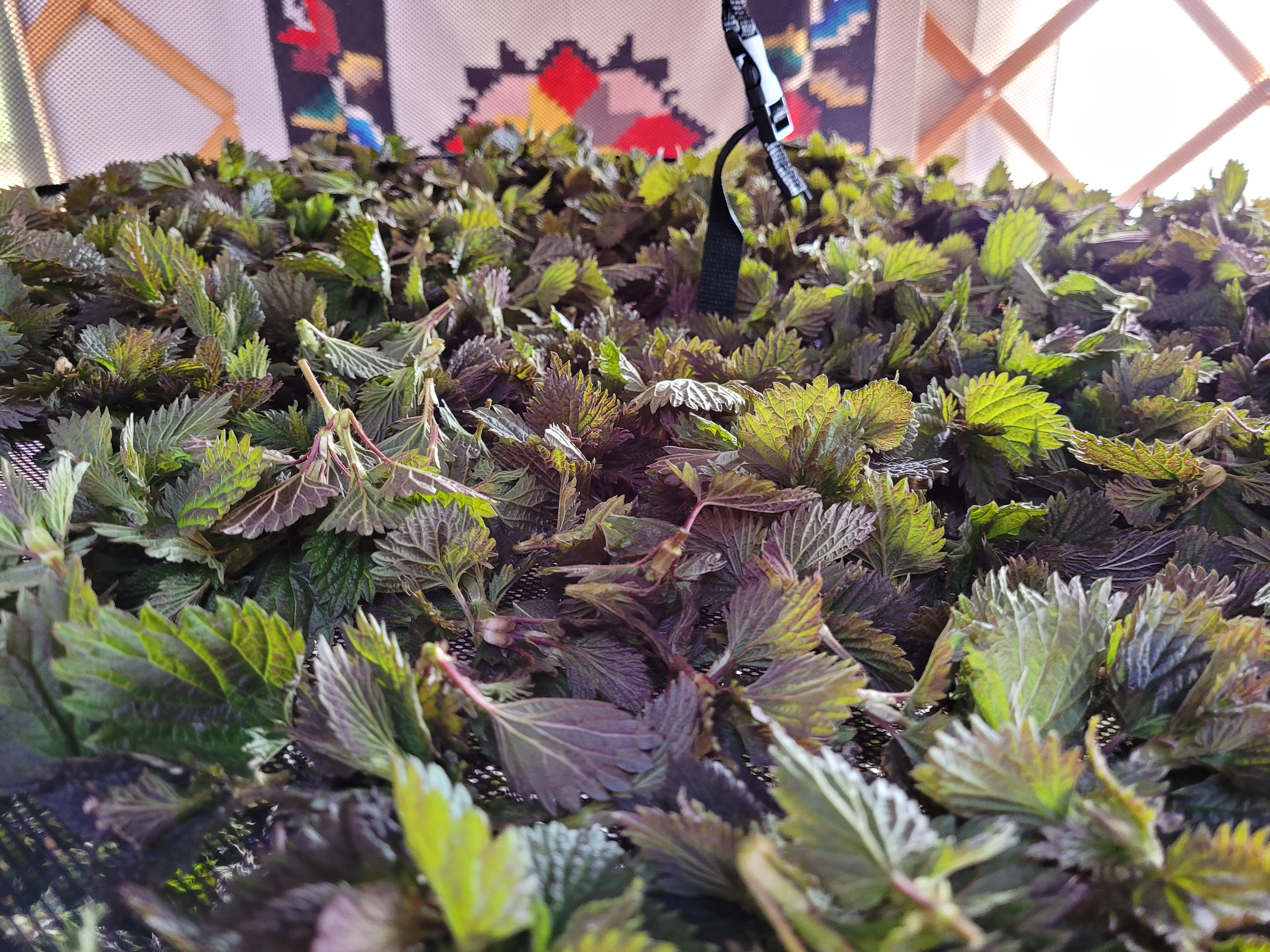
The season for stinging nettle is winding down with this heat, but it’s been a good harvest so far. I like to get as much as I can because it’s the base for many of the herb tea blends we make for our business and because we incorporate it into our meals throughout the winter. We knock ourselves out growing a garden, but nothing we can grow is as nutritious or abundant as the stinging nettle that just pops up out of the ground.

nettle spread out to dry

A couple of years back a wild black currant popped up inside our fenced garden. We’ve staked it and watered it on occasion, but other than that we’ve done very little to encourage it’s growth. Already it’s three times the size of the domestic black currants we planted four years back. It’s a reminder that the indigenous plants around here have evolved to flourish in this northern environment. We’d be smart to incorporate them into our lives and reap the benefits they have to offer.

wild black currant

The absence of chickens has been a bit to get used to. Besides missing their presence and the eggs they provided, they ate a lot of our kitchen scraps. Chickens are a part of the garden system that we’ve created around here and our plan is to give ourselves a break for a year and then design a new setup that will be safer for them and easier on us. Whatever we come up with will definitely involve an electric fence the next time around.

Today I’m off to the farmer’s market with my mom and then back to bask in our yard again for another three days. Over the long weekend we’re going to try making nettle beer from a recipe we found in the book Sacred and Herbal Healing Beers by Stephen Harrod Buhner, and if time allows I’m going to make some dandelion petal syrup. There’s more to do than I’ll have time to do, but this time of year is about potential. There’s so much that the earth is offering up to us and the sunny days make me feel like everything is possible.

Five-Acre Almanac: Hard News

Week 40

My visit to Atlanta was wonderful, but the week since I’ve been back hasn’t been the best.

The day after I got home a bear climbed into our chicken coop and killed three of our chickens, including my new hen and rooster. Dean was home when the bear broke into the coop and he managed to scare it away with some noise and light bird shot.

After the unfortunate bear encounter we sat down with a cup of tea to decompress, and that’s when we saw the news that a man has been arrested for the murder of Duffy Murnane. On an afternoon in October 2019 Duffy left her home to walk to an appointment across town and she was never seen again. For two and a half years we’ve suspected and assumed that she was abducted and murdered, but now we have information that confirms our worst fears.

The suspect worked in the assisted living apartments where Duffy lived and he was a member of our community for a few years. Duffy knew him and trusted him enough to get into a car with him.

There is some relief in knowing that a violent killer is off the streets but right now the relief is overshadowed by sadness, anger and shock over the news. And the senselessness of it all. Duffy was a kind and gentle person, quiet and observant. She was loved. Her undeserving family has been through hell. And now as new details come to light, there is a different kind of hell that many people will have to contend with.

While our town has been shaken by her disappearance, this new information brings with it a sense of betrayal. I did not know the man who was arrested, but many people I know did. He made his way into our community. He found employment. He included himself in our town’s traditions. He made friends. On the surface he came across as a decent person, but he was not.

And so here we are in the spring of the year. Finally the crocus on the west side of our house are blooming and things are greening up. The migratory birds and the seasonal workers are returning. We’re hardening off our garden plants and making plans for summer camping trips. In the midst of it all we’re trying to come to terms with this horrible thing that happened in our town. We’re holding onto the people whose lives have been randomly and unfairly impacted by a man whose inner demons defy understanding. We’re mourning the loss of our friend. We’re devastated by the pain that’s been inflicted upon so many good people.

Sometime on Friday morning the bear came back and killed five more of our chickens. And in the evening when we were trying to figure out what to do about this problem bear, it came again and nabbed one more of our birds. We yelled at it and it ran away but we knew that as long as there were chickens to be had it would keep at it. We gathered up our six remaining chickens, all of which were at least three years old and past the point of being good egg layers, and put them in cages and brought them into the house for the night. Once they were out of harm’s way we were faced with a tough decision.

I’ll leave out the details, but our twenty year run of keeping chickens ended on Saturday afternoon. We’ve lost a few hens here and there to dogs and hawks and eagles. We even had bears break into the coop to get to the chicken feed a time or two, but this bear had a taste for blood and it wasn’t going to stop. We had to make sure it wasn’t rewarded.

The bear will likely come again, but now if it does it will find an empty coop. Hopefully that will be enough to make it lose interest in our place and head back into the forest.

Losing our flock of chickens was hard, but compared to the hardships other people have to endure it was a small thing. There are bad days and then there are life altering tragedies. We’ve had a few bad days and I’m sad about the chickens, but I’ll be okay.

This morning we sat on our deck and sipped coffee under blankets and the yard seemed especially quiet without the rooster and the chicken chatter we’ve grown accustomed to hearing. This afternoon I spent a couple of hours harvesting nettle down in the elderberry grove below our house and the act of foraging felt healing, like the earth was offering me something in exchange for my loss. Now it’s the middle of the night and I’m sitting looking out my window at the full moon over the bay. Since the trees are down I can see the moon’s reflection on the water and it’s as beautiful as anything I’ve ever seen.

I’m up late because I’ve written a hundred endings to this blog post and I’ve deleted them all. I’ve been thinking about Duffy and her family and nothing I can think of to say feels remotely adequate. I guess I’ve been trying to think of a way to say that even though the weight of all that’s bad in this world feels awfully heavy right now, I hope we can keep each other tethered to the beautiful things, like the full moon over the bay, like a mother’s love for her child, like small acts of kindness, like the snuggles of a beloved pet, like the way new lovers look at each other, like a blueberry bush loaded with plump berries, like a field of fireweed in full bloom. I hope we can notice all the beauty, and name it, and tip the scales.

Five-Acre Almanac: Oh, Georgia.

Week 39

I’m spending a few days with my daughter and her wife in Atlanta, trying to rest a bit and ready myself for the demands of early summer that will be waiting for me when I get back to Homer. I’m fully enjoying my time here and doing a pretty good job of not thinking too much about the nettle I could be harvesting or the potatoes I could be planting or the holes I could be digging back at home. In reality though, it’s a decent time to be gone. The last remnants of winter will likely be gone by the time I’m back.

From the guest room I’m staying in I see Adella and Ally’s backyard garden and a wall of deciduous trees. It’s still cool enough here at night to sleep with the windows open and last night a thunder storm startled me awake and this morning I woke to a serenade of birdsong and rooster crows. You wouldn’t know that there’s a major freeway just a couple miles away or that 6.2 million other people live nearby, but it’s true.

Last night we strolled around the neighborhood for a while. We passed a grafted tree that grows plums, peaches, apricots and nectarines. We stopped a couple of times to smell the Japanese honeysuckle and again at the bridge to look down on the creek that runs the length of the neighborhood. Last spring we hopped Adella and Ally’s backyard fence to go foraging around the creek and found cleavers, turkey tail mushrooms, wild garlic, plantain, roses and dock.

While we were out walking we ran into neighbors Philip and Sylvia and their two daughters. The last time I’d seen them was at Adella and Ally’s wedding last July. Now their baby is walking and their toddler is talking. Philip takes a trash bag with him on their evening walks and was happy to report that it takes much longer to fill a bag than it used to.

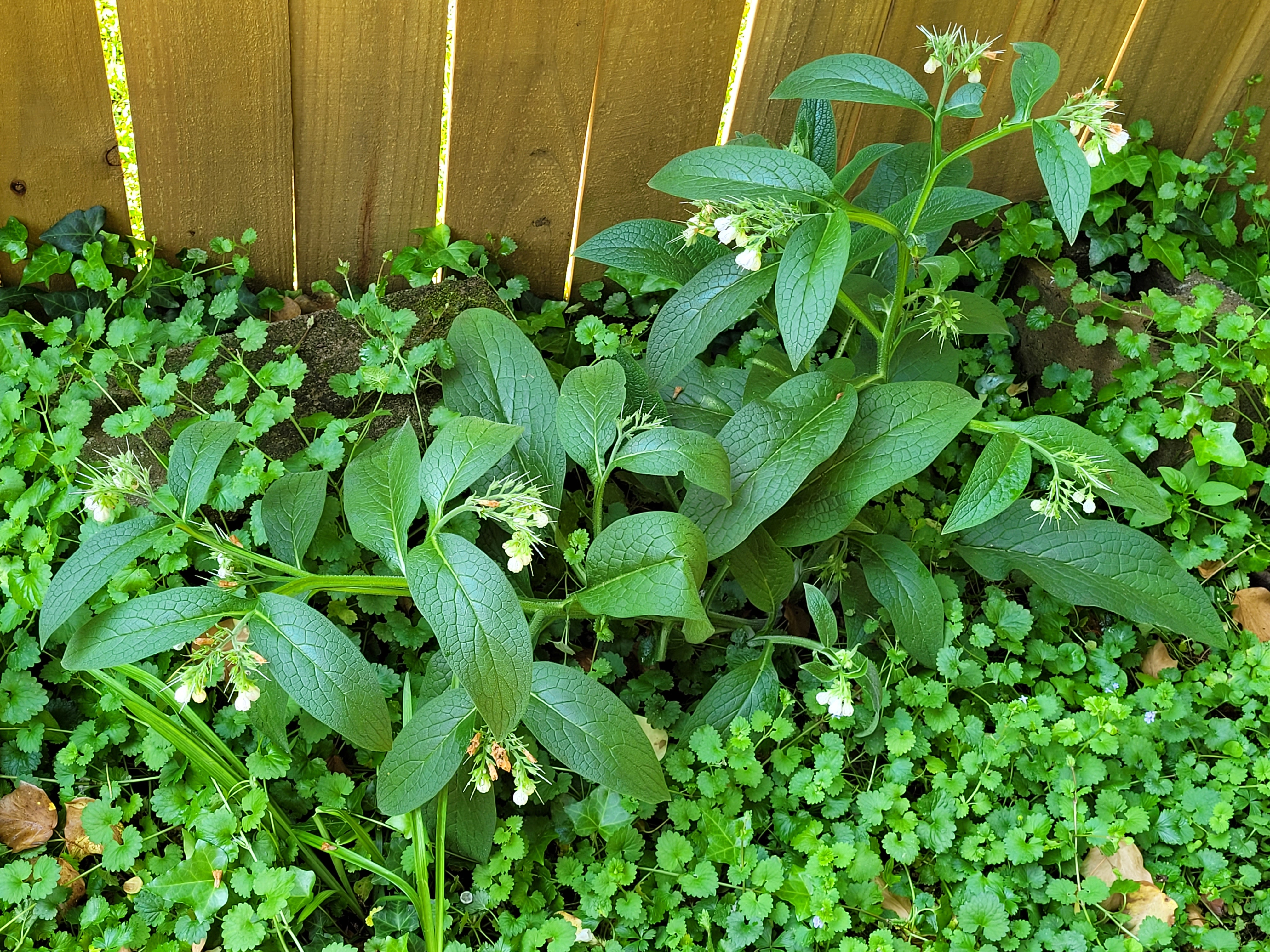
This morning after coffee we looked in on the tomato plants and pole beans which are taking off as the days get warmer. The spring greens are in their prime. We pulled a couple of garlic to check on their progress. Last July when we came for the wedding I brought some comfrey root from our Alaska garden to plant here in this Georgia yard. Like our daughter, it’s adjusted just fine to this warm climate.

Had my daughter not moved here I might never have visited Georgia, but now I’m happy to have this place to return to. So much of what I love about my five acre home in Alaska is what I love about here. There are wild plants to forage, trees and birds to identify. There are seasons to track and weather patterns to learn.

The forecast is predicting a high of 88 degrees this afternoon so our big plans for the day are to sit in the shade and sip on sun tea. Later when it cools down we might head into the woods behind the house for a look around. Tonight when it starts to get dark we’ll keep an eye out for fireflies and watch the tops of the trees for bats. Mostly we’re enjoying our time together. It’s a short trip this time and it’s going by too fast.

It may look like I’m not doing much to fill these fast days, but I am. I’m busy filling my heart to its brim with this place and these two women. I’m gathering and storing and filling my reserves with all that our time together has to offer in hopes that it will sustain me through until our next visit.

Five-Acre Almanac: Expanded view

Week 38

For the past several months I’ve spent Sundays writing and it’s been a luxury to devote one entire day a week to it, but now that the season is shifting this blog may have a bit of a personality change in order to accommodate the demands of summer. It might be a bit less lofty and a bit more earthy. It may have fewer words and more pictures. I’m not sure what it will look like exactly, but it will be fun to see where it goes.

Every winter in Alaska is a long winter, but now, thankfully, it really does feel like this one is behind us. Every day there is less snow and yesterday after coffee Dean and I ventured out to have a look around and to reacquaint ourselves with the bare ground. We pulled mulch off of our front garden beds to check on the state of the soil and saw that it’s thawed and ready for seeding root crops. We checked on the waist-high apple trees that popped up in our compost a few years ago and pruned them back a bit. We looked in on the rhodiola divisions that we planted in the fall and found that in addition to thriving they look like they somehow grew over the course of the winter. We found rhubarb bulging up red through the soil and stinging nettle growing on ground that was covered with snow just two days ago. We plotted out the spots where we’re going to plant the five apple trees that we ordered and then before coming back inside we picked some early spinach and chives to go with our scrambled eggs.

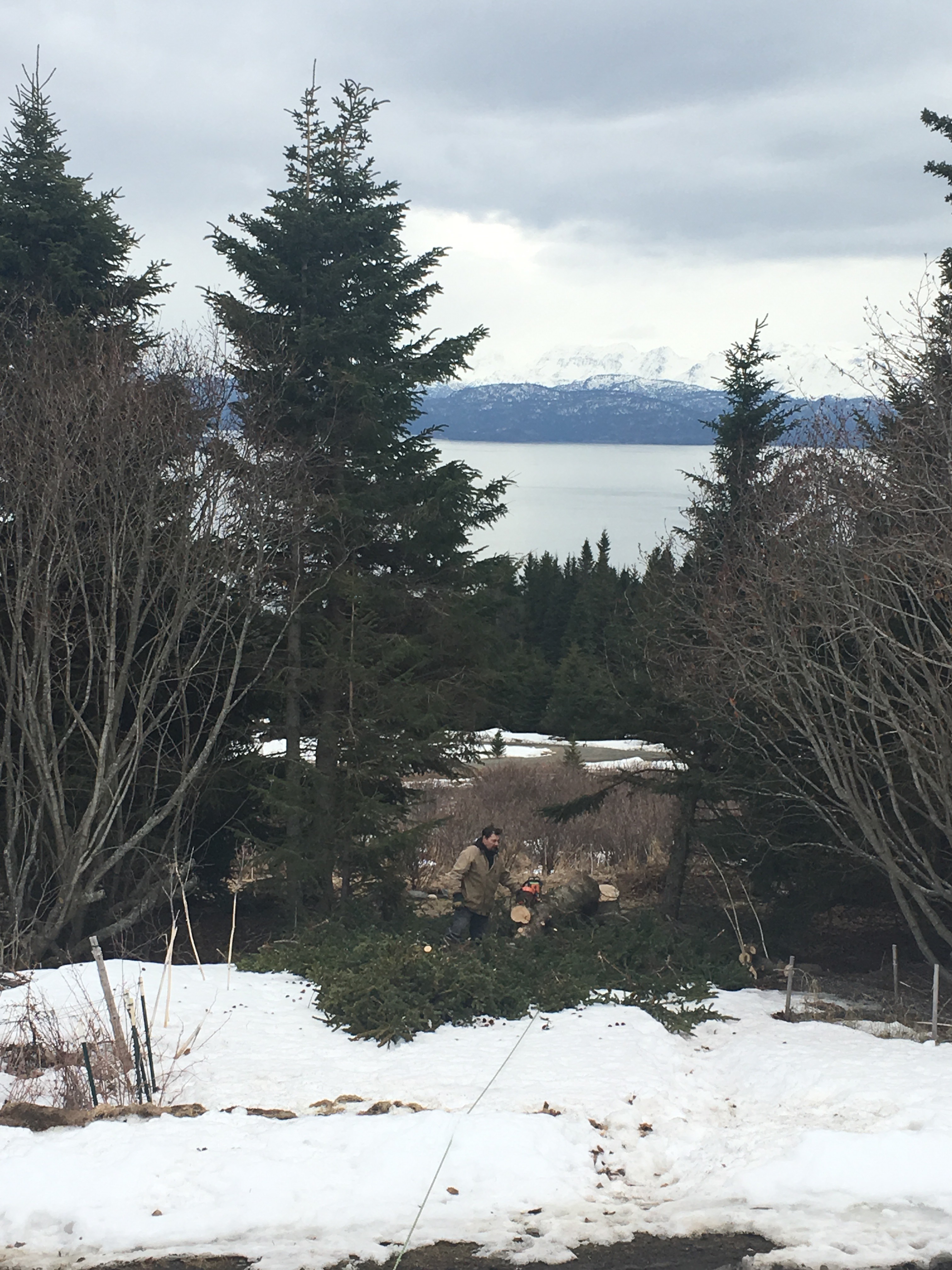
In the afternoon Dean cut down a tree in an ongoing effort to reclaim our view. I had mixed feelings about this as I tend to get attached to trees. I enjoyed watching squirrels jump from this particular tree’s branches onto the neighboring tree and I appreciated that the two trees together formed a kind of passageway from one part of our yard to another. This tree was young when the spruce bark beetle infestation that came through twenty some years ago and its very survival gave it sentimental value. I mourned the loss of the old trees, but it helped to watch the young ones that were spared grow tall and stately over time.

The view from our house disappeared so gradually as the small surviving trees grew that I didn’t notice its absence until people started commenting on it. In my mind the view was still there for us, we just had to take a thirty second walk to get to it. I didn’t feel like I’d lost anything as much as I felt like I’d gained some tall trees. But once it was pointed out to me that our view was gone I started to look for the things I could no longer see. In time I warmed up to the idea of dropping some trees.

I was on the phone with my daughter in Atlanta when the tree came down and in an instant the space inside our house was brighter, which is a benefit I hadn’t anticipated. Now I can once again see the entrance to Peterson Bay from my living room window, and Sadie Peak, and a swath of Kachemak Bay that goes from this side of the bay to the other. The tree was still healthy and beautiful though. It blocked wind and provided a barrier of privacy between our house and the development in the meadow down below. It was a part of this place.

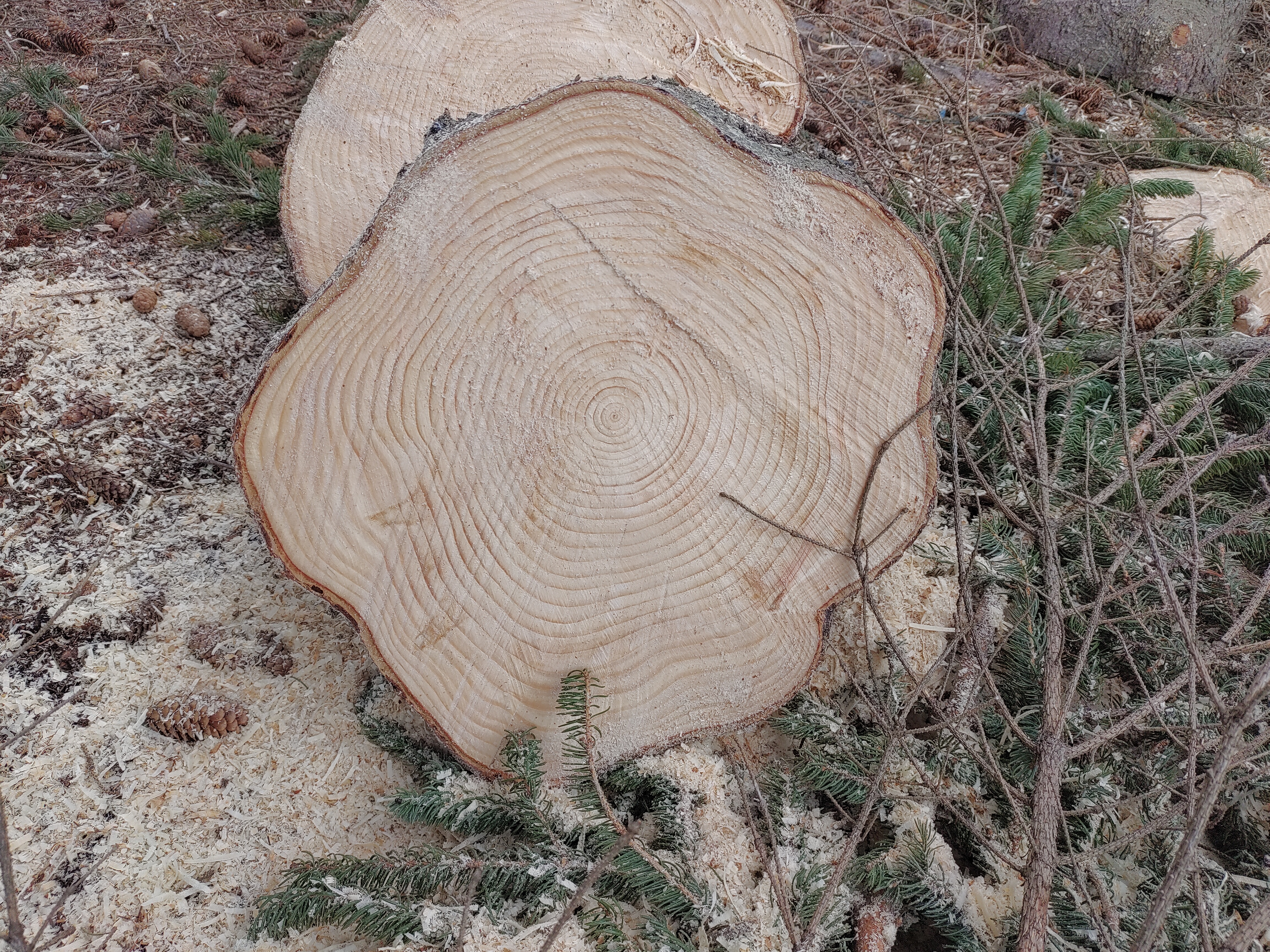
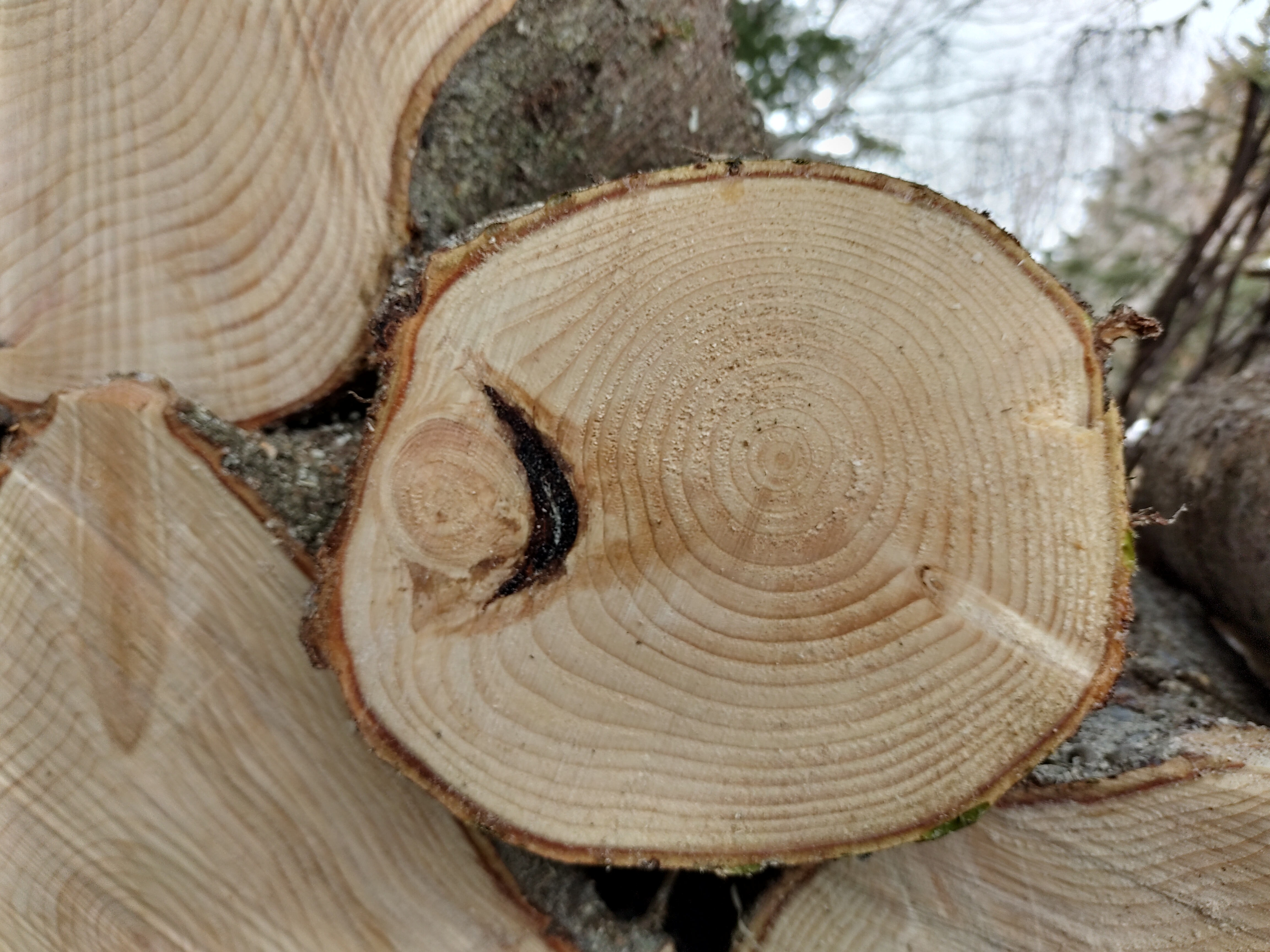
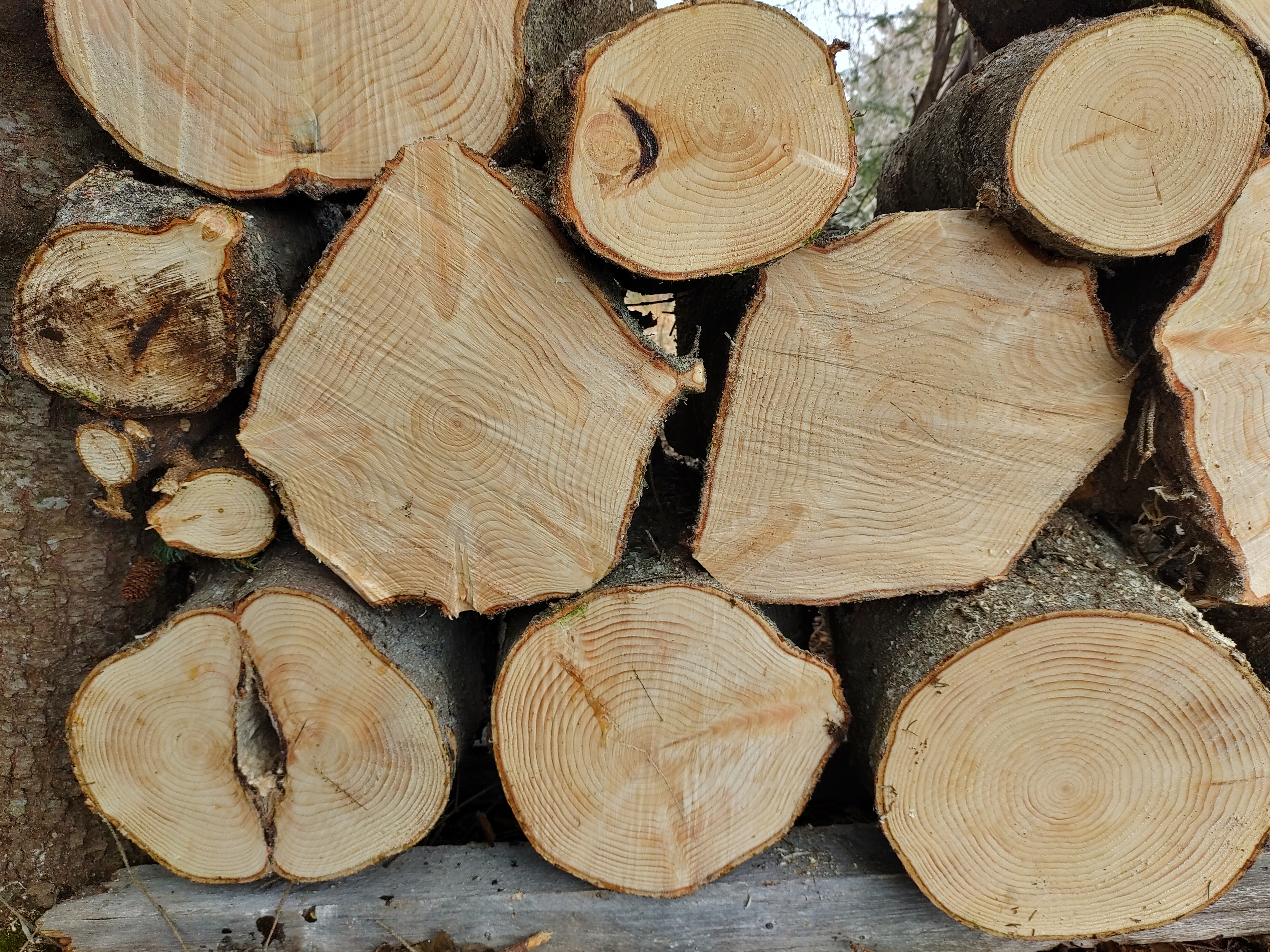
Now its trunk has been sawed into rounds and stacked to dry. Either next winter or the following one we’ll use the wood to heat our house. Cutting the tree down was a loss and a gain. An exchange. Soon enough it will be old news but today I can’t stop looking at the space where the tree used to be. The influx of light still surprises me. The gap leaves me feeling a little bit exposed.

More trees are slated to come down but probably not for a while as gardening season is upon us. After we get back from a short trip out of Alaska next week we’ll be going full throttle around here. We’re eager to get our hands in the dirt. Eager to see green. We’re eager for company and late night fires, for songbirds and cranes. We’re eager for fishing and foraging and for getting our fill of summer so that when winter rolls around again in a few short months we’ll be eager for it too.

Five-Acre Almanac: All These Trees

Week 36

In the summer when the plant life is in full force, certain parts of our property aren’t easily accessible. In the winter when the snow is deep and soft we tend to stick to trails. But this time of year we can get around. This morning it was clear and cold and the snow was perfect for walking on. When I went out to feed and water the chickens I didn’t intend on staying out for such a long time, but once I started walking around on top of the snow I didn’t want to stop. I didn’t have a particular mission in mind when I started meandering but soon I occupied myself with surveying the birch trees that grow around here.

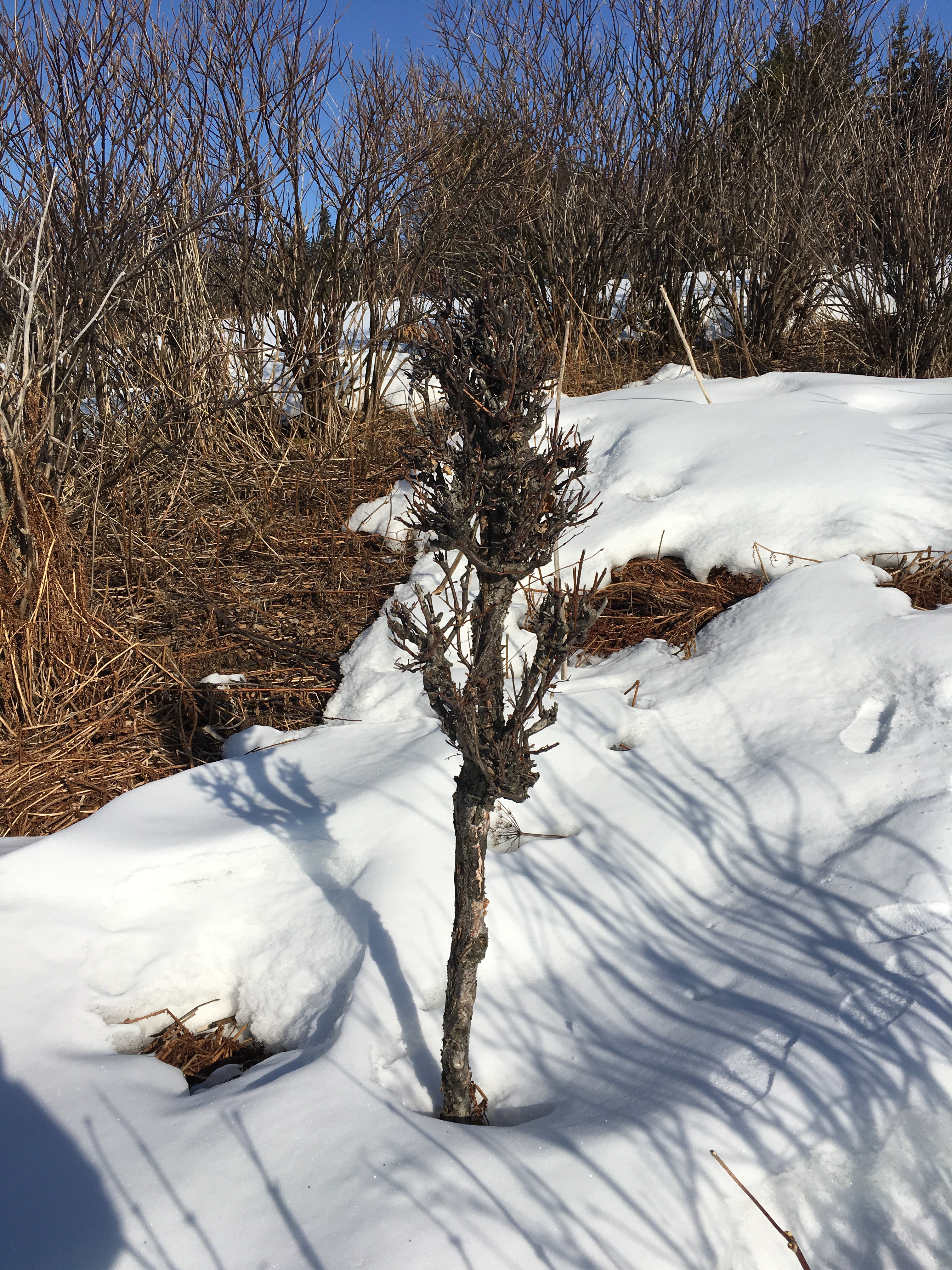
Birch are the species of tree that have the longest life span in this area. We’re fortunate to have a few very old ones on our property, and a handful of younger ones that have grown tall in the protection of spruce where the ever-hungry moose have not been able to eat them. There are also dozens of small ones scattered around. Each summer these small birch trees put on new growth and each year they get munched back by the moose, but somehow they still manage to stay alive. They’re gnarly and tough and some of them are probably much older than their size would indicate. I imagine they have some sturdy roots beneath them.

An old but unprotected birch

In the book To Speak for the Trees, the author and botanist Diana Beresford-Kroeger suggests that every person plant a tree a year for six years in order to bring the planet’s living systems back into balance. She also says that the trees that will offer the most in return for our efforts are those that are the longest living native species to an area. For us on the lower Kenai Peninsula that species is birch.

From my vantage point up on top of the snow I identified a few of those small moose-vulnerable birch trees that might be good ones to fence, then I checked on two that we transplanted a few years ago, one of which was only about three feet tall when I removed it from its less than ideal location just behind our house. It was small and spindly when I carefully extracted it for replanting, but it had a robust main root that ran horizontally in one direction for about seven feet alongside a cement barrier that’s part of our home’s foundation. That long horizontal root made both the digging it up and the transplanting tricky and I wasn’t sure if it would survive, but so far it has. Now it’s about seven feet tall, its main trunk is thick enough to withstand moose munching, and it has lots of new growth.

The other fenced birch tree had a precarious beginning. Three summers ago, after years of neglect, I finally got ambitious and cleaned the organic material out of our back rain gutter. Growing out of the muck was a small birch tree about four inches tall. I potted it in some soil and kept it tucked away from moose for that first winter, then the next spring we planted it in the ground, staked it with some old curtain rods, and protected it with chicken wire. Now it’s about four feet tall and in need of much more substantial fencing.

Gutter Birch

In addition to planting a native tree every year for six years, Diana Beresford-Kroeger says we should do everything we can to make sure they make it to old age. To her that means more than just taking care of their physical needs, it also means forming a relationship with them. Name them, tell their stories, she says, and I’m good with that.

There are plenty of trees around here besides the birch that have stories to go along with them. We’ve got a larch we planted on our son’s eighth birthday and the spruce tree we’ve buried our beloved pets beneath. We’ve got a mini-forest of spruce trees to the east of our garage that were knee high when we moved in but are now keeping us in fence posts and Christmas trees.

In our fenced-in back garden we’ve got four apple trees that popped up from seed in our compost pile five years ago and without any expectation of them producing fruit we transplanted them just to see what would happen. They grew to two feet tall that first summer and stalled out there until last summer when they shot up to about waist high.

We also have the cottonwood trees above our property that bald eagles roost in, and the elderberry forest down below the yurt with its fairyland hideaways. We’ve got a few mountain ash too, and a couple of willow trees that have grown tall. Alders are everywhere, fixing nitrogen and creating amazing soil.

I’m here with all of these trees. With their windbreaks and their shelter. With the habitat they create and texture they add to this landscape. I’m here with the grandmother birch and the rain gutter birch. I’m here with the ones that have grown straight and tall and the ones that have grown gnarled and twisted. I’m here with the ones that need to be trimmed back and the ones that need to be fenced. I’m here with all of these trees and they’re here with me.

Their presence is so quiet and constant and undemanding that it’s easy to take the simple way they give us what we need for granted. It’s easy to lose sight of the significance of our connection. But today I remembered to be in awe of trees for a little while.

walkable snow

Retreating snow under a young spruce

Five-Acre Almanac: Small Joys

Week 35

It’s Sunday again, the day I’ve designated each week to write a post for this yearlong project. Facing down a blank page with the intention of sharing the words that materialize over the course of a few hours requires courage because while I’m writing about some aspect of life here on our five acres, I also want something more to come from my writing. I never know if what I’m hoping for is going to show up though, and the courage comes in trusting that something will reveal itself at some point along the way.

Writing about the work we do, the gardens we grow, the wild foods we harvest, the antics of our homegrown food experiments and our animals is the easy part. Writing from a deeper place, a place where the physical world connects to that place within me that is searching for meaning, is much more difficult.

This is all to say that this week I’m struggling to know what to write. In one hand I’m holding all the hope that this time of year brings, and in the other I’m holding sorrow. I believe that’s true for most of us. To pay attention to what’s happening in the world is to know grief. To see spring chives poking up out of the ground is to feel hope. Watching our beloved dogs grow old exposes our hearts to a tenderness that’s both beautiful and sorrowful. To have the time and ability to work on the things we find meaningful gives us deep satisfaction. Every day is a mix of small joys and deep sorrow, deep joy and small sorrows and writing this post each week becomes a balancing act where I try to lean heavy on the hope and joy but stay grounded in reality.

Earlier this week Dean and I signed up for a year-long gardening course offered by local gardener and teacher Saskia Esslinger. The way it works is that Saskia hosts a Zoom meeting once a week to talk about some aspect of gardening and a person can join the course at any point in the year. We signed up because even though we’ve been gardening for a long time now, there’s always more to learn and as we look at expanding, any efficiency we can implement now will help make this a sustainable endeavor rather than one that wears us out. Also, we get to talk about gardening and related subjects every Saturday morning for a year.

Yesterday was our first session and the topic of the day was greenhouses. We have a greenhouse, but already after just one class we have some simple improvements in mind that will likely make it better. Even if we don’t have the time to make the changes this year, we have an ideal we can work toward, which is exactly the kind of thing we were hoping for when we decided to sign up for this course.

Dean built our greenhouse off the back of our chicken coop five summers ago. He used old windows, a door one of our friends salvaged from the dump and scrap lumber from an old structure that was here when we moved in but needed to be torn down. It’s a funky little greenhouse, but I love it and now we have a place to grow a few crops that don’t typically grow outside in Alaska and a place to hang out and enjoy the view this time of year before it’s full of plants.

Dean putting all the pieces together

On Thursday I went out to check on the chickens in the early afternoon and heard something scurry up the side of the coop. I’ve suspected that an ermine has been stealing our eggs and finally my suspicions were confirmed. I rearranged a few of the laying boxes and plugged up a hole that might have been the entry point. Since then I’ve been getting four or five eggs a day as opposed to zero or one, but I’m not convinced that the ermine won’t find its way back in. They seem like smart and scrappy little creatures that would be quick to find a work-around to any obstacle that’s put in their way.

On Friday an unexpected package arrived in the mail from a friend. She sent me a chicken poster with a handwritten note explaining that she saw it hanging in a bookstore window and immediately thought of me. She asked the proprietor if they had another poster for sale but they didn’t. They did however have one they were willing to give her. She also mentioned that the poster is meant to be hung in the chicken coop to inspire the hens. I’ll get down there soon for some deep spring cleaning and muckraking and ermine-proofing and I’ll find a place to hang it then, but in the meantime I’ll keep it inside where I can see it and be reminded of my friend, and the fact that she thought of me and acted on her impulse to spread some joy.

And I guess that’s what I’m landing on today, the importance of those small joys that make up a life. Interesting classes, the kindness of friends, fun surprises, spring greens after a long winter, sitting in a warm greenhouse on a cool but sunny afternoon, solving problems, time spent pursuing passions, great conversations, beach walks, good music. These things don’t take away the sorrows of the world, but they ease them a little. They don’t give us a solution to every problem, but they point us in the right direction. If enough of us follow where those small joys lead us, maybe it will make a difference.

Five-Acre Almanac: The Fullness of it All

Week 34

I’m not sure when it happened, but somewhere along the line Dean and I became the kind of people who have a well-stocked pantry. It makes sense here in earthquake country, in a state that gets most of its food from thousands of miles away, but we haven’t always been this way and so we’re still figuring out how to do it. Yesterday I started the project of organizing it. We try to do this every now and again to remember what all we have and to bring the stuff that’s been sitting around for a while to the front of the line. We’re realizing that there’s a fine line between having a well stocked pantry and hoarding, and we don’t want to cross that line.

The process of working on the pantry was painful, and as those kinds of jobs often go it got worse before it got better. A couple hours in and the kitchen table and counters were covered in all the things that had been on the pantry shelves, and with each item a decision had to be made. Are we really going to use that five year old rhubarb butter or is it time to give it to the chickens? That weird sauce that has the questionable ingredients in it, yes we bought it for some strange reason a few years ago but now that we know what’s in it will we ever use it? Probably not.

Between the pantry job, the disheveled nature of our house while it’s undergoing some minor remodeling and garden starts filling every horizontal surface that gets any light, the clutter nearly sent me into a state of overwhelmed-ness that bordered on despair. The fact that I’d been reading the news earlier didn’t help. The pantry job also had me going in and out of our garage which, even after a few sessions of sorting and getting rid of stuff, is still packed.

A few years back we got rid of a raft that we bought in Montana shortly after we got married. It was worn out and no longer useful but we held on to the rowing frame. The frame had been knocking about in the loft of our garage for years and we kept it even though the likelihood of us ever using it again was next to nothing. Finally a couple of weeks ago we loaded it into the back of our truck, but not before I imagined how it might be put to use for a cold frame for our garden or for a makeshift bench by our fire pit, and that revealed another problem I have which is that I feel guilty for adding more stuff to a world that’s already overwhelmed with too much stuff and in an effort to assuage my guilt over being a consumer I try to envision the potential reuses for every single thing, from used yogurt containers to old rowing frames.

Another problem with getting rid of things has to do with the stories that are attached to them, or more accurately, our perception that stories are attached to the objects we hold on to. Storing the raft and frame in our garage added nothing to the memories we have of floating the Smith River or fly-fishing our way down Rock Creek. Letting them go was not letting go of the people we used to be, as those younger versions of ourselves had already moved on. The raft and frame weren’t keeping anything alive, they were just taking up space.

We’re having a bigger dilemma trying to decide what to do with a huge collection of leather bound Franklin Mint books that once belonged to Dean’s dad who died at age 48 just a month before Dean and I met each other. Ken was a pilot for Braniff Airlines, and then after Braniff folded he and a partner started Sun Country Airlines. He valued the idea of reading classic literature but as a driven businessman he didn’t allow himself much time for that sort of thing. He told Dean that his plan was to make his way through those books once he retired.

Ken’s untimely death meant that most of those books he looked forward to reading one day were never opened. When he died they went into boxes, and then into storage, and then onto a barge that brought them to Alaska where we’ve continued the tradition of not reading them. We displayed them on our bookshelves for a while, but they weren’t the books we wanted to read so they just collected dust. Now they’re back in boxes in our garage, taking up space.

It’s good to remember that we have some choice over what’s meaningful in our lives, and that we’re allowed to change our minds and evolve and let things go when the time is right to let things go.

Yesterday I let that old rhubarb butter go, along with a half-full mystery box of croutons and bag of sorghum flour that I was never going to use. I said goodbye to the three year old box of yellow cake mix and eight jars of dried herbs that were well past their prime. Then after I got the pantry put back together and cleaned up after the project, I went outside and wandered around for a while with Dean and the dogs. We loaded the wheelbarrow with firewood and shoveled snow off the yurt deck. We checked in on the chickens and stood inside our greenhouse for a while to enjoy the extra bit of heat. I stayed out long enough to lose my sense of being overwhelmed, then I came back inside and turned on Radio Paradise and made dinner.

Sometimes I want everything to be orderly and I want it now, but the nature of this life that we’ve chosen is that it’s messy. We make repairs as we can afford them. We sort through the stuff that’s accumulated as we’re able to. We cook and make a mess of the kitchen, then we clean it up and do it all again. We reuse jars and plastic bags. We have dogs that shed. We ferment things. We grow a garden that takes over our house for about a month every spring. We put chores on hold in order to write. We make time to go for walks and practice tai chi and listen to music.

There is no future date when everything will be perfectly lined up and all the tasks will have been completed. There is just this day and the next. We’ll make a little progress in some areas and fall further behind in others. It’s easy to get overwhelmed by the fullness of it all, but when I stop to take a breath I remember that we’re having a pretty good time.