Hello Everyone,
It’s Thursday, May 7th as I’m finally sitting down to write to you again, and while I’ve been looking forward to writing this particular letter, I’ve also been slow to get it started. That’s because there’s a lot to tell you and as much as I’ve thought about how to string the words together to tell you the story of this past month, I know it’s not going to come out anything like what I imagined.
There is a saying about a finger pointing at the moon. Have you heard this one? The idea is that religion, spiritual teachings, sacred texts, etc. are all just fingers pointing at the moon. The moon is a metaphor for what really matters. I feel the same way about words sometimes. They’re just an approximation, a human interpretation, an attempt at making meaning out of something that’s really too big to make sense of. What am I pointing toward with all of these words?
I’ll start by telling you that my oldest sibling, my sweet, beautiful, intelligent sister Diana died in early April just a couple weeks before her 66th birthday. Without explaining the details of her medical situation it’s important for the sake of the story to tell you that she was facing a decision about how to proceed with treatment, but her prognosis was positive. In other words, we all expected that we’d have lots more time with her.
But then the night after Easter Sunday she had a cardiac episode that changed everything. CPR was performed on her for about 45 minutes and she was transported to the hospital. She had not gained consciousness by Monday morning and was being kept alive with technology, which is something she did not want. By early afternoon several family members had gathered around to be with her as the life support measures were removed.
I was at work that day and expecting a call around noon to let me know that she had passed.
But things did not go as we thought they would. After my sister was freed from the devices that were keeping her alive and while everyone was waiting for her to take her last breath, she woke up. From Monday afternoon until Wednesday evening, she was back.
A miracle, according to Oxford Languages, is defined as “an extraordinary and welcome event that is not explicable by natural or scientific laws and is therefore attributed to a divine agency.” I believe what happened that Monday afternoon fits within the parameters of that definition, and to be sure, the doctors and nurses who were overseeing my sister’s death had to quickly change their plan when Diana’s feet started to warm up and turn pink again, when her vital signs returned to almost normal and when she started answering questions coherently and asking plenty of her own. One doctor told her that he’d never forget her as in all of his years of practice he’d never seen anyone return from what he called “cardiac death.”
We don’t know why she returned the way she did and we don’t really know how, either. But the fact is that her family had more time with her than they thought they would. She got to see her mama, her husband, a couple of her sisters, and her children gathered around her. They got to express their love to her in person. For whatever reason, she was granted that gift, and they were granted that gift, and those of us who weren’t there but were keeping up with her situation were granted that gift. Her reprieve didn’t last as long as we would have liked, but it made her eventual passing just a little bit softer.
A few days ago I came across this line from Richard Rudd: “It is impossible to be indifferent to a miracle.” And it’s quite likely that had I read that line a month ago I would have blown right past it without giving it a second thought. But nowadays I’m paying attention to that word, miracle, when it comes my way.
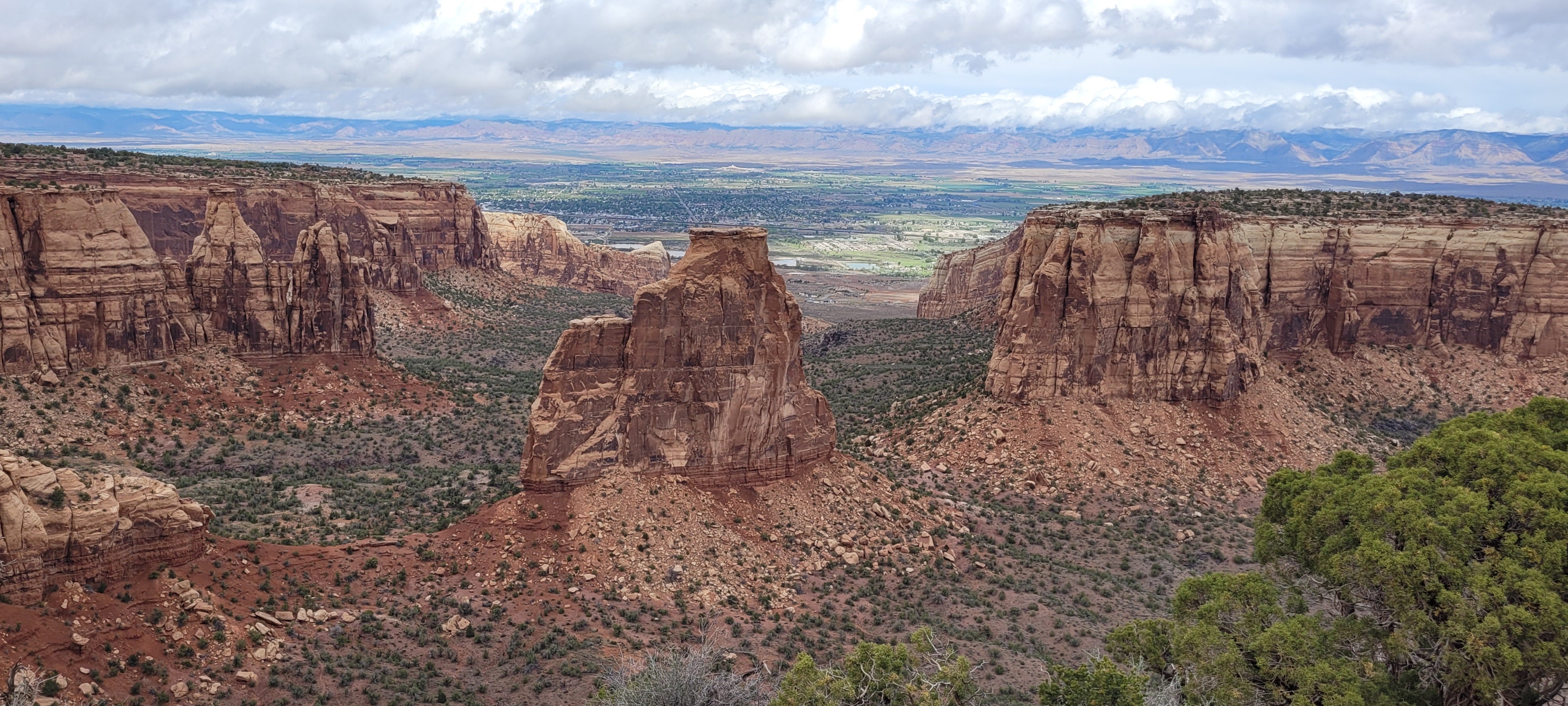
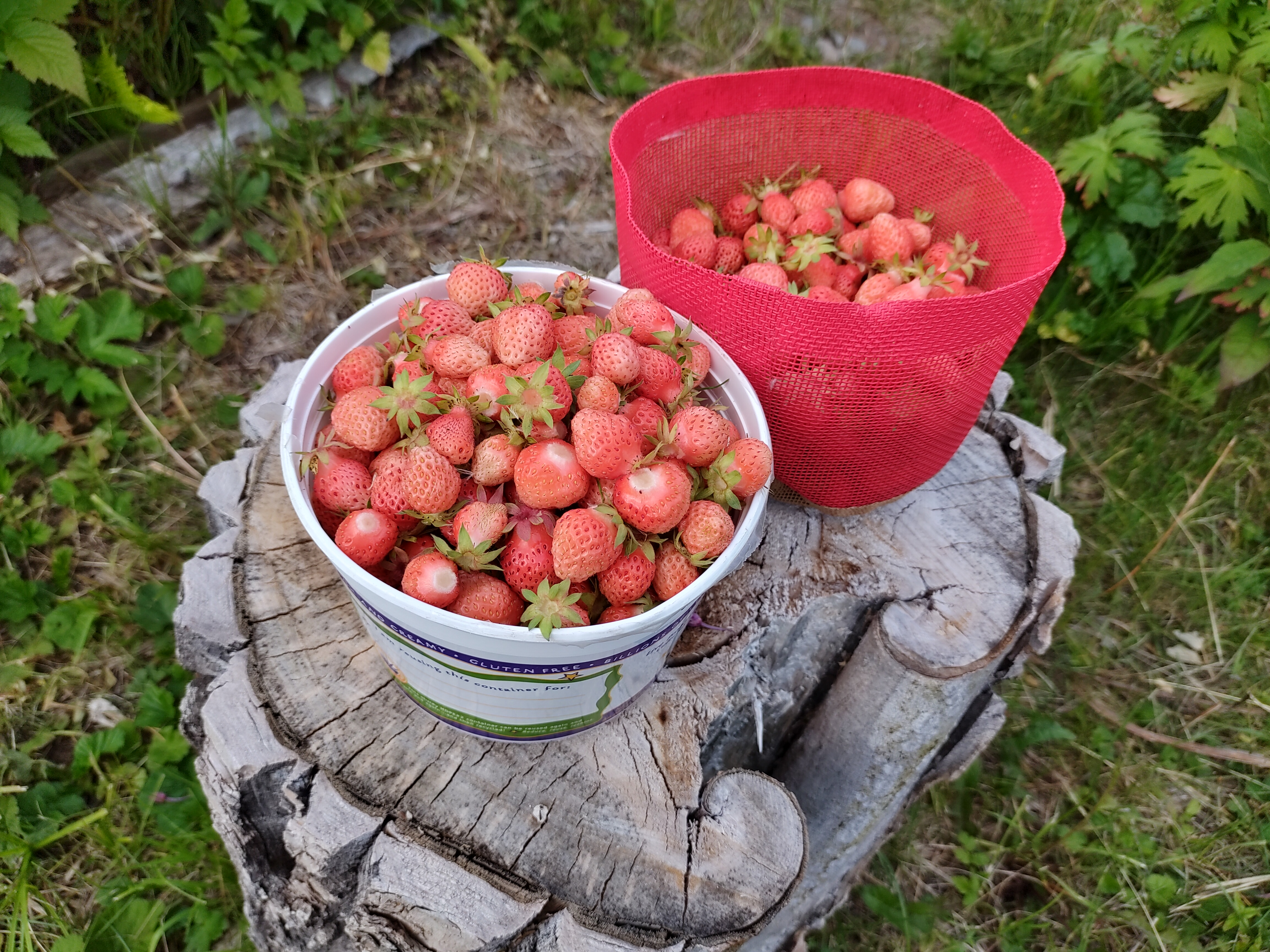
So a lot has gone on since my last letter. I went back to Grand Junction, Colorado, the town where I was born, to gather with family and attend my sister’s memorial service. The flood of memories, the reconnecting with so many cousins and second cousins and old friends and old familiar places has me feeling pensive. Of course I’m sad, but I’m also grateful to be here, you know? Grateful for small things, like trekking up the road with the wind in my face to check the mail, and for those first green chives that are popping up in our garden after a long winter, and for homemade strawberry jam to sweeten my morning yogurt.
Sometimes, especially when my heart is feeling tender, every little thing feels like a miracle. I mean, isn’t it a miracle that any of us are here at all? That we’re walking around in these bodies that are performing a trillion different tasks all at once without us even having to think about it?
And then one day it all ends. The biological parts of our body cease to function. But that energy that fueled all of those trillions of tasks, where does it go? Science tells us that energy cannot be created or destroyed, only transferred. So the energy that fueled my sister’s body, the stuff that made her alive, still exists, and I choose to take comfort in that.
On our way back to Denver from Grand Junction, Dean and I stopped at Glenwood Hot Springs and soaked in the mineral-rich waters there for a couple of hours. The first hour was perfect and the second hour was almost perfect until I started thinking about how long it might be before I get to soak in a hot springs again. You see, I love a good hot springs soak. They even occupy my dreams with some regularity. And sadly, while the Kenai Peninsula of Alaska has tremendous offerings in the way of natural beauty and outdoor experiences, there are no hot springs here. The good news is that we’ve started planning a hot springs tour/road trip around the western United States for our next getaway. Please let me know if you have any favorites we should add to our itinerary.
One thing that my sister had that my niece so graciously passed on to me is a five-year diary that belonged to my paternal grandmother. Grandma Ross wasn’t one for writing down her deepest thoughts or concerns, but she kept a record of her days; mostly of who she visited with, a few things she accomplished, and the weather.
Here are a couple of entries:
* March 4, 1966 Been pretty nice a little chilly. I baked bread got ironing done. Clarence took a walk. We got a letter from Melvin and Veda. They sent a picture of baby he sure is cute. It’s 25 after 9.
* November 23, 1963 Been nice a little chilly, about all the news on Radio today has been about President Kennedy. Sure feel sorry about it. Don, Mary and LaDawn came by ate supper with us.
I suspect that Grandma Ross wasn’t writing in her diary for anyone but herself, and she wasn’t trying to tell a story of any kind, but there’s a lot to be learned from the simplest of entries. My biggest takeaway is just how connected she was on a daily basis to her adult children and her grandchildren. They visited, shared meals, looked in on one another, and helped each other out nearly every day of the year.
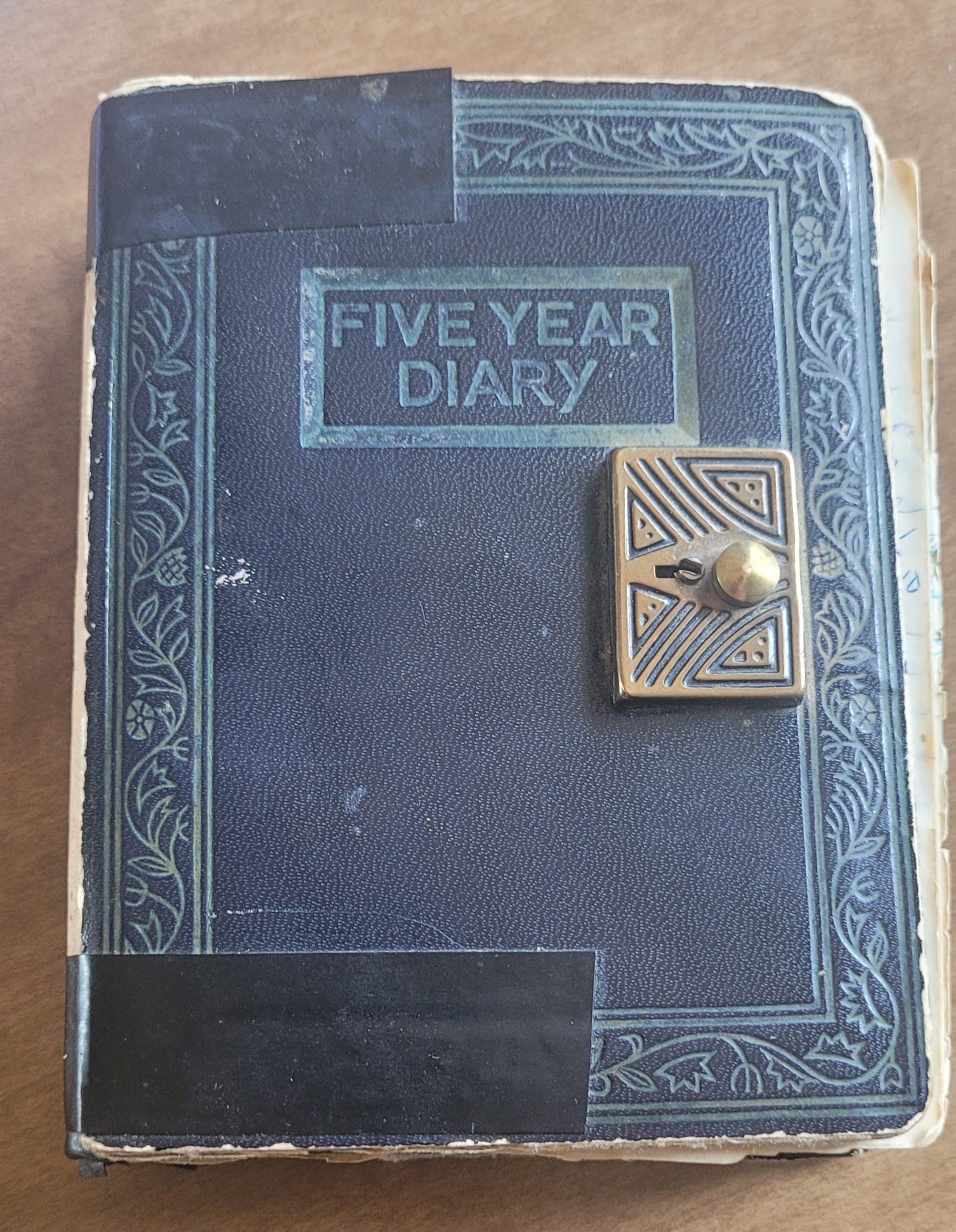
Remembering my Grandma Ross and seeing her diary entries and her notations about every visit and correspondence brings me to something fun that I’ve been wanting to do for a while.
I’d like to encourage you to write a letter, a card, or a postcard to someone you care about, and send it to them in the mail. If writing isn’t your thing, an in-person visit or a meaningful phone or Zoom call will work. In certain situations, email might be the most practical. The point isn’t the tool you use to connect with another person, but the connecting itself. I haven’t always been the best at keeping in touch, but I have sent a few letters out in recent months, one of which was to my sister Diana. Now I’m so glad I did.
If you do send out a letter, place a long overdue phone call or visit someone you’ve been meaning to catch up with between now and June 4th, send me a quick note via email to let me know and I’ll enter you into a drawing for a giveaway. On June 5th I’ll randomly choose a name from all the entries and I’ll send (or deliver) the winner some of our Twin Fish Gardens tea. You don’t need to provide any proof because I trust you. I also promise not to fill your email with anything unrelated to this little giveaway.
Here’s my email: tsundmark@protonmail.com
Okay, I’ve gone on for quite a long time here, and I need to get on to other things now. (Rest assured, it’s not ironing.) As always, I love hearing from you, so please reach out if you’d like to. If you hit “comment” on the WordPress page, your post will be public. If you’d rather reach out privately, you can use the email above.
Thank you for being on the receiving end of my letters. Until next time, keep your eyes open for miracles.
With love,
Teresa
*On my flight down to Colorado, I read The Correspondent by Virginia Evans. It’s a novel that’s composed entirely of letters and as such has been recommended to me by several people. I didn’t know much about it when I chose that book to read on the airplane, but the main character’s life is largely shaped by grief. Don’t let that heavy subject matter scare you though, because really it’s about healing. The author unpacks the story beautifully and if you’re one of the few people who hasn’t already read this book, I highly recommend it.
*Speaking of miracles: Here is something lovely that was made from something ordinary. My friend Mary left a voicemail for her son, Clinton, and he put it to music. It’s called “Miracles.” Thank you Clinton Edminster for giving me permission to share it. (You’ll probably need Facebook in order to see this one.)
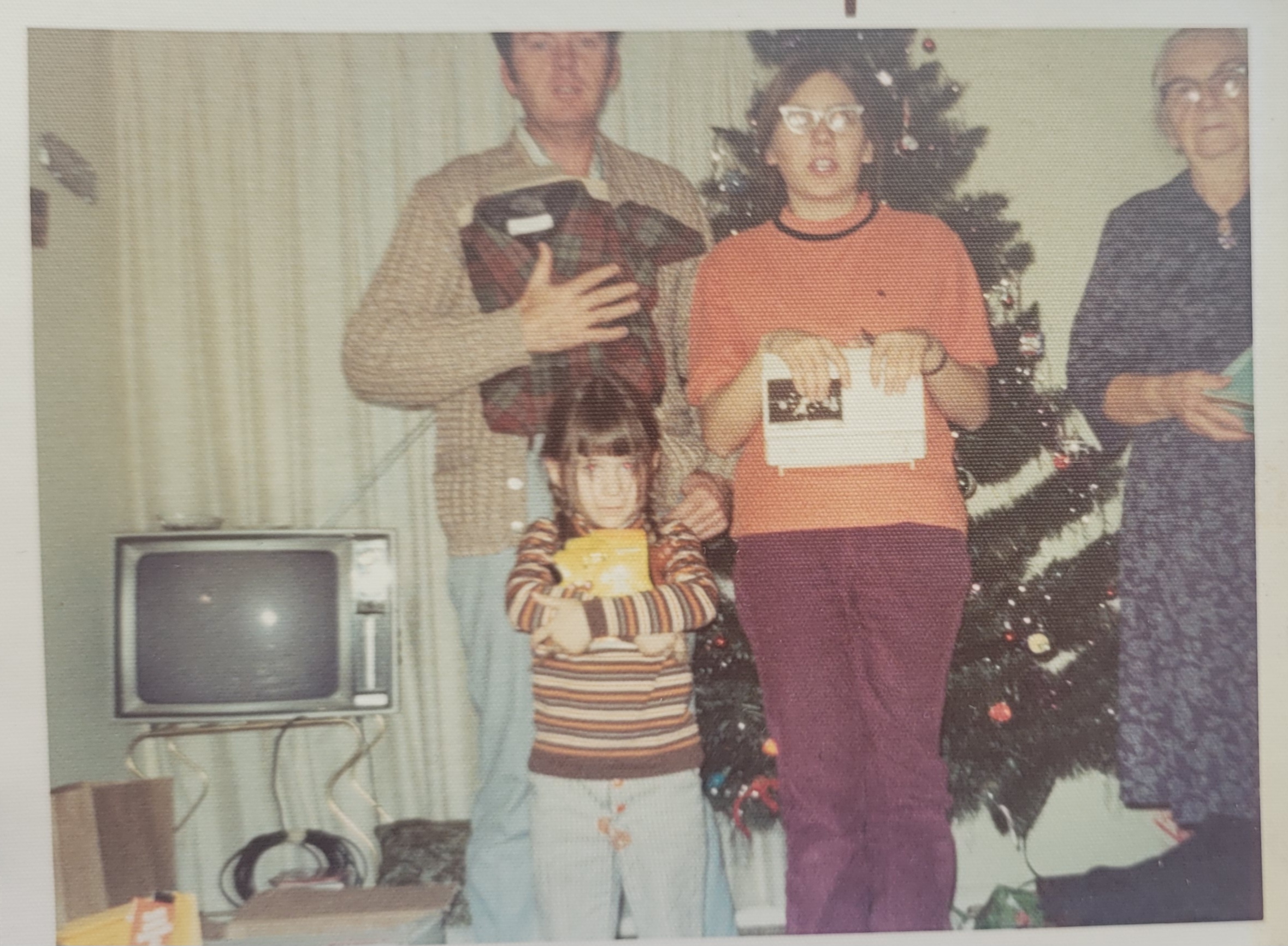
*And one last thing. When I was back in Colorado, my sister Karen shared an album of photos that she took when she was ten years old. It’s a throwback to the days before you could take a hundred pictures and delete all but the best ones, which to me makes this one perfect. It’s me with my sister Diana, my dad, and my Grandma Ross posing with our Christmas presents.