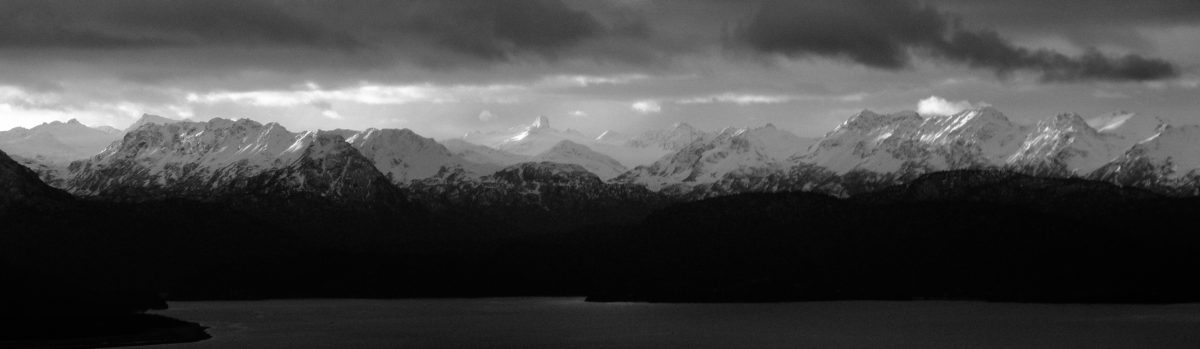

There is a mass of land north of where I live that bulges toward the heavens. It’s been measured by humans and thus determined to be the highest reaching land mass on the continent. People pilgrimage to this great land mass. Sometimes they stay in its proximity for days just to catch a glimpse.
Something so grand, so awe-inspiring, so beyond anything else, becomes revered; not because it demands reverence, but because reverence for it is inevitable. And to see it, to be near it, to feel its presence inspires us to use it as a reference. There are other land masses that protrude from this continent and each of them are unique and beautiful, but only one is The Great One.
What is the purpose of a name? I’ve had friends who’ve changed their names because they were never comfortable with the ones that had been chosen for them. I changed my name as well after I got married, like my mother did, and her mother before her, and hers before her as far back as the genealogical history on both sides of my family goes. Does my married name make me who I am any more than my maiden name did before that?
In a society that demands identification, would I cease to exist if I didn’t have a name? Without a name, how would I be known? By my appearance, my attributes, my essence? Would I be known by the evidence of my existence?
What evidence is there of my existence? There is my physical flesh and blood, although that will cease to exist one day. What about the children who were born from my body and the children they may have one day? Had I not chosen to have children though, I would still exist.
Would the words I write or the things I make with my hands act to prove my existence? Would they, even without a name to attach to them?
A name then, is a convenience. A name is something we attach to something that exists. But a name is not proof of existence.
A name gives us something to call each other.
A name gives us a sound, a visual to attach to ourselves and our surroundings, and when a name is agreed upon, it gives us something in common. When I say I live in Alaska, you recognize that name. You may not think of Alaska the same way I think of Alaska, but we have a common reference point from which we can launch our conversation.
As for me and for you, if the name that’s been attached to us were to be stripped away, what would we be left with? It depends on who’s asking. I am someone different to my spouse, to my kids, to my coworkers. We are seen from a different perspective from everyone we encounter, but does that change who we are fundamentally?
A name then, is a simplification. Who we are in our true essence is much more complicated than what a name could possibly contain. We, at our core, are nuanced beings who can move through the world and adapt to the environments in which we find ourselves.
I have different roles at home than I have at work. Roles then, are not unlike names.
I am the lady behind the circulation desk at the library. I am a Cook. Spouse. Friend. Writer. Musician. Beach wanderer. Sun seeker. Reader. Vacuum operator. Gardener. Tea maker. Sister. Mother. Animal caretaker. Neighbor. Driver. Television watcher. Internet scroller. Philosopher. Mystic.
Strip away any of these. Strip away all of these. Who am I?
We know each other by our names. We know each other by our associations.
“I don’t know your name, but you sat in front of me at the basketball game.”
“I’ve never met _____, but I’ve read an article they’ve written.”
“______ is a talented artist, and from what they’ve made I imagine they’d be interesting to talk to.”
“I’ve heard that name before, but I can’t recall where I’d know them from.”
We only know a person from the perspective from which we’ve interacted or been introduced. We can never know another person as well as we can know ourselves. And a name is never able to encompass the full story of whatever it is we are attempting to name.
If I use the word God, what does it mean? It will mean something different to you than it does to me because we only have our own perspective from which to give it meaning. We may have a guide that informs our ideas in the form of a text. We may have had experiences that add to our perspective of whatever it is we think about when we hear the word God.
A belief in God is not required in order to try to describe what is meant by the word God. What comes to mind when you hear the word God? What feeling is evoked? How would you describe whatever you think others might mean when they use the term God?
We each have an understanding of what we’re trying to describe, but my description will always be different than your description. No one perspective is complete.
What is it that we’re trying to name when we use the word God? The force that pulls us all together? All there is and all there ever will be? The endless cycle of being? That which gives us life?
We use the word God because an adequate description of what we’re trying to name will always fall short. The term God then is inadequate. It is a limitation, an approximation, a shortcut.
Could any name, could any book, could any religion or tradition claim to know all there is to know about God? No. It is an impossibility. All we can do is try to understand what is meant when we use the term God, and there is no end to such an exploration.
Could any name adequately encompass the grandness of the tallest mountain in North America? No, but the people who lived in its shadow, who lived with it as their continual reference point, described it as Denali – The Great One – so I will refer to it as that. No matter what any human calls it or names it though, the truth of the mountain’s existence, the truth of the mountain’s essence, the truth of the mountain’s grandeur is incapable of being diminished.
Remember, this is also true of you.
 Lofty Minded in Alaska