January 2026: A Letter

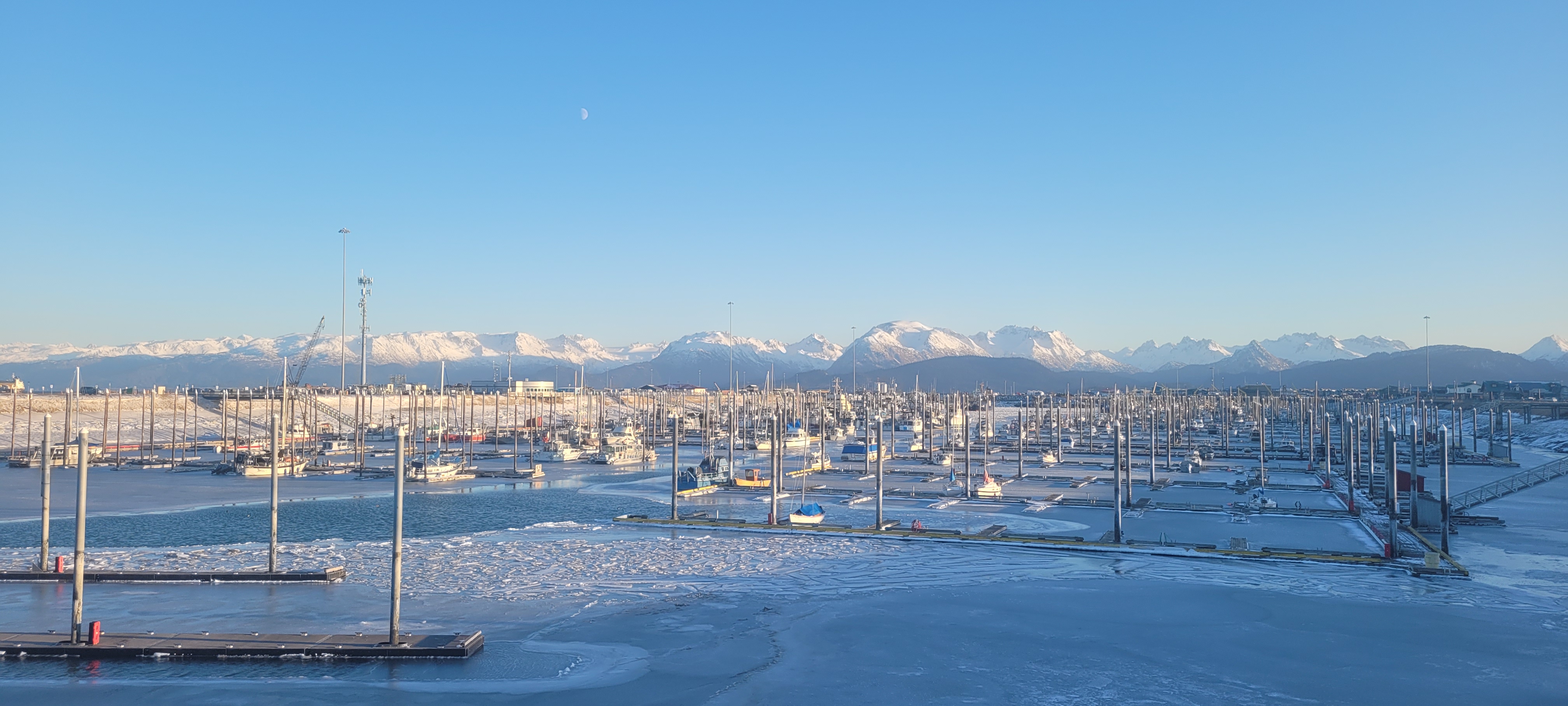
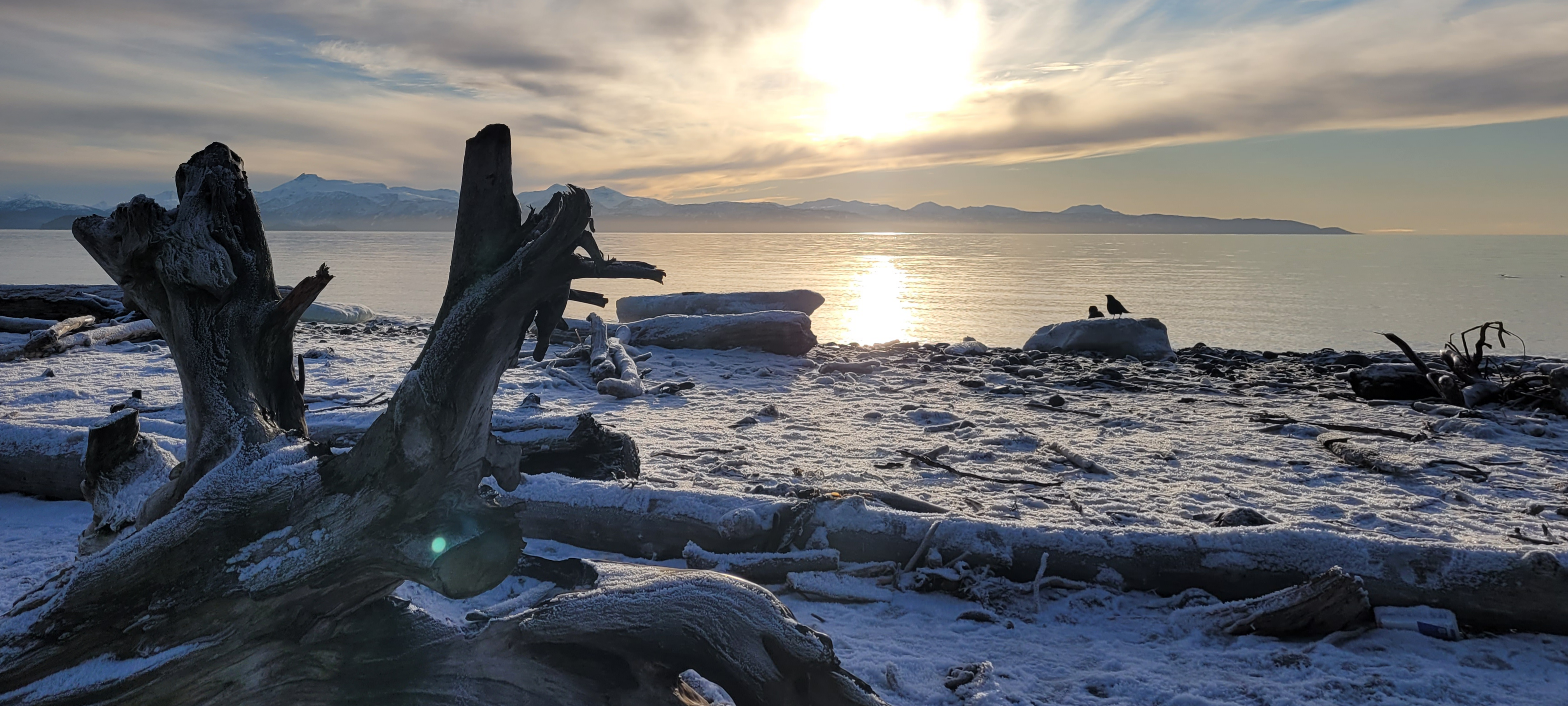
A frozen Homer Boat Harbor

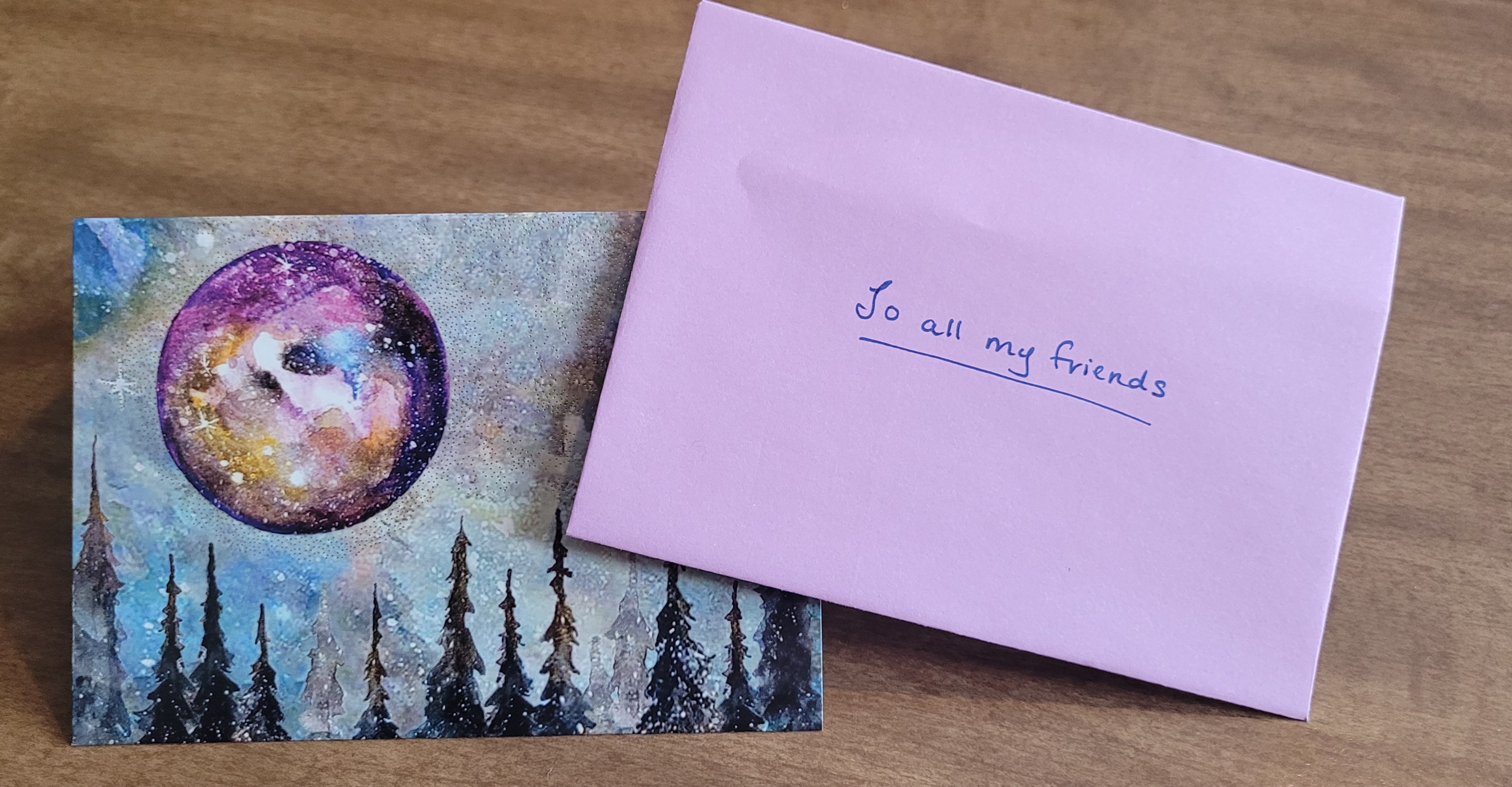
Dear Friends – friends in real life, family members, acquaintances, neighbors, old friends, friends I’ve yet to meet, and friends that I’ll likely never cross physical paths with,

I hope this letter finds you well as we’re heading into a brand new year. I don’t know about you, but I feel like the past few years have changed me. I suppose that would be true no matter the year, no matter the era, but I’m feeling the changes from recent years more acutely. As a result, I’m feeling the desire to reconnect with people and my community. So I’m starting the year by writing you a letter.

I don’t know if there are any rules to letter writing, but my aim is to begin a conversation.

A good conversationalist asks questions, shares news, tells stories, and tosses out ideas that invite a response. A good conversation isn’t formed like an essay, so writing a letter that’s meant to be a conversation should, in theory, be able to ramble a bit, and switch topics, and ask rhetorical questions. It shouldn’t require a topic or a reason for existing. Which is good, because I don’t have a plan here, I’m just writing to say hey.

I fear that a letter in the form of a blog post will not have the charm that a handwritten letter would have. There’s no paper to unfold. There’s no handwriting to decipher. There are no eraser marks or crossed out words.

I recently came across a decades old letter that was sent to me from a college friend a year after her divorce. We each got married to our spouses in 1990, and the four of us were close friends in Missoula. Over time, we all moved on and our correspondence became infrequent. Now, enough time has passed without contact that I would have to do some searching in order to find her. Maybe I’ll add that to the list of things I’d like to do this year.

Her letter contained a lot of catching up but it wasn’t just small talk. It was real talk, and it reminded me of the conversations we’d shared back when we were both in our early 20s. Her letter, which was everything you’d want a letter from an old friend to be, came to me at a time in my life when I was pretty overwhelmed with raising children and trying to make ends meet and in general trying to keep my act together, and I don’t remember if I ever wrote her back. I hope I did.

When I was done reading it, I tucked it back into its envelope with its stamp that cost a whole lot less than a stamp costs now, and placed it back in the box that I’ll probably not look at for at least another decade. That’s a hard experience to create in digital format.

Now we have AI and I’m still trying to figure out my relationship to this thing that is here whether I’m ready for it or not. Have you noticed all of the AI written essays that are floating around social media lately? They’re stories about people or historical events. Often they’re political in nature. These essays are all similar in length and have short and choppy sentences that seem to be written for maximum impact and an overblown emotional response. They’re full of descriptors and metaphors that sound clever but I find them manipulative, and annoying.

I’ve always felt like I have a good bullshit detector, and I’m hoping that this particular super power will help me out in this age of AI, but I fear that as the technology gets better my BS detector will be put to the test. It’s a good argument for handwritten letters and across the table conversations.

What’s new with you? What changed for you in 2025? What are you looking forward to in the new year?

Are you sleeping well? Do you have good food to eat? Are you staying warm this winter? Do you have enough money to pay your bills? How are you in your relationships with your parents, your children, your significant other, your friends? How is your health?

I know these are questions we don’t often ask each other. Maybe that’s because we’re afraid of prying, or maybe it’s because receiving honest answers to these kinds of questions would require a response.

Somehow it feels safe to ask these kinds of questions in a letter. The reader (you) have a choice about whether or not to respond. Sometimes the written word acts as a barrier, which can be a good thing in certain situations or for certain people. In that way, a letter is like an opening. You can choose to go through it, or choose to stay outside.

In the local public library where I work, there are a few people who come in first thing when we open each day and stay until we close. I resist the urge to ask them if they have a warm place to sleep, or if they’re hungry, or if there is anything they need. I stick to my professional library worker persona and greet them with kindness when they walk through the door each morning. Sometimes I’m afraid that if I asked them direct questions about their well-being the spell would be broken and they’d stop showing up. And I’m glad they’re coming through those library doors. I’m glad a place exists where they can exist without being hassled. I wouldn’t want to mess that up.

I guess I’m trying to figure out if asking them those questions would be the right thing or the wrong thing to do. This is really all about acknowledging the hardship we see in the world rather than pretending everyone is okay. I guess I want people to know that it’s okay to not be okay and their value does not hinge on having a warm place to sleep or money in their pocket.

Transitions have always been tricky for me, both in writing and in life, which is another reason why this letter writing thing just might work for me. In 2025, our daughter and daughter-in-law made the difficult decision to part ways. This was a big transition for me to wrap my head around, but as these things go, it wasn’t about me, it was just a change I needed to accept. The two of them have demonstrated that breakups can be done gracefully, even with love, and for that I’m grateful. I’m also thankful for the time they chose to be together, because our lives were enhanced by the relationships their pairing brought our way. I can talk about it now without so much sadness, but I had some grief to work through this past year.

There were plenty of things to be thankful for in 2025. One of my ambitions for the year was to achieve more balance in my life, and while that is always going to be a work in progress, I feel as though I made some good strides in that area. My measuring stick was how I felt at the end of the summer, and for the first time in several years I wasn’t totally exhausted at the beginning of September. I attribute the better balance to an overall lowering of expectations. The garden wasn’t perfect this year. We didn’t vend at as many farmer’s markets. We only went to one day of the big music festival instead of the full three days. Those and many other small tweaks made a difference and allowed for a more relaxed summer vibe, which in Alaska can be difficult to achieve.

The most relaxing weekend of the summer was a camping trip Dean and I took in the Kenai National Wildlife Refuge. We had a campground to ourselves and the weather was perfect. Dean had his canoe and I had my banjo and a lake to swim in. We ate well. We slept well. We spent a lot of hours around a campfire. It was the perfect way to spend a few days.

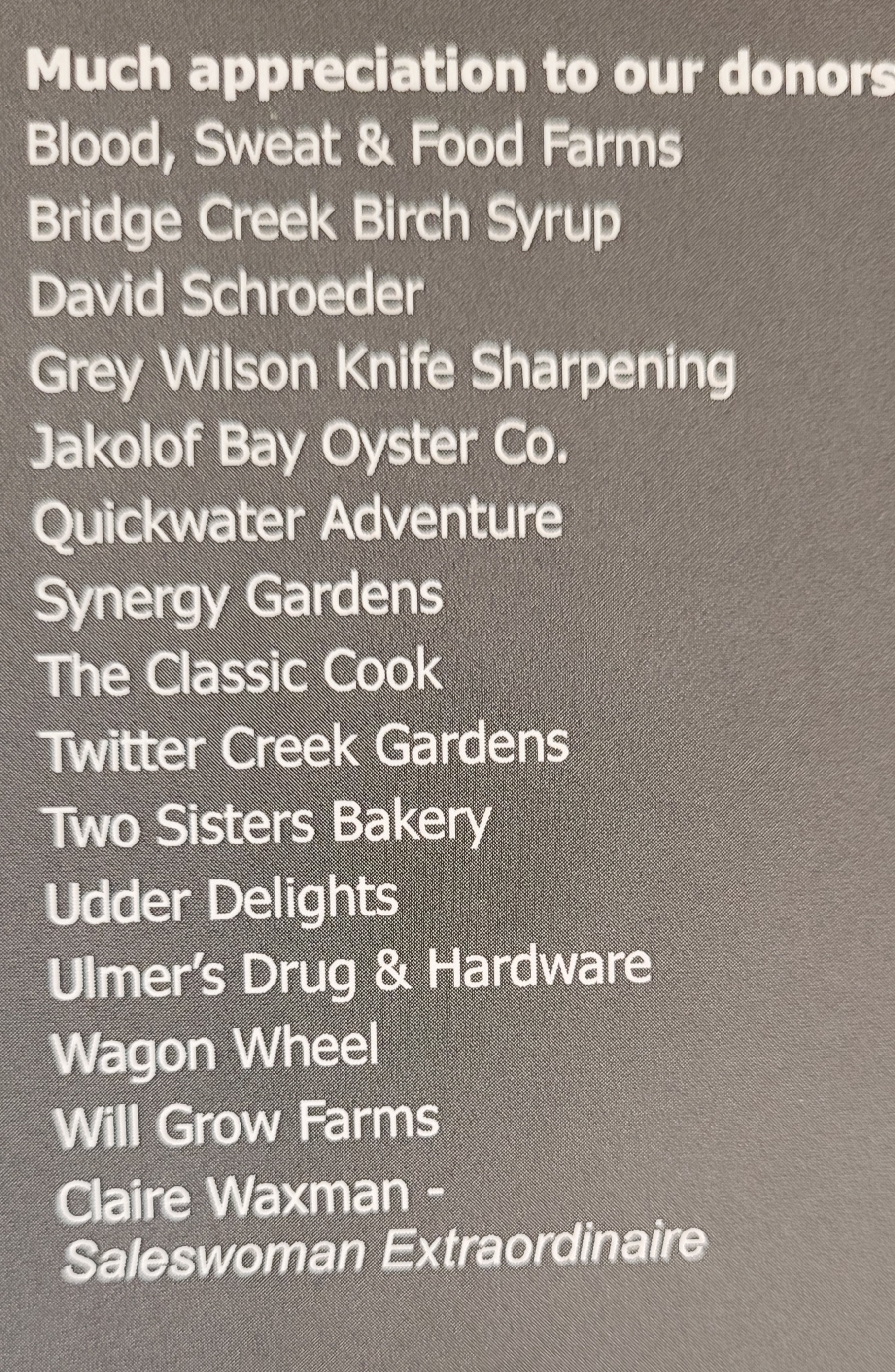
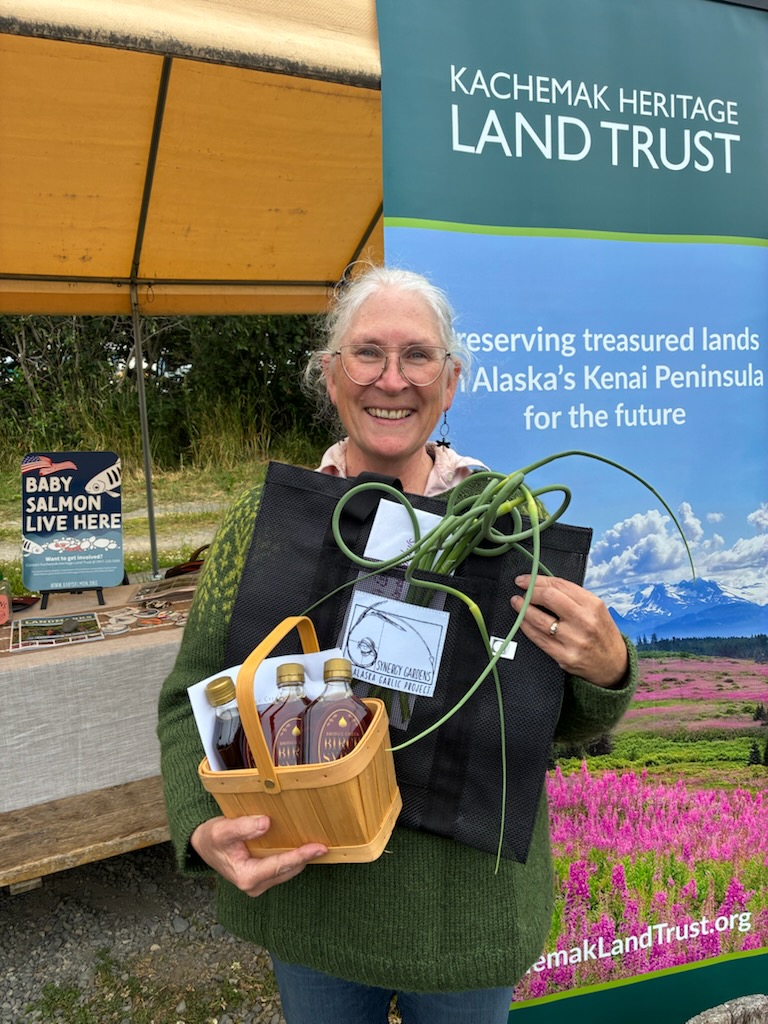
Another fun highlight of 2025 was winning the Kachemak Heritage Land Trust raffle. We were vending at the farmer’s market when I got news that I’d bought the winning ticket. My winnings included incredible bounty from local food producers and businesses – birch syrup, honey, a whole goose, a Traeger Grill, lots of fun swag, ice cream, a fondue pot, and gift certificates for knife sharpening, baked goods, garden supplies, a fishing charter, and loads of veggies, which helped compensate for this year’s less than perfect garden. I felt lucky, to be sure, but also grateful to live in a town that’s comprised of so many generous people who are contributing to such inspiring work.

Speaking of inspiring work, 2025 was a good year for our small business, Twin Fish Gardens. It’s growing slowly, as planned, and I’m enjoying getting to know this entrepreneurial side of myself that was lying dormant for a lot of years. Over the summer, between work and camping, we managed to harvest and process enough fireweed to keep our customers in tea for another year. My goals are to make things more efficient, incorporate more writing into the whole project, and start working on our garage conversion shop.

I’d love to know what’s inspiring you. Any good podcasts or albums to recommend? What about books?

Here are a few of my current inspirations:

* Bonnie Prince Billy’s 2025 album, The Purple Bird.

* Radio Paradise. Online radio that’s listener supported and free of ads. A real person curates every set, so it never feels monotonous and it’s introduced me to a ton of fabulous artists over the years. (My daughter calls me a Radio Paradise evangelist.)

* The Telepathy Tapes podcast.

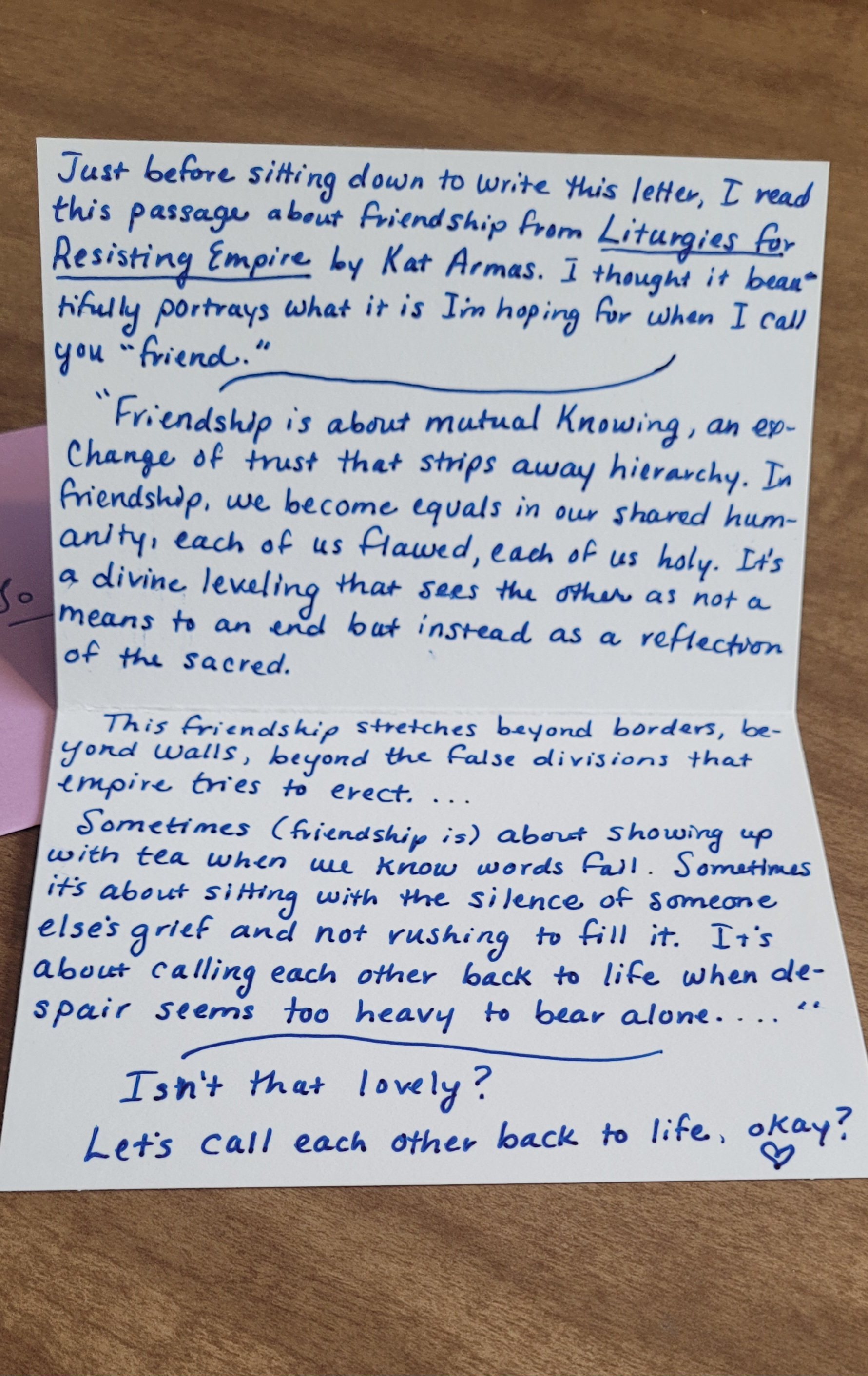
* I’m currently reading Liturgies for Resisting Empire: Seeking Community, Belonging, and Peace in a Dehumanizing World by Kat Armas. I’ve borrowed the copy from the Homer Public Library but am feeling the need to get a copy of my own.

* If you are interested in such things, I highly recommend contemplating the Lord’s Prayer as translated from the Aramaic by Neil Douglas-Klotz. I’ve been using lines from it as journal prompts for the past couple of months and it’s a deep well of inspiration and insight. It’s good teaching, no matter your belief system.

If you’ve gotten this far into this letter, then you really are a friend. Thank you for being out there and for listening. I tend to be self-conscious about my writing and I put pretty high expectations on myself to make it all sound smart and well put together. I’m learning though, that for my intentions, being real matters more than being polished.

So here’s to a year of being real.

Let’s stay in touch, please, and let’s try to take care of ourselves and each other.

With love,

Teresa

Nothing Great

I’ve felt my fair share of righteous anger lately, and plenty of dismay, but today I’m sad. Incredibly sad. Was it the video of Kristi Noem looking cute and wearing a $30,000+ Rolex standing in front of caged humans that caused me to feel this way? Was it the video of masked men in plain clothes detaining Tufts University Ph.D. student Rumeysa Ozturk, even though she’d done nothing wrong? Is it the fact that the things that make life a little better for the citizens of this country are being made out to be handouts and a waste of money? Is it that decisions that impact the lives of working people are being made by a billionaire who cares not one iota about our well-being? Is it that the earth itself is seen as just a resource to be used for building wealth, with no consideration for the living beings who will inhabit this planet far into the future?

I realize that my personal sadness could go two different ways. I could wallow in it, shake my head and wish for better days, or I can try to put it to use somehow and be a part of the solution to the problem of the cruelty that’s being perpetuated in the name of making our country great.

But here’s the simple truth. Nothing great comes from cruelty. Nothing great comes from destroying the ecosystems that life depends on. Nothing great comes from causing others to suffer. Nothing great comes from scapegoating. Nothing great comes from a platform that’s been built on lies. Nothing great comes from pretending that this country hasn’t inflicted great harm both within and beyond our borders. And nothing great will ever come from valuing money and power over all else.

If being great means being oppressive, if it means having no regard for peoples’ ability to have a good life, if it means forgetting what it means to be good, then I don’t want any part of it.

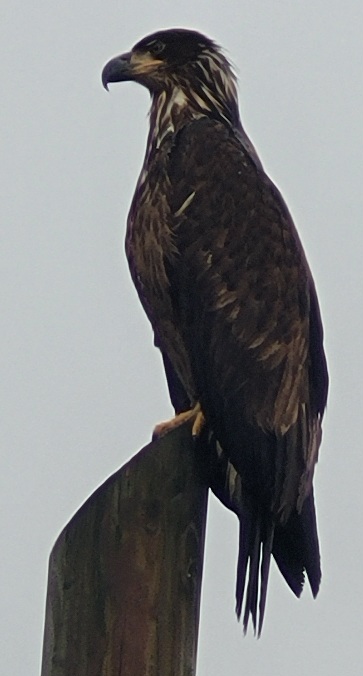
Immature bald eagle

Nameless

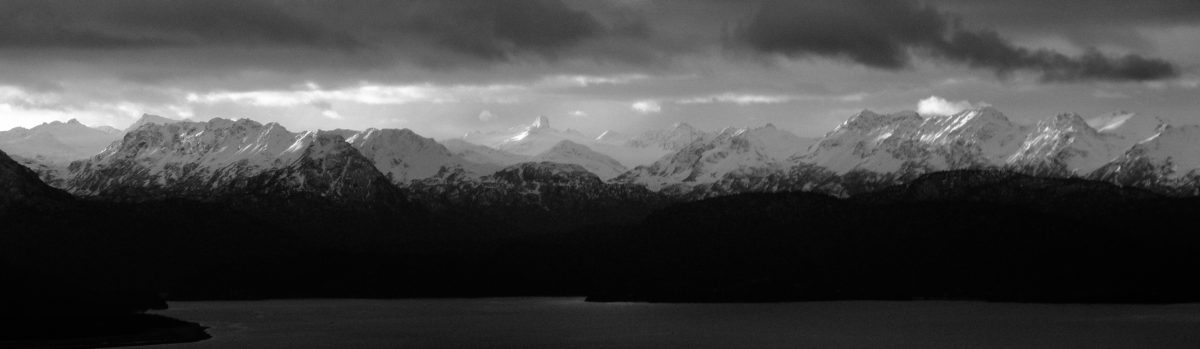
There is a mass of land north of where I live that bulges toward the heavens. It’s been measured by humans and thus determined to be the highest reaching land mass on the continent. People pilgrimage to this great land mass. Sometimes they stay in its proximity for days just to catch a glimpse.

Something so grand, so awe-inspiring, so beyond anything else, becomes revered; not because it demands reverence, but because reverence for it is inevitable. And to see it, to be near it, to feel its presence inspires us to use it as a reference. There are other land masses that protrude from this continent and each of them are unique and beautiful, but only one is The Great One.

What is the purpose of a name? I’ve had friends who’ve changed their names because they were never comfortable with the ones that had been chosen for them. I changed my name as well after I got married, like my mother did, and her mother before her, and hers before her as far back as the genealogical history on both sides of my family goes. Does my married name make me who I am any more than my maiden name did before that?

In a society that demands identification, would I cease to exist if I didn’t have a name? Without a name, how would I be known? By my appearance, my attributes, my essence? Would I be known by the evidence of my existence?

What evidence is there of my existence? There is my physical flesh and blood, although that will cease to exist one day. What about the children who were born from my body and the children they may have one day? Had I not chosen to have children though, I would still exist.

Would the words I write or the things I make with my hands act to prove my existence? Would they, even without a name to attach to them?

A name then, is a convenience. A name is something we attach to something that exists. But a name is not proof of existence.

A name gives us something to call each other.

A name gives us a sound, a visual to attach to ourselves and our surroundings, and when a name is agreed upon, it gives us something in common. When I say I live in Alaska, you recognize that name. You may not think of Alaska the same way I think of Alaska, but we have a common reference point from which we can launch our conversation.

As for me and for you, if the name that’s been attached to us were to be stripped away, what would we be left with? It depends on who’s asking. I am someone different to my spouse, to my kids, to my coworkers. We are seen from a different perspective from everyone we encounter, but does that change who we are fundamentally?

A name then, is a simplification. Who we are in our true essence is much more complicated than what a name could possibly contain. We, at our core, are nuanced beings who can move through the world and adapt to the environments in which we find ourselves.

I have different roles at home than I have at work. Roles then, are not unlike names.

I am the lady behind the circulation desk at the library. I am a Cook. Spouse. Friend. Writer. Musician. Beach wanderer. Sun seeker. Reader. Vacuum operator. Gardener. Tea maker. Sister. Mother. Animal caretaker. Neighbor. Driver. Television watcher. Internet scroller. Philosopher. Mystic.

Strip away any of these. Strip away all of these. Who am I?

We know each other by our names. We know each other by our associations.

I don’t know your name, but you sat in front of me at the basketball game.”

I’ve never met _____, but I’ve read an article they’ve written.”

______ is a talented artist, and from what they’ve made I imagine they’d be interesting to talk to.”

I’ve heard that name before, but I can’t recall where I’d know them from.”

We only know a person from the perspective from which we’ve interacted or been introduced. We can never know another person as well as we can know ourselves. And a name is never able to encompass the full story of whatever it is we are attempting to name.

If I use the word God, what does it mean? It will mean something different to you than it does to me because we only have our own perspective from which to give it meaning. We may have a guide that informs our ideas in the form of a text. We may have had experiences that add to our perspective of whatever it is we think about when we hear the word God.

A belief in God is not required in order to try to describe what is meant by the word God. What comes to mind when you hear the word God? What feeling is evoked? How would you describe whatever you think others might mean when they use the term God?

We each have an understanding of what we’re trying to describe, but my description will always be different than your description. No one perspective is complete.

What is it that we’re trying to name when we use the word God? The force that pulls us all together? All there is and all there ever will be? The endless cycle of being? That which gives us life?

We use the word God because an adequate description of what we’re trying to name will always fall short. The term God then is inadequate. It is a limitation, an approximation, a shortcut.

Could any name, could any book, could any religion or tradition claim to know all there is to know about God? No. It is an impossibility. All we can do is try to understand what is meant when we use the term God, and there is no end to such an exploration.

Could any name adequately encompass the grandness of the tallest mountain in North America? No, but the people who lived in its shadow, who lived with it as their continual reference point, described it as Denali – The Great One – so I will refer to it as that. No matter what any human calls it or names it though, the truth of the mountain’s existence, the truth of the mountain’s essence, the truth of the mountain’s grandeur is incapable of being diminished.

Remember, this is also true of you.