Not as scary as A Thief in the Night

Earlier this week I finished reading Lidia Yuknavitch’s memoir, The Chronology of Water.  Normally I don’t feel compelled to own a book—I’m usually content with borrowing a copy from a friend or the library, but this is one I want to buy.  As Sugar at The Rumpus would say, Lidia writes with humility and surrender, with resilience and faith, in other words she “writes like a motherfucker.”  Lidia’s story is interesting, heartbreaking at times and filled with drama, but it’s her writing that pulls me in—her ability to cut right to the point, her ability to turn the story of a life into a piece of artwork.  I want to own her book so I can refer to it when I need some inspiration—which is often.

I was telling my daughter about this book.  She’s sixteen and her love of books kicked in later than many of her friends, but to my immense satisfaction she’s now an avid reader.  Two summer’s ago she was hooked by The Hunger Games series.  Now she’s reading The Virgin Suicides. When I was telling her about The Chronology of Water (don’t worry—I left out the sexy parts) I made a comment that my life has been too boring to ever write a memoir as interesting as Lidia Yuknovich’s.  She told me that from what she’s heard of my childhood, I have plenty of material.

It’s true I suppose.  My parents divorced when I was very young, which meant that I had to deal with stepparents and the dichotomy of being raised in two separate households.  And there’s the whole religion business.  My daughter has been to church only a few times in her life but I spent a good portion of my childhood in Sunday school, sitting through sermons and crying at the altar—pleading for forgiveness for the sins I’d committed.  (And aren’t all elementary-aged children terrible sinners?)  It’s true that living in a non-stop Pentecostal fear-fest certainly makes for some interesting stories.

Most of the hours spent at church—the First Assemblies of God Church on 4th and Grand Avenue in Grand Junction, Colorado, to be specific—blur together.  I couldn’t tell you the specifics of any one sermon.  The church itself though, with its long white-tiled hallway, its labyrinth of classrooms, its red carpeted sanctuary and its dimly lit balcony will forever be associated with a whole host of mixed up emotions in my memory.

One of the things I do remember—with horrifying distinction—from the church of my childhood, is a movie that was made in the early 1970s called A Thief in the Night.  It was the story of a woman who had been left behind after the rapture.  She realized early on that although she was a good person she’d made a terrible mistake by not taking Jesus Christ as her personal savior.   Without taking the time to tell you the entire plot line, (I’d need to refresh my own memory,) I can say in all honesty that nothing in my life has scared me as much as that movie.   I’m talking nightmare, wet the bed kind of fear.  I’m talking crying and screaming upon coming home to an empty house kind of fear.  One scene depicted a child being sent away to a guillotine. (Not everyone is as fortunate as I am to have an actual video of the scene that traumatized me for years to come.  To understand my terror please see the attached YouTube video.) Other scenes involved torture and executioners.

     Ironically, at the time they showed those films during the evening services, I wasn’t allowed to go to movies because they were “against our religion.” Somehow though, the church officials thought it was okay to show A Thief in the Night to children.  The graphic, disturbing images were justified because they would hopefully lead to conversions.  And let me tell you, the altars were busy on those nights.   Jesus became the personal savior of many a kid after those showings.  It was a strange combination of Jesus loves you unconditionally and if you do not accept him as your personal savior you will burn in hell. 

This is how I was raised.  It was the backdrop to all of the other mixed up stuff that was going on with my two-part family and my adolescent body.   I guess my daughter is right. I do have a few stories to tell.  So does everyone.

As much as I wish I could remember more specific details of my childhood, most of my memories come in the form of emotions.  The last time I visited the 4th and Grand church was for my father’s funeral.  My emotions were already out of whack before I walked through the doors, but being back inside that building, seeing so many of my relatives that I hadn’t seen in years, being around the Jesus lingo again, using the same bathroom I used to retreat into as a kid when the pressure of the place became too much—it all reminded me of how I felt throughout the majority of my childhood.  Inadequate.  Small.  Fearful.

So, as usual, (forgive me) all of this comes back to writing.  When I applied to the MFA program over a year ago I chose fiction as my genre to study.  But I’m questioning that choice lately.   When I sit down at my computer it’s the true stories I want to tell—they seem easier to come by because my memory and my experience limit where I can go.   But I believe in fiction.  I believe that some truths are best expressed when we’re forced to step outside of our own lives.  It’s just that when I sit down to write fiction I feel inadequate, small, fearful all over again.  It’s not as fear-inducing as A Thief in the Night—nothing is as terrifying as that, but it’s scary just the same.  The good news is that if I got over my fear of the rapture I can get over my fear of writing fiction.  It takes practice though—a lot of it—and faith in the process.  I may not know where I’m going with a story, but worst-case scenario is that I have to scrap an idea or start over.  That’s not nearly as bad as thinking you’ll be sent to hell if you screw up.

49 degrees

It’s Thursday morning and I’m moving slowly.  If I’m lucky I won’t have to leave the house today.   It’s -3 degrees outside and our 1970s-built house is struggling to hold the heat.  Yesterday when I got home from work I discovered that I’d shut the woodstove down just a little too tightly and the fire had gone out.  The house was cold—a mere 49 degrees—and I had to devote my evening to warming the place up.  Today I have the luxury of staying home.  I’ll tend to the fire; cook something slow and savory.   I’ll have time to work on my story and go for a walk and read.

Funny how staying home feels luxurious these days.  When my children were small and I didn’t work away from home I was always looking for reasons to leave the house.  I needed to get out.  I rarely had time to read or write so I had to go searching for ways to stimulate my brain.  I needed to converse with other adults, go to performances and seek out activities that gave us a break from the routine of being home all the time.  I had to go away to find the space I needed in my life.

The other night I met with a group of writers at the library to discuss our projects and ambitions for the year.  My friend Bill, an elementary school teacher and poet, talked about how last year he had more time for creativity in his life with his middle child on foreign exchange and his older child at college.  He described it as having more “bandwidth.” I could relate.  I’m starting to feel the effects of more bandwidth in my own life.  Less than two weeks ago my son left for college and my sixteen-year-old daughter has taken a huge leap in self-sufficiency now that she has her driver’s license.

It’s a slow, gradual process, this gaining extra bandwidth.  It’s an hour of not driving to town and back.  It’s a night at home with my husband while Adella is gone on a DDF (drama, debate and forensics) tournament.  It’s more frequent evenings with no Netflix or television.  It’s a little less cooking, a little less cleaning.  It’s a lot less time spent waiting.

The extra bits of time are small, but they’re adding up.  There’s a part of me that feels I should be using this extra time to write more prolifically or get to work on our never-ending list of home projects that have been put on hold for the last several years, but so far that’s not what I’m doing.  So far with my extra time I’m doing a lot of wandering around, staring out the window, reading, thinking.

I have a suspicion that most people my age, especially parents, have a hard time allowing themselves much unqualified time.  I think about my friends around town.  Some of them homeschool their own children (which is a full time job with very few breaks and no pay) and yet they still manage to keep their families well fed and their houses in order.  One of them directs a nonprofit agency and spends her weekends shuffling her daughter around the state for hockey tournaments.  One wrote a book and earned an advanced degree while teaching school.  A co-worker of mine volunteers in her children’s classrooms on her days off and then at night, when the rest of her family is in bed she studies for a couple of hours.   It’s probably best if I don’t compare myself to these friends of mine who seem to use their time so efficiently. At least not right now.

In a society that measures productivity by the number of dollars earned or tasks completed, I’m falling terribly short.  I could be looking for ways to earn more money.  I could go back to yoga class or involve myself with one of the many nonprofit organizations that are doing great things for our community.  But for now, I just want to stay home.  I want the company of my dogs.  I want to walk around my property and notice all the things that go unnoticed in a hectic life.  I want to take naps and drink tea and sometimes play the same fiddle tune a hundred times until I get a certain part just right.

For now, the little bit of extra time and space in my life feels good—nourishing even, after many intense years of raising children.  Of course there are still bills to pay and debt and chores and work, but there is more space around each of those things as my children move on with their own lives.  So today my tasks are to play my fiddle, make dinner, keep a hot fire in the woodstove and finish this blog post.  Tonight I’ll spend the evening with my daughter before she heads off to Anchorage for another tournament this weekend.  I probably won’t set any productivity records or add anything of great value to this world, but for today it’s enough.  Sometimes in the middle of winter, in a poorly insulated house, it’s enough just to keep the temperature above 49 degrees.

 Image

Montana, music and the New Year

It’s the beginning of a new year—one that will be different for sure in our family.  Dillon will be heading up to UAA in a couple of weeks and in the fall Adella will be going to high school in Montana for her junior year.  The house will be emptying out a little sooner than I had expected, at least temporarily, and anticipating that change gives me a different perspective on the present.  Suddenly spending quality time with my family feels kind of urgent, and yet I’m finding that teenagers don’t necessarily feel the same way.  I’m trying to guard against being too sentimental.

It was challenging to stay caught up with my writing in December, so one of my biggest goals for the new year is to start acting like a serious graduate student again.  I’m not so far behind that I can’t get caught up, but I have to find the time to write and then use that time wisely.  I’m not sorry that I took a break though.  I had a great visit with my mom and two older sisters earlier in the month when they came to see Homer’s version of The Nutcracker and the holidays, with everyone at home, have been great.

A little break from writing has been nice, but I’m ready to face the new year now.  I find that I’m a bit of a New Year’s geek, always getting introspective and thinking about what I want to change about my life with the change of the calendar.   I can’t decide if it’s optimism that makes me this way or if it’s chronic dissatisfaction with the status quo.  Either way, I always seem to want to try harder, tweak a few of my habits and generally work on self-improvement.

Last year was great in many regards.  I started an MFA program that I’m excited about.  I cut my sugar consumption way down.  Things are good with my family.  But I can see that I unintentionally cut back on a couple of things that bring me a lot of joy.

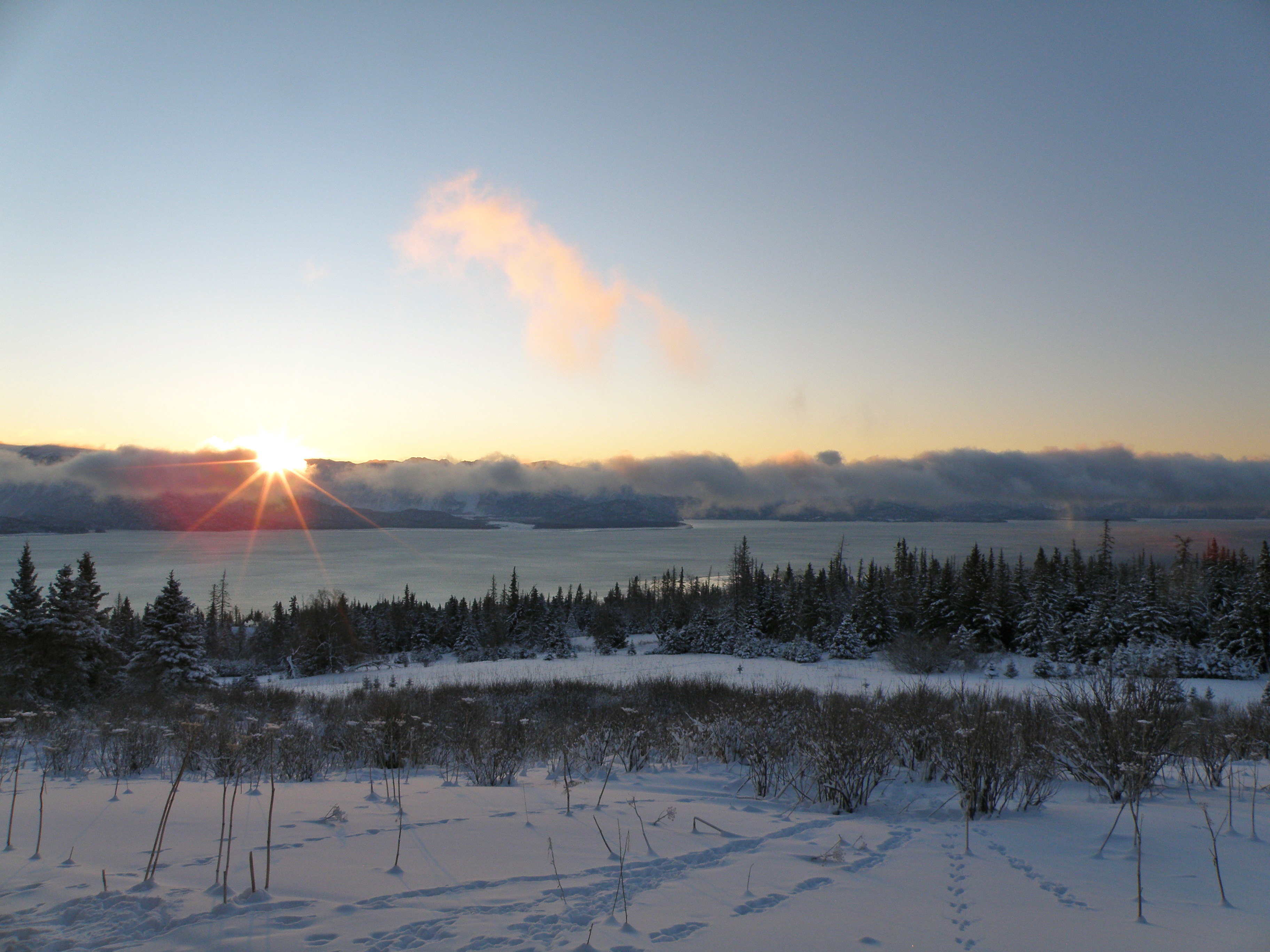
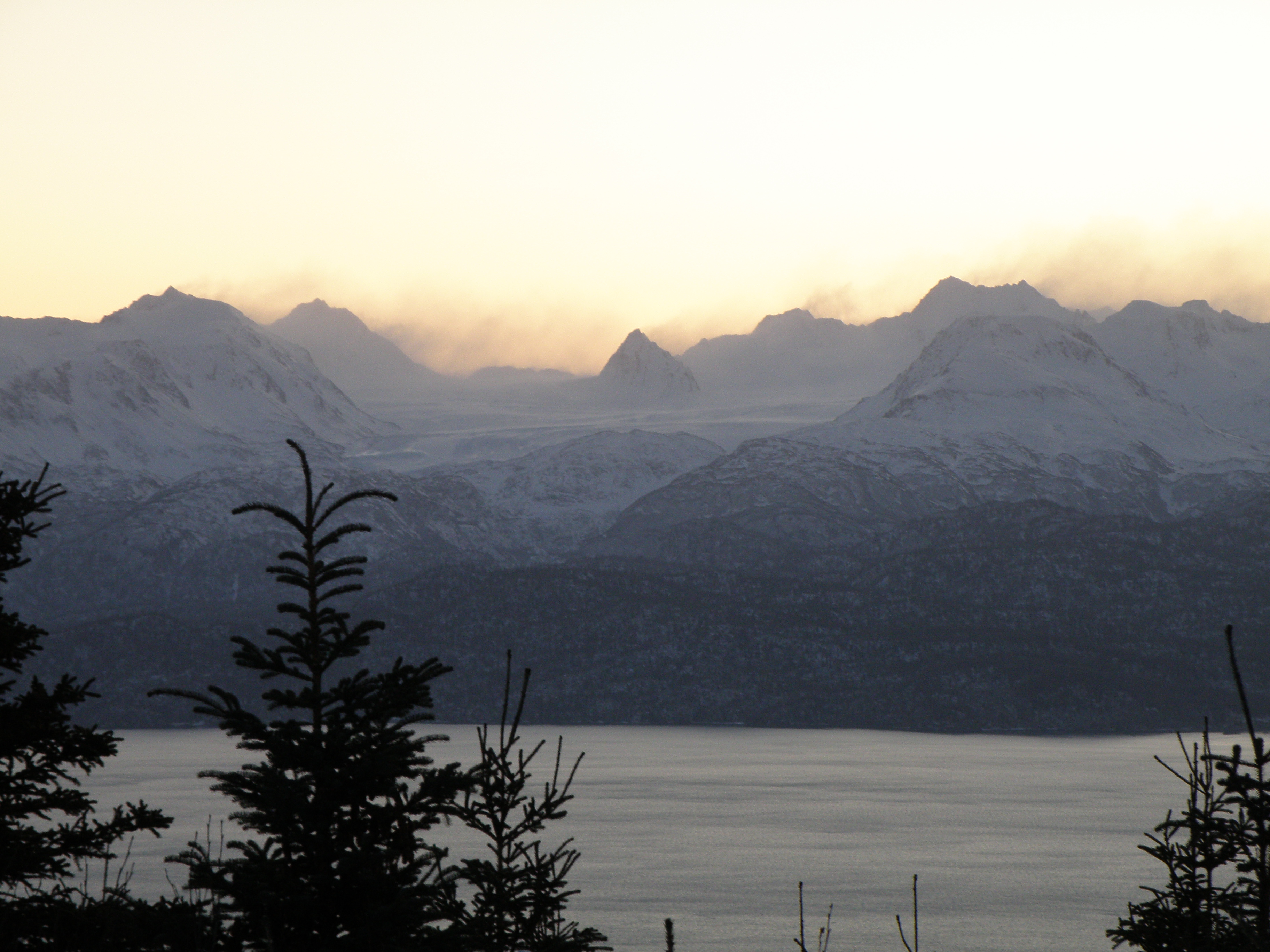
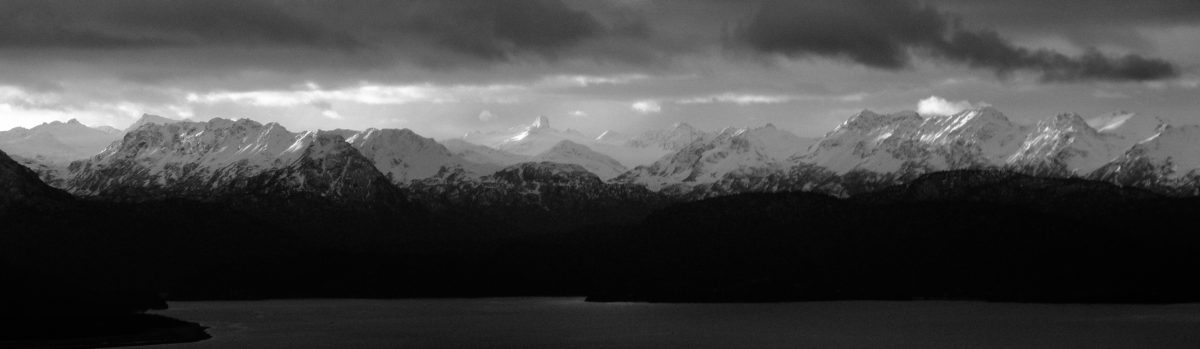
I went a whole summer without going camping or stepping foot in our skiff—and  summers in Alaska are way too short to not get out and enjoy the nature that’s all around.  I live in a beautiful place, with a stunning view of the mountains and the bay, but sometimes I need to leave my five acres and get out there.  That has to be a priority this year.

The other thing that I didn’t make enough time for in 2011 was music.  For the past decade I’ve made playing music a huge part of my life, and it’s one of the things that fills me up.  It gives me what I need to go about my less than exciting life of driving around, going to work, doing dishes, cooking dinner.  And as much as I love writing, it doesn’t do the same thing for me.  Music takes me out of my head.  When I get together with friends to play tunes I lighten up.  I drink a little.  I crack jokes.  When I’m alone and I work on learning new tunes it’s a lot like meditation.  My mind is clear for a while of all my responsibilities.

I love writing, and it gives me fulfillment in a different way, but it’s heady stuff.  When I’m concentrating on writing I tend to take myself a little too seriously.  I need to find a better balance.

So my hope for 2012 is to make time for music.  With it being an election year, I’m also hoping to spend less time reading the Huffington Post.  To me it seems like my time will be better-spent reading poetry, playing music and having fun with my family.  Of course I want to stay informed, but I don’t want to get worked up this time around.

I’m also anticipating a trip or two (who knows, maybe more?) to Missoula when Adella is down there.  I have nothing but fond memories of my time in Montana when I attended the U of M and although I’ll miss her terribly, I’m happy to have a reason to go back.  The mixed feelings I have about her going are eased by knowing I’ll get to visit, and by trusting that she’ll be in good hands while she’s there.

Best Wishes for the New Year to you all, and in keeping with my New Year’s wish for more music, here’s a clip of our afternoon old-time session from yesterday.  I’m playing one of the two fiddles.  (I’m the one trying to keep up.)

Thoughtful reading

One of the things I love most about the MFA program that I’m in is that it requires of me a tremendous amount of reading.  Every month I have to read and write a response to three books.  This requirement forces me to focus closely on how a book is written, how its essence impacts its readers and how I might learn to do the same sort of thing in my own writing.

When I applied to UAA’s low-residency MFA program I had to choose between fiction, non-fiction and poetry.  I ended up choosing fiction; for me personally it is the most challenging.  But I want to study all three.  So in order to appease myself I have not excluded poetry or non-fiction from my reading lists.

Right now I’m working on writing a story that is about a place as much as it is about the people in it and I’ve tried to choose books to read that will aid me in this process.  This month I was lucky to have stumbled upon a new book written by an Alaskan author who does this so eloquently that I feel I could read it over and over again and each time glean a new angle in my approach to writing about the way a place can influence and shape the people who reside there.

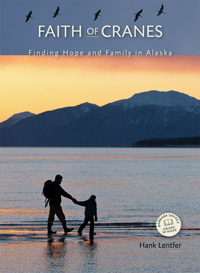
I was initially drawn to the memoir, Faith of Cranes:  Finding Hope and Family in Alaska by Hank Lentfer, because of its title.  Sandhill cranes return to my neighborhood outside of Homer every summer and I’ve always felt honored to share space with them.  Their return every spring is one of the most hopeful things I know of.  My own teenaged children, who don’t always seem terribly observant of the natural world, take notice of the cranes and are always thrilled when they first see them flying overhead at the end of every long winter.  When the cranes leave each September, almost always on the 16th day of the month, it’s with mixed emotions; we’re in awe of the magic of migration and already nostalgic for the summer days that went by so quickly.

I was also drawn to the book because of the author’s name.  It turns out that the author’s parents live here in Homer and are huge supporters and users of the library where I work.  The nosey side of me that is always trying to make connections was eager to read the writing of Jack and Mary Lentfer’s son.

Hank Lentfer’s story is a story of coming of age, a story of finding himself trying to make sense of a world that doesn’t make sense but most importantly it’s a story of love.  Hank heartbreakingly loves the place where he lives and the wild places where he hunts deer and picks berries and harvests salmon.  His story is of coming to terms with his fear of losing the land where he finds spiritual and physical sustenance.  It’s also a story of love for the people who share in his connection to a place and the realization that the loss that ultimately goes hand in hand with love is beautiful and hopeful in its own right.

So many of the books that I read, even some of the great ones, are enjoyable and thought provoking in the moment of the reading.  But not all of them stay with me.  Faith of Cranes stands out because since I’ve read it I find myself mulling it over, considering the choices I’ve made, thinking about the ways I’d like for my own life to be more thoughtful and more closely tied to nature.  And it leaves me asking important questions, a few of which are below:

  • How different would the world be if all parents, before conception, considered the responsibility, the joy, the loss and the beauty of bringing a child into existence?  The chapter in Lentfer’s book entitled, “Letter to an Unborn Child” was striking in its honesty and its raw expression of his fears about becoming a father in a world that is filled with war, environmental degradation and disconnection.
  • How much living are we, as a culture, missing out on by buying into a consumer-driven mentality?  By choosing to slow down and live with less we would be giving ourselves more opportunities to develop friendships, deepen the bonds we share with our families and have more time for self-reliance and art.  We know this, and yet it is difficult to extricate our lives from the cycle of filling our days with jobs and tasks we don’t find meaningful.  Why is it so hard?
  • As a person who is concerned about things like climate change, wilderness preservation, clean air, clean water and the protection of habitat how do I not lose hope when the news is overwhelmingly bad on all those fronts?  And along those same lines how can creativity, love and hopefulness make a difference?

If you are interested in an intimate portrayal of a life in coastal Alaska, if you love a place on this earth, if you feel a connection to cranes or any other kind of wildlife, if you appreciate a well-crafted story or if you simply would like to escape for a while into a sensual, thoughtful world, I highly recommend Faith of Cranes.  And if you end up reading it, I’d love to know the questions it summoned for you.  I’d also love to know what books you’ve read recently that have stuck with you, caused you to consider changes you’d maybe like to make in your own life.  

The Closeness of the Moon

photo by Dean Sundmark

Yesterday morning, in the early hours, I made myself go out to take a look at the lunar eclipse.  I couldn’t see it from any of the windows in my house so I bundled up and stepped outside to my front yard for a good view.  The air was still and the stars were made more brilliant by the darkened moon.  It was only a few minutes before I wanted to be back under my down comforter, but I’m glad I went through the trouble to go out there.  In that moment I felt a hundred different ways, but mostly I was in awe of how it’s possible to feel so close to something so far away.   Maybe the moon feels close because there is nothing impeding my view of it, not the curve of the earth or a mountain range.   Visually it’s just a straight shot from my front yard, which makes the moon seem closer sometimes than the grocery store in town or my hometown in Colorado where most of my family resides.

Two days ago I drove back home from Anchorage after taking my mom and sisters to the airport.  They were here for a week and they got to see Adella perform in the Nutcracker.  This was her tenth year dancing in the production.  The roads were not in great shape with all of the freezing and thawing that’s been going on, so I took my time.  I drove slowly and stopped often.  All along the way I listened to The Elegance of the Hedgehog by the French author Muriel Barbery.  I was so enthralled with the book that when I got home after the five-hour drive I didn’t want to stop.  When I reached the turnoff to my road I opted to keep going for just a while longer.  I finally stopped with only a few chapters to go.

Yesterday morning after dropping Adella off at the high school for the Nutcracker and before it was my turn to take a volunteer shift in the greenroom, I parked at the beach and resumed listening to the final chapters of the book.  As I watched the sea birds floating on the water I listened to one of the most beautiful and touching pieces of writing I’ve come across in a long time.

So yesterday my day started with a lunar eclipse and it ended with a windstorm.  In the middle of it all I helped out with the last Nutcracker performance of the season.  But because of the prose I’d listened to earlier in the day I experienced it all differently.  While I stitched torn costumes, fluffed tulle and pinned hairpieces into place I was thinking of the closeness of the moon, about the small moments of beauty and friendship in an ordinary life.  And today the wind is still raging.  If any of the big beetle-killed trees on our property were still standing, this is the kind of storm that could blow them over.  If our greenhouse were still intact, this is the kind of storm that would send the fiberglass panels flying across our five acres.  And it occurs to me that art has that kind of power.  It can rearrange the landscape of our perceptions.  It can change an ordinary day into something entirely meaningful.  If we let it, it can break down barriers and send the unsecured debris sailing.  It can take us to the places we didn’t know we had a right to visit.

A Simple Notion

Back in July I was sitting in a room full of fellow MFA students I’d just barely met when Richard Rodriguez was introduced to us.  He walked slowly to the front of the room to deliver his keynote address.   His appearance alone commanded my attention.  He’s a small man, with dark skin and Native American looking features.  He wore a perfectly ironed, white shirt—something already out of the ordinary in Alaska, and black trousers.   His brown skin against the white was striking.

Before the residency we were required to read Rodriguez’s book, Brown, and discuss it online.  I have to admit, much of his book was lost on me.  I had to look up lots of his references in Wikipedia.  Sometimes I found his prose hard to follow.  Because of my experience with his book I wasn’t sure what to expect from him as a keynote speaker.  When he opened his mouth though, and started talking to us, any preconceived notion I’d had about the man was gone.  In a matter of minutes I was fighting the tears and by the end of his talk I’d long since given up on trying to hold them back.  I was a little embarrassed that I’d lost it that way, in front of these people I’d just met, but when I looked around the room I found I wasn’t alone.   Any devices we’d summoned in order to protect our egos before the residency, any doubts about the validity of our decision to pursue writing, any worries about entering into a career path that comes with absolutely no guarantees—they all were gone, at least for a while.  Richard Rodriguez had gotten to the heart of why we were all there.  He reminded us that “there is only one thing that should interest you as a writer:  What it means to be alive.”

Why did that simple notion cause me to have such a strong emotional reaction?  Well part of it was in his delivery.  He’s an amazing public speaker.  But part of it was how he made the average life out to be a thing of beauty.  So much writing is filled with ostentatious jargon, or it’s sarcastic or it’s shallow.  Richard Rodriguez challenged us as students to write about what is real.  It’s harder than you might imagine.

So then, what does it mean to be alive?

Obviously it means different things to different people.  All I can speak with authority on though, is what it means for me to be alive.  What do I spend my time doing and thinking about?  What consumes me?  What inspires me?  What makes me want to carry on?

There is no doubt that sometimes life is hard.  For example, right now we are going on three weeks without running water.  The inconvenience of not having water is one thing, but the stress of how we’re going to pay for the repair of our well is something altogether different and more daunting.  There’s more.  Sometimes in my family there are hurt feelings and disagreements.  People don’t always behave the way I think they ought to.  The house is never clean enough.  Time is constantly scarce.  There are always chores that nobody else will do.   Recently a close friend was diagnosed with cancer. Sometimes my kids are hurting.  Sometimes I’m hurting.  And the news, it’s full of terrible, hopeless stories of people going through things a thousand times worse than anything in my life.

Is this what it means to be alive?

The answer is yes, and yet there is always another side.  Right now, as Thanksgiving approaches, I’m trying to think about that other side.  I’m reminding myself of the unconditional love I get from my friends and family.  I’m thinking about my husband’s job and how it allows my son and I to get an affordable education.  I’m thinking about my house—it’s modest and it doesn’t insulate very well, but when the woodstove is thumping and it’s cold outside, there’s no place cozier.  I’m thinking about the freedom I feel to express myself.  I know that some of the things I write are hard for my family to read, but the fact that they love me in spite of our religious and political differences gives me courage.  I’m thinking of the view out my window—the very existence of the mountains and glaciers helps put my problems in perspective and the bay reminds me that life is a changing thing.  Mostly though, I’m thinking about how lucky I am just to be here at all.  I get to watch my children grow.  I get to live with the man that I love.  I get to laugh at the funny things and cry a cleansing cry now and again.  It’s worth a lot just to be able to think and breathe and feel.


Biggest regret

I hate bandwagons.  I really do.  But sometimes something comes up in the news that I have a hard time shaking off.  The Penn State scandal is one of these things.  There is no reason for me to repeat how awful it all is.  No reason to speculate about what should be done in the football world, of which I care so little about, but there is reason for me to talk about childhood sexual abuse and whistleblowing.

Accusing someone of sexually abusing a minor is a big deal.  What are we supposed to do when we suspect—when we have a gut feeling—that someone we care about is being abused?

That was my situation.

I never witnessed any actual abuse, but I began to suspect that something bad was happening.  My suspicions were based on the behaviors of the victims, the children, and the fact that the abuser gave me the creeps.  I didn’t have any hard evidence to go on, but as I was getting more mature and learning more about the psychological fallout of sexual abuse, things began to add up.

Still, I didn’t say anything.

I was afraid of being wrong.  I was afraid of not being believed.  Even though the clues were all there, I doubted myself.  I even tried to convince myself that I was wrong because to be right about such a thing meant that a family I loved would be torn apart.

Eventually, the truth came out and the abuser was exposed.  But his downfall had nothing to do with any courage on my part.  The victims, the children he hurt, were the ones who were brave, and they had so much more at stake than me.

Every day I wish I had said something.  I wish I had confronted the abuser.  I wish I had talked with the children, established myself as a safe person to talk to.  Instead I let my fears and my insecurities keep me quiet.   I let denial and Christian goodwill cloud my better judgment.

The very ugly truth of the matter is that had I voiced my concerns in some way the abuse might have stopped sooner than it did.  I suspected that something was very wrong and yet I was so worried about being wrong or causing a scene, that I said nothing.

Many years have passed since all of this happened and I still ask myself the question every day.  “What could I have done?”  I never draw a blank. I can always think of something I should have or could have done.

I am ashamed and I am sorry.

A Little Sweetness

Gypsy

On October 2nd we invited a new element of chaos into our lives.  We found her on a roadside pullout near our house.  It was raining hard and windy.  She was sitting there, soaked and afraid next to a kennel.  She growled at us when we stopped to check her out.  Within an hour she had a name.

Gypsy wouldn’t get in the car with us and she wouldn’t let us put a collar on her, but she was happy to follow us home on foot.  She did so twice but returned to the pullout and the kennel each time; apparently she had been there for a few days and in her mind it must have been home.  Once we brought the kennel to our house though, she stuck around.

She wouldn’t come in the house so we put a dog bed on our front porch and set out some food and water for her.  All night we wondered if she’d stay.  She did.

The front door was scary and she wouldn’t go through it.  On her third night with us Dillon heard her growling and went out to investigate.  A porcupine was walking through the yard so Dillon picked Gypsy up and brought her inside.  When we woke up she was pretty pleased with herself at being in the house, but the door was still very scary and she wouldn’t go out.  That is when her official training began.  It involved opening the front door and coaxing her with food.  In four weeks time the coaxing has gone from around ten minutes per door episode to a mere few.  This is good considering that it’s almost November and an open door can really cool a house down these days.

Sometimes Gypsy cries in the middle of the night and because she’s had a couple of accidents in the house I’m pretty quick to jump up to let her out.  If the door seems especially scary I end up pulling on my boots and running out before her, when she sees that the door hasn’t harmed me sometimes she follows.  Sometimes she doesn’t and I am outside standing in the yard in my shorts and mud boots calling her.  It’s been invigorating really.  I’ve seen beautiful night skies.  I’ve heard owls and coyotes.  Think of the things I would have missed had I been warm and asleep in my bed.

Fortunately, Gypsy loves Ripple, our older, much more mature dog (ahem) and the feeling seems mutual as far as I can tell.  They started out playing around the yard then figured that if they had fun in the yard they’d probably have a really great time roaming the neighborhood.  Dogs roaming the neighborhood is rarely a good idea, and even though they were considerate and brought us souvenirs from their adventures (one day a mutilated bunny, the next day a halibut tail) we’ve resorted to putting them out separately, which would be fine except for the fact that Gypsy had almost gotten to the point of being unafraid of the door when she saw Ripple going through it.  Our door time, as we’ve come to call it, was almost down to nothing but we’ve gone backwards now that she has to go through it all by herself again.

Have I mentioned that Gypsy is incredibly gentle? Aside from when we first found her, abandoned and afraid on the side of the road, she’s shown absolutely no aggression.  She seems genuinely thrilled to have a warm house, a soft bed, a dog friend and four people to dote on her.  Still though, it’s taken a while for her to entirely trust us.  She loves us but she still gets nervous if we approach her too quickly.  It seems like her previous people sent her mixed messages, affection one minute and something much worse the next.  It’s going to take a while, but she seems more comfortable all the time.  Sometimes we have a set back though, like this morning.

We got our first snow of the season last night and so this morning I had the notion that it would be nice to stay inside and enjoy a cup of coffee near the woodstove.  I made the mistake of letting the dogs out at the same time.  When they came back twenty or so minutes later Ripple had two porcupine quills stuck in her muzzle.  Gypsy had about thirty.  Dean brought out the pliers and I went to work removing them, but we soon discovered that she had them all over her tongue and inside her mouth.  A vet visit was in order.  Unfortunately all the things we’d been easing up to—the car, the leash, the vet—had to happen all at once.  All of her biggest fears were realized within an hour, along with what I imagine must have been an incredible amount of pain.

Aside from the bill, the vet visit was a good thing.  Gypsy’s got her shots now and after examining her teeth, Dots, our lovely veterinarian, informed us that Gypsy’s only about eight months old.  She’s just a baby.  There’s plenty of time to get over the silly fears, plenty of time for her to stop having accidents in the house.

Just the week before we rescued Gypsy we had started considering getting a second dog.   We’re kind of a two dog family and Ripple was seeming a little down after losing Nayak.  Although I will never understand what kind of a person would abandon a puppy on the side of the road in cruddy weather when the Homer Animal Shelter is such an easy option, I do believe the timing and the placement of that person’s bad deed was very serendipitous.  Now Gypsy is with a family that is willing to be trained and I’d say we’re doing a darn good job of meeting her every need.  In trade she’s giving us a lot of laughs and a fair amount of joy.  She’s bringing sweet energy into our lives—and in a household that’s busy and chaotic to begin with, a little sweetness can make all the difference.

Ready to Read

It’s Alaska Book Week.  And for the literary crowd it’s been pretty exciting.  The internet is abuzz with Alaskan book talk.  In the library I put together a display featuring books written by our local, Homer area authors and next week we’ll be hosting a reading of twelve of those authors, each reading for a few minutes from a piece of their own work.  An Alaskan, Debby Dahl Edwardson was even named as a finalist for the National Book Award this week for her Young Adult book My Name is Not Easy.

Tonight at the college there will be a panel and public discussion in which Nancy Lord, Tom Kizzia, Rich Chiappone, Miranda Weiss and Erin Hollowell will discuss the books that influenced their lives and their writing.  So besides being in awe of the fact that I live in the same town as all of these great authors, I’ve been asking myself that same question this week.  What books influenced my life?

Nancy Lord wrote an essay called On Rereading Siddhartha where she reflects on the impact the book Siddhartha had on her as a young teenager.  Over the past couple of days Miranda Weiss has posted the question “What books made you?” on her Facebook page.  We’ve got Anne of Green Gables and the Little House books.  People mentioned Shakespeare and Jane Austen and Edgar Allen Poe.  A lot of the classics were listed as well as a few contemporary wonders like one of my own favorites, Animal, Vegetable, Miracle by Barabara Kingsolver.  I’ll be interested to see what others have to say tonight at the panel discussion and I plan on taking notes, mining the conversation for reading ideas.

My own reading history is one that is a bit embarrassing to admit.  While Nancy Lord may have been ready for Siddhartha at age thirteen, I was not.  I was consumed with worry about boys and my hair at age thirteen.  And while many children were at home reading the Little House books, I was watching it on television, along with other shows like Three’s Company and Welcome Back, Kotter.  I remember owning one book that I treasured, Heidi by Johanna Spyri, but I don’t actually remember reading it.  I did love the movie though.

I was encouraged to read the Bible as a child.  I would get these little pamphlets from church that would have a mapped out plan for reading the entire Bible in one year.  Every night I would read a certain number of verses and then mark them off on the chart.  As far as I’m concerned there is no better way to make a child want to go to sleep than to have them read Bible verses before bed.  I remember absolutely nothing of significance in all of that Bible reading.  No epiphanies, no moments of enlightenment.  I just remember trying like heck not to fall asleep.

In middle school someone was passing around Are You There God? It’s Me, Margaret, by Judy Blume.  I may have read that one, I don’t fully remember.  I at least read the part about periods.  I learned more about menstruation from Judy Blume than I did from anywhere else.

In a high school English class we were assigned The Great Gatsby.  I did not read it all the way through, and I did not care.  I still managed to get an A in the class somehow, probably because although I was late to develop an appreciation for fine literature I was well ahead of the game when it came to bullshitting.

It wasn’t until about my senior year in high school that I came across a book that changed it all for me.  I don’t recall its title, but the author was Danielle Steele.  Oh yes, it got my attention.   It had glamor. It had conflict. It had SEX!  Aside from a few picture books as a young child, it was the first book I remember reading from cover to cover.

At the library I sometimes hear people complaining about the “trash” that kids read these days.  The other day I heard a father say of his son, “If it doesn’t have a dragon or a vampire, my kid won’t read it.”

I wanted to say, “At least he’s reading!”

Assuming I live a long time, and I’ve got pretty good genetics on my side, I will have time to read plenty of good books, some of them, thankfully, more than once.  I can forgive myself for being a very late bloomer when it comes to literature.  The good news is that it happened.  I learned to love really good books.  It happened at the University of Montana where I was exposed to authors that wrote about the very surroundings in which I found myself.  William Kittredge, Rick Bass, Richard Hugo, John Maclean.  They wrote about the West, which was familiar, but they made me see it in a new way.  They somehow validated my rural upbringing.

The biggest thing though, was that I was ready.  I was finally ready to read.

Something out of nothing

It’s October 1st and sometime in the next few days I’m supposed to turn in my second packet of writing for my MFA program which includes a short story and three reader’s response papers.   I’ve written most of this month’s short story and I’ve done all the reading that I agreed to do, but the hard work still lies ahead of me.

Finishing short stories is always the hardest part because I never really know what’s going to happen with my characters.  I start a story with an idea, an image or an event and I create from there.  It’s truly making something out of nothing and it’s always scary.  There is always the fear that for some reason it won’t work this time around.  It can also be incredibly emotionally draining, which is why I procrastinate like crazy at this stage of the process.

I’ll get it done, I always do, but all week I’ve been finding other things to occupy my time.   Last weekend I started a new knitting project.  I’ve begun reading two books that are unrelated to my MFA.  I squandered my one day off during the week to hang out with friends and play around on my new computer.  I’ve taken lots of photos. (see below)  I’ve written two articles.  I’ve done the dishes several times when I could easily have opted out with the ‘I need to work on my school’ excuse.  I changed the format of my blog.  I learned two new fiddle tunes!  Last night I even did two foreign language lessons (French and Spanish) on Mango, a new, free online offering through the library website.   And here I am now, writing for my blog when I should be writing fiction.

Kachemak Bay and beyond

Overall I’ve been very productive in my procrastination.  But the deadline is looming and I need to focus.  I need to sit my butt down in the chair, turn off the internet and find out what is going to happen with Larry, the simple, yet complicated guy that I made up.  I need to make him believable and interesting.  I need to find that thing about him that we can all relate to, something heartbreaking and funny and beautiful.   I need to bring him to life in a world that’s as real as yours and mine.   None of it’s going to happen though if I don’t stop putting it off.  I’ll get right on it after I take the dog for a walk and clean the house.  Really, I will.