Five-Acre Almanac: Breakup Season

Week 32

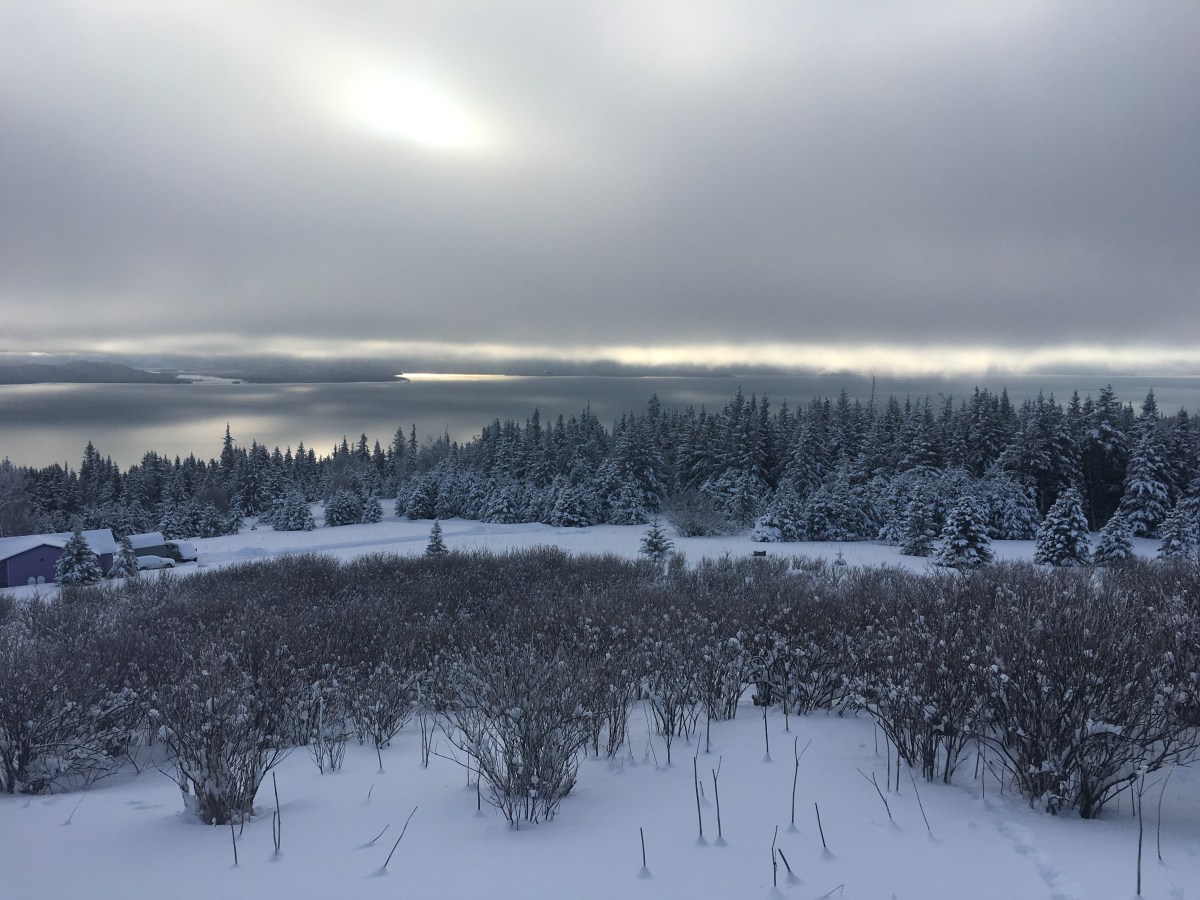
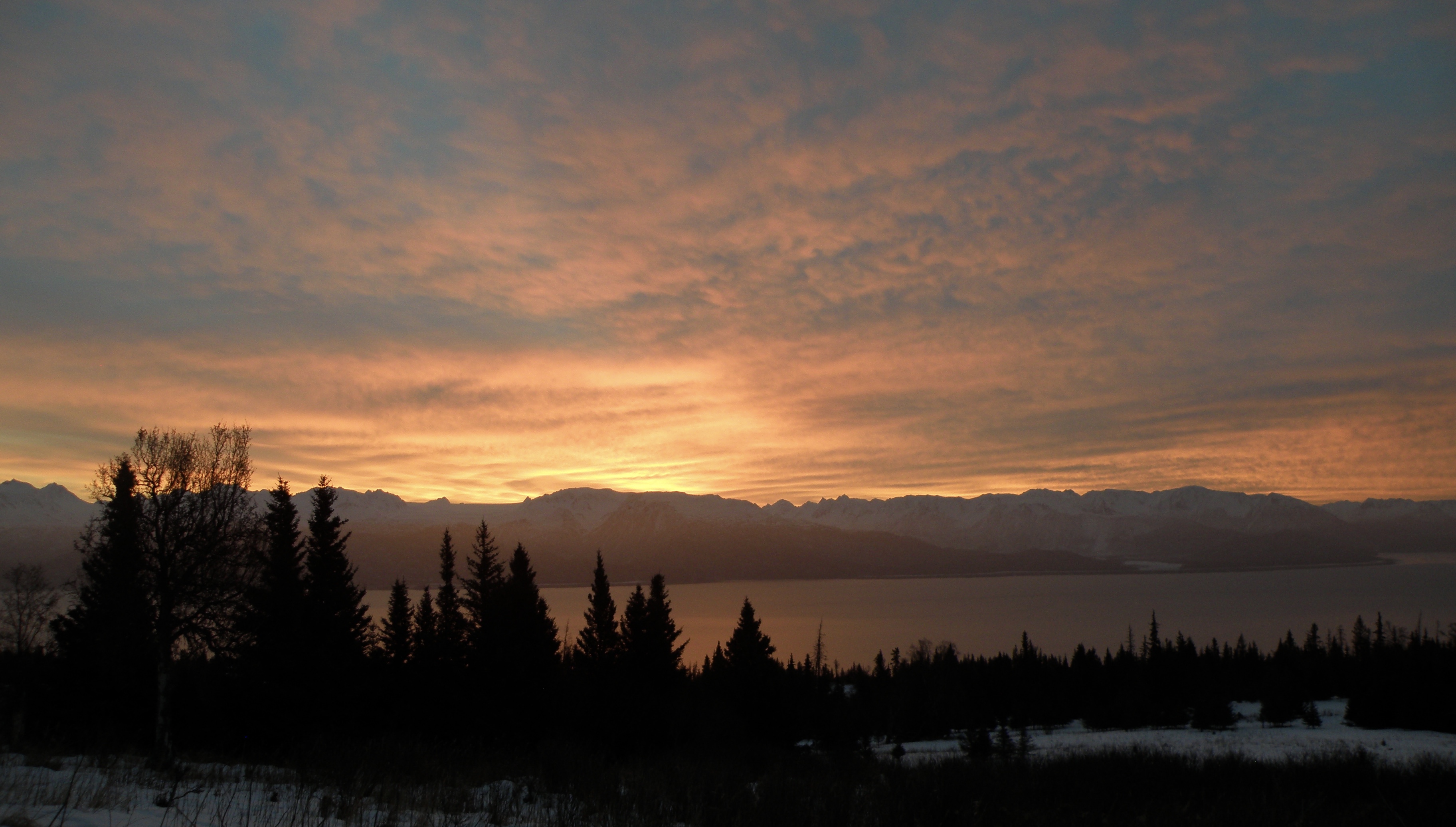
Breakup is the Alaska term for when winter loses its hold. It’s when the snow and ice begin to melt and the ground begins to thaw. It’s a process that can take a couple of months and during breakup there can be beautiful blue sky days with perfect snow conditions or there can be days when it’s sleeting sideways and the streets are lined with dirty piles of mushy snow that’s melting into pools of water with no place to drain. It’s when new dips in the roads materialize overnight and driving becomes a focused exercise of avoiding potholes. Normally breakup starts toward the end of March and continues through April but this year it started in February. Now we’re all waiting to see if it’s here to stay.

Yesterday Dean started planting our garden. He started pepper, leek, marjoram, oregano, sage, marigold and sunflowers seeds that will eventually be transplanted outdoors. Last week he started goji berries, tomatoes, and spinach. I started some seeds too. Fifteen years ago when my dad died I collected wildflower seeds from the cemetery on Wilson Mesa where his ashes were scattered and brought them home to Alaska. They’ve been in a jewelry box on my dresser until last week. Now I’ve put them in a damp paper towel inside a Ziploc bag to try sprouting them knowing that even though seeds can last a long time, especially ones like these that have a hard outer shell and have evolved to grow in the harsh high country environment of Western Colorado, I might have waited too long.

We still have snow in our yard but we’re starting to see the ground again in certain places. Our two hugelkultur raised beds are completely uncovered and I hope the little knobs of rhodiola rosea I planted last fall will start to emerge. They’re the most cold hardy of plants and just might be able to withstand another bout of winter, should it decide to return.

Another sure sign of winter’s end is the eagles have been swooping about the neighborhood the way they do when it’s time for them to build a nest. Last summer a pair of bald eagles raised two eaglets in a cottonwood tree in our neighbor’s front yard but yesterday when I was out I noticed that the top half of the tree has broken off and the nest has been destroyed. It must have toppled over during one of our recent wind storms.

Wind can be a destructive force around here but our own place doesn’t seem to be as battered by it as it was when we first moved in. I can’t tell if it’s because we don’t have as many windstorms as we used to or if it’s because our trees have grown tall and we now have a windbreak. It’s also quite possible that I’ve become used to the strength of the windstorms that blow in from the Gulf of Alaska and they no longer freak me out the way they used to. One may come along on occasion that keeps me awake at night, but the wakefulness is due more to noise than it is worry over the potential destruction.

It’s been hard seeing images of all the destruction that’s happening in Ukraine. Apartment buildings destroyed, streets rendered impassable from bombings, school yards blown to bits. The physical damage cannot be compared to the loss of human dignity and life, but still I can’t help but think about what a waste it all is. All the resources and energy that went into creating what’s useful and necessary, maybe even beautiful, reduced to ruins.

I try to imagine having to leave this place behind. These five acres that we’re still paying for, that we’ve raised a family on, that we plant a garden on and harvest food from. This piece of land that because of a monthly money exchange and a few pieces of paper we can call our own. I try to imagine a bomb tearing through our roof causing the house to be uninhabitable or sinister forces moving in and taking the things we’ve worked hard for for their own. It’s happened to plenty of people throughout history. It’s happening now, just not to us.

Then I take it further and try to imagine losing the town I’ve come to call home. What if a military invaded and took over the harbor and the airport? What if they destroyed the roads we would need to drive on should we feel compelled to escape? I don’t imagine these scenarios in order to wallow in pain, but as an effort to try to identify who I would be if all the things I’ve come to identify myself with were no longer mine. Who would I be when separated from the place I call home, with no prospect for a new one?

According to Amnesty International there were 26 million refugees around the globe in 2019. Just within the past few weeks there have been another couple million added to that number. These are people who have been displaced from their homes due to violence, insecurity, food shortages and persecution, and half of them are children.

Those numbers make me feel the privilege of being a person who’s able to write about what it’s like to live on these five acres of land. Gratitude is one piece of it, as I’m thankful for my life. But there’s something more that I’m having a hard time putting my finger on, and maybe it has to do with the fact that I’ve always felt cared for. I’ve always had shelter. I’ve always had enough food. I’ve never been displaced. And because of this I’ve always trusted that things will turn out okay. How much greater a person’s trust must have to be when all the structures of their lives have been pulled out from underneath them. Does this make them feel like God or the Universe has abandoned them, or does it make them feel closer to the source of their humanity?

These are heady thoughts, which seem about right for these heady times, and for Lent, and for breakup season, while we’re waiting for something to give.

Five-Acre Almanac: This Sad World

Week 30

A good deal of my week has been spent reading about Russia invading Ukraine and trying to imagine what it would feel like to have bombs randomly dropped on your town, or soldiers in tanks driving through the streets of your city, or feeling the need to make homemade explosives in order to defend yourself. I’ve thought too, about the Russian citizens who are hearing one thing from their government and another thing from other sources and the general helplessness and confusion many of them must feel. I’ve admired those who have taken to the streets in protest, in spite of the risks they face for doing so.

What a privilege it’s been to shut it off, close my computer, and step away when it all begins to feel like too much. While a fierce battle raged in Kyiv, I made chocolate raspberry brownies. While children huddled in subways at night to stay safe from explosions above ground, I picked up another book and settled into the couch. While citizen soldiers kept vigil day and night, I allowed myself another nap.

None of this is new. It’s just easy to forget that in every moment of every day there are people who are oppressed. People who are hungry. People who are living under tyrannical leadership. People whose lives lack stability. It’s not that I don’t know this, it’s just that most of the time I don’t think about it. I go to work and know my paycheck will be deposited into my bank account every two weeks. I plant my garden and if for some reason it doesn’t grow I have no reason to fret. I read whatever books strike my fancy on any subject that interests me. I wander around these five acres of property that I call home and look at the Kenai Mountains and Kachemak Bay and am grateful for the life I have.

I don’t really know where I’m going with this. I’m just trying to describe the weird phenomena of watching a war unfold in real time while munching on chips and salsa and listening to Radio Paradise. Trying to make sense of geopolitical alliances and responses in the context of history, much of which I’ve either never learned or have forgotten. Trying to figure out what to do with the weight of all the suffering and fear, with the pointlessness of it all, with all the grief.

It’s easy to identify the things that cause us grief, but we don’t always allow ourselves the opportunity to grieve. I feel like that’s what I’ve done with this week off of work. I imagined that I’d rest a couple of days and then get busy getting things done around here, but that’s not what happened. Last week I wrote that I was tired. When I finally allowed myself to rest I discovered that not only am I tired, I’m sad. I’m sad about the state of the world. I’m sad that after two years of a pandemic we’re more divided and suspect of each other than ever. I’m sad for friends who are hurting and for their kids who are hurting. I’m sad about the rapid development I see all around my town and neighborhood. I’m sad that my dogs are getting old. I’m sad about the lack of time and bandwidth I have for nurturing the relationships in my life that matter the most. I’m sad about so many things and now I’m sad about the war between Russia and Ukraine.

I’m not writing about sadness because I need sympathy. I’m not suffering from depression. I’m writing about it because I think it’s something we all need to address in ourselves. We’re afraid we’ll be overcome by it, which is a legitimate fear, but to feel sad is as much a part of being human as is being happy, and yet we tend to push the sadness away. In denying ourselves the opportunity to grieve, to feel sad, to mourn our losses, to empathize with others, we don’t allow ourselves to fully live.

Much of life is learning to hold many different things in balance, and I read this week that peace is balance. Balance is peace. So what do we do to balance out the sadness in the world? I think we stay with it. We don’t push it aside. We give ourselves the time and space we need to feel it. We love this sad world and we offer up our sadness as a prayer. Not a prayer for an answer, but a prayer as an offering. Here is this sadness. Here is this sadness. Please make something beautiful from it.

Five-Acre Almanac: Multidimensional

Week 29

“I hope you find something to love
Something to do when you feel like giving up
A song to sing or a tale to tell
Something to love, it’ll serve you well.” –Jason Isbell

It’s Tuesday 2/22/2022 as I’m writing this and even though it’s just numbers there’s something fun about all those twos in a row. I’ve taken this week off of work in hopes of rejuvenating my spirit. It hit me a few weeks ago that I’m tired. Bone tired. Not the kind of tired that sleep can cure but the kind of tired that only the freedom to follow my whims for a while can cure. So today I’m reading and napping and writing. I’m listening to fiddle and banjo music I haven’t listened to in a long time and it’s waking something up in me that’s been tucked away, buried under layers of responsibilities and commitments and all the things I try to write but cannot properly express. John O’Donohue said, “music is what language wants to be,” and I’ve thought that a thousand times. I write because I’m a better writer than I am a musician.

This morning I came across a journal entry of mine from February, 1999. I recognized my handwriting but not a whole lot else about myself. In it I was searching for something to love. I wrote about how Dean had passions and interests that he pursued and I recognized that I needed something like that for myself.

It wasn’t long after I wrote those words that I borrowed an old fiddle from one of my coworkers and enrolled my kids in violin lessons. The three of us practiced together and while technically I was doing it for them, I found myself pulling out the fiddle after they went to school and after they went to bed. At first it was Suzuki songs, then it was Irish tunes. Then one day while driving the kids to swimming lessons I heard a segment on NPR about old-time music. That fiddle and clawhammer banjo combination was new to me, but the sound of it cut right through all the layers of my soul.

I sat in the car with the kids and listened to the rest of the radio segment before heading inside to the pool. I sat in the bleachers with other parents as the kids learned to swim and there was one mom in particular that I watched closely because her son and my son had a similar energy about them. I sensed that we’d have a few things in common and so I struck up a conversation with her. We hit it off and the next day she brought in a book for me to borrow and over that week of early morning swimming lessons we learned more about each other. One of the things I learned was that she played clawhammer banjo.

It’s funny how you don’t always put things together until after the fact, but the way that friendship came to me just when I needed it seems remarkable now. Like it was orchestrated. I needed Kate’s friendship and I needed that connection to music in my life. It was through Kate and her husband Scotty that I came to know old-time music, which became that thing I was searching for back in 1999 when I wrote that journal entry. I wanted a passion to pursue, something to capture me and give me spark, and I found it.

I immersed myself into the world of old-time music for a while and I loved it, but it wasn’t always compatible with the rest of my life. The experience of delving into something, practicing it, pursuing it, listening to it, studying it, and spending time with other people who loved it as much as I did changed me though. It added dimensions to my life that beforehand I didn’t know existed. And once a person knows about those new dimensions, they’re not something you want to live without.

So I’m taking a break from work for a week, not to get things done or cross things off my list but to remind myself of my multidimensionality. I might read and write some more. I might play music. I might even give Kate a call to see if she’d like to go for a walk. We started talking while our kids were at swimming lessons all those years ago and we haven’t run out of things to talk about yet.

Five-Acre Almanac: Brightening Sky

Week 28

So much of life is about balancing commitments and priorities, about giving a little here and taking a little there. And in taking all of that into consideration I sat down to write this week’s post last night. Today’s forecast is calling for thirty-five degrees and sun. If I were to have put all of this writing off until today I’d have put myself in a position of having to choose between spending time in the sun or spending time in front of my computer screen and it’s the time of year when the sun must win. Hands down. Anyhow, it’s probably good to mix up when I write because my mood is surely different on a Saturday evening than it is on a Sunday afternoon.

Yesterday wasn’t as sunny as today is supposed to be but the air was calm and the temperature was above freezing. I mucked out the chicken coop and made a trail through the snow to the compost pile. Our son is here for the weekend and the two of us spent an hour or so clearing stuff out of the garage. Like he has for the past few weekends, Dean worked on a plumbing project that recently made its way to the top of our home repair list.

Our repair list is long and while it used to feel overwhelming it’s finally beginning to feel less so. Not because we have loads of time on our hands but because we’re making peace with what we’re realistically able to do while still keeping our sanity. Keeping true to our priorities means we get things done at a slower pace. It means one winter we paint the living room and the next one we re-plumb the bathroom. It means our garage will get cleared out eventually, if we keep at it. It means we’ll spend an afternoon outside in the sun when we can, even if something else has to give.

Yesterday before I got busy with chores I spent a couple of hours revisiting a short story I wrote in graduate school. It’s a story that has potential but it’s never been quite right. I tucked it away for a few years and haven’t thought about it much for a while, but it popped into my awareness again this week and I started wondering if I might be ready to give it another shot. My overall mood has changed since I first wrote the story and I may be able to offer it something now that I couldn’t back when it was first written.

A few months ago I told a friend that he has a personal story so intense, so big, that he could write about it every year for the rest of his life and it would be a different story each time. Time changes us and it changes our stories. It’s impossible for me to reread old stories and blog posts without wanting to change them to fit the person I’ve become.

Writing here each week doesn’t allow me time to obsess. I write and then I post and then I have to move on. If I write too infrequently I put too much stock in each piece. I’ve put too much stock in the fiction I’ve written and in doing so I’ve scared myself away from it. It felt good to pull my story out and face it once again. I’m adding it to my long list of things to do.

It’s funny how we add a lot to our to-do lists but rarely remove anything. I attribute the habit to loving life and wanting to experience so many things, but maybe it’s just a sign of too much wanting. Maybe a few hours spent in the sun will help me come up with a few things I can take off of my list.

A week ago one of the pepper plants we overwintered in the back bedroom started putting on new leaves. We’ve kept it inside to keep it from freezing and we’ve given it just enough water to keep it alive. Now it’s coming out of dormancy. In the fall Dean filled several empty chicken-feed bags with potting soil and compost so we’d have some to work with before the ground thaws. Yesterday I brought one of the bags in from the garage and put it beside the wood stove to thaw out. Today I’ll bring the pepper plant out of the back room, re-pot it in fresh soil, give it some water and put it in our south facing window where it can get plenty of sun. If all goes well we’ll be eating peppers from it in a few months.

A few months seems like a long time to wait for peppers when we could buy them fresh at the grocery store any day of the week, but being privy to a plant’s cycle of growth, production, decline, dormancy and reawakening is a pretty cool thing. I suspect we’ll appreciate those peppers more for having witnessed their journey into existence.

There’s so much more that could be said about the cycles and stages we go through in our own lives, about emerging into one thing even while we’re waiting for something else to happen. I could go on. But even as I’ve got my fingers on my keyboard I’ve got my eyes on the forecast. The clock is ticking and the sky is getting brighter.

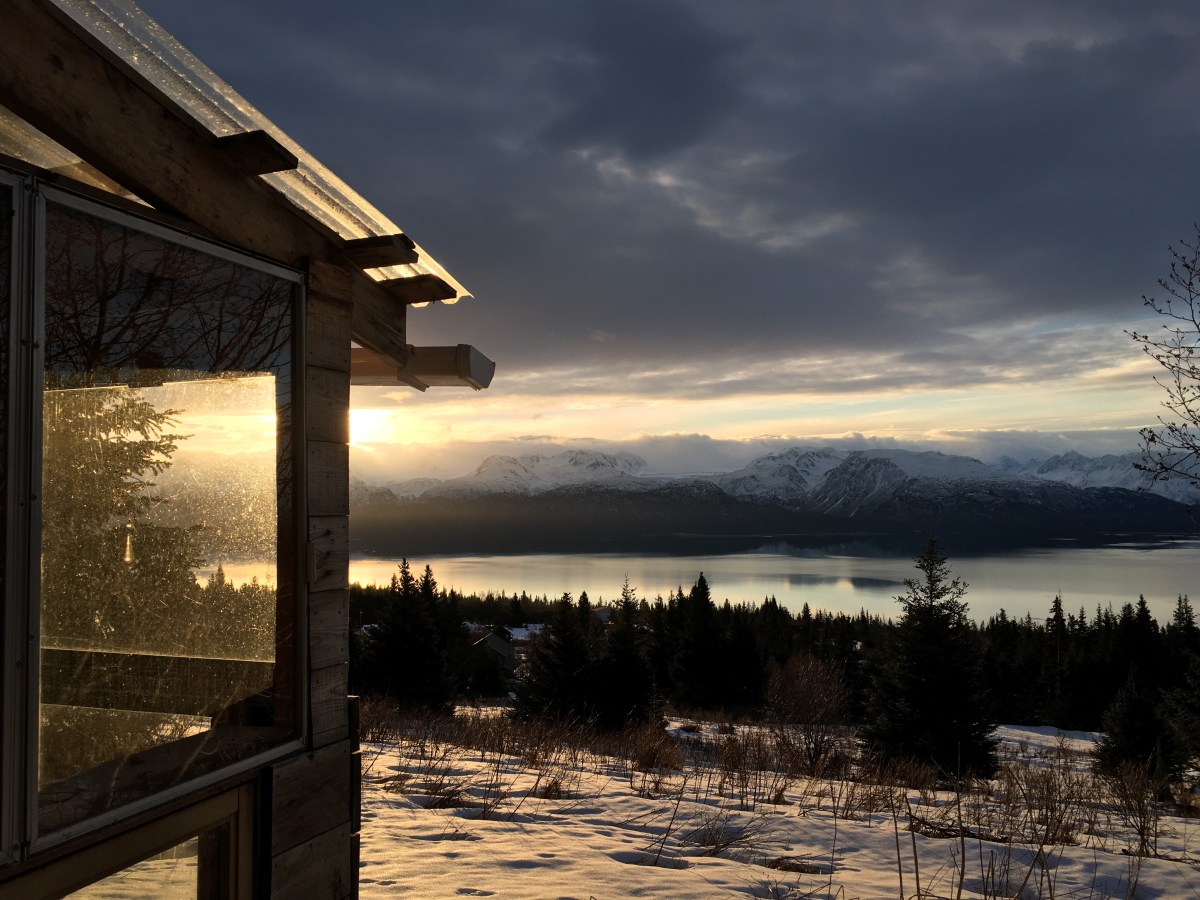
yurt view

Five-Acre Almanac: Expansive

Week 19

The place on the planet where our home sits is surrounded by wild. Beyond our front door there is a small yard with our garden but beyond that is a meadow and an elderberry grove. Further still is a spruce forest that’s home to moose, coyotes, black bears, lynx, owls, ermine, squirrels, porcupines, hares, spruce grouse, owls, and a host of other small animals. Sometimes a brown bear or a pair of wolves will wander through.

At the edge of the forest directly to the south of us, a bluff drops nearly 500 feet down to Kachemak Bay. The 40-mile long arm that juts out of lower Cook Inlet and cuts a groove into the landmass of the Kenai Peninsula is the lifeblood of our community. It’s alive with fish and seabirds and marine mammals and is in a state of constant motion, keeping time with the moon’s gravitational pull.

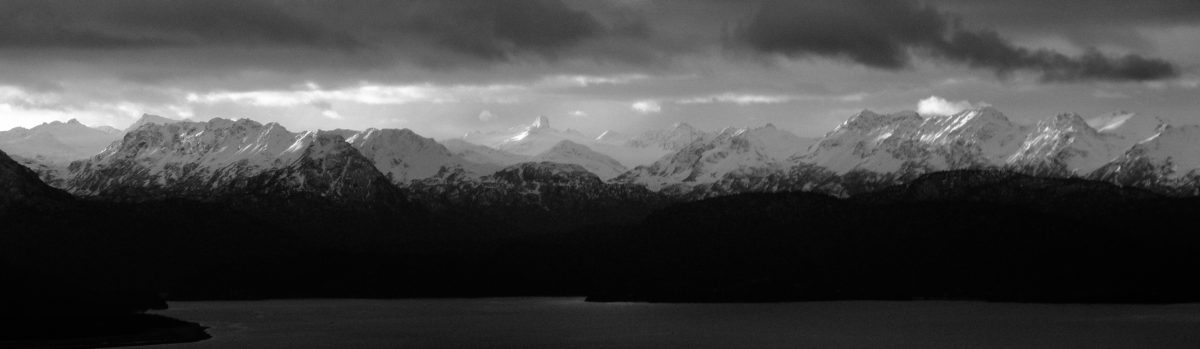
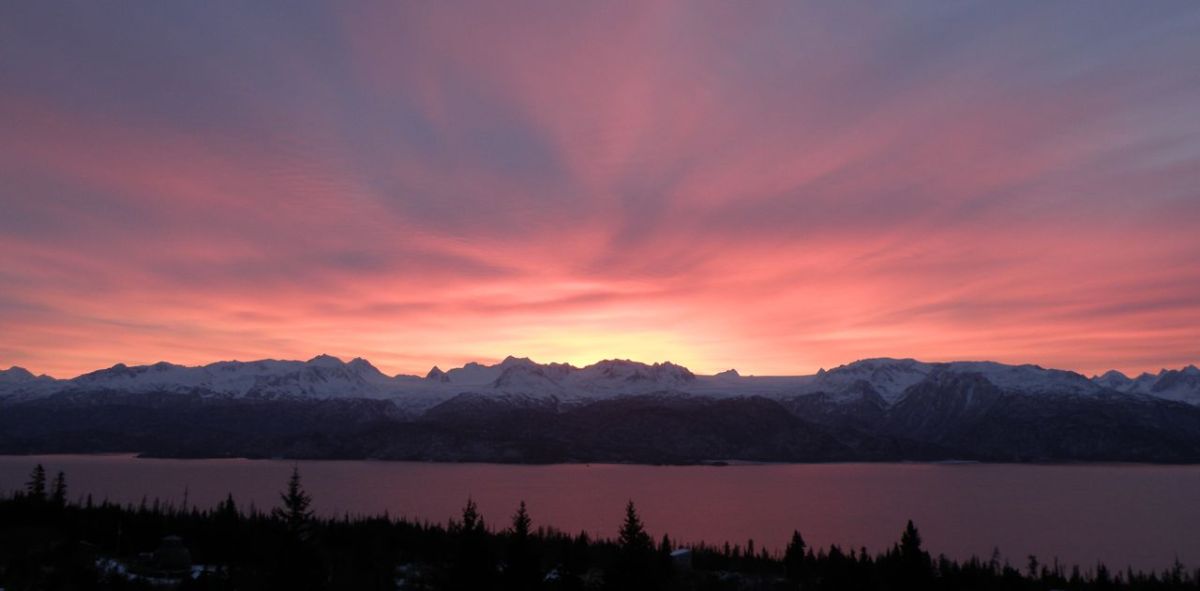
On the other side of Kachemak Bay are the Kenai Mountains. At 3000-5000 feet, they aren’t as tall as some, but they’re steep and jagged and the light shines on them differently depending on the time of year, the time of day, whether or not it’s cloudy or clear, dry or humid. There are glaciers too, that spill down from the Harding Ice Field. We see Dixon and Portlock from here, and the iceberg dotted lake that flows out of Grewingk. We have a bird’s eye view of where the lake’s silty stream braids out of the valley and mixes into the bay.

We can’t see the Gulf of Alaska on the other side of the Kenai Mountains, but it’s with us nonetheless. It sends us warm air and high winds on occasion, and sometimes, like this week, deep snow.

Out our back yard and to the north there is a stand of cottonwood trees and more spruce. The elevation rises. There are houses and roads, a school and a fire hall, but then the land goes on and up the peninsula, over hills and through wetlands to meet the 1.92 million acre Kenai National Wildlife Refuge, then on to more mountains, to giant lakes, to vast expanses of boreal forest.

There’s wild above us too, in the gases that make up our atmosphere, in the moon, the planets, the stars and all the space between them. And there’s the wild below our feet. Roots, dirt, worms, mycorrhiza, rock, the earth’s mantle, its core.

It’s easy to lose awareness of all the wild that surrounds us. We go to work. We get caught up in the tasks of living. We watch television. We lose ourselves in our striving, our obligations, our desires. We’re so focused on keeping our footing that we forget where we are. And in forgetting where we are, we forget who we are.

There is beauty to all of this wild, but the beauty goes beyond what can be captured in photos or words. There is deep truth in the design and the function of the natural world, and deep truth in how the design and function inform each other to create individual systems that work together as a whole. The default of the wild is interdependence. I don’t know how to portray that sort of thing, I only know that I want to learn the way of it all. I want to live with that kind of truth. I want to remember who I am.

So I step out into the cold with my snowshoes. I walk the same trail I’ve walked a hundred times. I touch the trunk of the old birch tree on my way down the meadow. I pluck a frozen highbush cranberry and hold its bitter earthy flavor on my tongue as I tromp through the spruce and alder woods. When I reach the other side of the trees I stop and look up from the snow. The mountains, the bay, the glaciers are before me. I hear the ocean’s churning. I’m aware of the cool air on my face and the warmth inside my down jacket.

The sun is low in the sky and it casts a golden glow. For a moment I am in a state that’s somewhere between remembering and forgetting, between who I’ve been and who I am still meant to become. Everything wild that surrounds me would exist without me, but in witnessing it I become wild too. It feels like belonging.

Five-Acre Almanac: Feeling Reflective

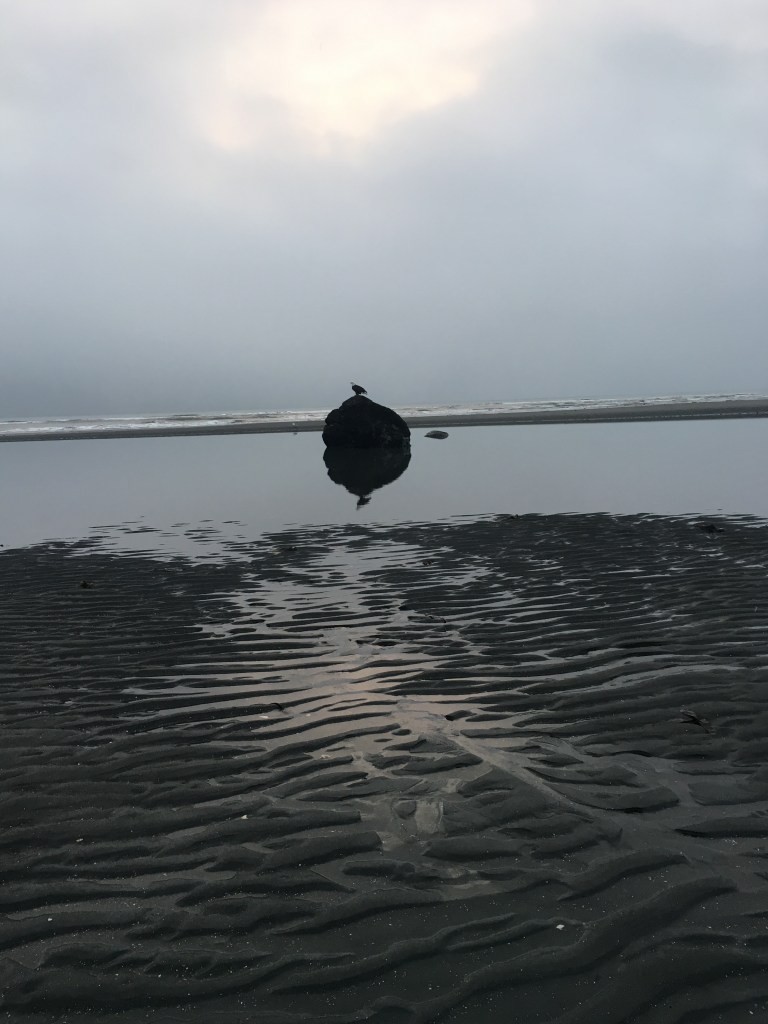
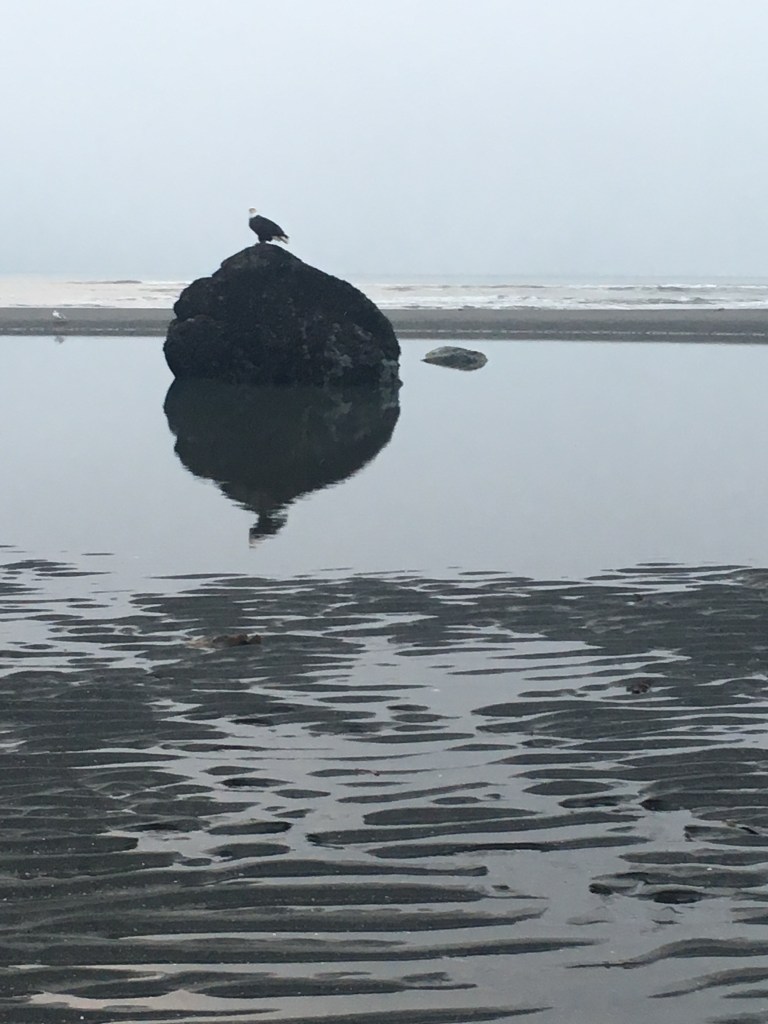
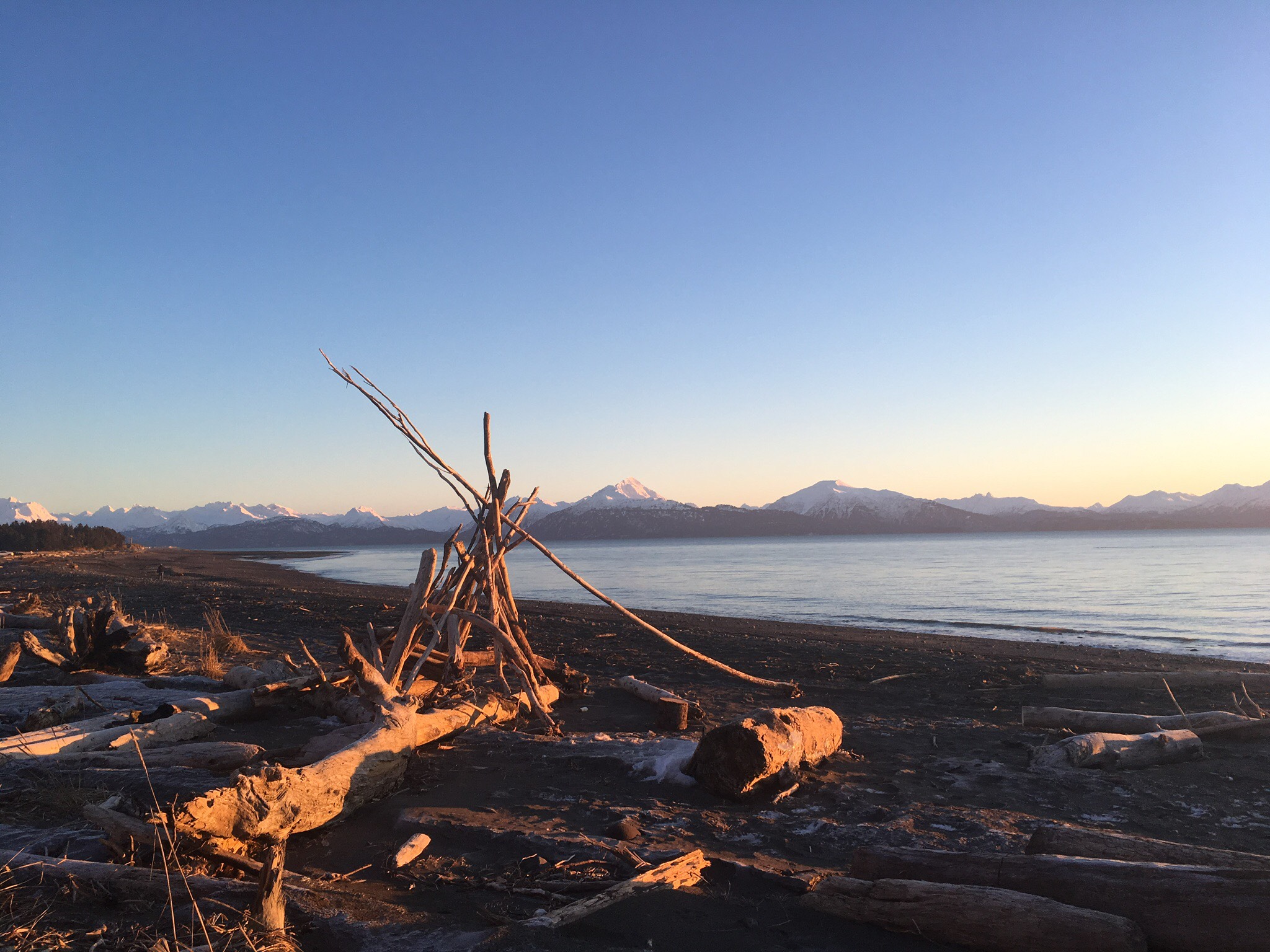
Bishop’s Beach 12/02/2021

Week 18:

Sometimes writers need to write about writing and so that’s the subject of this week’s post. I think it fits with the Five-Acre Almanac theme because it’s a good part of what I do here. Writing makes me go through life differently than I would if I didn’t write. In that way it’s a part of who I’ve become, not so much because of the words on the page but because of how I move through my days searching, looking for connections, asking myself questions and trusting that there will be an opening. I’ve learned that once I go through that opening there will be surprises on the other side.

I felt compelled to start the Five-Acre Almanac posts at an unlikely time. It was August and besides going to work every day I was busy with party planning and gardening. In addition to the time constraints there was also the problem of planning. I didn’t have a fully fleshed-out road map or well-defined theme. The timing was all wrong, yet there was a persistence I couldn’t ignore that was telling me to start it anyhow. And so I did.

Now I’m eighteen weeks in and enough time has passed that I can reflect on the experience of showing up and writing each week. When I started out I had a personal goal of doing this for a year, but I didn’t want to put that in writing because I wasn’t sure if I could follow through with such a commitment. I didn’t want to set myself up for failure and so instead of being specific in my goals, I remained vague about how long I would be doing this.

My determination to meet my goal of showing up here every week has been solid, and that’s new for me. I seem to be able to work through my self-doubt and trepidation in ways I haven’t in the past. That’s not to say I don’t experience both or that I’m not continually talking myself out of giving up, but there’s a drive that keeps me going. I’m working on identifying what’s fueling that drive.

Why am I doing this? Why am I staying committed to it? Why does it matter so much to me?

Writing reflects who I am more honestly than anything else in my life, at least when I’m doing it right and not falling into the trap of writing for praise or for profit. This week when I was driving into town and I was asking myself some of these questions, these words came to me:

“Your job is not to impress.”

This left me wondering, what is my job then? The answer that came to me, which might be different than the answer that comes next time, is that my job for now is to show up.

When we commit to a relationship with another person, we have no way of anticipating the hardships and joys that we’ll face with them. When we commit to a job, we don’t know all of the challenges that will arise. When we commit to any kind of practice, we don’t know what’s going to be there for us on the other side or what we’re going to learn along the way.

Writing each week for the Five-Acre Almanac is the same way. I don’t know what it is supposed to be. I don’t know what it’s supposed to become. I only know that whatever I’m meant to discover along the way will only be discovered if I show up, if I honor the commitment I made to myself when I started.

I made this evolving project a public one, which is both motivating and terrifying. Motivating because I push myself to do better than I would if I were just writing in my journal. Terrifying because my uncertainty about what this is meant to be is on display.

“Your job is not to impress.”

Then what is my job here? What is the purpose of this self-imposed, public writing practice?

It is to get better at articulating the experience of being alive. Not because my experience is any more interesting or important than anyone else’s, but because language is the gift that gets me closer to articulating the experience than anything else I’ve discovered so far. And the experience of being alive is something to behold.

So I post here every week about something I’ve seen or done or witnessed in the natural world, and I try to tie it to something that is beyond myself. But like an iceberg, the part that is seen, the part that comes through in an 800-1000 word blog post is just a tiny piece of the bigger picture. Underneath there is a mass that includes everything else I’m trying to make sense of—my family, my hopes, my fears, my trying to understand the bigness of the world and my place in it, my gratitude, my uncertainty about the future, the terrible unfairness and hardship that exists right alongside so much beauty and wonder.

I turn to the natural world with all the questions that make up the entire iceberg of my existence, and the answers reveal themselves outside of the realm of language. The Five-Acre Almanac posts are my attempt to tune myself in to whatever it is that I’m meant to learn and turn a small piece of what I discover into words that make sense. The hope is that the writing will surprise me.

***

Scruffy.

Five-Acre Almanac: Temporary

OLYMPUS DIGITAL CAMERA

Week 17

When my children were young and the three of us spent our days at home together we had a dog named Porter. He was gentle and goofy and could not be left alone for a moment. Because he was never out of sight, we were witness to all of his antics including his attempts at hunting voles. He caught them on occasion and when he did he was as surprised by his conquests as we were. Sometimes he swallowed them whole before anyone yelled for him to let go, and if it wasn’t too late he’d open his mouth and the rodent would leap out and escape to freedom. One time though the vole dropped to the ground, dead.

Upon picking it up I discovered that the dead rodent was female, and under the thin skin of her belly there was motion. Without fully thinking it through I brought it inside, plopped it on a cutting board and performed a c-section in front of my children. This wasn’t an attempt to save the baby voles, it was a chance to see something that we don’t normally get to see.

It wasn’t until I’d extracted the babies and put them in a box with some straw that it occurred to me that I’d set my children up to watch the animals die. The kids were already attached to the tiny pink squirming bodies and were rooting for their survival, even arguing over what to name them before I realized what I’d done.

My thought was to tuck the box away and let the infant voles die while nobody was watching, but the kids wanted to keep them nearby and check on them frequently. I explained how in nature small mammals need things that only their mothers can give them and that the cow’s milk in our refrigerator was not an adequate substitute for their mother’s milk. I reminded them that the tiny creatures hadn’t even been born yet and that their hearts and lungs might not even be fully developed. I did my best to prepare them for the inevitable.

I suggested removing the mice from the box and taking them outside and finding a place for them to die in the grasses, but neither child agreed to that plan. In the end we put the box on the coffee table and for a few hours we checked on them until one by one their bodies became motionless. Then we took them outside, along with the body of their mother, and buried them.

All of this took place before Dean got home from work. When he returned and asked about their day they told him how Porter had killed the mama vole and how I had cut it open and found live babies and then we put them in a box and then after a while they all died and we buried them. It was all very matter-of-fact. They were not visibly traumatized by the experience as I’d feared they might be.

This story came back to me today seemingly out of nowhere, the way that memories often do. Maybe it’s because it’s Thanksgiving and I’m feeling nostalgic and I’m inviting the memories of those little kids to come around. They remind me of how this house has a history that’s rich in spite of its need for upgrades and improvements. Our family’s stories give our home value that transcends the real-estate market, at least to us.

Somewhere out there in our yard in the ground there’s a spot where the earth has reclaimed the cross we made out of Popsicle sticks and the voles that didn’t survive our dog all those years ago. Our beloved dogs Porter and Nyack are buried closer to the house under a big spruce tree, not far from where the crocus flowers come up each spring.

This isn’t a sad thing. There’s intimacy in having lived in a place long enough for our stories to be a part of the landscape. And there were stories here before we ever arrived on the scene. Bob and Doris, the homesteaders who moved here before there were roads and electric lines, sold these five acres to Harley and Betty who built the house and lived here for twenty years before we came along. There are those too, who must have passed through and taken shelter on this land long before any of us parceled up the place and claimed ownership.

We can draw up papers and build houses and put up fences, but it’s good to remember that our time here is temporary. Our stories may live on after we’re gone or they may be reclaimed by the earth. Either way, this land belongs as much to the people who are yet to come as it does to us. Remembering this is humbling and beautiful. It connects us to something ongoing and perpetual. It gives us a reason to question the things we’ve come to think of as normal. It allows us permission to do better.

Five-Acre Almanac: Illumination

Week 16:

Most weeks I’m able to work from home on Thursdays. That was that case this past week which was lucky for me because the moon was full and the skies were clear and I was able to adjust my work schedule around the moonrise. All week long I’d been seeing photos of the moon on the eastern horizon against the Kenai Mountains and I had a hankering to be out there and witness its ascent myself. The moon was due to rise around 4:30pm and the sun was due to set just a little while later. I don’t know what the temperature was, but if I had to guess I’d say it was somewhere around zero.

If I could go back in time and tell my eighteen year-old self that one day I’d be a woman who would plan her day around the moonrise, eighteen year-old me would surely be worried. Tracking the moon was not the sort of thing that seemed normal to me back then and if I’d met anyone who wanted to talk to me about such things I would have thought they were wacky, possibly a little bit unhinged and spooky.

What was normal to me as an eighteen year old was an accumulation of what I’d experienced up to that point which involved small town sports, hours and hours of television sitcoms, lots of pop music, going back and forth between two blended families in two Western Colorado towns, and attending Pentecostal church services every week. Those were the things on the surface.

There were deeper things I was wrestling with too, things that didn’t add up. I’d witnessed hands-on healing, people speaking in tongues and dancing in the spirit, and had heard all kinds of biblical interpretations of current events. I’d had my heart broken already by a boy and by life circumstances and by the false notion that we are not worthy of any of the grace we’ve been given. I lived in fear of never finding love, of the impending apocalypse, of not being able to make it on my own.

I’d heard that there were women out there who concocted strange brews and gathered around fires during a full moon, but the thought of them made me nervous and so I didn’t allow them to take up any space in my imagination.

On Thursday when I made a pot of herb tea for my thermos and went outside to start a fire so that I could stay warm while watching for the moonrise, I wasn’t thinking so much about my eighteen year-old self. I was thinking instead about the practicalities of my situation. Both of my dogs were cold and wanted to go back in the house. I’d started work early that day and hadn’t yet figured out a plan for dinner. While I worked without gloves to get the paper and cardboard and kindling set up just right before I lit the match, the cold worked its way into my fingers. After the fire caught and started throwing heat I realized that from where I was standing I wouldn’t be able to see the point on the horizon where the moon was going to make its appearance.

The fire danger is low this time of year so it was fine to leave the fire in search of a better vantage point for viewing the moonrise. I tromped past the old birch tree and the chicken coop and turned north and east. I kept an eye out and soon a portion of the moon became visible. A stand of cottonwood trees stood between me and an unobstructed view, but the light was impressive the way I knew it would be.

Seeing the moon on the horizon never gets old. I love the persistent trick of the brain that makes it look bigger against the mountains than it does overhead. It’s a reminder that there are things we know to be true that can’t fully be explained. It’s a reminder that what is and what we perceive aren’t always the same thing.

While the size of the moon on the horizon might have been an illusion, my cold fingers were not. After a few minutes of moon gazing I let the short haired dog back into the house and made my way back to the fire. From there I thought about what to cook for dinner and watched the sun grow larger as it dipped toward the ocean. I warmed my hands and sipped my tea and stayed long enough to see Venus and Jupiter come to light.

It wasn’t until I was back in the house and cutting up potatoes that I thought of my eighteen year-old self. She sneaks into my awareness sometimes like a phantom and asks me to forgive her for being shallow and lost and afraid. She asks me for love and reassurance and for a reason to dream. She asks me to light the way forward, and so I do. I give her the sun and the moon and the stars. I build a fire and keep it burning.

photo by Dean Sundmark

Five-Acre Almanac: Oil to the Engine

Week 14:

Late Friday afternoon on my lunch break I took a walk on the beach. I only had twenty minutes so I set the timer on my phone for ten minutes and walked one direction until the alarm sounded, then turned back. The tide was just a foot or so below its highest point of the day and I followed the line of driftwood and seaweed that the sea had recently deposited. I’ve walked on the beach several times over the past few weeks, but most days it’s been overcast. On this particular day the sky was blue and the sun was bright and reflecting off the water. When sunlight hits your retinas it sends a signal to your brain to produce serotonin, but even without the technical explanation all that light felt like medicine.

After reading To Speak for the Trees last week I was eager to learn more from the author Diana Beresford-Kroeger and I searched online to see what was available. I found a podcast called “For the Wild” produced by Ayana Young that has Diana Beresford-Kroeger as a featured guest. The two women cover a lot of ground in the interview, but one of the asides that Ms. Beresford-Kroeger offers has to do with kelp. Those of the Fucus species she said, when rubbed against the skin, give the body a boost. This was an old Celtic traditional health practice that can now be explained in scientific terms. Bladderwrack is the common name for our local Fucus species and it has inflated bladders that are filled with a water soluble mucilaginous substance that’s loaded with all kinds of lipids, amino acids, vitamins and minerals, one of which is iodine that helps regulate the thyroid. According to Beresford-Kroeger, rubbing the substance into the skin is like “adding oil to an engine” and makes everything run more smoothly.

Strolling along the tide line with all the washed up kelp at my feet I scanned for Bladderwrack even though it’s not the right time of year for harvesting it. Most of what I saw was bull kelp (nereocystic luetkeana) that had rolled onto shore with recent storms, along with plenty of other species I’m not familiar with yet. While I’ve spent a lot of time learning about the wild plants that grow on land around here, the plants of the sea are new territory. For once my focus at the beach was not just on rocks.

Almost every time I leave the beach I’ve got one or two rocks in my pocket. I collect them for reasons that are beyond reason. Sometimes I imagine using them to border a garden bed but most often there is just a compulsion to pick them up, feel their smooth contours, admire their individuality. The concept of infinity is difficult to fathom, but the rocks on the beach in all their various shapes, colors, sizes, and compositions inch me closer to understanding. To give my attention to one rock out of the millions, billions, trillions that are available, is a study in singularity. Occasionally I try to imagine the geological and geographical journeys a rock has been on and even though I can’t really, just the trying puts time in a whole different perspective. A twenty minute walk, a work day, a week, a month, a year, a decade, a century, a millennium. For those of us that are fleshy and prone to decomposition, time is not the same thing as it is for a rock. Maybe this is why my windowsills are lined with them.

After my twenty minute walk on the beach I went back to the library to finish out my work day. When six o’clock rolled around and it was time to leave I discovered that my phone was missing. The last place I’d used it was at the beach when my ten minute alarm went off. It wasn’t quite dark yet, so I decided to head back to the beach to retrace my steps, but as I was pulling out of the library parking lot and saw the police station directly across the street I figured it wouldn’t hurt to stop in to see if anyone had turned it in.

I told the attendant at the front desk that I’d lost my phone at the beach and she asked my name. Within minutes of noticing they were gone my phone and the case I keep it in that contains various cards and my driver’s license were back in my hands.

It was a small thing in the big scheme of things, to be lucky that way. Lucky that the tide had been high when my phone fell out of my pocket, lucky that the person who found it was kind enough to turn it in, lucky that my hunch to check the police station saved me from a fruitless search at the beach.

If I’d lost my phone forever, along with my driver’s license and cards, it would have been disrupting and a hassle, but I’d still consider myself lucky. I think about this in terms of the times we’re living in. Every time I read the news or spend much time on social media I am reminded of all the ways I could spend my time fretting. But I am alive. There is always more to learn, more to consider. There are an infinite number of relationships to cultivate—with people, with plants, with the ocean, with the seasons, with the elements. The possibilities for expansion and wonder are limitless and learning to look at life this way is a kind of medicine. It’s like adding oil to the engine.

***

Photos: Sunday afternoon, unexpected brush cutting/burning/rejuvenating.

Five-Acre Almanac: Never A Straight Line

Week 9

What I write and what I want to say don’t always come together easily, and yesterday was one of those days. Yesterday I sat writing on my couch for almost the entire day, and in the end I had fewer words than I started with. I’ve made a commitment to myself to post something every week, but I don’t want to write just for the sake of writing. I want to write something I like.

Yesterday I didn’t like my writing, and it felt like I was wasting time. As the day went on I grew increasingly frustrated and I was hard on myself, and while Dean worked to get a bunch of things crossed off of our to-do list and was infinitely patient with me sitting on the couch for hours writing, I felt guilty. Late in the evening I finally gave up. I’ve learned that trying too hard is counterproductive, and I was definitely at that stage. Today I’m starting over.

One of the many things Dean accomplished when I was writing.

Today is Sunday and the sky is mostly blue with a few wispy clouds. Our daughter called and I told her of my dilemma with writing yesterday and she said I should just go outside and work on something for a while and then write about it. So that’s what I set out to do.

I’ll start from the beginning.

After coffee, and my phone conversation with Adella, and a piece of toast, I decided it was time to go outside, but first I needed to change out of my sweat pants. When I went to put on some clothes I remembered that I needed to switch over a load of laundry, so I did that. I didn’t want to take the time to fold the clothes from the dryer so instead I took them to a chair in the spare bedroom. Out the window of the spare bedroom I saw a spruce grouse in our driveway, so of course I wanted to go get a photo of it.

I slipped on some shoes, grabbed my phone and went outside. I followed the spruce grouse around and managed to get a couple of pictures, but not good ones because my phone camera isn’t the best and the grouse kept moving. When I was about to come back in the house, two of my chickens showed up. These two particular hens have been perching outside at night lately, and they were locked out of the coop. So I went to unlatch the door so they could get in for some food. While I was there it made sense to check for eggs. There were four of them.

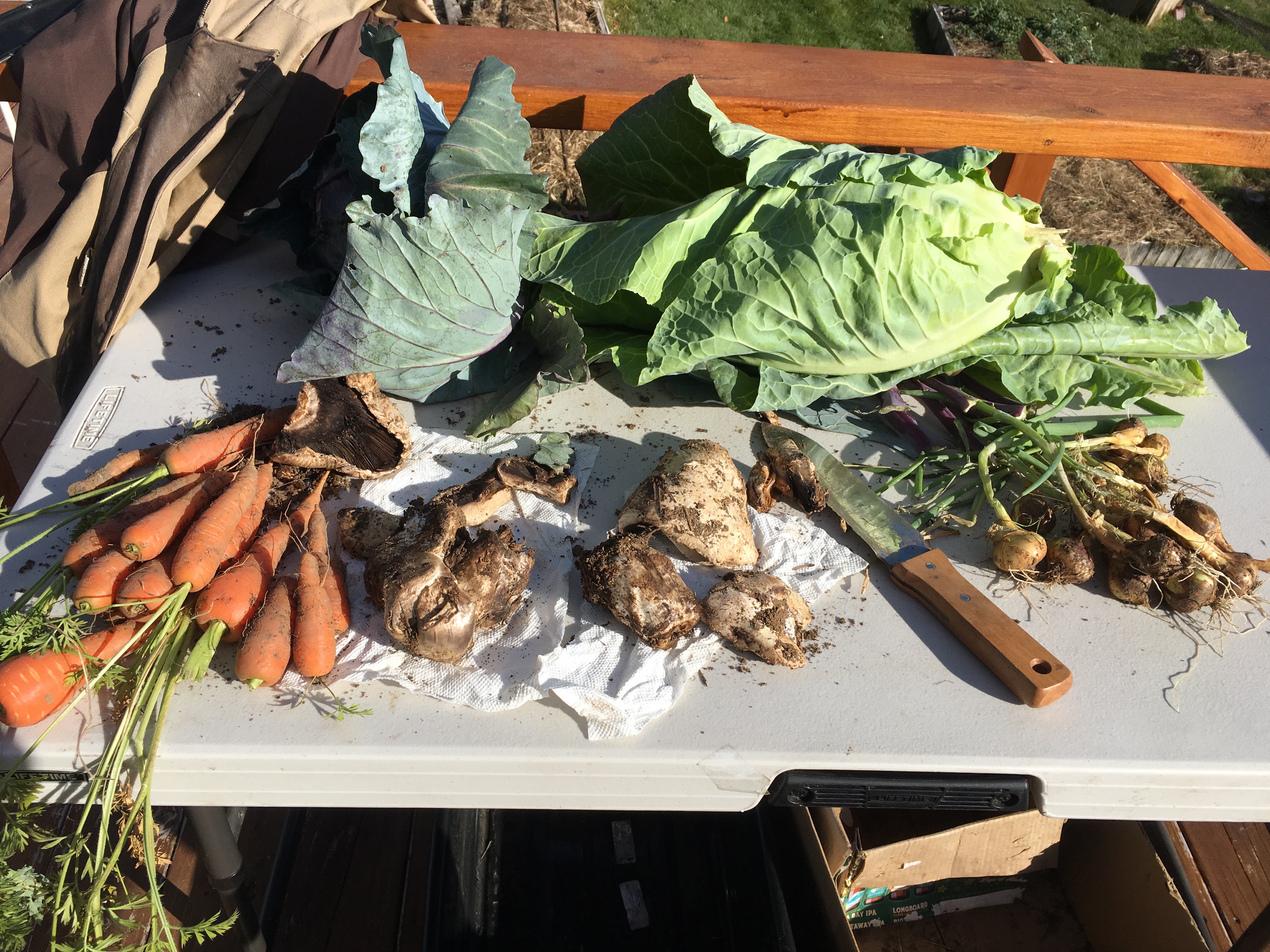
I didn’t have a bucket, so I put two eggs in the pockets of my sweatpants. As I was latching the chicken coop door I looked down on the outside of the coop. Two days ago Dean dug up a bunch of dirt from the chicken pen to add to one of our garden beds and I looked down at some of the holes he’d dug and found a giant portobello mushroom growing in a crevice. It was huge, and I had to get it, so I spent the next five or so minutes carefully extracting it. I carried it back to the deck, set it outside so the dirt on it could dry, brought the eggs in the house and remembered that I needed to start another load of laundry.

Soil rehab: Layering up with chicken coop dirt, straw, and grass clippings.

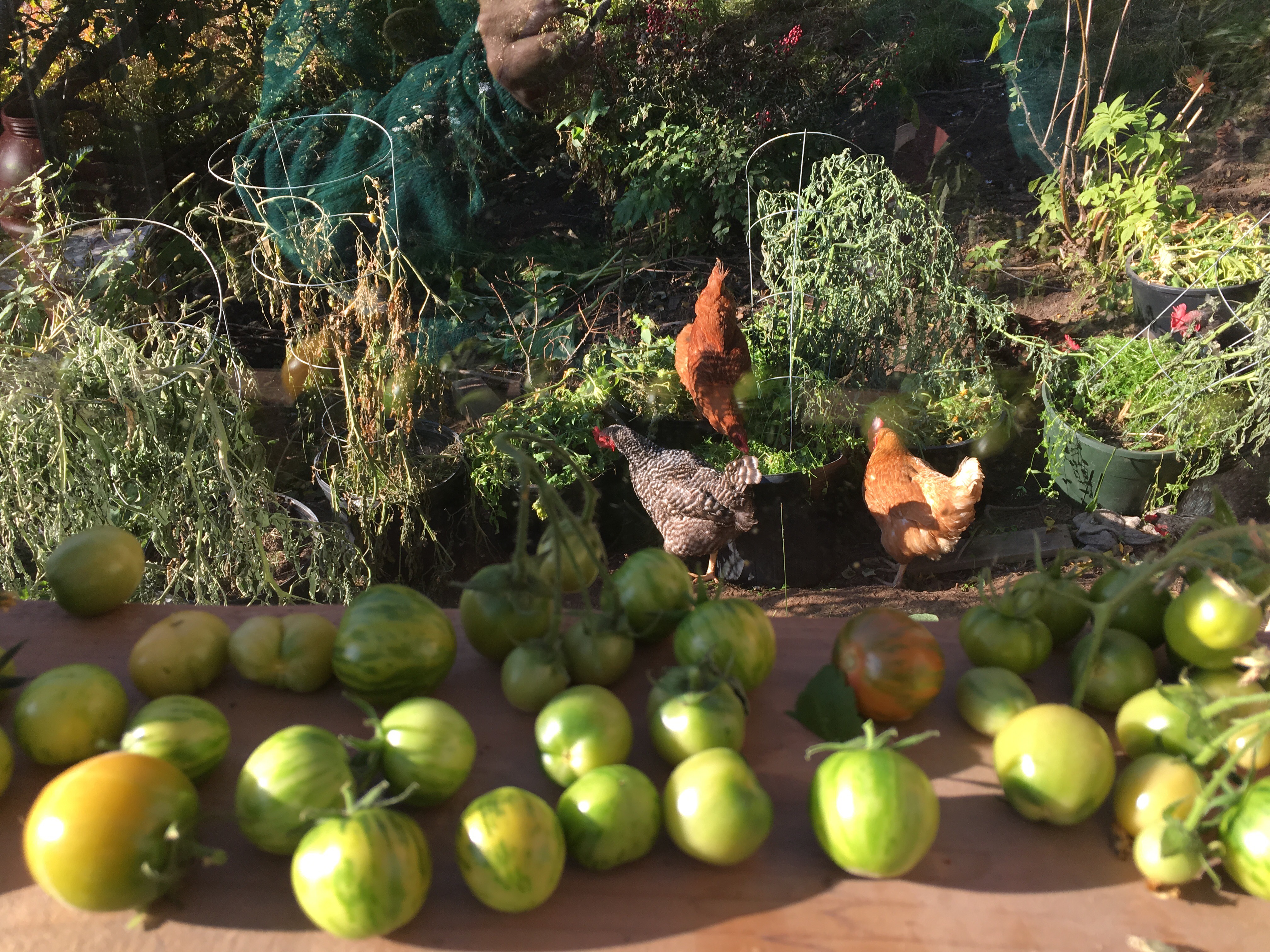
I finally got dressed and headed outside. It made sense to start with the greenhouse since it was warm. My task was to empty all the tomato and cucumber pots into the compost bin and stack the empty pots in our garage. As soon as I set the pots on the ground outside the greenhouse, the chickens flocked to eat the fresh chickweed that was growing in them. And because the chickens were enjoying their buffet I couldn’t empty the pots quite yet so decided to find something else to do for a while.

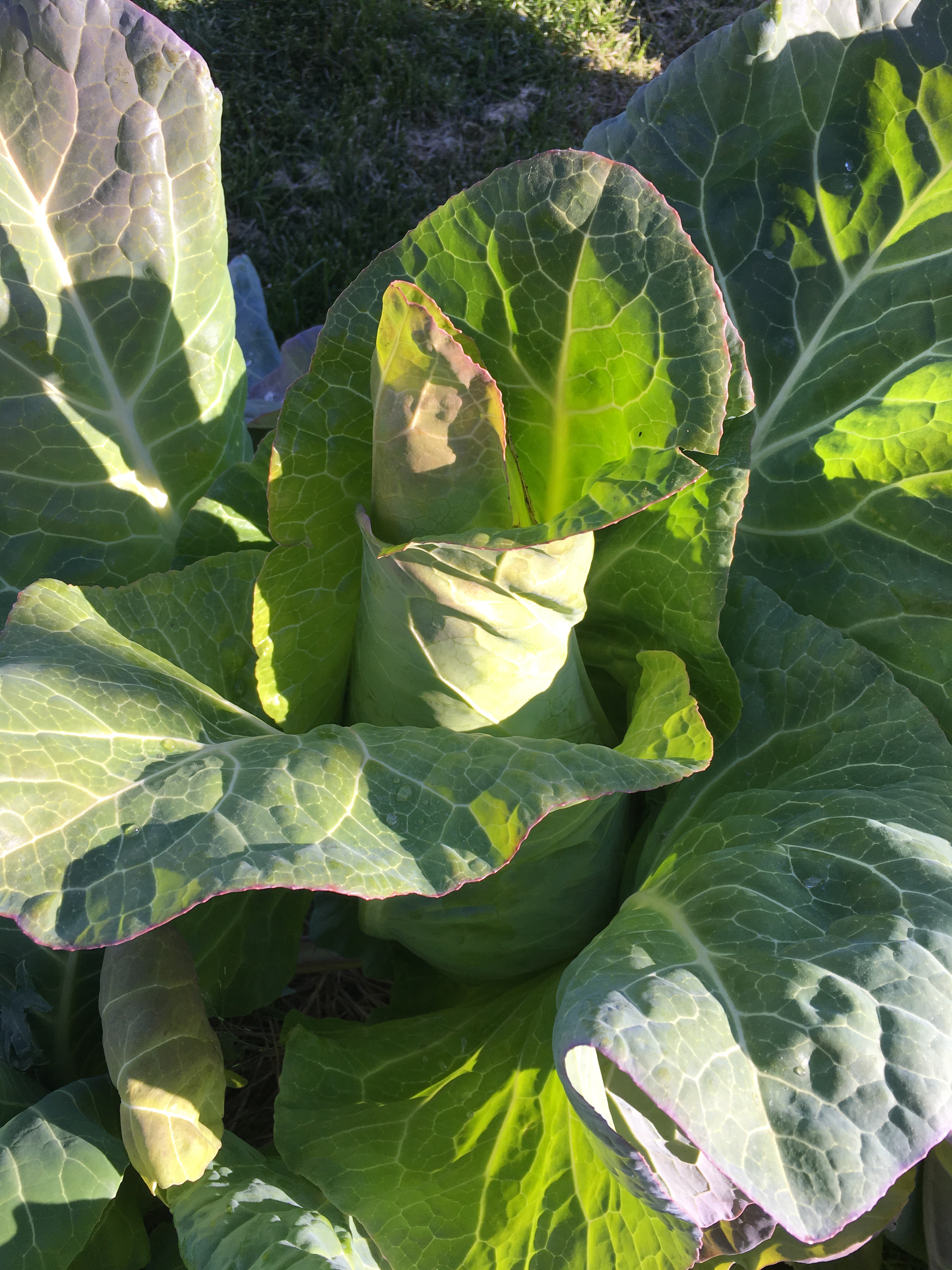
Sauerkraut is on my list of things to make today, so I went to the front yard garden and harvested some cabbage. We didn’t get a bumper crop of cabbage this year, but we did get two excellent heads, one purple and one green. Then I went to the back garden to pull some carrots that I’ll shred into the kraut. On my way to the carrot bed I noticed our chrysanthemum plant finally looks like it’s done for the season. We bought the plant from Strictly Medicinal earlier in the summer and they told us to give it a nice deep mulch before winter. So I went to find some straw. While I was at it I thought I might as well get enough for the lavender plants.

Dean started the lavender plants from seed last spring, and seven of them survived and are doing well. But depending on our winter, they may or may not make it. In addition to mulching them, I decided to dig one up, put it in a pot, and bring it in the house for the winter. All of that required finding some soil and a pot.

I got the soil and the pot and set them on the deck. Then I went to get the straw, but before I actually got the straw I saw some tall nettle plants that I decided to cut down so that I can extract some fiber from them later when I have more time. I cut the nettle plants, found a safe place to stash them, then got the straw.

I grabbed Dean’s hori hori knife for digging up the lavender plant. I mulched the plants I’d set out to mulch and dug up one of the seven lavender plants. But before I headed back to plant the lavender in its new pot I saw the two beds we harvested potatoes from the other day. They were empty and the soil was exposed and now that we’ve changed to no-till gardening I have this thing about exposed soil and I had to cover it up. So I used the hori hori and cut down a bunch of fireweed stalks and mulched those two beds. Then I remembered to pull some carrots for the sauerkraut.

That brings me up to right now, and after spending a whole day writing yesterday I can’t afford to put much more time into this post. I’ve still got sauerkraut to make and pots sitting out beside the greenhouse that need emptying. And as you might guess, the odds are high that I’ll find something that’s not on my list that I’ll want to get done.

Mushroom, cabbage, carrots, hori hori.