February 2026: A Snow Moon Letter

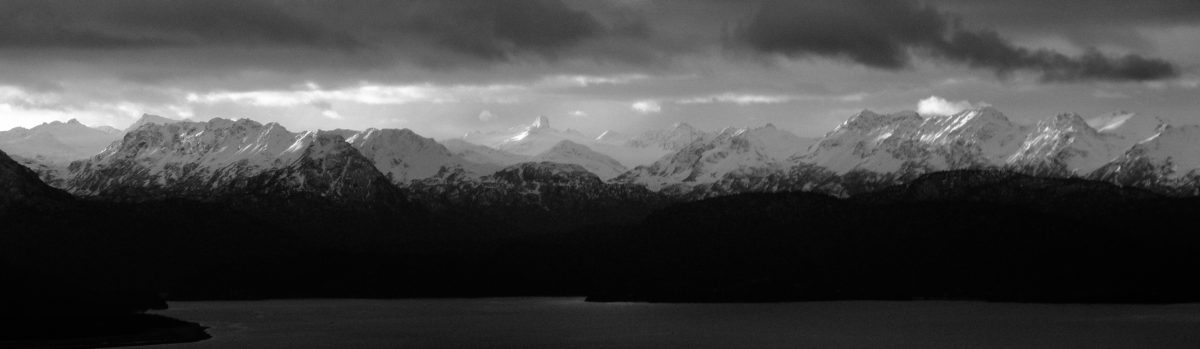
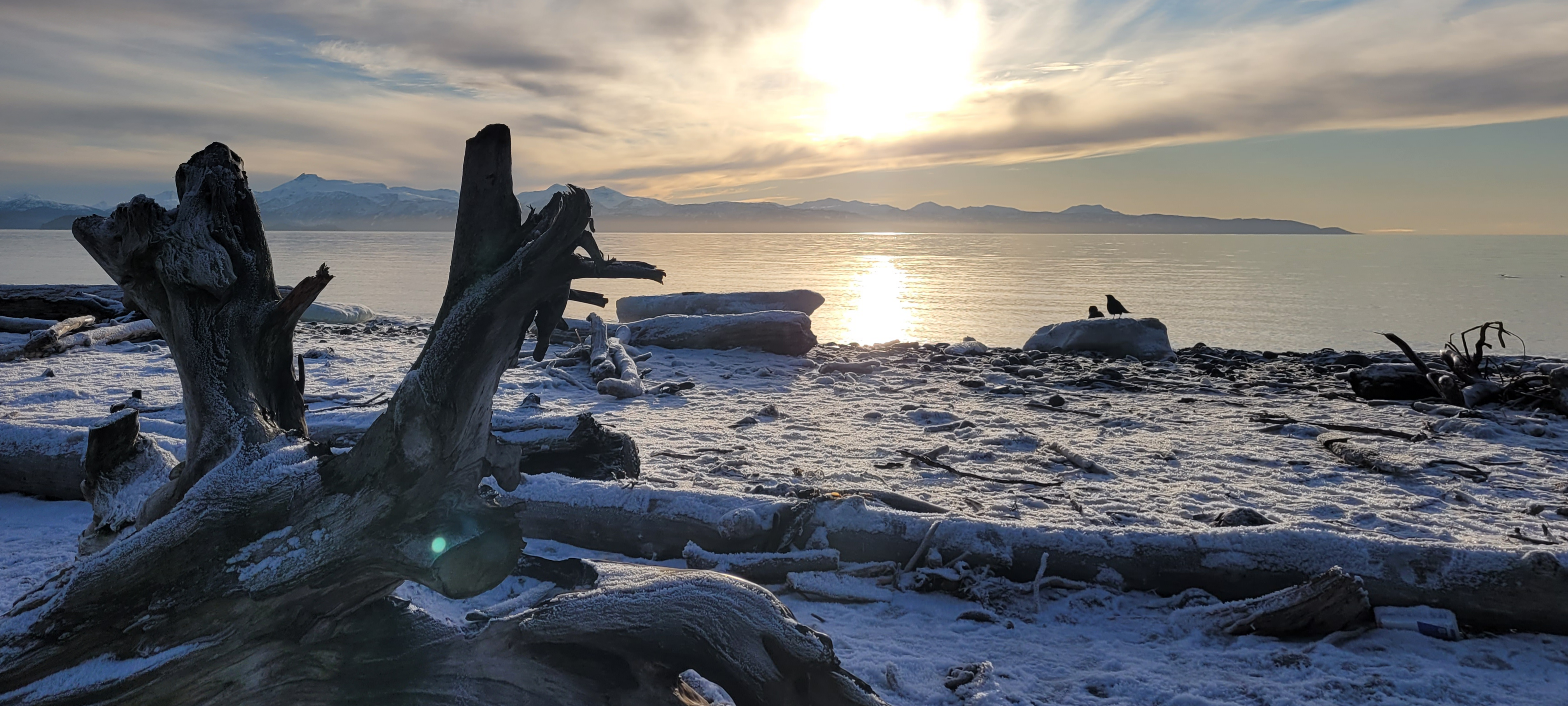
Pacific Ocean

Dear Friends,

Since my last letter, I’ve received so many kind notes and in-person condolences. I’ve had phone messages and emails and a few hugs that cut through all the layers of talk and went straight to the heart. Something inside me must have known that I needed all of that, but now I know for sure that I did. To not feel alone, to not have to carry the heaviness of loss on my own, to know that grief is something we all share… it’s made me feel like I’ve got a place among you, and what we all need is to belong. So, thank you.

It’s an interesting thing that I’m doing, writing a letter to anyone who will read it, and I’m still trying to figure out why I feel compelled to do this. Maybe it’s an experiment in community. Maybe it’s just a free form way for me to write when I don’t always know what I want to say. Maybe it’s me reaching out a hand in invitation, saying, let’s do this thing together, let’s find something in common, let’s go wherever this takes us.

I don’t know why it took me so long to discover this, but in the last couple of years I’ve learned that I have a hard time looking people in the eye. I can have a conversation with just about anyone, and obviously I’m not afraid of sharing things about myself with others, but looking at someone else’s eyeballs kind of freaks me out. I watch people’s mouths when I talk to them and if I happen to make eye contact it almost stings. I immediately avert my gaze. Since becoming aware of this I’ve been working on looking at peoples’ eyes when I talk to them, but it’s not an easy thing for me to do. It feels like a fragility on my part. What is it I’m afraid of seeing? What is it that I’m afraid others might see in me?

There’s that whole notion of eyes being the window into another person’s soul, and I think there might be something to that, and that might just be what’s jarring to me about looking someone in the eye. When I make eye contact with another person, I sense that there’s an energetic connection, like a spark, and it startles me. Maybe I need to learn to stay in that uncomfortable space until it’s no longer uncomfortable. Maybe I need to learn to trust myself with that kind of energetic exchange because it feels kind of powerful. I’m curious to know if anyone else experiences this.

I think I’m going down this rabbit hole because writing these letters feels a lot like baring my soul, and yet it doesn’t freak me out. Maybe letter writing is my love language. Maybe it’s my attempt to make eye contact.

Anyhow, I hope there is something about these letters that makes you feel seen.

It’s been more than a couple of weeks now since that life-altering day I wrote about in my last letter. Without a dog, our house is quiet in a way it hasn’t been in the 35 years that Dean and I have been married. The temptation is to rush out and get another puppy but we’re trying to make ourselves wait a while. There are a few trips we’d like to take before we take on the responsibility of another dog, and this kind of quiet might actually be good for us to experience. At least that’s what we’re telling ourselves.

Also in the two weeks since I last wrote you, I’ve been to Florida and back. I’m still recovering from the trip and feeling a little raw from the mix of emotions that came from gathering with family to say goodbye to my nephew. After being with his mom and sisters and attending his memorial, I know more about him now than I knew before. The thing I heard over and over again from his family and friends is that Ellijah was a person who showed up for other people. When people needed him, he was there. It made me think about the people in my life who show up and it made me think about what it means to be a person who shows up.
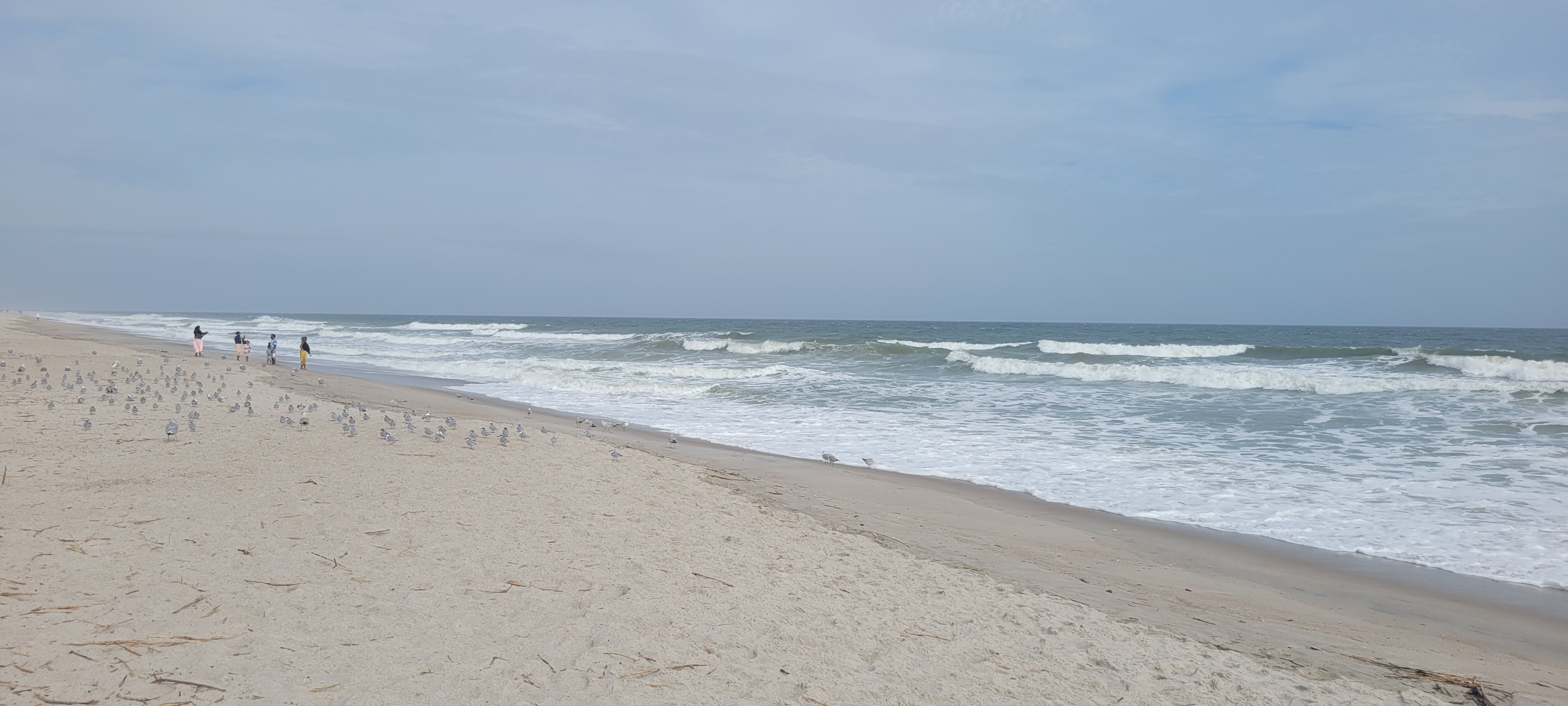
Atlantic Ocean

I went to Florida because I needed to go, and somehow I thought that need was for my sister and her girls. In retrospect though, I needed to go for myself. I needed to remind myself that I belong to a family. We all started out in Colorado together, but over time we’ve scattered around the country. We’ve moved away from each other in non-geographic ways as well – politically, religiously, culturally – but when we were all in a room together I felt at home, and at peace. I didn’t know I needed that, but I did.

One highlight of the weekend was when we gathered for brunch the day after Ellijah’s memorial. Cousins, sisters, sons, daughters, nieces, nephews, parents, grandparents, friends, brothers, aunts, uncles all together around one long table. The little boys ran around the table with their toy car and dinosaur, and my niece’s beautiful baby got passed around to anyone who wanted a turn holding her. The waitstaff at the restaurant were endlessly patient with us, and kind, and for a few hours we had the time to just be together. None of us took it for granted, because who knows how much time will pass before we’re all able to share space like that again.

It’s mysterious the way things work; that tragedies can bring about healing, that new and beautiful relationships can blossom after loss, that priorities can come into focus when your heart is broken. It’s true personally and I have to hope that it’s true collectively.

And how are you holding up? What are you doing to take care of yourself these days? Do you have any good books to recommend? Any podcasts or music that’s helping you get through the intensity of this particular moment in time? I started listening to The Overstory by Richard Powers when I was traveling. It’s been recommended to me more times than I can count but I put it off because I haven’t been drawn to reading much fiction over the past few years. Of course it’s as good as everyone said it is and the writing is a miracle. Maybe it will launch me back into a fiction reading phase again. I hope so.

We’re in the middle of a dreary weather pattern here with no sunshine icons at all in the ten day weather forecast. I’ll try to dig deep and find some of that inner light to get me through; lots of hot tea, yoga, jumping on the rebounder I bought last winter, and as many beach walks as I can fit in. It’s a good time for garden planning and tea packaging, and of course for writing. We’re halfway between winter solstice and spring equinox now and we’re gaining almost five minutes of daylight every day-even if it is behind a thick layer of clouds. Already our slow days of winter are feeling numbered, so I might as well embrace them.

Have I told you yet that I appreciate you reading these letters? I hope this one finds you engaged in something meaningful and encouraged about some aspect of your life. I hope it finds you rising above the intensity of current events. I hope it finds you well-cared-for and well-fed and at peace. But if you’re not feeling or doing your best, that’s okay, too. Don’t be hard on yourself. Let yourself rest. Know that I’m rooting for you.

Thank you for being out there and for reading my ramblings, and if you feel so inclined, I’d love to hear from you. And if this letter encourages you to reach out to someone else, that’d be cool too.

Take good care until next time.

With love,

Teresa

And just a few more things:

*I’d love to share these letters with as many friends as possible, so please feel free to share this with some of your friends. Also, if you’re not already subscribed to receive an email every time I publish, please consider doing so. It’s free and will remain so.

* The family brunch I described above reminded me of this song and it’s been playing in my head ever since. ‘Crowded Table’ by The Highwomen. You might enjoy it, too.

*I’m a sucker for note cards and stationary and just because I write these letters online doesn’t mean I won’t find an excuse to go to the Homer Bookstore and buy pretty things to write on.
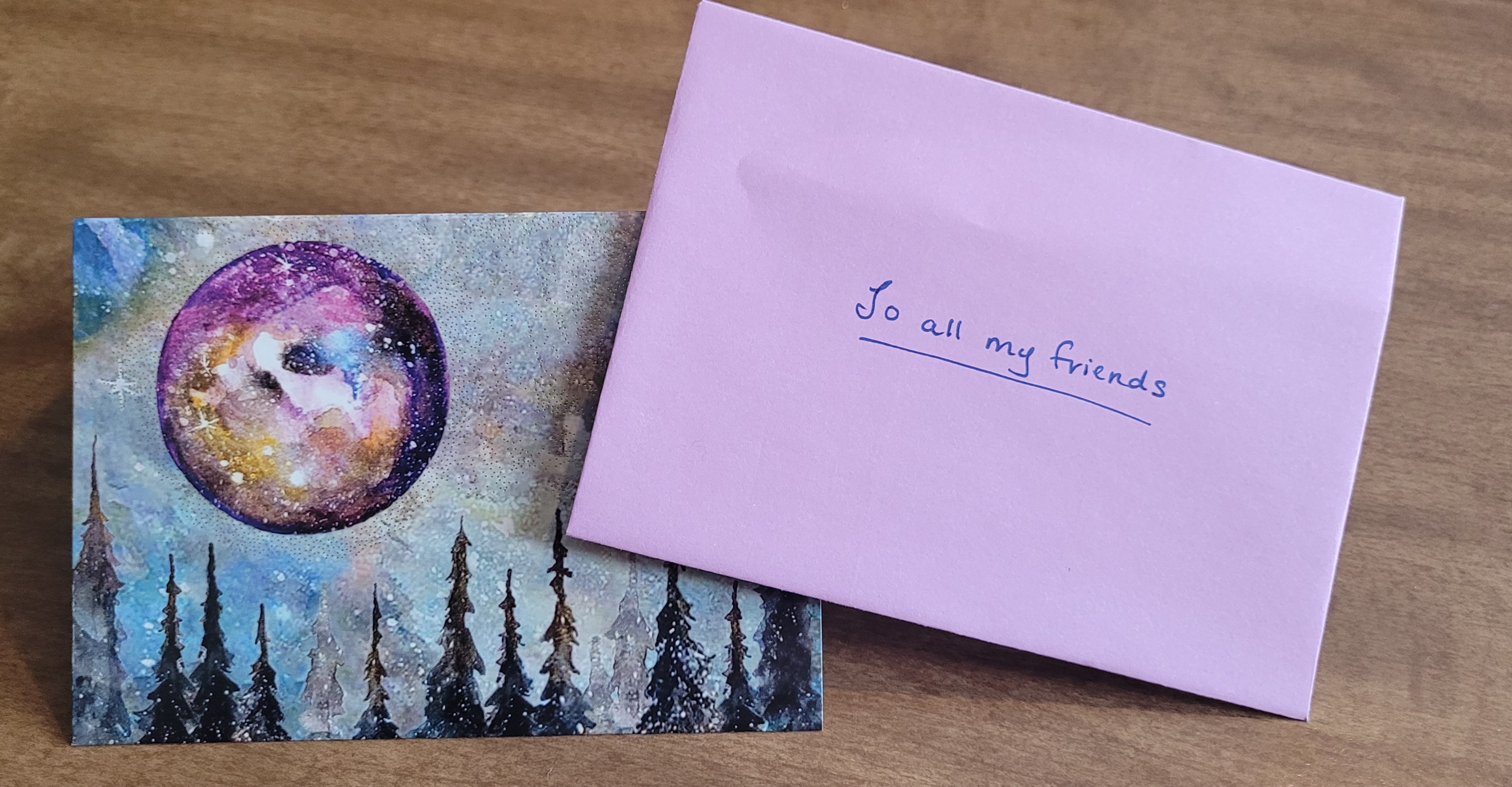
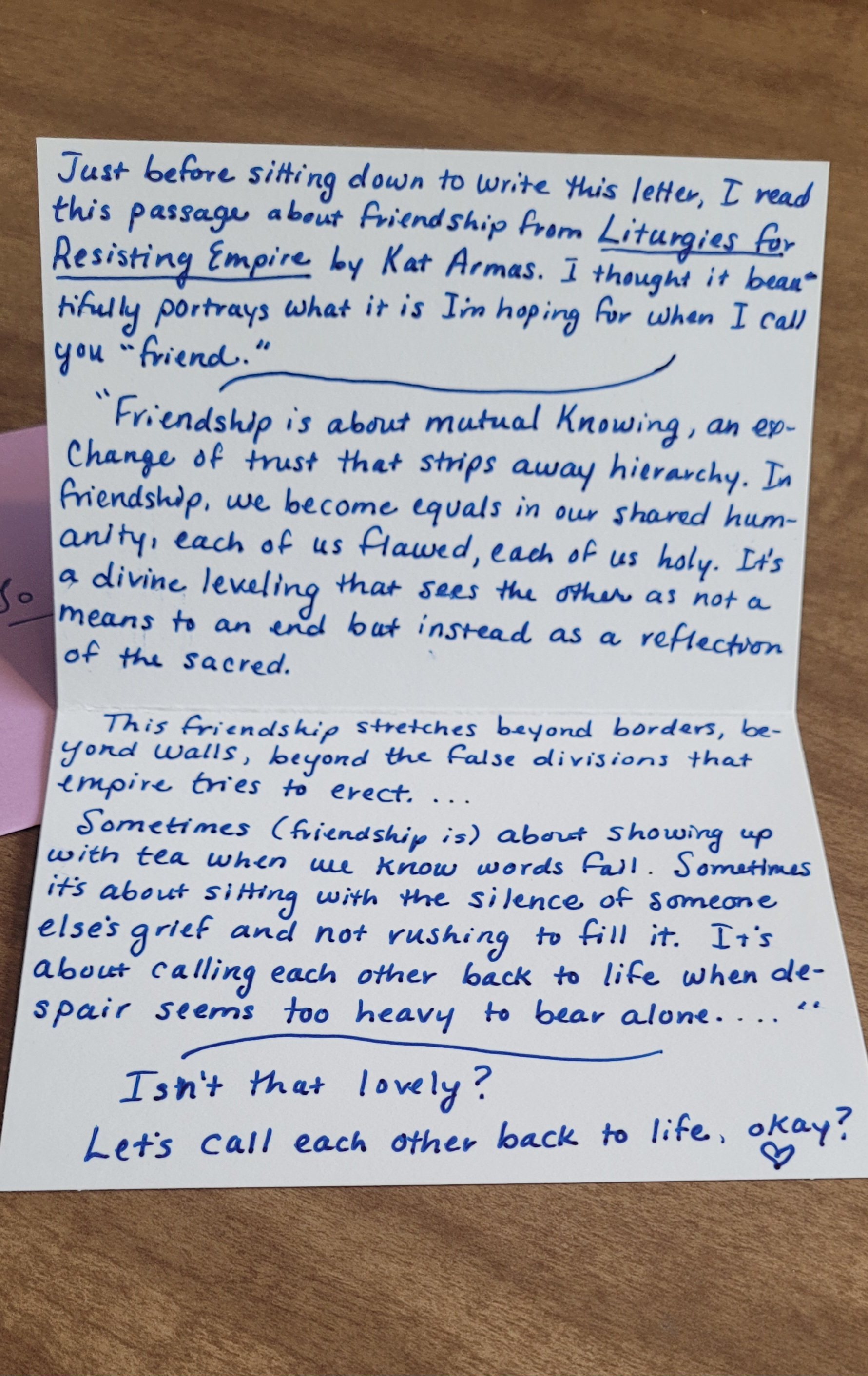
Peter Pauper Press, Inc. Copyright 2020 Illustration by Terri Foss

January 2026: A second letter

Dear Friends,

When I wrote my January letter earlier this month I didn’t expect I’d be writing another one so soon. I haven’t even responded to everyone who reached out and I’d hoped to do so before writing again. But I was encouraged by how many of you replied. My soul felt lifted by the conversations that were started. My hope for deeper connection going into the new year was buoyed, and so I’m here again because I could use that kind of boost again. Perhaps you could too?

I have to warn you though, it’s been a heavy week, and this letter may not feel like much of a boost. In fact if you’re feeling sensitive right now, you might want to wait on this one or give it a pass altogether.

I’ll start by telling you about a book I listened to a couple of months ago. The Comfort Crisis by Michael Easter is a book about confronting and even embracing the things in life that cause discomfort. It covers physical exertion, cold exposure and hunger – all things that have to do with our material existence, but it also considers existential discomforts such as boredom and the reality of our own impermanence. In the book, he talks about the Buddhist monks of Bhutan and their practice of contemplating their own deaths at least three times a day.

Recently I’ve been given plenty of opportunities to contemplate death, and this week in particular brought it into sharp focus.

Just after the holidays, our sweet old dog, the one we adopted after finding her on the side of the road fourteen years ago, went into decline. We recognized what was happening, and we knew our days with her were running out. Our care for her went from typical elder care accommodations to more of a hospice care situation. We fed her fresh ground beef and gave her extra cuddles. We carried her up and down the stairs and cleaned up after her when she didn’t make it outside. On Monday, I told my supervisor at work that I might need to take some time as we were getting close to having to make the difficult decision to have her put down.

Then on Tuesday morning I woke to a text from one of my sisters telling me to call her right away. That’s never a good thing to wake up to. I feared that the call might be about my 87 year old mom who’d just had a rough bout of flu and I braced myself before dialing my sister back. The news she delivered was not about my mom but about our nephew Ellijah, just 27 years old and the son of my youngest sister, who had died in the night after a tragic accident involving a gun. The exact circumstances of his death weren’t known at the time, and frankly they didn’t matter. What mattered was that he was gone, and whatever amount of pain and shock that I felt upon hearing the news were a million degrees smaller than what Ellijah’s parents and siblings were experiencing.

Then a sense of helplessness set in. We cannot undo death and we cannot ease the pain of a parent whose lost a child. We can offer comfort, express our condolences, shower them with love as best we’re able, but the hard truth is that sometimes pain has to be endured, and we have to allow those that are hurting to endure it in whatever way they need to. I can carry pain over the loss of Ellijah’s life, but that will not diminish the pain that my sister is experiencing. Comfort in her time of exquisite pain is the best I can hope for.

I was not personally close to Ellijah, but I kept in touch with him on Facebook. Interestingly, I feel like I know more about him now with the tremendous outpouring of fond memories and photos that his friends and close family members are sharing online. By all accounts he was silly and thoughtful and was an exceptionally loving uncle, brother, nephew, friend, son and coworker. And while none of that is surprising given what I did know of him, it’s beautiful to see so much love for him expressed so openly.

Like many of us, I have a love/hate relationship with social media, but I will say that this week I’ve been thankful for Facebook. It’s helped me know my nephew better. It’s given me a place to go to mourn. It’s helped me feel connected to family that’s thousands of miles away. And it’s a helpful and effective way for me to get this letter out to you, wherever you might be.

And writing this letter and knowing so many beautiful people are reading it is helping me process my own grief, and I thank you for being there.

I know there are many ways to go through grief. Lots of people prefer to keep it to themselves, but (obviously) I’m not one of those folks. I don’t share my grief to bring you down, and I apologize if that’s the effect this letter is having. I share because life is full of beautiful things and it’s full of hard things, and only sharing what’s good doesn’t feel completely honest. I promise I’ll share the good times as well so that I will not become the Debbie Downer of letter writers.

How are you? We’re just a couple of weeks into 2026 but it seems like a lot has happened. In terms of world events and politics, etc. it’s been intense and I have the sense that it’s going to be that way for a while. I keep reminding myself of the overall message of Easter’s The Comfort Crisis, which is that change for the better often comes from leaning in to discomfort. How do I lean into the discomfort of this time of chaos that we’re in? How do I show up for my family and my friends and my community? More importantly, what is my role in getting us through to the other side, whatever that other side might look like?

I’m looking for ways in which I’ve chosen comfort over growth in my own life, and there are plenty. One of them is my tendency to keep my convictions to myself.

The subject I’ve probably read the most about over the past two years is deconstruction from religious systems. I laugh about it because I deconstructed from my religion long before that word ‘deconstruction’ was a thing. I’m more in the reconstruction phase of my spiritual life and while organized religion isn’t the pathway I’m choosing, I still resonate deeply with the teachings of Jesus.

I am baffled and dismayed at how so many people who claim to follow Jesus don’t actually apply his teachings to their political convictions. It’s not my job to change anyone’s mind, but I am trying to become a person who speaks her own truth and I’m reclaiming the stories that formed my sense of right and wrong. On this subject, I highly recommend reading or listening to Separation of Church and Hate by John Fugelsang. It’s funny, because he’s a comedian, but it points out the ways that scripture has been used to justify policies and behaviors that are a far cry from the message Jesus brought into the world.

Are you feeling challenged to step out of any of your comfort zones? If you are, I’d be curious to hear about it.

I’ll tell you about a beautiful thing that happened in our town a couple of weeks ago, although it is also a story connected to death. I guess that’s just the nature of this letter, which is a reflection of this moment in time, and a reflection of life in general.

There is a fun-loving group of people in town that have taken it upon themselves over the years to bring the New Orleans spirit to Homer. They call themselves the Krewe of Grambrinus Social Aid and Pleasure Club and every February they march in the winter carnival parade with their instruments and costumes and spread their Mardi Gras joy. In recent weeks a number of the folks that were a part of this festive group have passed on, but they were honored with a Second Line procession down Pioneer Avenue on a frigid and sunny Saturday afternoon. Nearly 200 people showed up with instruments, white handkerchiefs for waving, and umbrellas for spinning. Tears and laughter and a big group of friends walking down the road making a bit of a spectacle of themselves reminded me of the Homer of many years ago. A lot has changed about this town over the thirty odd years that we’ve lived here, but it’s still Homer at its core, and I appreciate that.

Back to our sweet old dog, Gypsy. The same day we heard the news of our nephew Ellijah, it became clear that it was time to say goodbye to her. Some days are worse than others, and Tuesday hit us hard.

Sorrow comes in different degrees, and it’s hard to hold the loss of our dog on the same scale as the loss of a beloved nephew. Still though, our house feels pretty empty without her, and our hearts are heavy that our companion of fourteen years is no longer with us. There’s that saying that love is love, and it’s true. On the same note, grief is grief, and we’re holding it right now, on all it’s different levels. You might be, too. And if so, please know you’re not alone.

Thank you for reading this letter and for being on the receiving end of all I’ve had to say. I should tell you that even though it’s been a hard week for me, I am okay. In fact I am more than okay. My life is good and my hope is that yours is too.

Before I wrap up, I have a couple of things to ask of you. If you have a beloved pet, please give them an extra scratch or a special treat. Please thank them for the joy they bring into your life. If you’re prone to such shows of affection, please stick your face down into their fur and inhale deeply.

If you’re a praying person, please say a prayer for my nephew’s parents and siblings. If you’re a Quaker, please hold them in the light. If you are an atheist, please imagine a future for them in which the pain over the loss of their son and brother is less acute.

I believe that how we define ourselves matters very little compared to the love we offer. Please offer and accept all that you can.

I loved hearing from so many of you after my last letter and I hope you’ll continue to stay in touch. All the best to you until next time.

With love,

Teresa

And just a few more things:

*In my last letter I posted the Neil Douglas-Klatz Aramaic translation of the lord’s prayer and many of you found it meaningful. I’ll post a link to it again, in case you are interested: https://abwoon.org/wp-content/uploads/2020/04/APwlinks2020.pdf

*What am I talking about when I talk about prayer? Here’s something I wrote back in 2018 that still feels true to me today. https://loftyminded.com/2018/10/25/imperfect-prayers/

*Responding through the blog platform, even through “reply” will always leave a public comment. If you’d like to reach out to me personally, here is my email address tsundmark@protonmail.com

January 2026: A Letter

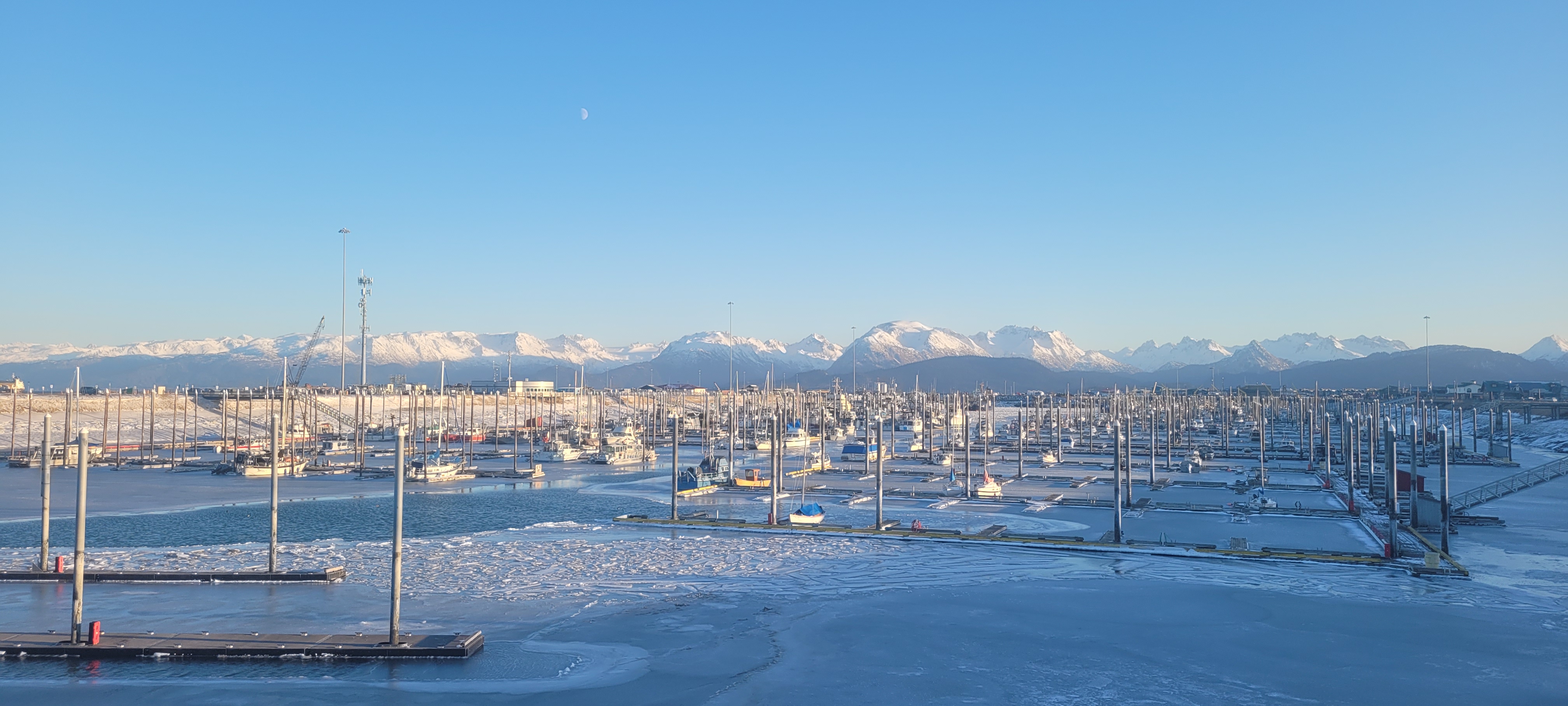
A frozen Homer Boat Harbor

Dear Friends – friends in real life, family members, acquaintances, neighbors, old friends, friends I’ve yet to meet, and friends that I’ll likely never cross physical paths with,

I hope this letter finds you well as we’re heading into a brand new year. I don’t know about you, but I feel like the past few years have changed me. I suppose that would be true no matter the year, no matter the era, but I’m feeling the changes from recent years more acutely. As a result, I’m feeling the desire to reconnect with people and my community. So I’m starting the year by writing you a letter.

I don’t know if there are any rules to letter writing, but my aim is to begin a conversation.

A good conversationalist asks questions, shares news, tells stories, and tosses out ideas that invite a response. A good conversation isn’t formed like an essay, so writing a letter that’s meant to be a conversation should, in theory, be able to ramble a bit, and switch topics, and ask rhetorical questions. It shouldn’t require a topic or a reason for existing. Which is good, because I don’t have a plan here, I’m just writing to say hey.

I fear that a letter in the form of a blog post will not have the charm that a handwritten letter would have. There’s no paper to unfold. There’s no handwriting to decipher. There are no eraser marks or crossed out words.

I recently came across a decades old letter that was sent to me from a college friend a year after her divorce. We each got married to our spouses in 1990, and the four of us were close friends in Missoula. Over time, we all moved on and our correspondence became infrequent. Now, enough time has passed without contact that I would have to do some searching in order to find her. Maybe I’ll add that to the list of things I’d like to do this year.

Her letter contained a lot of catching up but it wasn’t just small talk. It was real talk, and it reminded me of the conversations we’d shared back when we were both in our early 20s. Her letter, which was everything you’d want a letter from an old friend to be, came to me at a time in my life when I was pretty overwhelmed with raising children and trying to make ends meet and in general trying to keep my act together, and I don’t remember if I ever wrote her back. I hope I did.

When I was done reading it, I tucked it back into its envelope with its stamp that cost a whole lot less than a stamp costs now, and placed it back in the box that I’ll probably not look at for at least another decade. That’s a hard experience to create in digital format.

Now we have AI and I’m still trying to figure out my relationship to this thing that is here whether I’m ready for it or not. Have you noticed all of the AI written essays that are floating around social media lately? They’re stories about people or historical events. Often they’re political in nature. These essays are all similar in length and have short and choppy sentences that seem to be written for maximum impact and an overblown emotional response. They’re full of descriptors and metaphors that sound clever but I find them manipulative, and annoying.

I’ve always felt like I have a good bullshit detector, and I’m hoping that this particular super power will help me out in this age of AI, but I fear that as the technology gets better my BS detector will be put to the test. It’s a good argument for handwritten letters and across the table conversations.

What’s new with you? What changed for you in 2025? What are you looking forward to in the new year?

Are you sleeping well? Do you have good food to eat? Are you staying warm this winter? Do you have enough money to pay your bills? How are you in your relationships with your parents, your children, your significant other, your friends? How is your health?

I know these are questions we don’t often ask each other. Maybe that’s because we’re afraid of prying, or maybe it’s because receiving honest answers to these kinds of questions would require a response.

Somehow it feels safe to ask these kinds of questions in a letter. The reader (you) have a choice about whether or not to respond. Sometimes the written word acts as a barrier, which can be a good thing in certain situations or for certain people. In that way, a letter is like an opening. You can choose to go through it, or choose to stay outside.

In the local public library where I work, there are a few people who come in first thing when we open each day and stay until we close. I resist the urge to ask them if they have a warm place to sleep, or if they’re hungry, or if there is anything they need. I stick to my professional library worker persona and greet them with kindness when they walk through the door each morning. Sometimes I’m afraid that if I asked them direct questions about their well-being the spell would be broken and they’d stop showing up. And I’m glad they’re coming through those library doors. I’m glad a place exists where they can exist without being hassled. I wouldn’t want to mess that up.

I guess I’m trying to figure out if asking them those questions would be the right thing or the wrong thing to do. This is really all about acknowledging the hardship we see in the world rather than pretending everyone is okay. I guess I want people to know that it’s okay to not be okay and their value does not hinge on having a warm place to sleep or money in their pocket.

Transitions have always been tricky for me, both in writing and in life, which is another reason why this letter writing thing just might work for me. In 2025, our daughter and daughter-in-law made the difficult decision to part ways. This was a big transition for me to wrap my head around, but as these things go, it wasn’t about me, it was just a change I needed to accept. The two of them have demonstrated that breakups can be done gracefully, even with love, and for that I’m grateful. I’m also thankful for the time they chose to be together, because our lives were enhanced by the relationships their pairing brought our way. I can talk about it now without so much sadness, but I had some grief to work through this past year.

There were plenty of things to be thankful for in 2025. One of my ambitions for the year was to achieve more balance in my life, and while that is always going to be a work in progress, I feel as though I made some good strides in that area. My measuring stick was how I felt at the end of the summer, and for the first time in several years I wasn’t totally exhausted at the beginning of September. I attribute the better balance to an overall lowering of expectations. The garden wasn’t perfect this year. We didn’t vend at as many farmer’s markets. We only went to one day of the big music festival instead of the full three days. Those and many other small tweaks made a difference and allowed for a more relaxed summer vibe, which in Alaska can be difficult to achieve.

The most relaxing weekend of the summer was a camping trip Dean and I took in the Kenai National Wildlife Refuge. We had a campground to ourselves and the weather was perfect. Dean had his canoe and I had my banjo and a lake to swim in. We ate well. We slept well. We spent a lot of hours around a campfire. It was the perfect way to spend a few days.

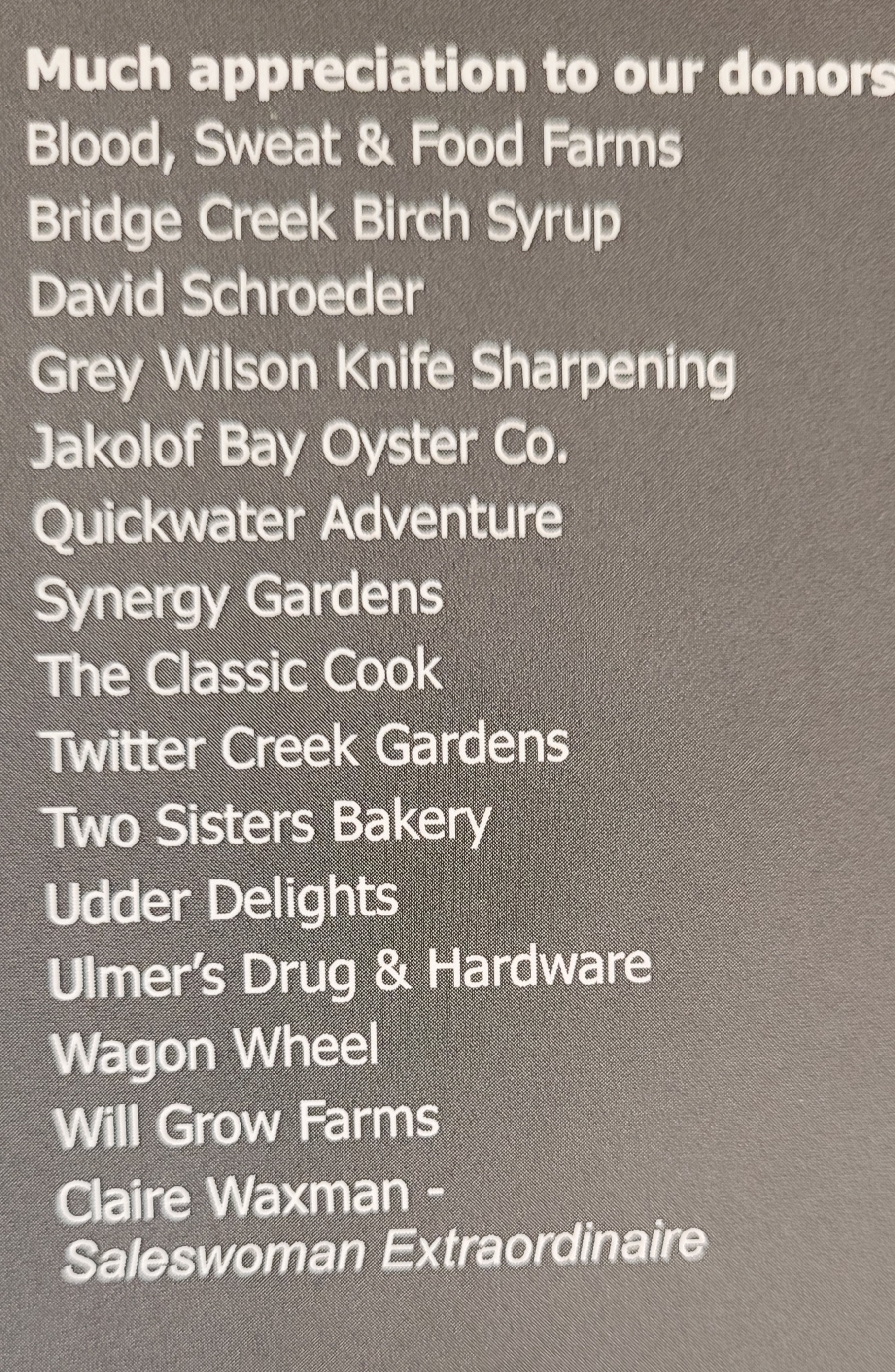
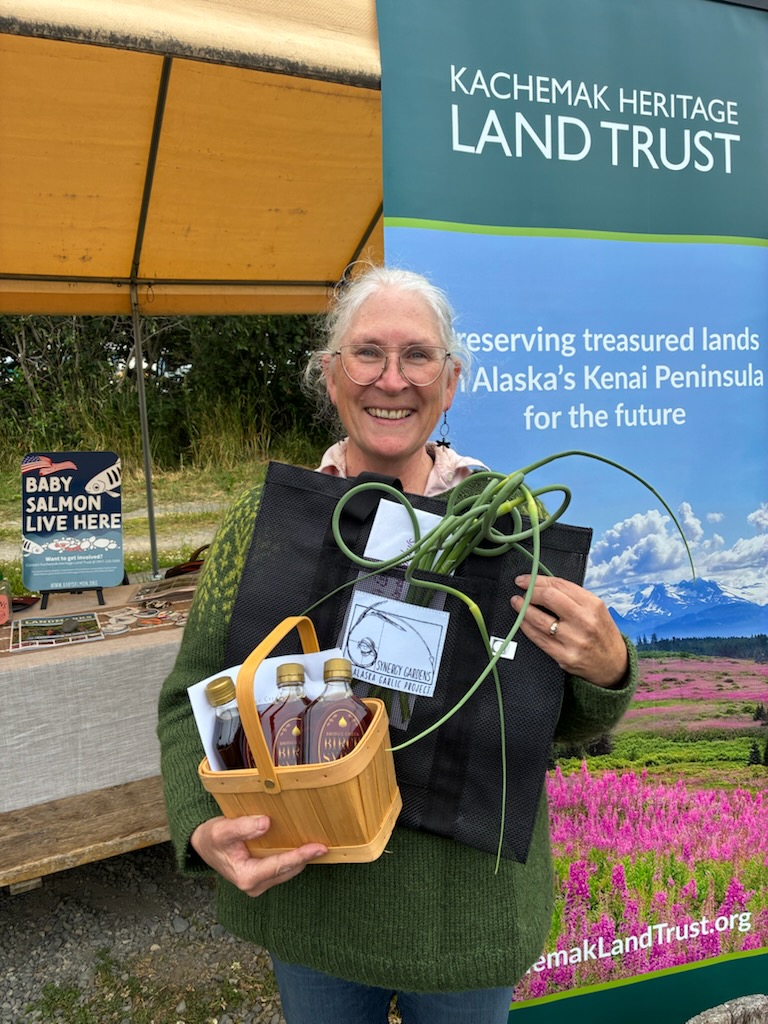
Another fun highlight of 2025 was winning the Kachemak Heritage Land Trust raffle. We were vending at the farmer’s market when I got news that I’d bought the winning ticket. My winnings included incredible bounty from local food producers and businesses – birch syrup, honey, a whole goose, a Traeger Grill, lots of fun swag, ice cream, a fondue pot, and gift certificates for knife sharpening, baked goods, garden supplies, a fishing charter, and loads of veggies, which helped compensate for this year’s less than perfect garden. I felt lucky, to be sure, but also grateful to live in a town that’s comprised of so many generous people who are contributing to such inspiring work.

Speaking of inspiring work, 2025 was a good year for our small business, Twin Fish Gardens. It’s growing slowly, as planned, and I’m enjoying getting to know this entrepreneurial side of myself that was lying dormant for a lot of years. Over the summer, between work and camping, we managed to harvest and process enough fireweed to keep our customers in tea for another year. My goals are to make things more efficient, incorporate more writing into the whole project, and start working on our garage conversion shop.

I’d love to know what’s inspiring you. Any good podcasts or albums to recommend? What about books?

Here are a few of my current inspirations:

* Bonnie Prince Billy’s 2025 album, The Purple Bird.

* Radio Paradise. Online radio that’s listener supported and free of ads. A real person curates every set, so it never feels monotonous and it’s introduced me to a ton of fabulous artists over the years. (My daughter calls me a Radio Paradise evangelist.)

* The Telepathy Tapes podcast.

* I’m currently reading Liturgies for Resisting Empire: Seeking Community, Belonging, and Peace in a Dehumanizing World by Kat Armas. I’ve borrowed the copy from the Homer Public Library but am feeling the need to get a copy of my own.

* If you are interested in such things, I highly recommend contemplating the Lord’s Prayer as translated from the Aramaic by Neil Douglas-Klotz. I’ve been using lines from it as journal prompts for the past couple of months and it’s a deep well of inspiration and insight. It’s good teaching, no matter your belief system.

If you’ve gotten this far into this letter, then you really are a friend. Thank you for being out there and for listening. I tend to be self-conscious about my writing and I put pretty high expectations on myself to make it all sound smart and well put together. I’m learning though, that for my intentions, being real matters more than being polished.

So here’s to a year of being real.

Let’s stay in touch, please, and let’s try to take care of ourselves and each other.

With love,

Teresa

Carrying On

When I studied fiction writing, I learned the term simultaneity. It’s a state of existing with more than one thing happening at the same time. Within a scene, a family might be playing a card game, having a difficult conversation, and managing their unruly dogs all at the same time. It’s a state that’s reflective of the real world, as nothing actually occurs in a vacuum, but it takes some skill to write a scene that portrays many things happening at the same time.

I was reminded of the term recently when I was thinking about how weird it is to be going about my normal day-to-day life while our country and its processes are being degraded at such a rapid pace. I check the headlines on my phone while I’m cooking dinner and see that an Iranian woman who’s lived in the United States for decades was targeted and swept away by armed masked men while working in her garden. While Dean and I are planning a small building project to support our small business, the Trump administration is planning to build more prisons to hold more people who are being taken off the streets and away from their families, due process be damned. While I’m at my library job checking out books to kids, education systems at all levels are being targeted, research grants are being pulled, and agencies across the federal government are being purged of professionals and replaced with unqualified Trump loyalists.

I carry on with my normal life the way so many Germans must have carried on with their normal lives as government sanctioned police rounded up people and sent them away to concentration camps, all under terms that were deemed legal. Chances are some of those German citizens were horrified but felt powerless to do anything to stop the machine. But we know now that a lot of them went along with the scheme because they’d been subjected to propaganda that made them fearful of anyone unlike themselves. They’d been programmed to view their Jewish neighbors as monsters and criminals. Purging the country of them, many German citizens agreed, was a way to make their country great.

And yes, I realize that what happened in Germany during Hitler’s reign isn’t happening to the same extent here, but I see signs that are pointing in a direction that’s not so different, and they’re making my inner alarm bells ring at a volume I can’t ignore. For me personally, to stay quiet or to pretend that all is well is not an option. Speaking out is inconvenient. It comes with a risk of alienating people or putting people on the defensive and that is not something I enjoy. But sometimes circumstances require that we move beyond what makes us feel comfortable.

I’m choosing to write this because I don’t have the ability to stop the unbelievable amount of money that the United States Congress just authorized to send to the the U.S. Immigration and Customs Enforcement Agency and I don’t have the ability to change Stephen Miller’s heart or Donald Trump’s priorities. I can’t close the doors of the despicable Alligator Alcatraz and I can’t stop the flow of news that somehow makes many of my fellow citizens think that all of this is okay.

What I can do is state for the record that I don’t believe our country is okay. I believe the cruelty being perpetuated by ICE in the name of public safety is unacceptable. I believe the profiteering that our president engages in is unethical. I believe Donald Trump’s love for power exceeds his desire to serve. I believe that for the richest nation in the world to prioritize the financial well being of its wealthiest while undermining the needs of its working class is immoral. I believe that dismantling environmental regulations and disregarding the realities of climate change is harmful to future generations. I believe that blaming all of the troubles of our country on Trans people and immigrants and those who stand up for them is discriminatory and dehumanizing.

I am not naive enough to believe that I can change anyone’s mind, but I know from personal experience that minds and hearts are capable of changing, which is another reason why I am writing here today, to kindly ask those of you who are cheering this administration and its tactics to deeply examine your choice.

If you think that Trump’s tactics are okay, if you think that what ICE is doing and how they’re treating people is in any way making America great, I’d like to encourage you to diversify your news sources. I watched an interview recently in which Adam Kinzinger, former U.S. congressman from Illinois, spoke with Rich Logis, who started an organization called Leaving MAGA. Asked what made him start questioning the MAGA movement and Donald Trump in particular, he answered that his views began to shift when he began to diversify his news sources.

For every news story there are many different angles to consider, and our biases sometimes close us off from hearing a perspective that doesn’t match the story we want to believe. Even more troubling is the fact that certain news organizations are reluctant to report on certain stories. They may not be lying outright but they are not always telling the whole story. I recommend Ground News. They describe themselves as “a platform that makes it easy to compare news sources, read between the lines of media bias and break free from algorithms.” I appreciate the section they call Blindspot, which highlights stories that both left and right leaning media are not reporting on.

This is deeper than news though. It’s about our hearts. It’s about our Faith. It’s about our children and our grandchildren and the people who will be here long after all of us are gone. Do we want this country, the supposed Land of the Free, which already has one of the highest incarceration rates in the world, to become even more of a police state? Do we want to continue to ignore the laws of nature in order to bolster the profits of corporations? Do we want to continue to reward a small handful of billionaires with policies that hurt the vast majority of our population? Do we want to ignore the teachings that so many of us grew up with, that instruct us to love one another?

I know there are plenty of Trump voters who don’t call themselves Christian, but most of the Trump voters I know would say that their Christianity is more important than their politics. But Jesus didn’t want people to be treated cruelly. He didn’t want his followers to make other people suffer. He didn’t want to humiliate people or cause harm. He did not scapegoat people who were different from him. Jesus instructed his followers to care for the poor, the sick, the weak, and the children. He did not encourage his followers to rise up politically in order to force his teachings onto anyone.

Jesus was here to bring healing to a broken world and those who feel called to follow his example should want to do the same. But the current administration is implementing policies and engaging in operations that cause human suffering. They even seem to be reveling in it. For as long as this is the case, greatness for the Unites States is an impossibility. All that will come from treating humans with cruelty is long-term resentment, the fomentation of hatred, the stoking of violence, the perpetuation of fear, and generational trauma.

Politics, like war, has a way of narrowing everything down to winning and losing, and for many Trump supporters, the way he’s moved into power since his inauguration feels like retribution for the ways they felt victimized by the last administration. But my hope is that the anger they feel over what they perceived as dangerous from the Biden presidency does not blind them to the dangers that are unfolding right now. If a short-term political battle is won but the ability to discern right from wrong is lost, we’re bound to end up on the wrong side of history.

I don’t want that to happen, so today, before I head out into my garden I’m putting this out into the world. The outcome is beyond my control, but I can rest easier knowing that I’ve done what my heart has compelled me to do.

Carrying On

When I studied fiction writing, I learned the term simultaneity. It’s a state of existing with more than one thing happening at the same time. Within a scene, a family might be playing a card game, having a difficult conversation, and managing their unruly dogs all at the same time. It’s a state that’s reflective of the real world, as nothing actually occurs in a vacuum, but it takes some skill to write a scene that portrays many things happening at the same time.

I was reminded of the term recently when I was thinking about how weird it is to be going about my normal day-to-day life while our country and its processes are being degraded at such a rapid pace. I check the headlines on my phone while I’m cooking dinner and see that an Iranian woman who’s lived in the United States for decades was targeted and swept away by armed masked men while working in her garden. While Dean and I are planning a small building project to support our small business, the Trump administration is planning to build more prisons to hold more people who are being taken off the streets and away from their families, due process be damned. While I’m at my library job checking out books to kids, education systems at all levels are being targeted, research grants are being pulled, and agencies across the federal government are being purged of professionals and replaced with unqualified Trump loyalists.

I carry on with my normal life the way so many Germans must have carried on with their normal lives as government sanctioned police rounded up people and sent them away to concentration camps, all under terms that were deemed legal. Chances are some of those German citizens were horrified but felt powerless to do anything to stop the machine. But we know now that a lot of them went along with the scheme because they’d been subjected to propaganda that made them fearful of anyone unlike themselves. They’d been programmed to view their Jewish neighbors as monsters and criminals. Purging the country of them, many German citizens agreed, was a way to make their country great.

And yes, I realize that what happened in Germany during Hitler’s reign isn’t happening to the same extent here, but I see signs that are pointing in a direction that’s not so different, and they’re making my inner alarm bells ring at a volume I can’t ignore. For me personally, to stay quiet or to pretend that all is well is not an option. Speaking out is inconvenient. It comes with a risk of alienating people or putting people on the defensive and that is not something I enjoy. But sometimes circumstances require that we move beyond what makes us feel comfortable.

I’m choosing to write this because I don’t have the ability to stop the unbelievable amount of money that the United States Congress just authorized to send to the the U.S. Immigration and Customs Enforcement Agency and I don’t have the ability to change Stephen Miller’s heart or Donald Trump’s priorities. I can’t close the doors of the despicable Alligator Alcatraz and I can’t stop the flow of news that somehow makes many of my fellow citizens think that all of this is okay.

What I can do is state for the record that I don’t believe our country is okay. I believe the cruelty being perpetuated by ICE in the name of public safety is unacceptable. I believe the profiteering that our president engages in is unethical. I believe Donald Trump’s love for power exceeds his desire to serve. I believe that for the richest nation in the world to prioritize the financial well being of its wealthiest while undermining the needs of its working class is immoral. I believe that dismantling environmental regulations and disregarding the realities of climate change is harmful to future generations. I believe that blaming all of the troubles of our country on Trans people and immigrants and those who stand up for them is discriminatory and dehumanizing.

I am not naive enough to believe that I can change anyone’s mind, but I know from personal experience that minds and hearts are capable of changing, which is another reason why I am writing here today, to kindly ask those of you who are cheering this administration and its tactics to deeply examine your choice.

If you think that Trump’s tactics are okay, if you think that what ICE is doing and how they’re treating people is in any way making America great, I’d like to encourage you to diversify your news sources. I watched an interview recently in which Adam Kinzinger, former U.S. congressman from Illinois, spoke with Rich Logis, who started an organization called Leaving MAGA. Asked what made him start questioning the MAGA movement and Donald Trump in particular, he answered that his views began to shift when he began to diversify his news sources.

For every news story there are many different angles to consider, and our biases sometimes close us off from hearing a perspective that doesn’t match the story we want to believe. Even more troubling is the fact that certain news organizations are reluctant to report on certain stories. They may not be lying outright but they are not always telling the whole story. I recommend Ground News. They describe themselves as “a platform that makes it easy to compare news sources, read between the lines of media bias and break free from algorithms.” I appreciate the section they call Blindspot, which highlights stories that both left and right leaning media are not reporting on.

This is deeper than news though. It’s about our hearts. It’s about our Faith. It’s about our children and our grandchildren and the people who will be here long after all of us are gone. Do we want this country, the supposed Land of the Free, which already has one of the highest incarceration rates in the world, to become even more of a police state? Do we want to continue to ignore the laws of nature in order to bolster the profits of corporations? Do we want to continue to reward a small handful of billionaires with policies that hurt the vast majority of our population? Do we want to ignore the teachings that so many of us grew up with, that instruct us to love one another?

I know there are plenty of Trump voters who don’t call themselves Christian, but most of the Trump voters I know would say that their Christianity is more important than their politics. But Jesus didn’t want people to be treated cruelly. He didn’t want his followers to make other people suffer. He didn’t want to humiliate people or cause harm. He did not scapegoat people who were different from him. Jesus instructed his followers to care for the poor, the sick, the weak, and the children. He did not encourage his followers to rise up politically in order to force his teachings onto anyone.

Jesus was here to bring healing to a broken world and those who feel called to follow his example should want to do the same. But the current administration is implementing policies and engaging in operations that cause human suffering. They even seem to be reveling in it. For as long as this is the case, greatness for the Unites States is an impossibility. All that will come from treating humans with cruelty is long-term resentment, the fomentation of hatred, the stoking of violence, the perpetuation of fear, and generational trauma.

Politics, like war, has a way of narrowing everything down to winning and losing, and for many Trump supporters, the way he’s moved into power since his inauguration feels like retribution for the ways they felt victimized by the last administration. But my hope is that the anger they feel over what they perceived as dangerous from the Biden presidency does not blind them to the dangers that are unfolding right now. If a short-term political battle is won but the ability to discern right from wrong is lost, we’re bound to end up on the wrong side of history.

I don’t want that to happen, so today, before I head out into my garden I’m putting this out into the world. The outcome is beyond my control, but I can rest easier knowing that I’ve done what my heart has compelled me to do.

Nothing Great

I’ve felt my fair share of righteous anger lately, and plenty of dismay, but today I’m sad. Incredibly sad. Was it the video of Kristi Noem looking cute and wearing a $30,000+ Rolex standing in front of caged humans that caused me to feel this way? Was it the video of masked men in plain clothes detaining Tufts University Ph.D. student Rumeysa Ozturk, even though she’d done nothing wrong? Is it the fact that the things that make life a little better for the citizens of this country are being made out to be handouts and a waste of money? Is it that decisions that impact the lives of working people are being made by a billionaire who cares not one iota about our well-being? Is it that the earth itself is seen as just a resource to be used for building wealth, with no consideration for the living beings who will inhabit this planet far into the future?

I realize that my personal sadness could go two different ways. I could wallow in it, shake my head and wish for better days, or I can try to put it to use somehow and be a part of the solution to the problem of the cruelty that’s being perpetuated in the name of making our country great.

But here’s the simple truth. Nothing great comes from cruelty. Nothing great comes from destroying the ecosystems that life depends on. Nothing great comes from causing others to suffer. Nothing great comes from scapegoating. Nothing great comes from a platform that’s been built on lies. Nothing great comes from pretending that this country hasn’t inflicted great harm both within and beyond our borders. And nothing great will ever come from valuing money and power over all else.

If being great means being oppressive, if it means having no regard for peoples’ ability to have a good life, if it means forgetting what it means to be good, then I don’t want any part of it.

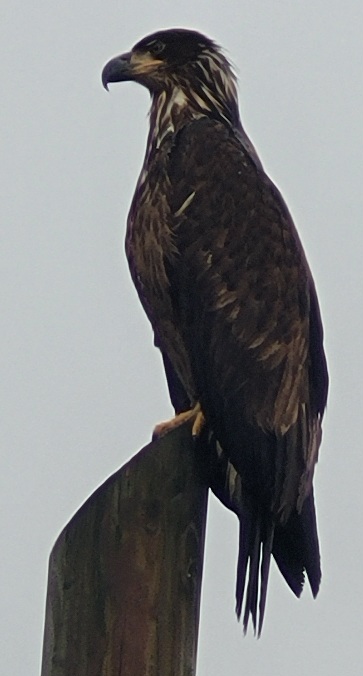
Immature bald eagle

Nameless

There is a mass of land north of where I live that bulges toward the heavens. It’s been measured by humans and thus determined to be the highest reaching land mass on the continent. People pilgrimage to this great land mass. Sometimes they stay in its proximity for days just to catch a glimpse.

Something so grand, so awe-inspiring, so beyond anything else, becomes revered; not because it demands reverence, but because reverence for it is inevitable. And to see it, to be near it, to feel its presence inspires us to use it as a reference. There are other land masses that protrude from this continent and each of them are unique and beautiful, but only one is The Great One.

What is the purpose of a name? I’ve had friends who’ve changed their names because they were never comfortable with the ones that had been chosen for them. I changed my name as well after I got married, like my mother did, and her mother before her, and hers before her as far back as the genealogical history on both sides of my family goes. Does my married name make me who I am any more than my maiden name did before that?

In a society that demands identification, would I cease to exist if I didn’t have a name? Without a name, how would I be known? By my appearance, my attributes, my essence? Would I be known by the evidence of my existence?

What evidence is there of my existence? There is my physical flesh and blood, although that will cease to exist one day. What about the children who were born from my body and the children they may have one day? Had I not chosen to have children though, I would still exist.

Would the words I write or the things I make with my hands act to prove my existence? Would they, even without a name to attach to them?

A name then, is a convenience. A name is something we attach to something that exists. But a name is not proof of existence.

A name gives us something to call each other.

A name gives us a sound, a visual to attach to ourselves and our surroundings, and when a name is agreed upon, it gives us something in common. When I say I live in Alaska, you recognize that name. You may not think of Alaska the same way I think of Alaska, but we have a common reference point from which we can launch our conversation.

As for me and for you, if the name that’s been attached to us were to be stripped away, what would we be left with? It depends on who’s asking. I am someone different to my spouse, to my kids, to my coworkers. We are seen from a different perspective from everyone we encounter, but does that change who we are fundamentally?

A name then, is a simplification. Who we are in our true essence is much more complicated than what a name could possibly contain. We, at our core, are nuanced beings who can move through the world and adapt to the environments in which we find ourselves.

I have different roles at home than I have at work. Roles then, are not unlike names.

I am the lady behind the circulation desk at the library. I am a Cook. Spouse. Friend. Writer. Musician. Beach wanderer. Sun seeker. Reader. Vacuum operator. Gardener. Tea maker. Sister. Mother. Animal caretaker. Neighbor. Driver. Television watcher. Internet scroller. Philosopher. Mystic.

Strip away any of these. Strip away all of these. Who am I?

We know each other by our names. We know each other by our associations.

I don’t know your name, but you sat in front of me at the basketball game.”

I’ve never met _____, but I’ve read an article they’ve written.”

______ is a talented artist, and from what they’ve made I imagine they’d be interesting to talk to.”

I’ve heard that name before, but I can’t recall where I’d know them from.”

We only know a person from the perspective from which we’ve interacted or been introduced. We can never know another person as well as we can know ourselves. And a name is never able to encompass the full story of whatever it is we are attempting to name.

If I use the word God, what does it mean? It will mean something different to you than it does to me because we only have our own perspective from which to give it meaning. We may have a guide that informs our ideas in the form of a text. We may have had experiences that add to our perspective of whatever it is we think about when we hear the word God.

A belief in God is not required in order to try to describe what is meant by the word God. What comes to mind when you hear the word God? What feeling is evoked? How would you describe whatever you think others might mean when they use the term God?

We each have an understanding of what we’re trying to describe, but my description will always be different than your description. No one perspective is complete.

What is it that we’re trying to name when we use the word God? The force that pulls us all together? All there is and all there ever will be? The endless cycle of being? That which gives us life?

We use the word God because an adequate description of what we’re trying to name will always fall short. The term God then is inadequate. It is a limitation, an approximation, a shortcut.

Could any name, could any book, could any religion or tradition claim to know all there is to know about God? No. It is an impossibility. All we can do is try to understand what is meant when we use the term God, and there is no end to such an exploration.

Could any name adequately encompass the grandness of the tallest mountain in North America? No, but the people who lived in its shadow, who lived with it as their continual reference point, described it as Denali – The Great One – so I will refer to it as that. No matter what any human calls it or names it though, the truth of the mountain’s existence, the truth of the mountain’s essence, the truth of the mountain’s grandeur is incapable of being diminished.

Remember, this is also true of you.

Waltzing through time: One two three, one two three…

12/31/23

Yesterday we drove our daughter and daughter-in-law to the airport in Kenai where they boarded a small plane to start them on their journey back to Atlanta. They were here for two weeks and during that time we shared space the way I always imagine people should share space. We chatted over morning coffee, took turns cooking and doing chores, schemed about new projects, went for walks, huddled around the wood stove, and sipped chai each evening from spices that had been simmering all day. We also gave each other space when it was needed, and did our own thing on occasion.

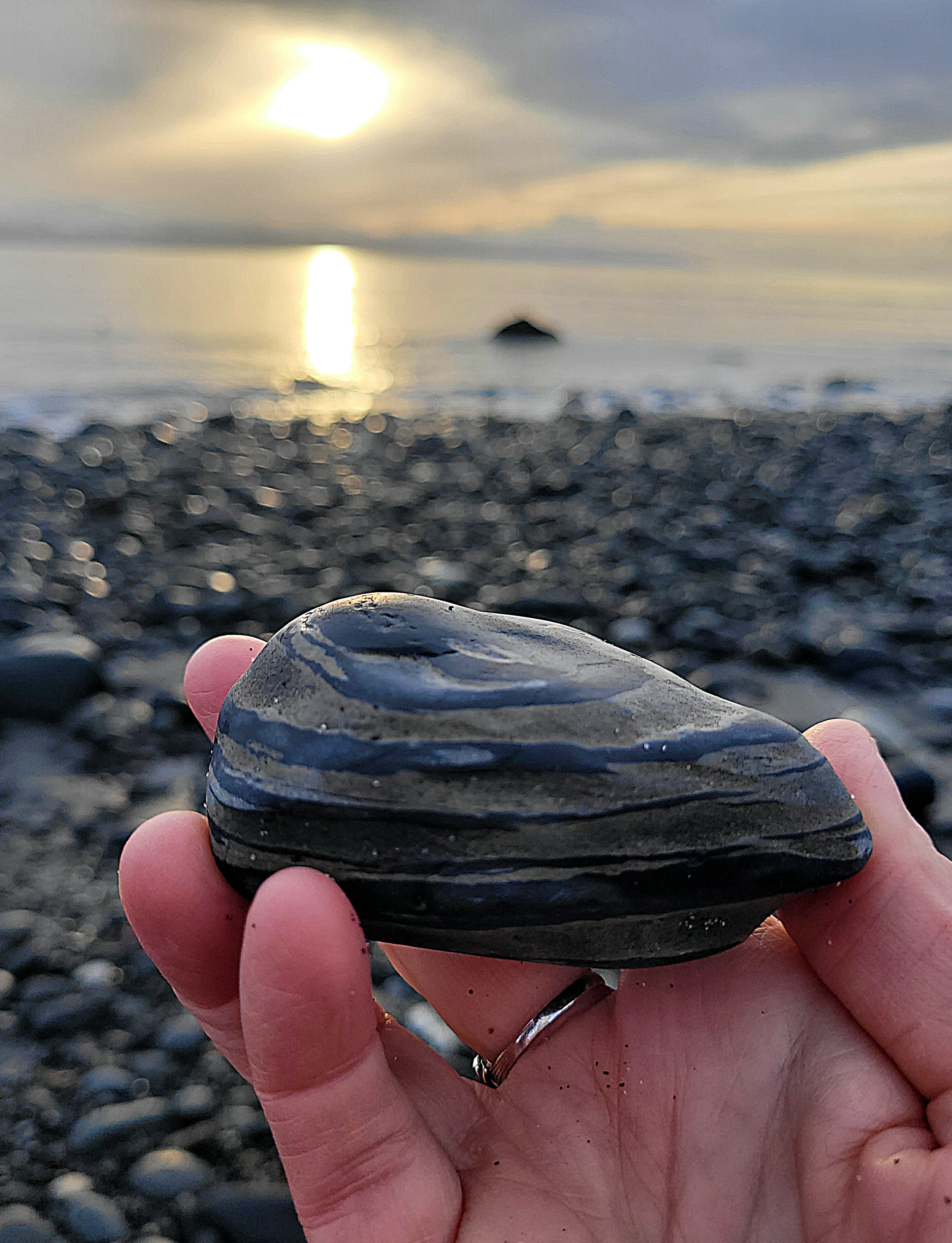
One day I had to make an early morning run to town for a couple of errands. I hadn’t planned on going to the beach but when I got to the stoplight at the intersection that leads there, I found myself turning. I’ve lived in Homer for going on 30 years now, but just in the last two years I’ve developed a kind of relationship with Bishop’s Beach. When I’m there, the mental chatter in my brain is paused. I don’t make lists or try to solve any problems. I don’t think about politics or the state of the world or the things I wish were different. When I’m there I am fully present with the rocks and the sand, the vast ocean, the driftwood, the wind, the salty air, the sunlight, the streams of water as they flow from the bluffs down into the sea, the birds, the ever-changing landscape that the perpetual tides create. There, I’m playful. I stack rocks. I leap over puddles. I talk to the crows. I experiment with photography. I sing.

My childhood was not especially conducive to playfulness and so I have a lot to learn in that regard. I was at the beach on my lunch break a few weeks ago and I got so caught up in taking photos of rocks that I had to run back to my car in order to make it back to work on time. I made it, but by the time I got there I was sweating and my hair was windblown. My face was flushed and I’d completely forgotten to eat. There at the library circulation desk where I was trying to smooth down my hair and catch my breath and figure out how I was going to make it without eating for the next few hours, I felt like a kid who’d been called away from playing outdoors to do homework or chores. At the beach I’d lost myself, with no agenda, and had experienced a kind of freedom that I suspect is what playing is all about.

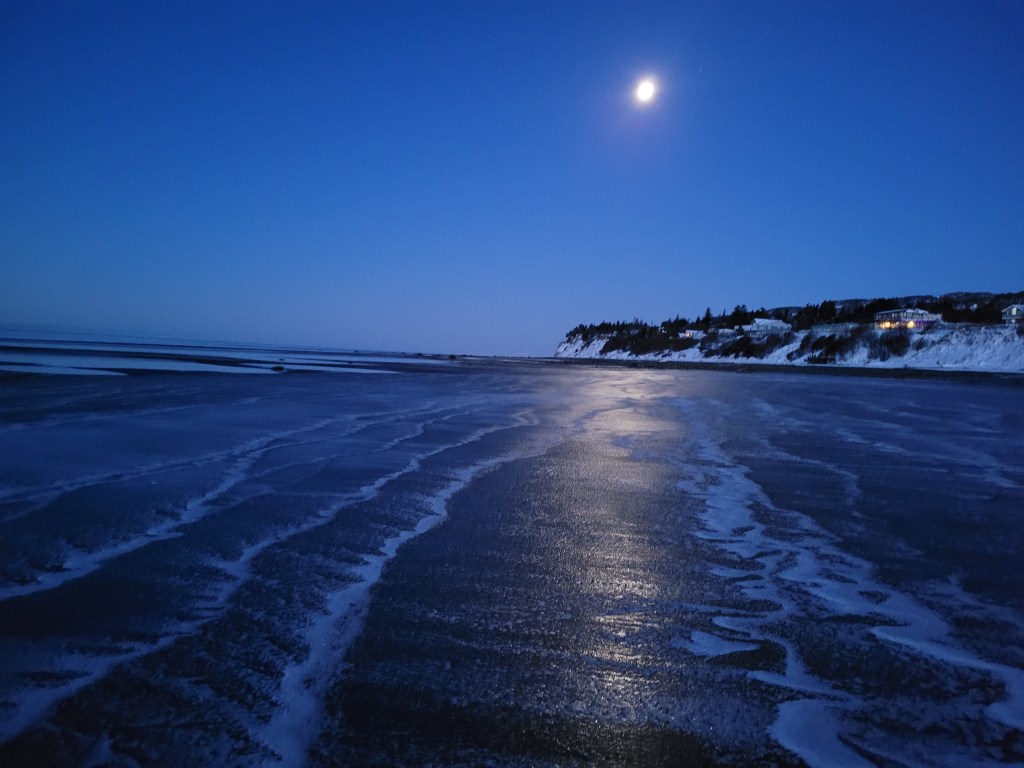
On the particular morning last week that I had to run errands in town, the sky was just beginning to lighten in the east and there wasn’t a cloud in sight. The trickle of daybreak and the waning gibbous moon made it possible for me to navigate the beach terrain without a headlamp, so I headed west into the moonlight, slowly at first to keep from twisting an ankle or slipping on the frozen rocks. Then I got to the sandy expanse where the walking was easy. I walked beside the water’s edge until the the tide began to roll back in. I took the tide’s turning as my cue to turn back as well, and headed back toward my car and the silhouetted mountains.

I drove back home with the car heater on full blast feeling like I had climbed a mountain, or glimpsed some piece of heaven. I’d been restored to myself and my place in the world again. I hadn’t known I’d needed that time at the beach, but I was glad I’d answered its call. Once I was home I sat with my daughter and her wife and we drank coffee and talked about herbs and music and books. We planned our next meal and figured out our day. Nothing was extraordinary about it, but at the same time everything about it was extraordinary.

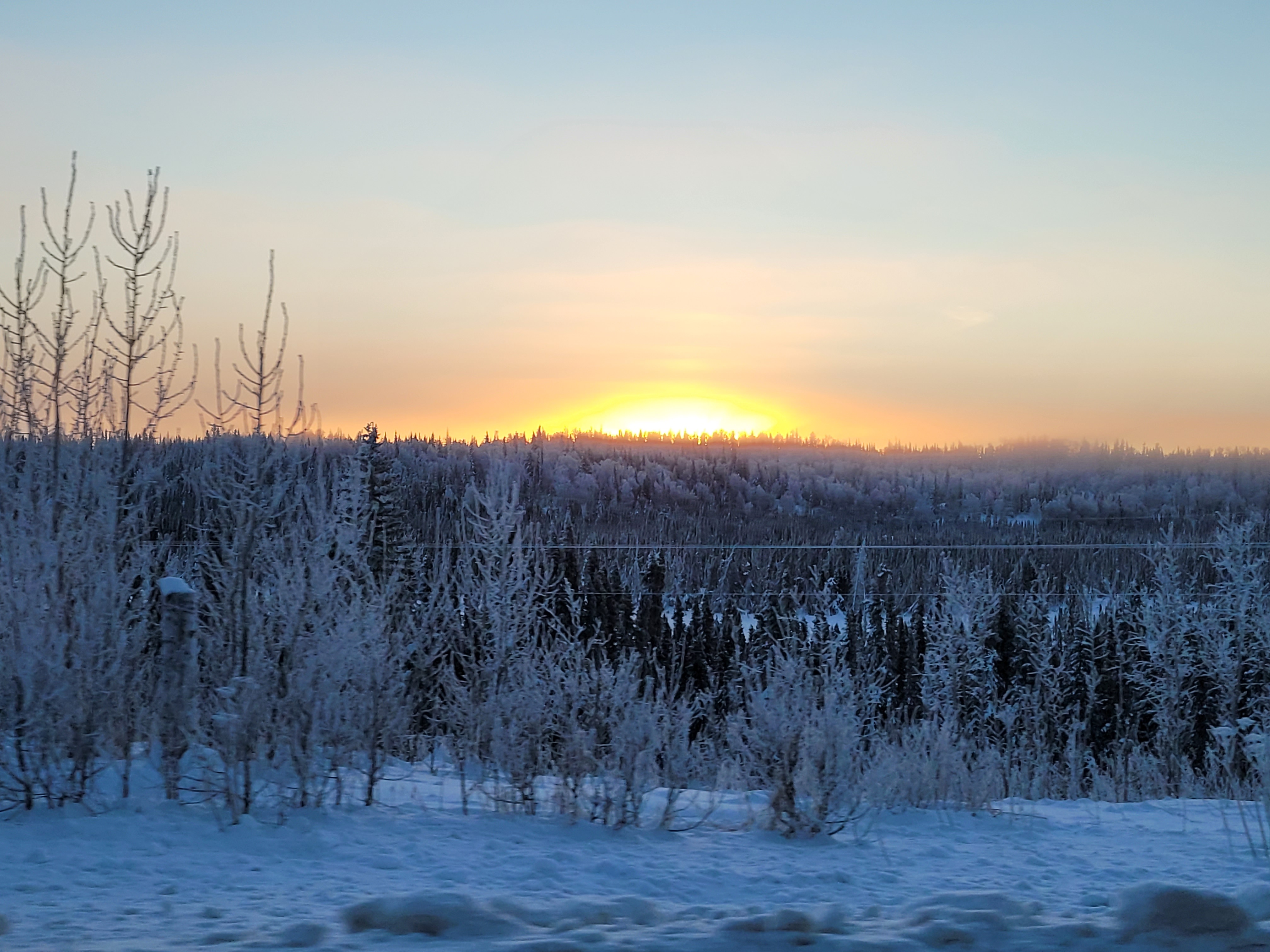
Yesterday we watched the small commuter plane take off from Kenai and take them away. Then we drove back home. The night before, a thick fog from Cook Inlet had come inland and the moisture froze itself to every tree, plant, and street sign in its path. Sometimes, when everything is so beautiful there’s a tinge of pain that comes along with it. It’s true even when you haven’t just said goodbye to people you love. But the combination of the hoarfrost, the low angle light, and the sadness over parting ways brought me back to a familiar kind of longing.

I felt it for years when I was a child and I had to say goodbye to my mom every other weekend. During every car ride when she drove me and my sisters back to Grand Junction after spending a weekend with her in Craig, a kind of sadness fell over me that I began to associate with the scenery. I still can’t make the drive between the two towns without that sadness sneaking in.

We all have our different kinds of longing, but yesterday I identified my own unique brand of it. I feel it still when my mom’s summers in Alaska come to a close and she heads back to Colorado. I’ve felt it every time I’ve taken my son or daughter to an airport. I feel it whenever I’m in piñon pine country and have to leave. The longing dissipates with time, but for a while it takes up all the space in my heart.

Today the clouds have rolled in and the stretch of clear cold days that we had when our house was full has come to an end. The intense beauty of the blue sky days and big moon nights has mellowed and there’s a new year to ring in. Like we’ve done in recent years since our kids have been grown, we’ll have a fire in the wood stove, we’ll light a few candles, and with our old dogs curled up beside us we’ll debate over whether it’s worth it to stay up until midnight.

Chances are we won’t. That’s partly because we’ll be tired and partly because we’ve got tomorrow to look forward to. The forecast looks good for the morning, and our plan is to bundle up and greet the day outside with coffee and a fire. It’ll be quiet and calm and maybe by then this longing I feel will have dissipated back into the contentment that’s my more normal state of being these days.

It’s taken some work to get here, to this place of contentment. And it will take some work to stay here too, and so here are my hopes as I move forward: to take life as it comes, to want less, to live in constant gratitude, to see the extraordinary in the ordinary, to learn to love more and love better, to allow space for playfulness and freedom, to listen to my body and my soul’s longings, to strive less and let things unfold as they’re meant to, to heal the parts of myself that still need healing and to take part in a greater kind of healing beyond myself, to know when to take action and when to be still, to mourn and recover as many times as life requires, to rest, to forgive, to cultivate joy, and to use discernment when making choices. Ultimately, my hope is for peace – for you, for me, for all the animals, both wild and domestic, for the planet that sustains us, for everyone. Everywhere. No exceptions.

May we remember that our capacity to love is as infinite as time and as vast as the universe, and that’s what we’re here to do. My heartfelt best wishes to you all for the new year.

Illuminate: A ten-day journal series

I count myself lucky to work in a place that’s a three minute drive to the beach. Often on my lunch break I pull on the mud boots I stash under my desk, grab my sack lunch, and head down to the shore. Most days I eat in the car and then head out walking. As soon as my feet hit the sand I feel like I’ve entered a different realm.

A person might go to the beach for any number of reasons. Sometimes after a big storm people drive out and fill their truck beds with coal for burning. Between September and April people might show up with buckets to collect seaweed for their garden beds. Friends of mine go to the beach once a month to plunge into the cold ocean. I say I want to join them, but haven’t mustered up the will quite yet. I usually go to the beach just to wander, and see what I might find.

Each beach excursion is different. There might be a calm drizzle or a raging wind, brilliant sun reflecting off the water or dense fog. The tide is either high or low or somewhere in the middle. Some days I might only have a few minutes, other days I might have a good long time. One day the beach will be crowded with people and dogs, other times it’s nearly empty.

It’s often cool and breezy and I find it tempting to stay in the car to keep myself separate from the elements, but always, even on the rough weather days, once I’m out there I don’t regret my choice to feel the ocean’s influence on my body and soul, even if it’s only for a moment. That’s because the beach is a place for receiving gifts. Some of them are physical, but more often I come away with something that’s much more difficult to articulate. How do you describe the effect of fresh salt air, the sound of waves on rocks, the company of birds, the long expanses, the being near something so vast and alive as the ocean?

When I go back to work after spending time at the beach, I’ve brought some of its offerings with me. I breathe easier. I’m better able to focus. I have fresh ideas and a new perspective. I’ve got color in my cheeks and a sense of calm and connection.

What do I feel connected to? Myself, I suppose, but also something beyond myself. I’m not just a person who goes here and there and exists on the planet alongside everyone else, I’m a part of the whole big system, and for me, puzzling about the whole big system—what it is and what my role in it might be—is the stuff that makes life interesting. It’s the driving force behind my writing.

And that brings me to my journal.

I do a lot of writing, and I share a small percentage of it here, but I consider the writing I do in my journal as the real writing. It’s the place where the inner work is done. It’s where I suss out questions and consider multiple answers. It’s where I question my beliefs and test the soundness of my opinions. It’s where I vent my frustrations and scheme about new ideas and imagine a brighter future. It’s where I give myself pep-talks and muster up the courage to do the things that are required to live the kind of life I want to live. It’s where I toss around new business ideas and evaluate their pros and cons. It’s where I’ve found empathy and ultimately forgiveness for the people I’ve needed to forgive, including myself.

On the pages of my journals are prayers for the people I know and love. Prayers for the whole of humanity, for the state of the world and for the planet that supports our existence. There are to-do lists, recipes I don’t want to forget, and anecdotes and snippets of conversations I’ve overheard. There are poorly written song lyrics and descriptions of places I wish I could teleport back to. On the pages of my journal I’ve imagined conversations with my dad and my grandparents who’ve been gone from my life now for a good many years. These conversations are made up, but often they bring back memories that are real, the sound of a voice, a specific gesture, a funny trait, a remembrance of what it felt like to be in their presence.

What I’ve discovered is that the way I feel after writing in my journal isn’t so different than the way I feel after I’ve spent some time at the beach. Each day the writing is different, but always when I’m done I feel a sense of calm. I feel connected. And often I’ve been given a memory or an idea or a vision of the future that feels very much like a gift. Where does that gift come from? What is it I feel connected to? Well, those are the kinds of questions I love asking on the pages of my journal.

For me journal writing has become a practice, and without hesitation I can say that it’s made my life better. I could continue to go on about it, but what I really want is for you to try it for yourself, or maybe get back into the habit. I want you to experience the way writing can change the way you see the world, the way it can open your heart and inspire your attention, even if you never share a word of it with anyone else.

I’d like to invite you to join me for ten days of journal writing, starting on the first day of November. Early each day I’ll send an email that will include some writing prompts along with a bit of encouragement, and then you’ll take it from there. That’s all there is to it.

If you’d like to participate in this ten day journaling series, let me know you’re interested by sending an email to tsundmark@protonmail.com and I’ll add your name to the list and send you a quick confirmation. Then you’ll hear from me again just before we get started. It’s free to join and there are no strings attached. At the end of the series there will an opportunity to offer a gift payment if you’ve found the experience meaningful, but absolutely nothing is required. For me this is about connection, and I’d love to have you join me.

An Empire of Earthworms

If you were to come visit us right now, you might feel a little overwhelmed by the nature of our house. Quite literally, we’ve brought nature inside. In our entryway we’ve got a good sized chrysanthemum plant that we’re going to try to winter over in case the ones we planted outside don’t make it. In our living space there’s a crock of sauerkraut burping away and four baskets of mint and marjoram waiting for a turn in the food dehydrator in the next room over. Near our wood stove we’ve got a good haul of onions draped over a clothes drying rack before we put them into deeper storage, and in our pantry we’ve got about a hundred garlic bulbs curing. I hate to admit it, but I’m kind of glad our potato harvest wasn’t terribly impressive this year.

As I was digging our few potatoes last weekend I witnessed something I’d never seen before, which was an earthworm producing an egg sac. What caught my attention about this particular worm was the white ring around its mid-section. It looked as though it had slithered into a small plastic ring or bead, and I watched the worm work to push the ring off its body, going long and skinny and then short and plump until eventually a little pale orb fell off of its body into the dirt. I’ve since learned that the ring was picking up sperm off of the worm’s body as it squirmed it off of itself, and once the sac was deposited onto the soil it contained scores of fertilized eggs. It was something to behold.

Peeking into the soil and seeing a healthy bunch of earthworms wriggling around is deeply satisfying but I’d never given much thought to earthworm reproduction. Anything I might have learned about them in my high school biology class had long since left my brain, so I took a short dive down that wormhole by reading the fifth chapter of Secrets of the Soil, a book about biodynamic agriculture by Peter Tompkins and Christopher Bird.

The chapter was packed with facts about earthworms and historical anecdotes. Turns out Cleopatra understood the Egyptian valley’s fertility depended upon earthworms and she decreed that they be revered and protected as a sacred animal. Aristotle called them the “Guts of the Soil” and Charles Darwin considered the earthworm to be the “greatest plowman, an animal of greater value than the horse, relatively more powerful than the African elephant, and more important to man than even the cow.”

And did you know that earthworms excrete a kind of mucus that helps them wriggle through hard ground, and that same mucus acts to cement the walls of their pathways, which in turn creates soil structure that’s perfect for retaining water and making space for the roots of plants? Or that earthworms have a gizzard that allows them to digest both organic matter and raw earth, and what comes out as worm castings on the other end is nearly perfect humus that’s loaded with microbes, giving plants what they need structurally, nutritionally and with the right pH?

These powerful, unassuming creatures go about their lives creating the fertile ground that allows us to grow gardens and feed ourselves. They mix organic matter and minerals around and up and down, gradually deepening the topsoil layer and distributing nutrients to where plant roots can reach them. In fact one earthworm can produce its weight in castings each day and can move a stone that’s fifty times its weight. What this means is that if the earthworm population is happy, no rototiller is needed. And that is why when I finished digging potatoes last weekend I covered the ground with grass clippings, nettle, dandelion leaves, comfrey and a bunch of beet greens and cabbage leaves. Then I added a layer of meadow straw that Dean had the foresight to rake and set aside back in May, before everything greened up, knowing that we’d need it now when it’s time to tuck our garden and our soil and all those hungry earthworms in for the winter.

This year’s garden is just about wrapped up. The garlic has been planted and all that’s left in the ground are carrots, parsnips and some kale. Over the next few weekends we’ll get the rest of the beds put away for winter. We’ll add a little compost and a layer of green. We’ll cover them all up with leaves and straw, and then we’ll walk away. In our absence, the earthworms and their microbial cohort will be mixing and churning. When the ground freezes they’ll go down deep. When it starts to thaw they’ll move up again toward the surface, and they’ll bring some of that deep earth goodness with them. In the spring when we peel that layer of straw off the garden bed we’ll find that somehow, even in the cold, the earthworms will have done what earthworms are meant to do and the soil will be ready for the seeds and the plants that will eventually grow into the food that feeds us. No matter how many times I see it or how many gardens I tend, I’ll never stop marveling over the way of it all.

I find that it’s easier to write about the changing seasons and growing a garden than it is to write about God. And I don’t mean God as a bearded fellow ruling the universe, I mean God as The Way Things Work. I mean God as the continuous cycle of death and renewal. I mean God as the all-encompassing glue that makes everything touch everything else. I mean God as that nameless energy that keeps the world spinning and the oceans churning and the earthworms tilling up the ground so that we can grow snap peas and sweet carrots and potatoes and the like. It’s much easier to stick to the facts but I can’t stop thinking about how within the workings of the natural world there’s something supernatural going on. Something so simple, so perfect, so sustainable. Something so honest, so straightforward, so real.

I don’t claim to understand how it all works, or why. I just know that in a world where it’s easy to be distracted by billionaires and politicians and the near-constant barrage of information and opinion, there is something bigger that is worthy of our attention, and that there is nothing to lose and everything to gain by reorienting our existence toward whatever that bigger thing is. To do so we might put our hands in the dirt and our feet on the ground. We might turn off the lights and look up at the night sky. We might notice how we change as the seasons change. We might learn the ways of plants and animals and fungi and each other. With practice we might remember the truth of who we really are.

And who are we, really? We’re humans with physical, temporary bodies that require nourishment and clean air and pure water. We have big brains that allow us to learn from the past and imagine the future. We’re as natural as the earthworms that are digging and tilling away in my garden and yet we have this incredible capacity to give and receive love. Where did that come from, I wonder. And how can we put it to use? There must be 8.1 billion different ways.

***

*** If you’d like to join me for a ten day journaling practice starting on Nov. 1, please send me an email at tsundmark@protonmail.com. Every day for ten days I’ll send out a few journal prompts that will get you started, and then you’ll take it from there. It’s free to join and I’d love to have your company. I promise I won’t share your email with anyone else. Feel free to share with anyone else who might be interested and let me know if you have any questions. — Teresa